
Best Things To Do in Busan, South Korea
Busan is South Korea’s second-largest city, a vast coastal metropolis that feels completely different to the likes of Seoul, Jeonju, or Jeju Island. Set along the south-eastern edge of the peninsula, it’s a city defined by its beaches, mountains and working port, giving it a more relaxed, open feel compared to the intensity of the capital.
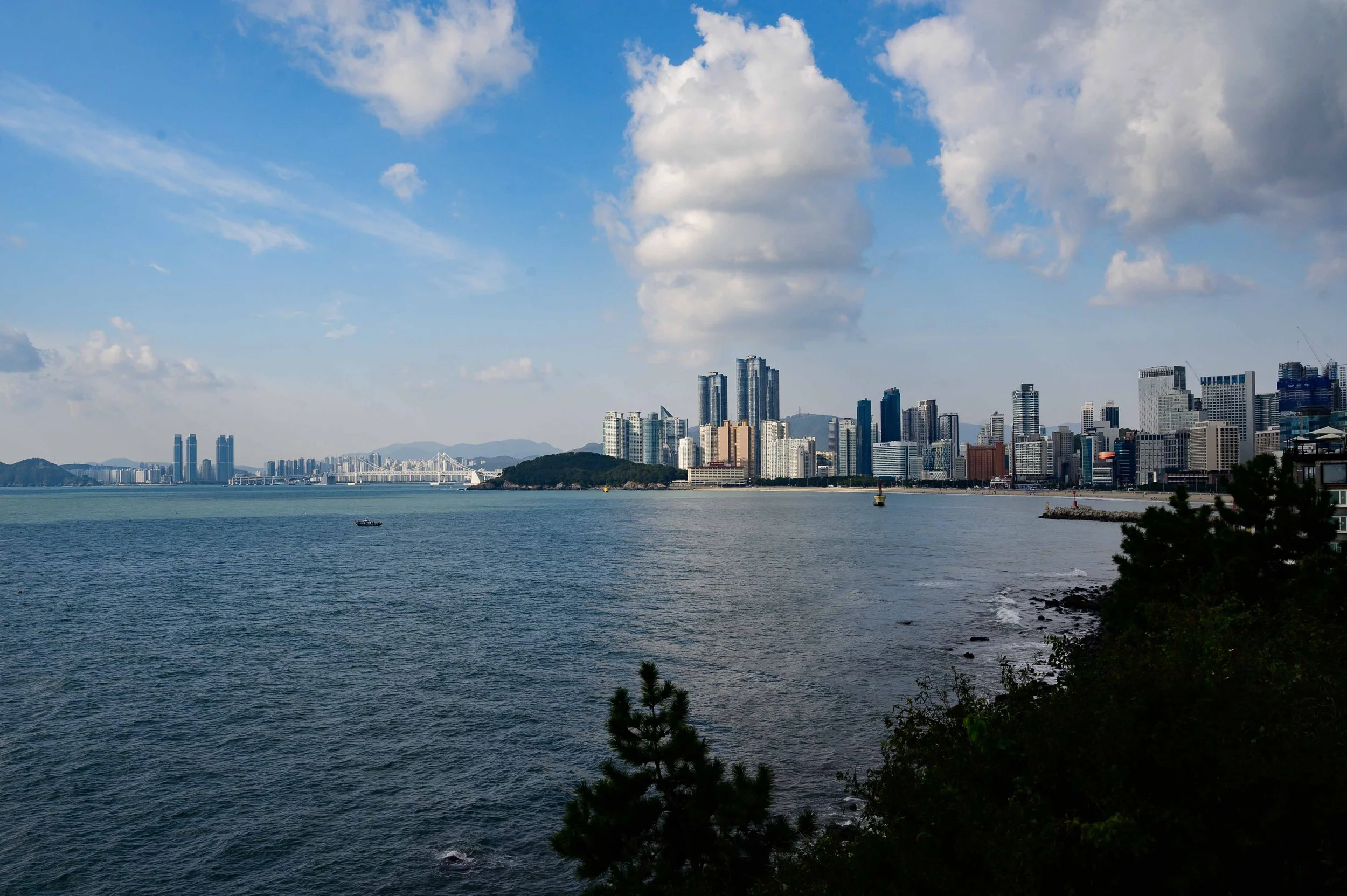
Busan also holds an important place in modern Korean history. During the Korean War, North Korean forces rapidly advanced down the peninsula, capturing most of South Korea in the early months of the conflict. Busan became part of the Pusan Perimeter, a small area in the south-east that remained under UN and South Korean control. It was part of the final defensive stronghold where forces held the line before launching a counteroffensive.
Our own trip to South Korea was partly inspired by flipping through the pages of National Geographic 2 years ago, where we first saw striking images of Busan’s coastline, colourful streets and endless stretches of beach backed by skyscrapers. It felt different, and once we arrived, it really was.
We spent a few nights here in 2025 and absolutely loved it. Busan has a completely different energy from the rest of the country: more laid-back, more spread out, and with a strong connection to the sea.
It’s worth knowing that Busan is a very large and sprawling city. Getting between areas can take time, so planning your days properly makes a big difference.
If you’re travelling through South Korea, Busan is well worth adding to your itinerary. Here are some of our favourite things to do while you’re there.
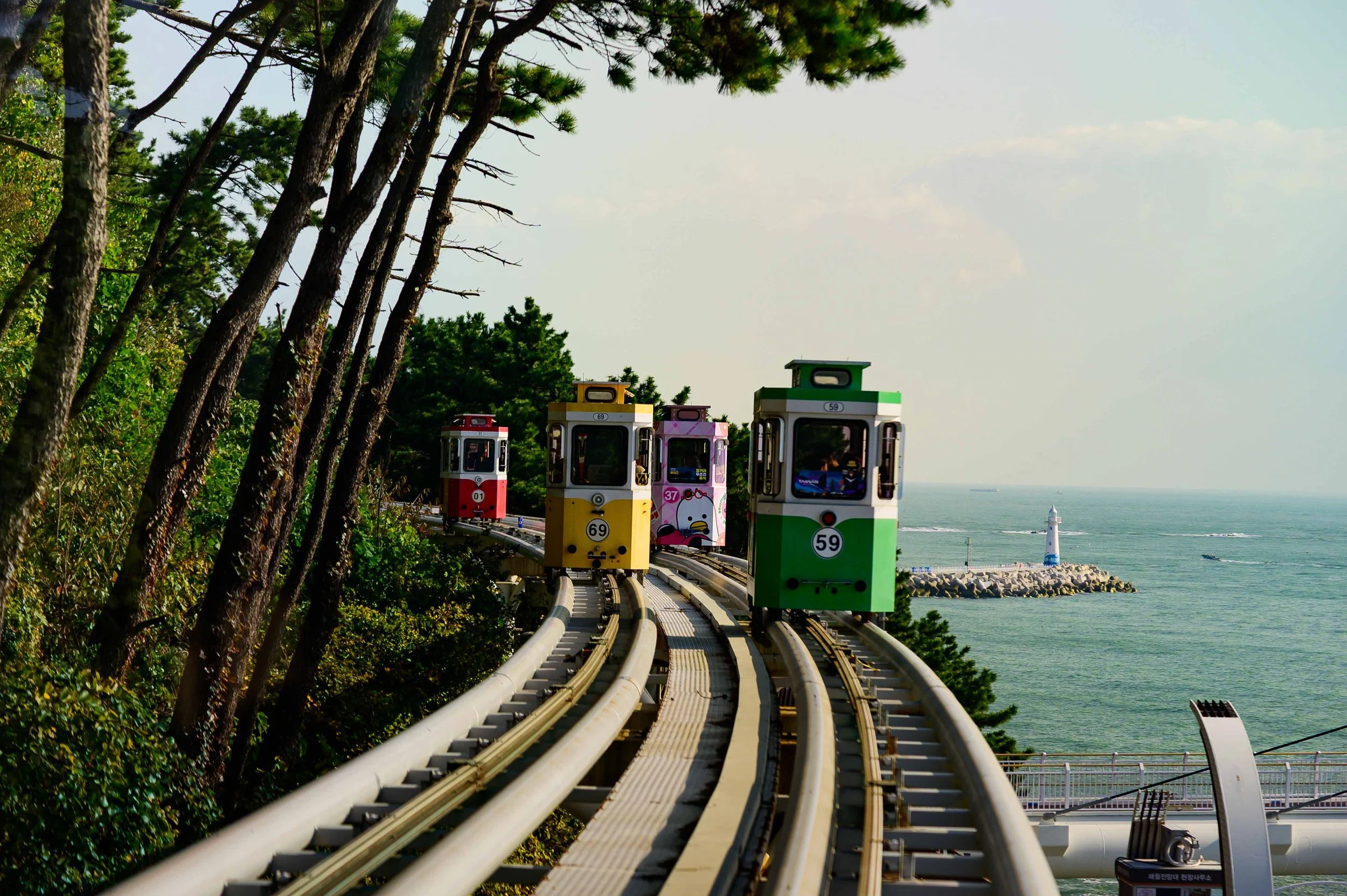
Sky Capsules at Haeundae Blueline Park
Busan Itinerary (2–3 Days at a Glance)
If you’re short on time and don’t want to read the full post, here’s how we’d structure a 2 to 3 day trip to Busan based on our experience.
Day 1: Coast & Beaches
Gwangalli and Haeundae Beaches
Sky Capsules at Blueline Park
Cheongsapo for incredible seafood and coastal views
Day 2: Markets & City
Jagalchi Fish Market
BIFF Square, Gwangbok-ro Fashion Street, Book Street, Momos Coffee
Seomyeon and Cafe street for evening food + drinks)
Day 3 (if you have time): Bathhouse or day trip
Spa Land
Haedong Yonggungsa + viewpoints
Day trip to Gyeongju
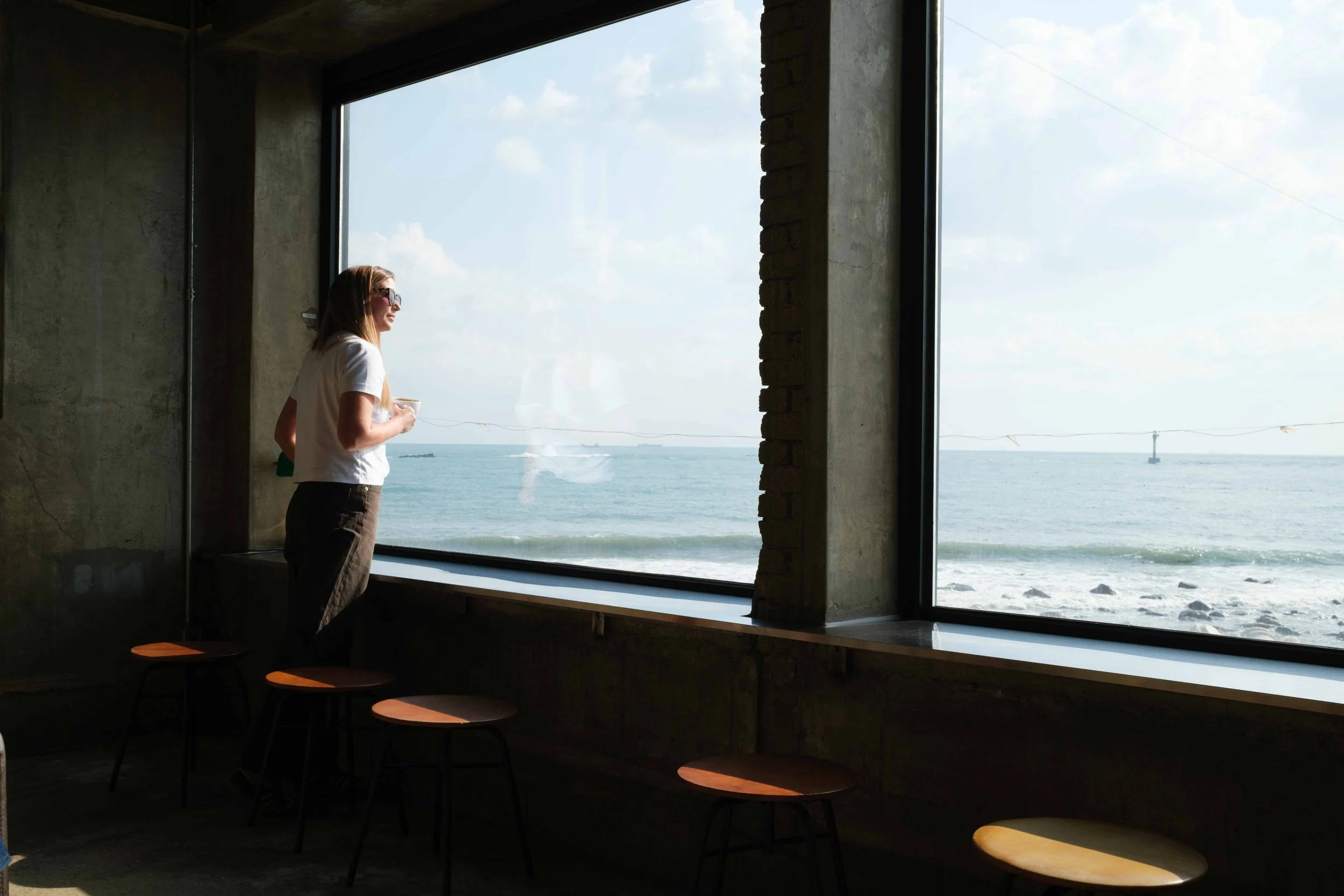
BRONI in Cheongsapo
Visit the Beaches
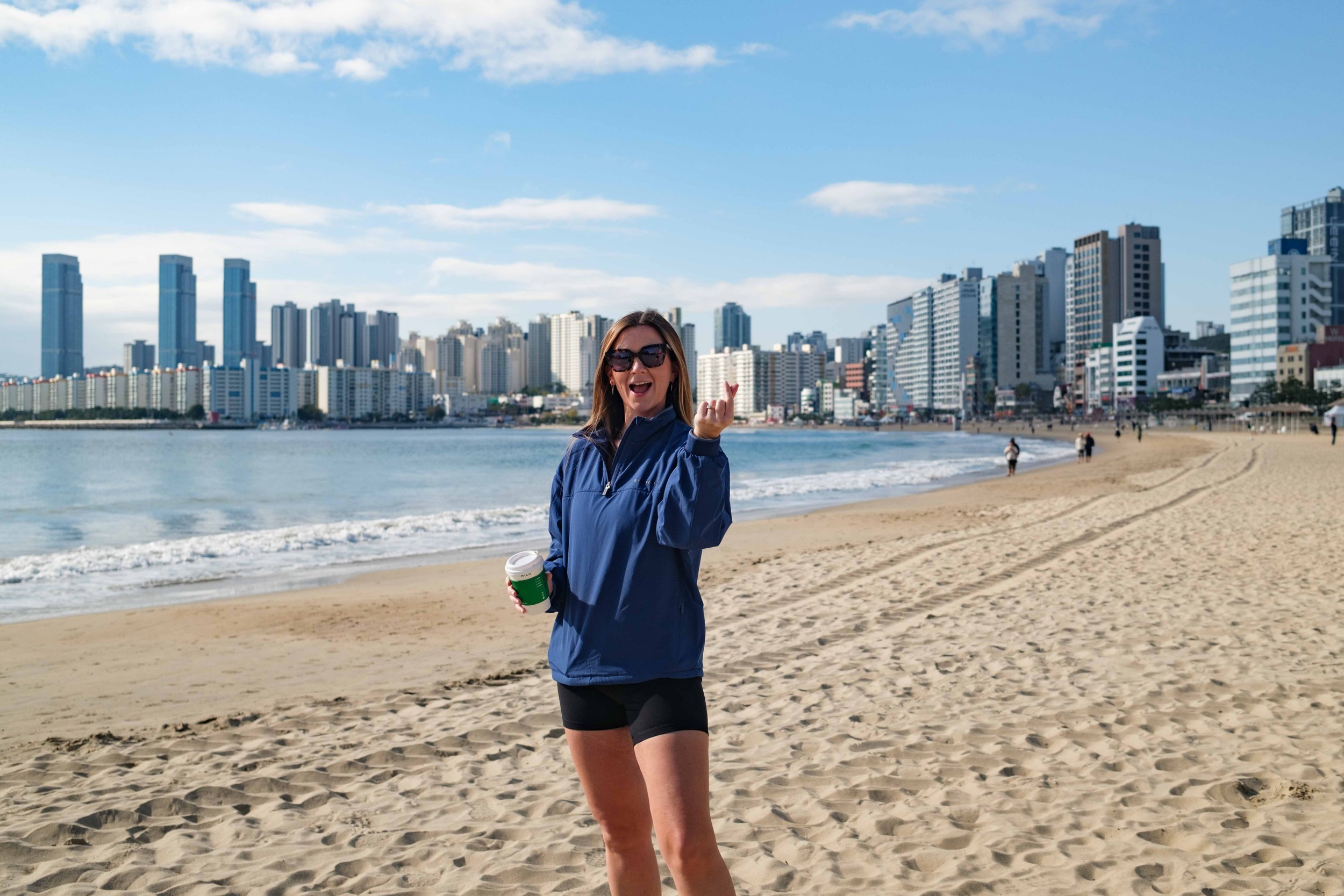
Gwangalli Beach
Being a coastal city, one of the best things to do in Busan is simply to spend time by the sea. We think the beaches are where you should base yourself, especially if you’re going to be visiting Seoul as well during your trip. The two main beaches you’ll want to visit are Gwangalli Beach and Haeundae Beach, each offering a slightly different experience.
Gwangalli Beach
We chose to stay at Gwangalli Beach, which we found to be the perfect base since it’s well-positioned between the coast and the rest of the city. The real highlight here is the Gwangan Bridge, which lights up at night and offers one of the most iconic views in Busan. If you’re visiting on a Saturday, there’s also a drone light show over the water, which draws a big crowd.
Haeundae Beach
Haeundae Beach, on the other hand, is Busan’s most famous stretch of sand. This is where you’ll find the large hotels, holiday resorts and a more classic beach destination feel. It’s busier, more built up, and especially lively during the summer months.
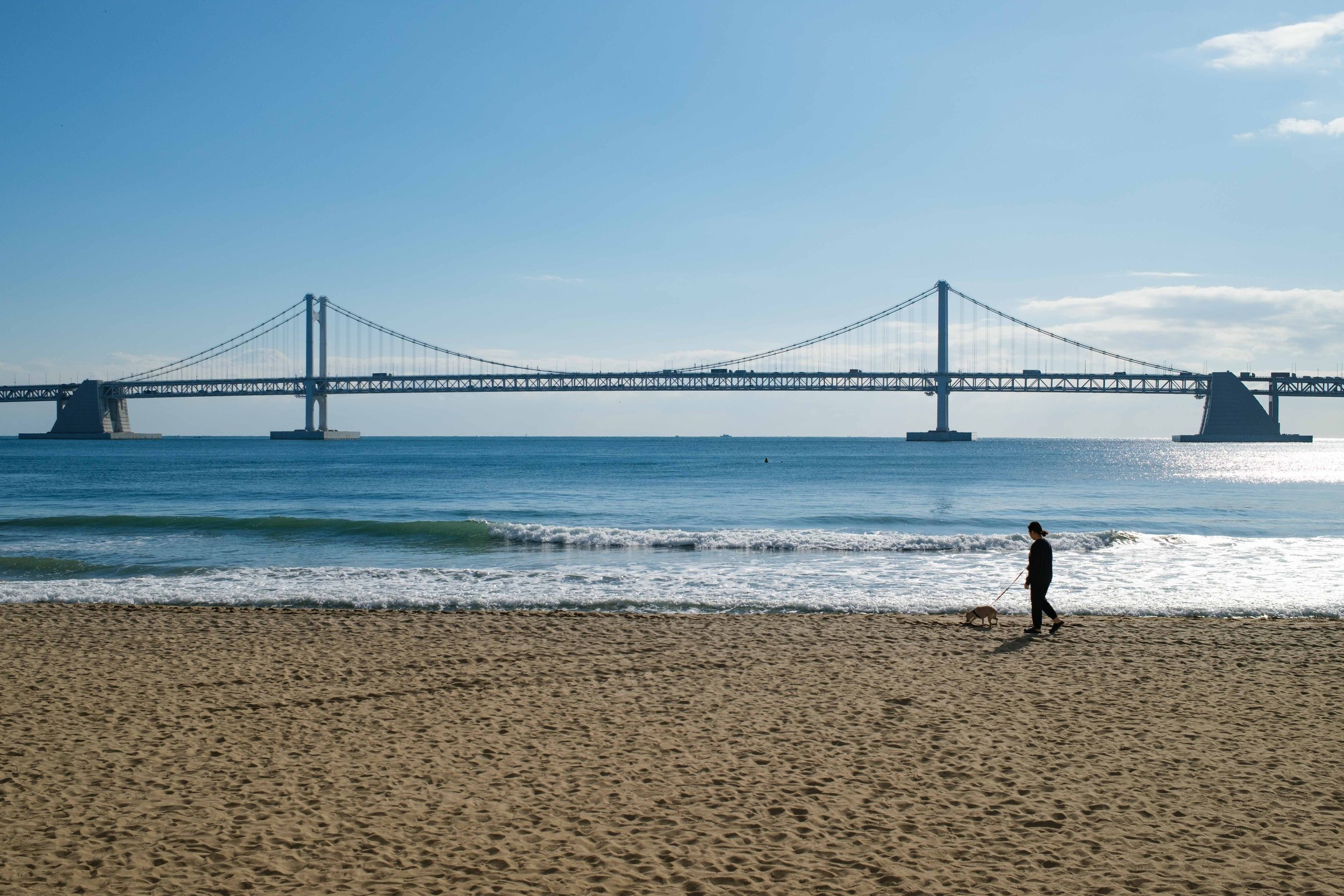
Gwangan Bridge
Both beaches are exceptionally clean and well-maintained, and even if you’re not planning a full beach day, they’re worth visiting for a stroll. You’ll find plenty of cafés, seafood restaurants and small markets dotted along the seafront, making it easy to spend a few relaxed hours just taking it all in.
Visit Jagalchi Fish Market (Busan’s Ultimate Seafood Experience)
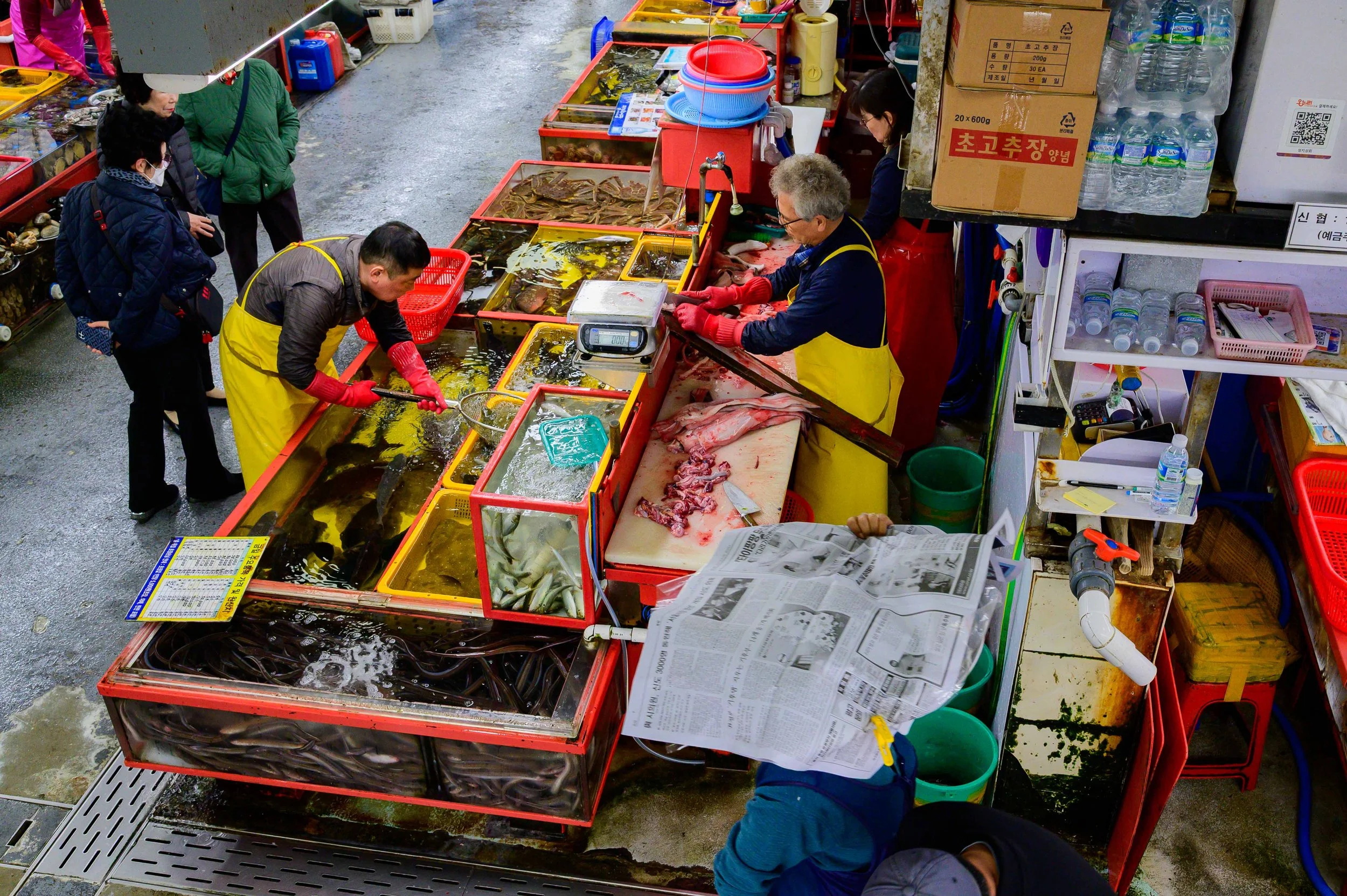
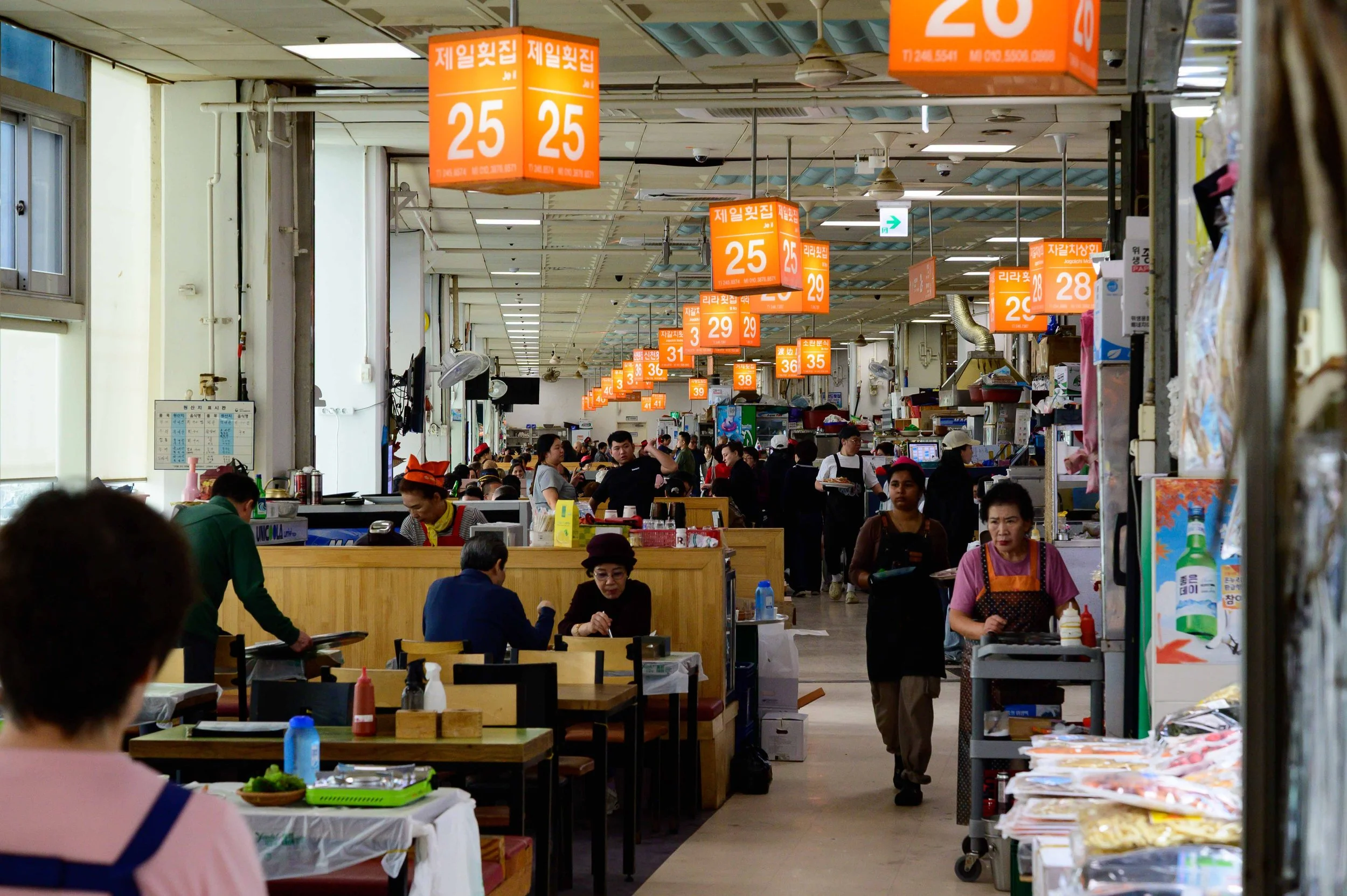
A visit to Jagalchi Fish Market is easily one of the most memorable things you can do in Busan, especially if you love seafood. This is the largest fish market in South Korea, with hundreds of vendors selling everything from live fish to shellfish and more unusual local delicacies.
The way the market works is simple. You wander through the ground floor, where rows of vendors display live seafood in tanks. Once you find a vendor you’re comfortable with, ideally one you can communicate with reasonably well, you choose exactly what you want to eat from their tanks and how you would like your fish prepared.
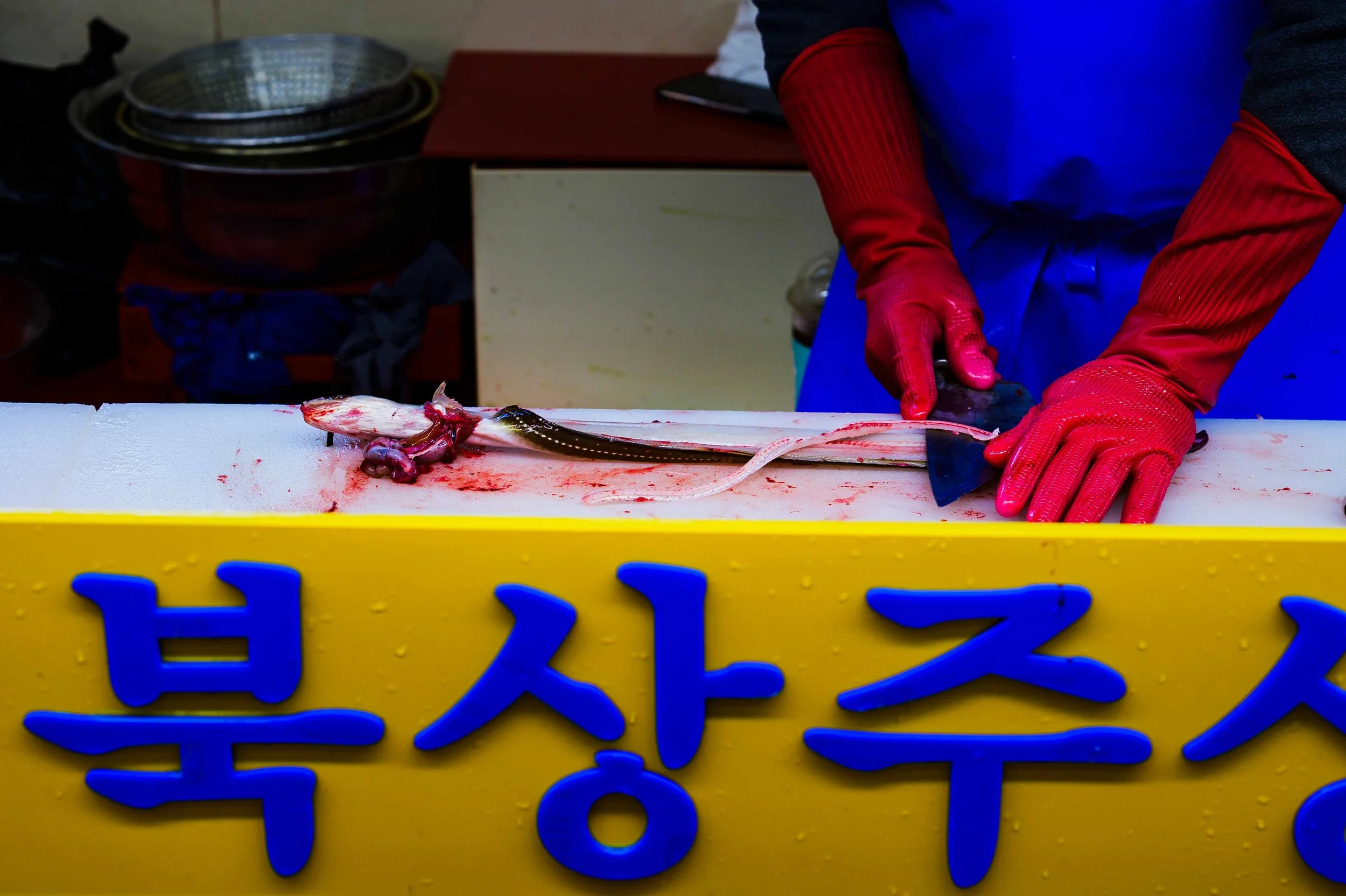
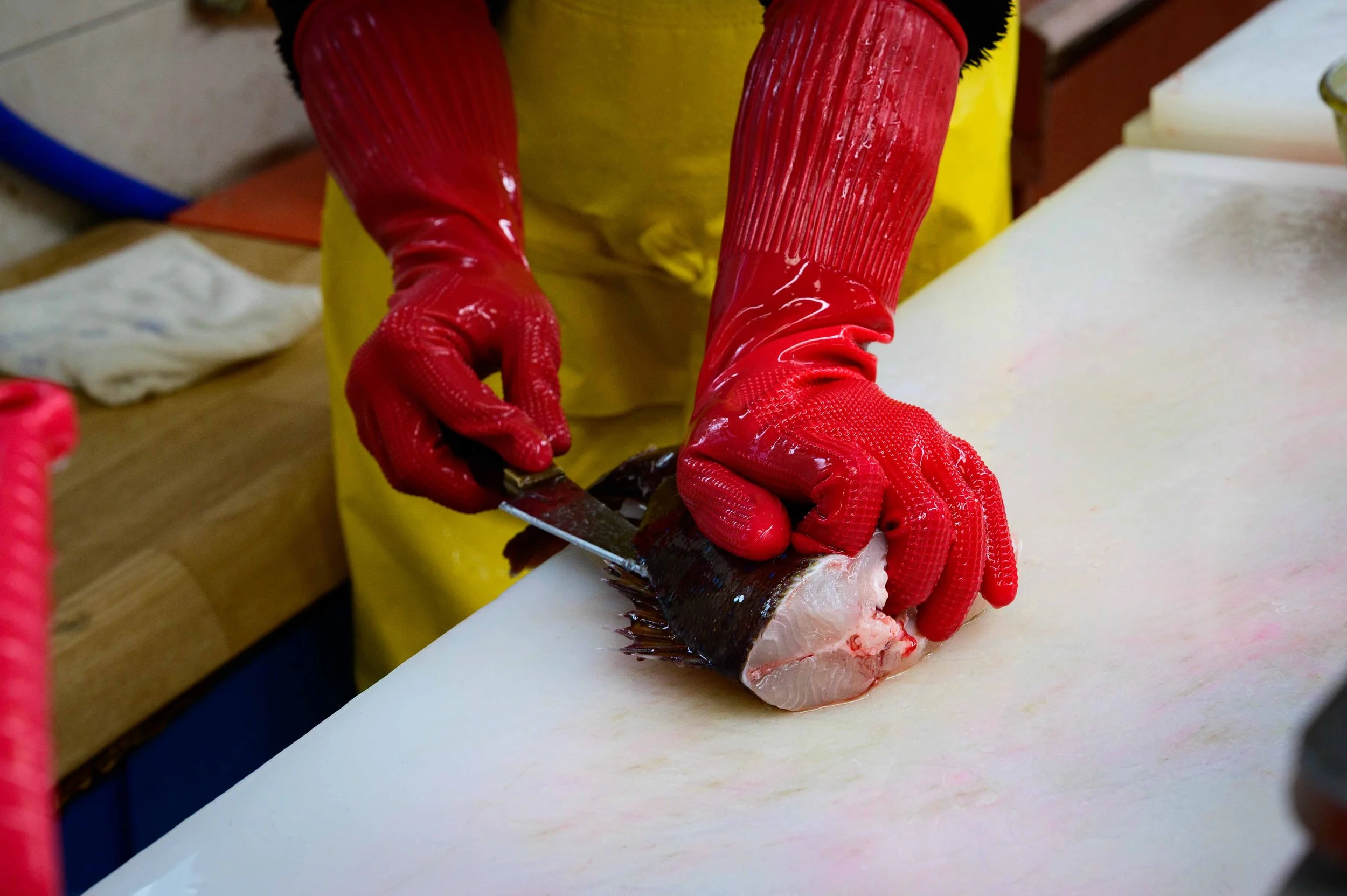
From there, everything happens quickly. The fish is prepared right in front of you, often within minutes, and then sent upstairs to a partner restaurant where you can sit down and eat it properly.
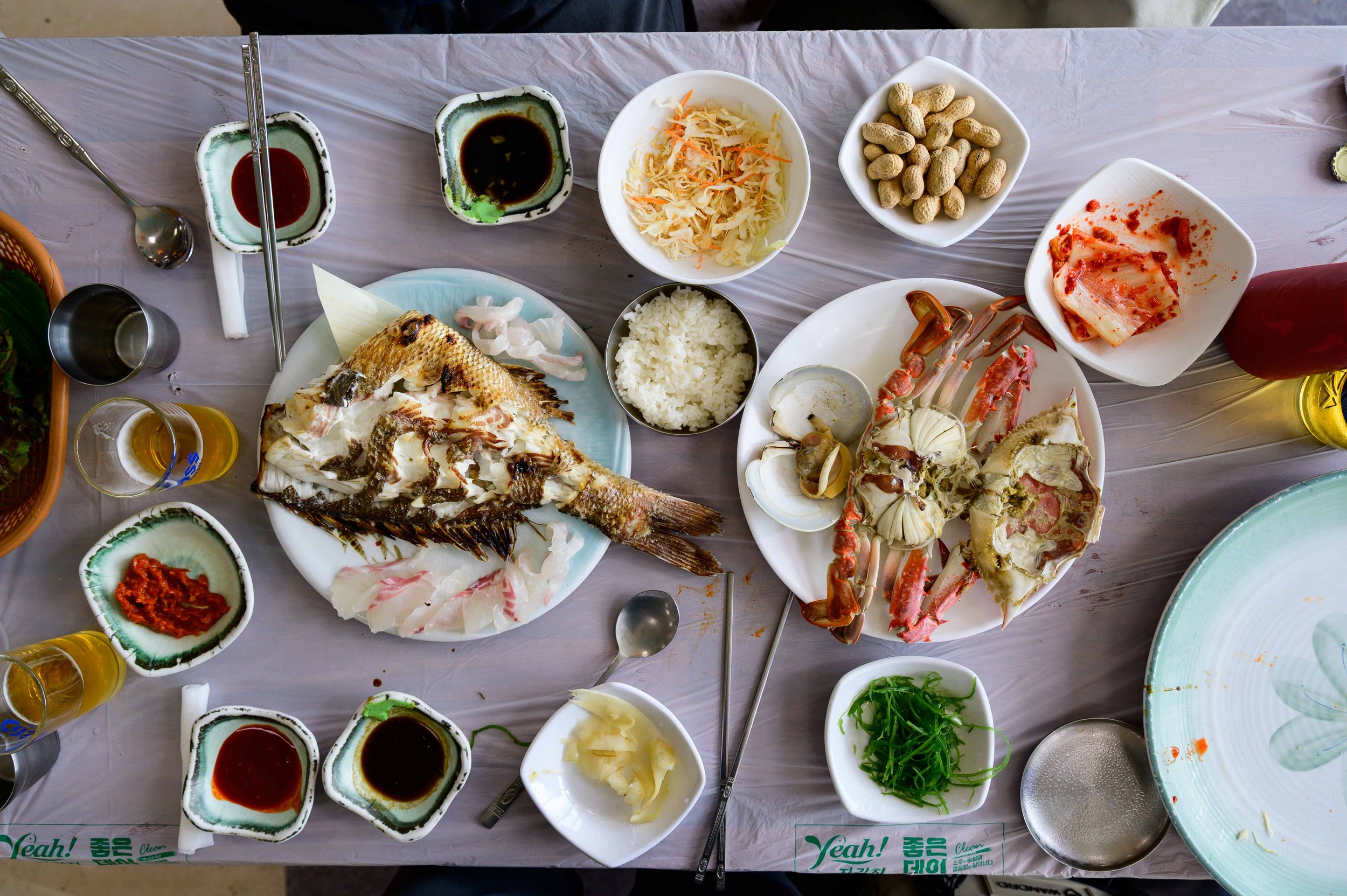
When we visited, we ended up choosing a whole red snapper (2kg). Half of it was prepared as sashimi on the spot, incredibly fresh, clean and delicate, and the other half was sent upstairs to be grilled. We also added a crab to be steamed by the restaurant.
Our Red Snapper
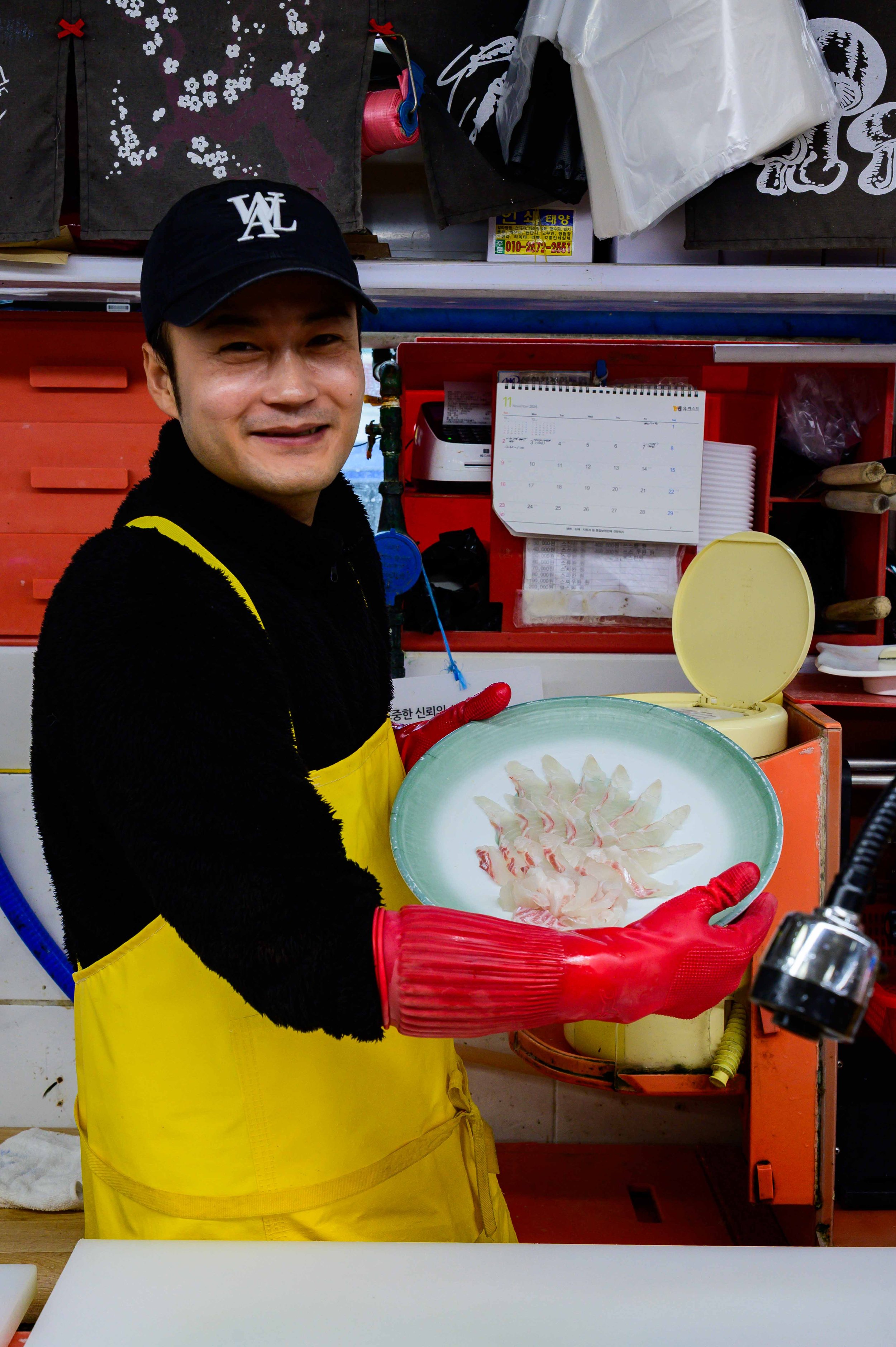
Red Snapper sashimi prepped right there and then
If you’re into cooking, keep an eye out for the knife sharpener who services the vendors’ blades just outside, working from a small cart. It’s a simple setup, but fascinating to watch, especially seeing the tools of the market brought back to life. We’ll share more about him in our Jagalchi Market guide once it’s published.
Visit Cheongsapo (A Quiet Coastal Escape)
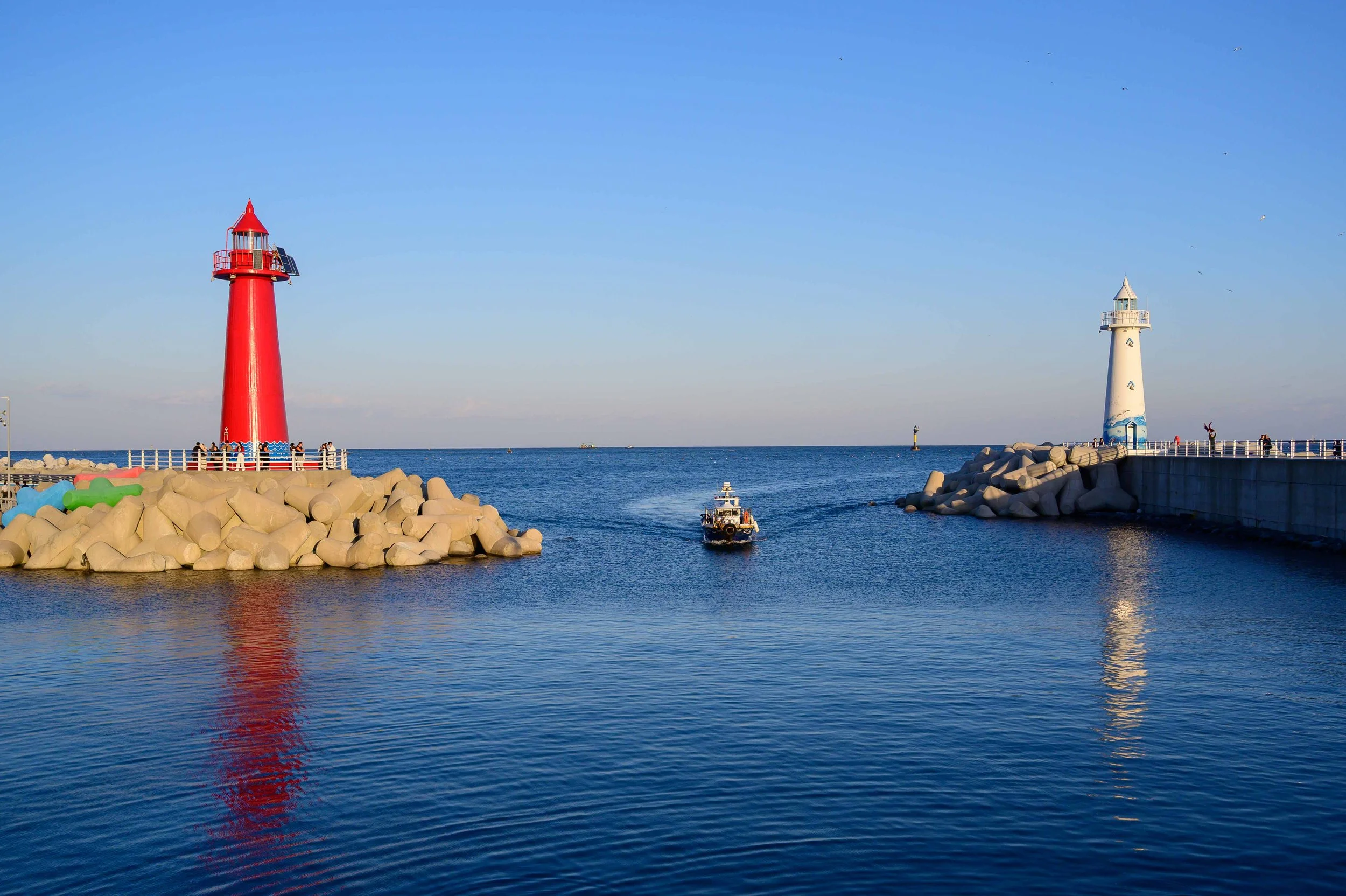
Cheongsapo is a small fishing village along the coast that feels a world away from the busy beaches of Haeundae and Gwangalli. It’s quieter, slower, and well worth visiting if you want to see a different side of Busan.
The area is known for its twin lighthouses, one red and one white, which sit along the rocky coastline and make for some great photography, especially around sunset. There’s also a series of coastal walkways and skywalks nearby, giving you uninterrupted views out over the sea.
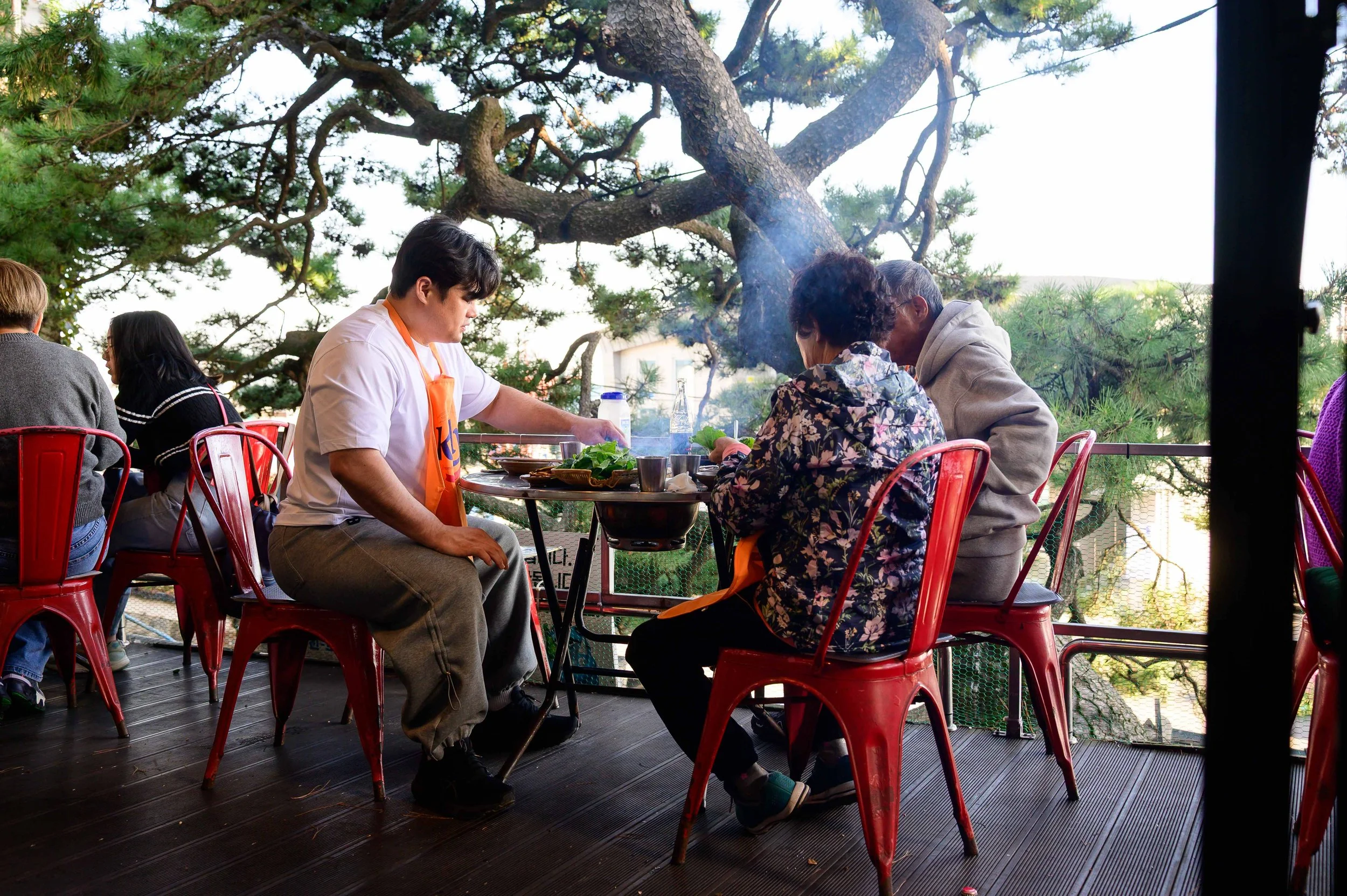
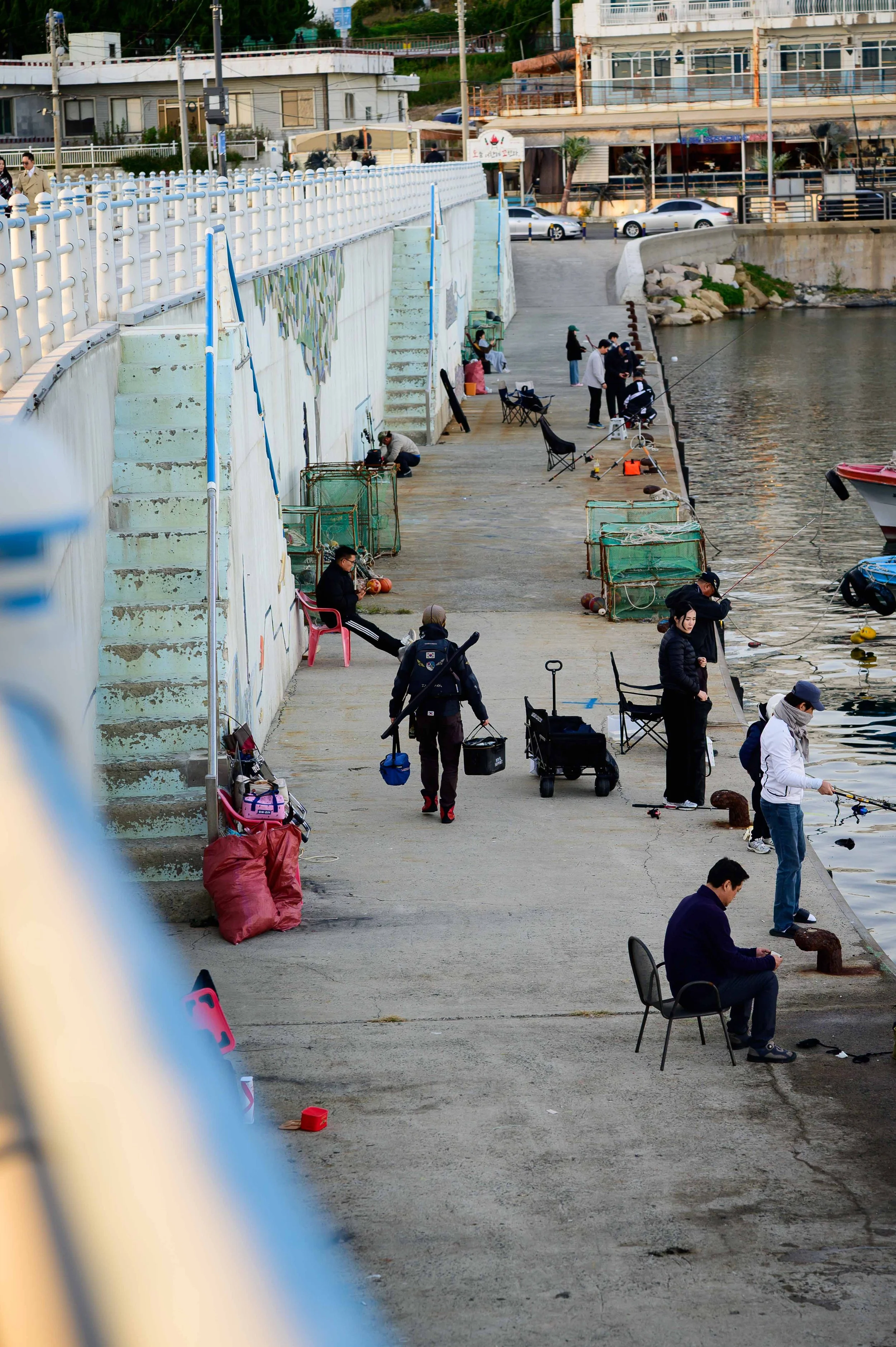
For us, the highlight was the seafood. We stopped at a local seafood restaurant called Suminine, not entirely sure what to expect, and ended up having one of the most memorable meals of the trip. Our waitress more or less took over, selecting dishes and guiding us through the experience, before cooking everything right in front of us on a grill at the table.
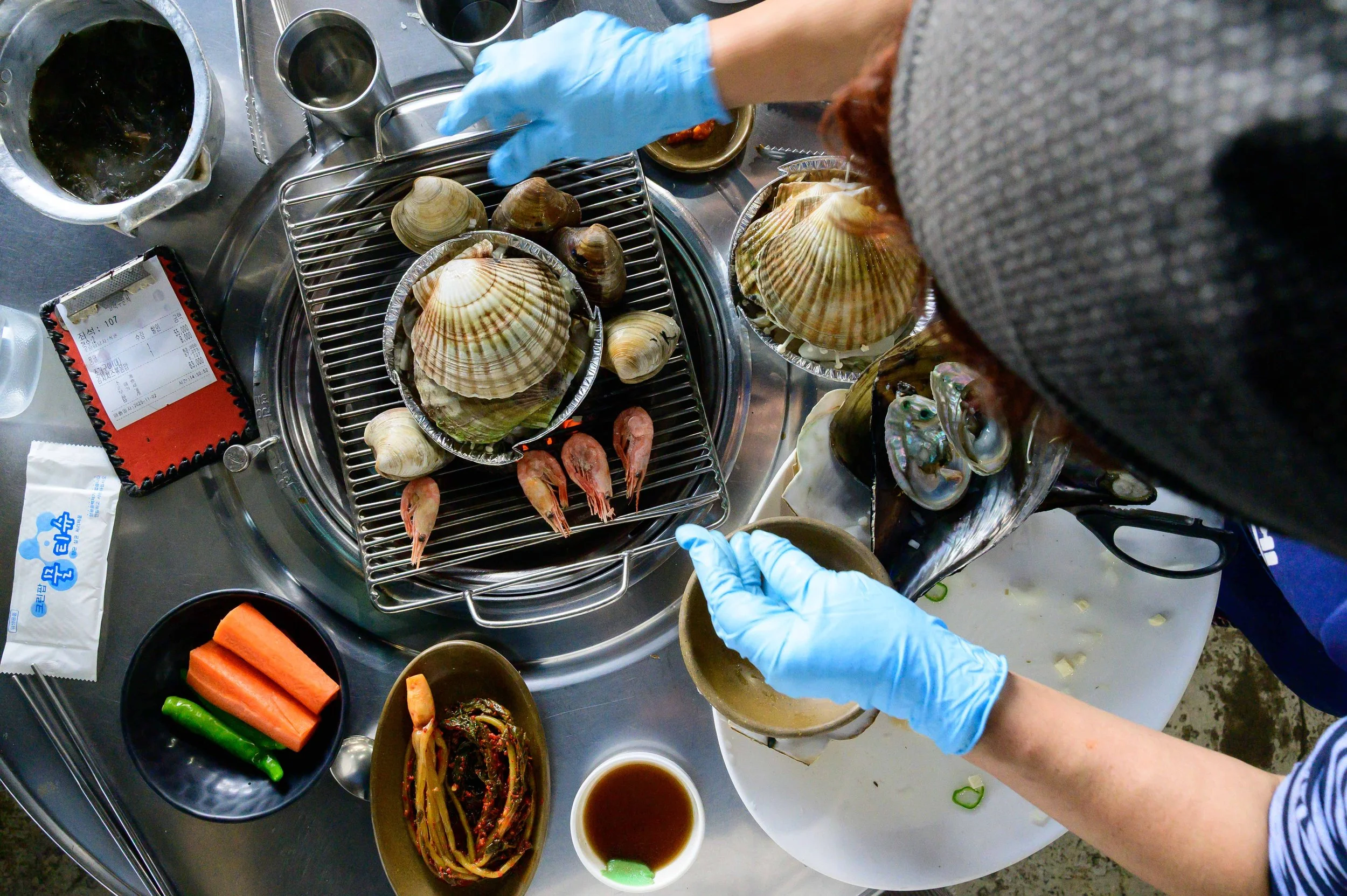
Shellfish dinner at Suminine
What followed was a full shellfish spread, fresh, generous, and completely effortless on our part.
If you’re already visiting the nearby Blueline Park or taking the sky capsules, it’s an easy stop to add in. But even on its own, Cheongsapo is worth the trip for a slower, more local coastal experience.
Ride the Sky Capsules at Haeundae Blueline Park
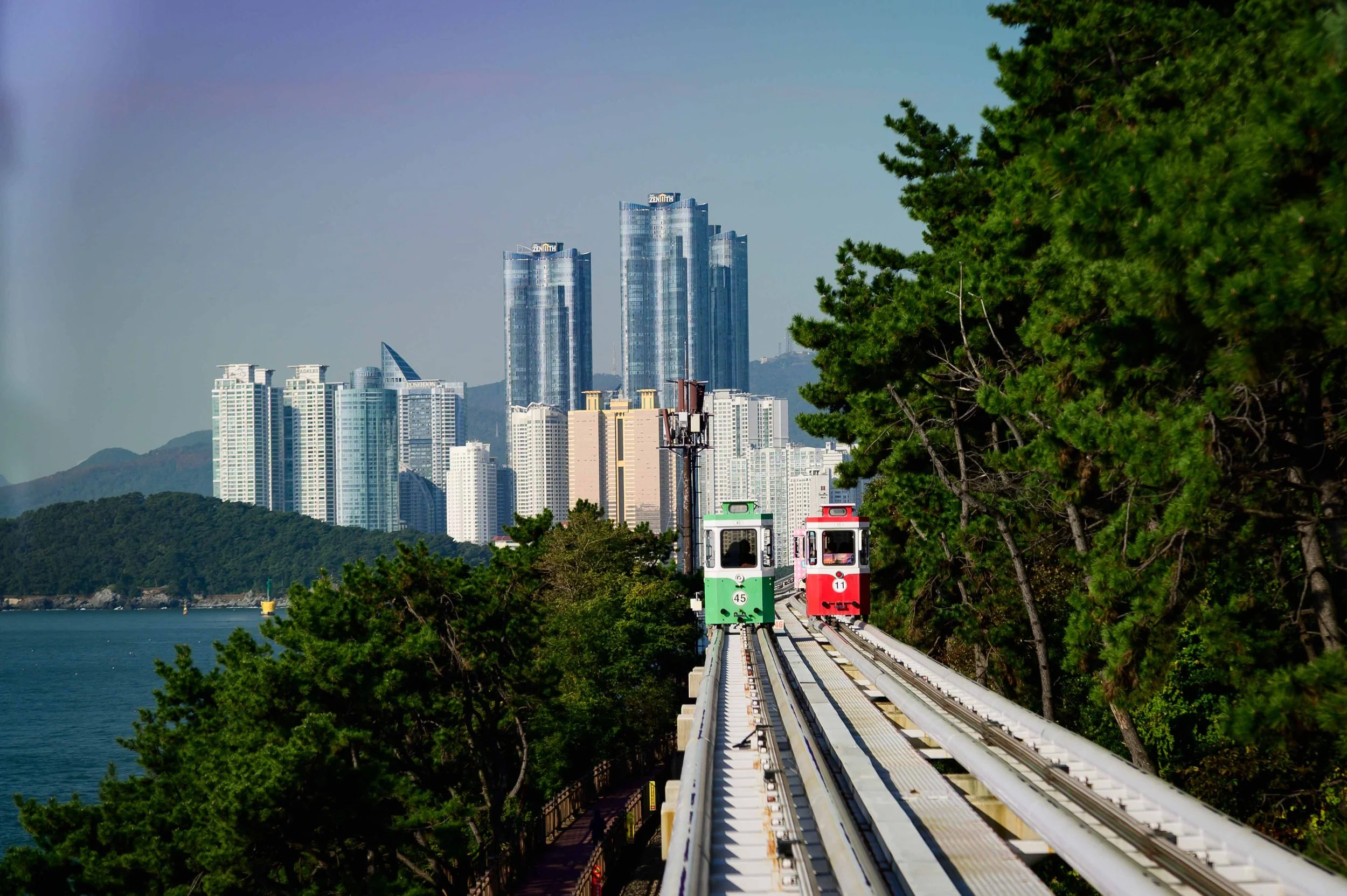
One of the most iconic images you’ll see of Busan is the colourful sky capsules gliding along the coastline, and riding them at Haeundae Blueline Park is one of the most popular things to do in the city.
The sky capsules run between Mipo and Cheongsapo, moving slowly along an elevated track right by the sea. It’s less about getting from A to B and more about the experience, taking in uninterrupted coastal views from your own private capsule.
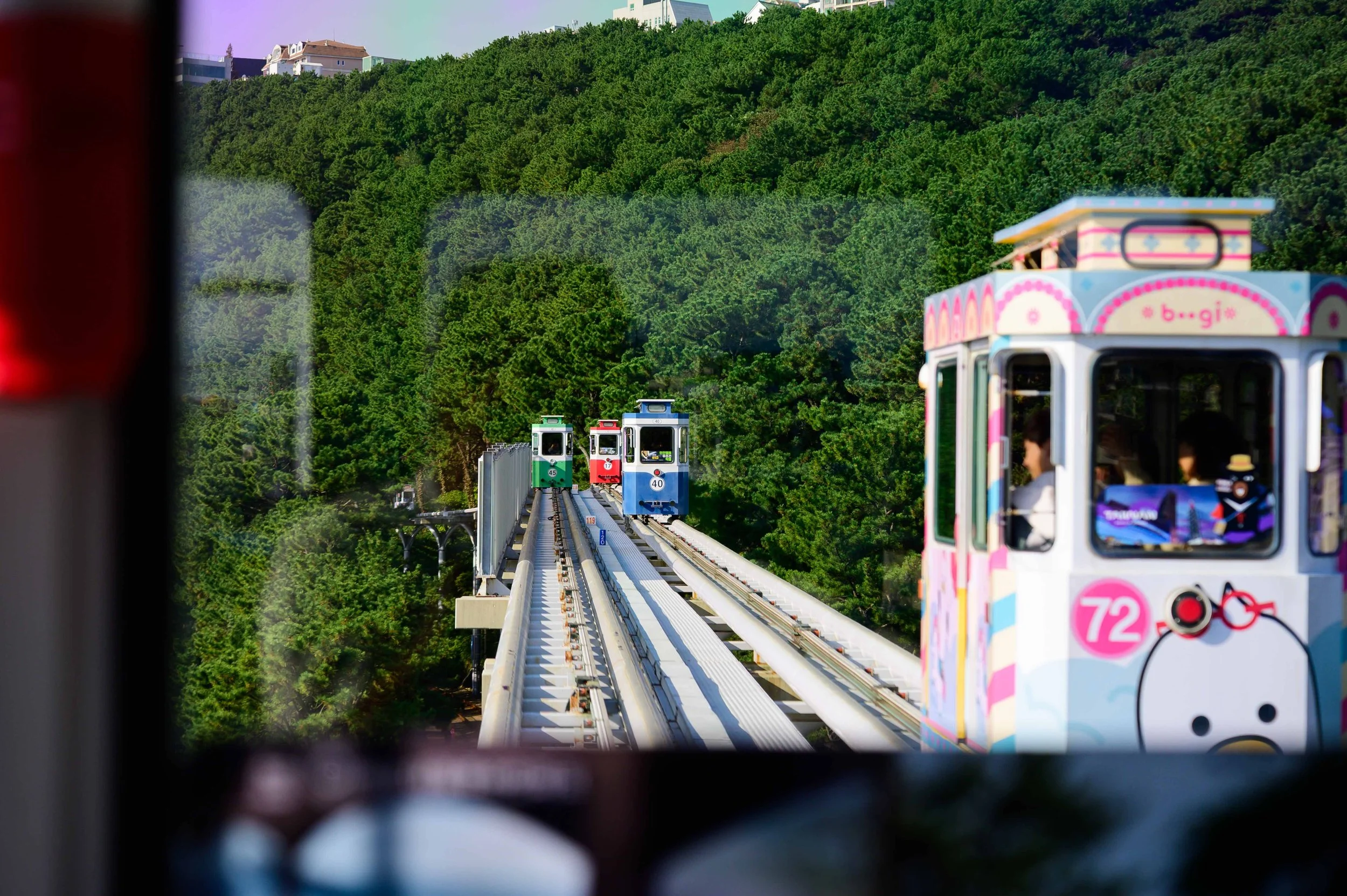
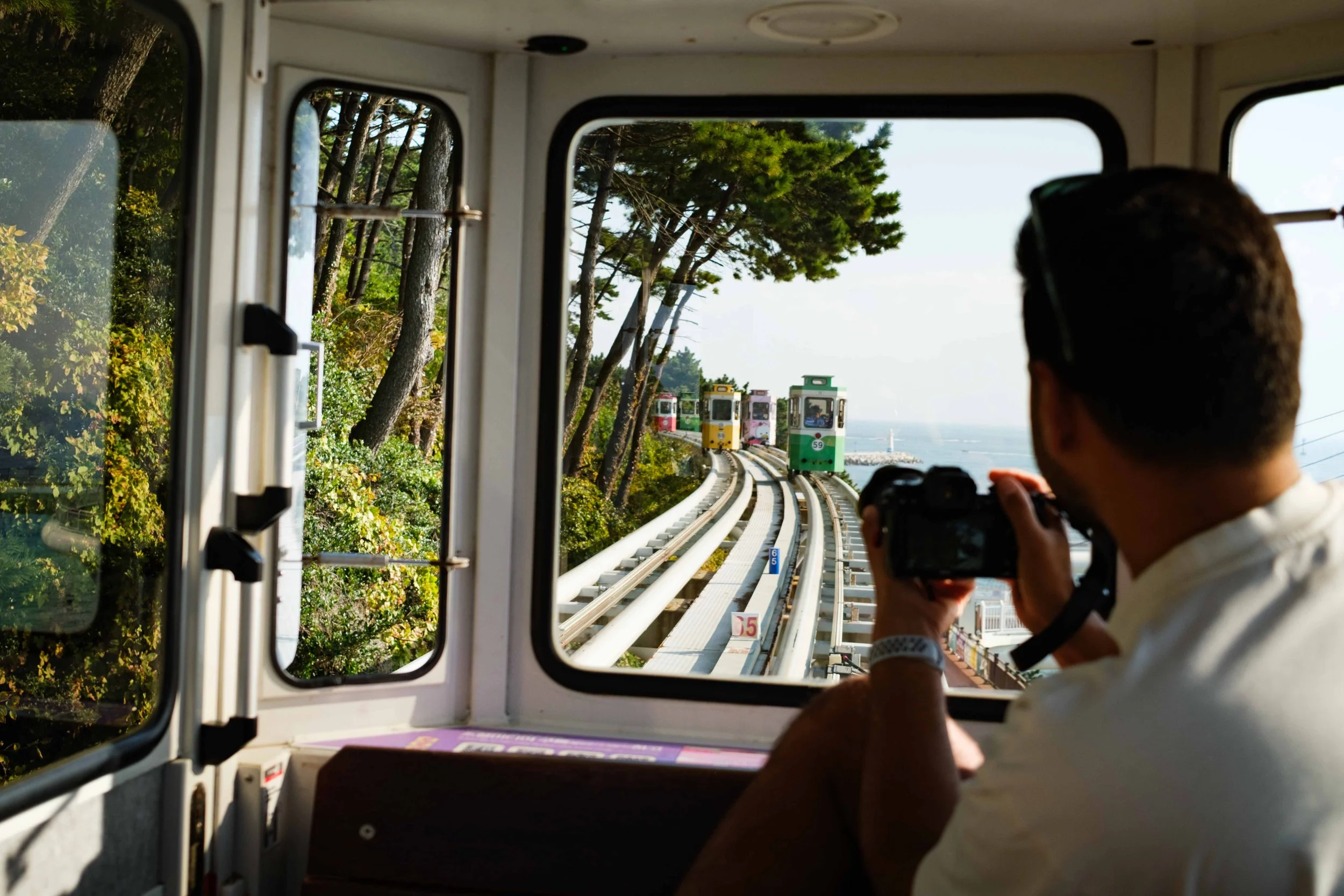
If you’re planning to do this, booking in advance is essential, especially if you want a slot around sunset or sunrise. These are the most in-demand times and tend to sell out a few days before.
There are two main options here. The sky capsules themselves are smaller and more private, ideal if you want a quieter, more scenic ride. Alternatively, there’s a beach train that runs along a longer stretch of the coast and can be a better option if you want to cover more distance.
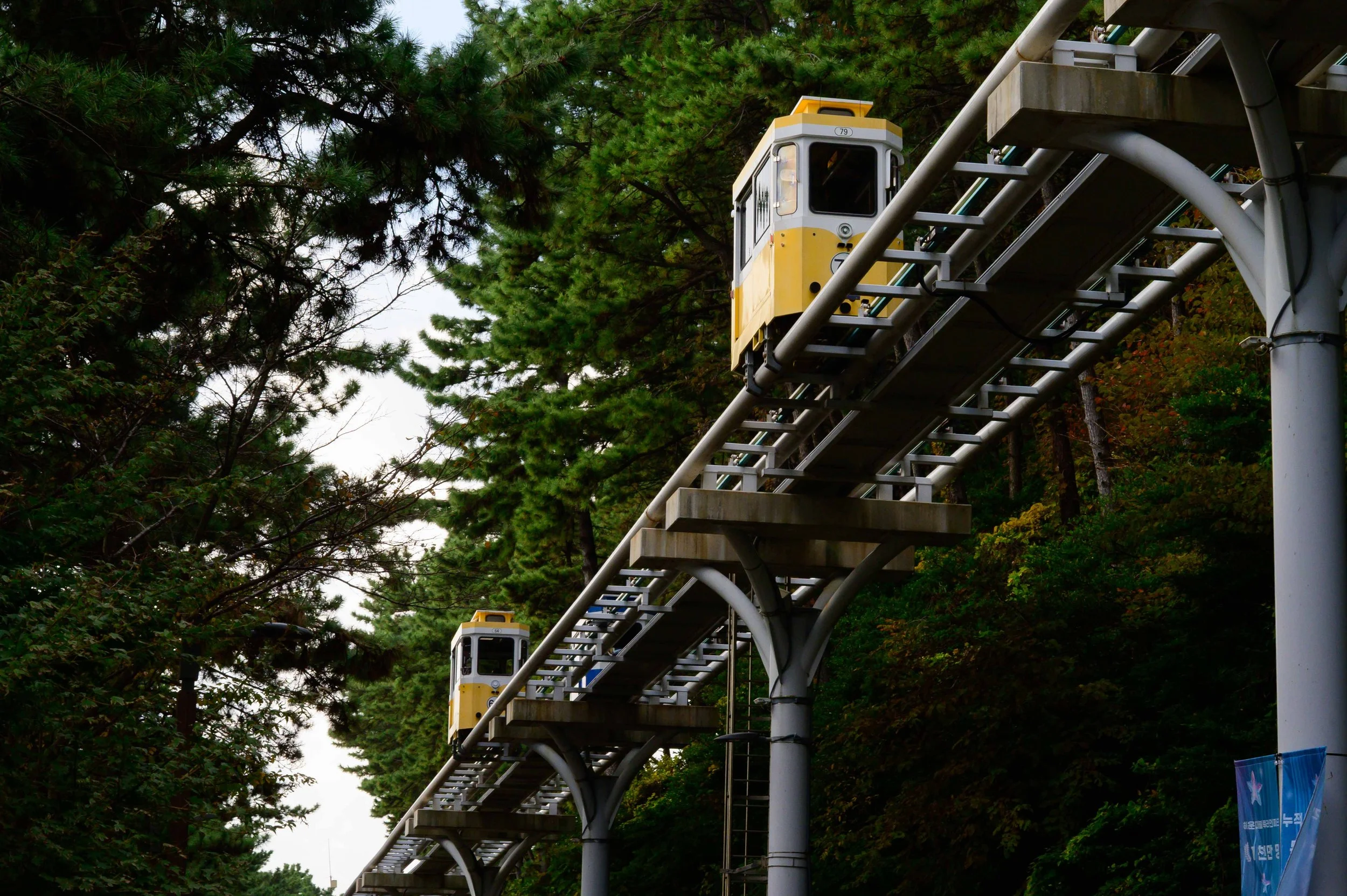
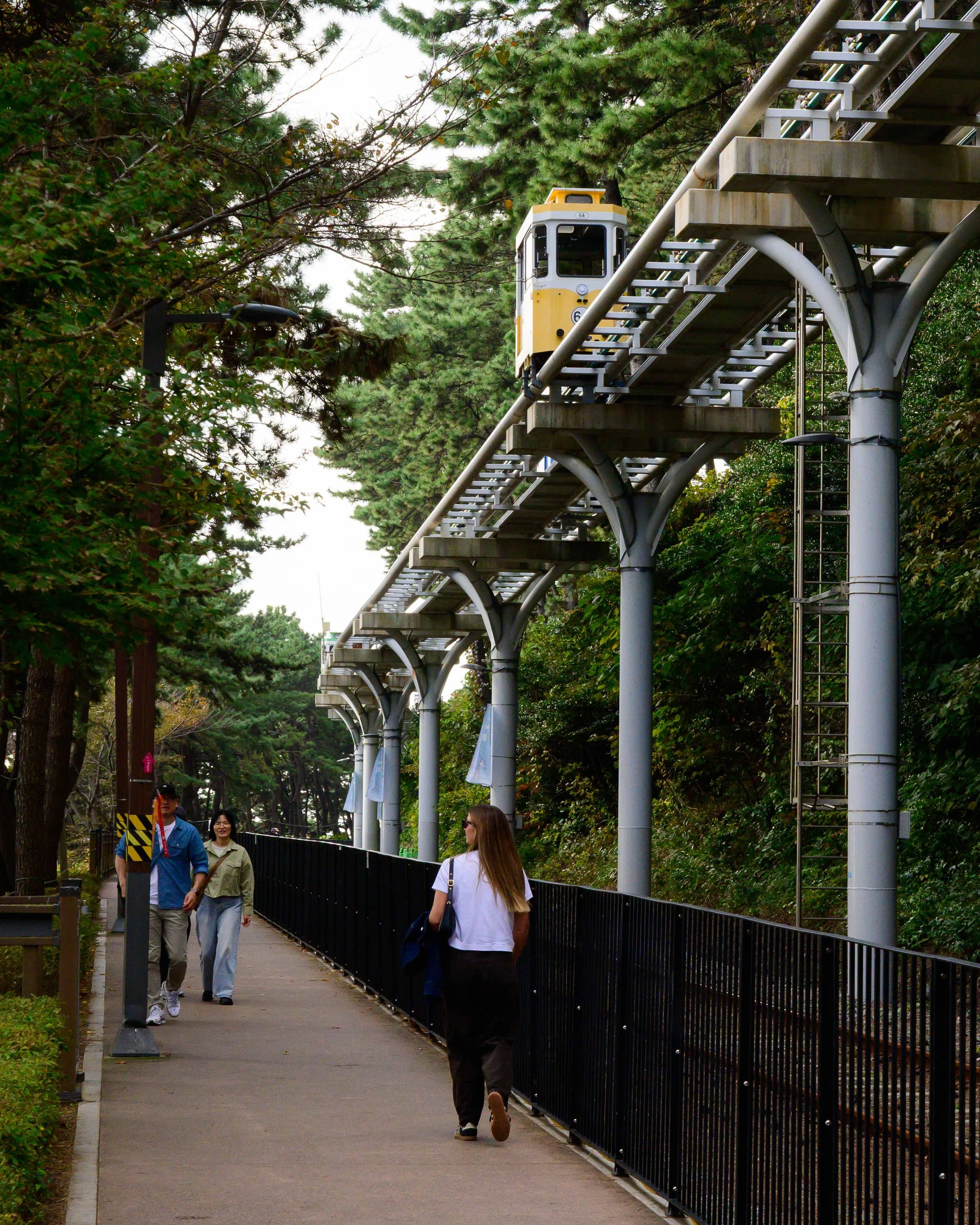
What we’d recommend, and what we did, is combining the two with a walk. Take the sky capsule one way, then walk back along the coastal path. This gives you the best of both worlds: the experience of the ride and the freedom to take your time, stop for photos, and really enjoy the coastline at your own pace.
Even if you don’t ride the capsules, it’s still worth coming here just to see them. Watching the bright colours move along the tracks against the backdrop of the sea is one of those classic Busan scenes you’ll recognise instantly.
Walk Busan’s Skywalks & Coastal Observatories
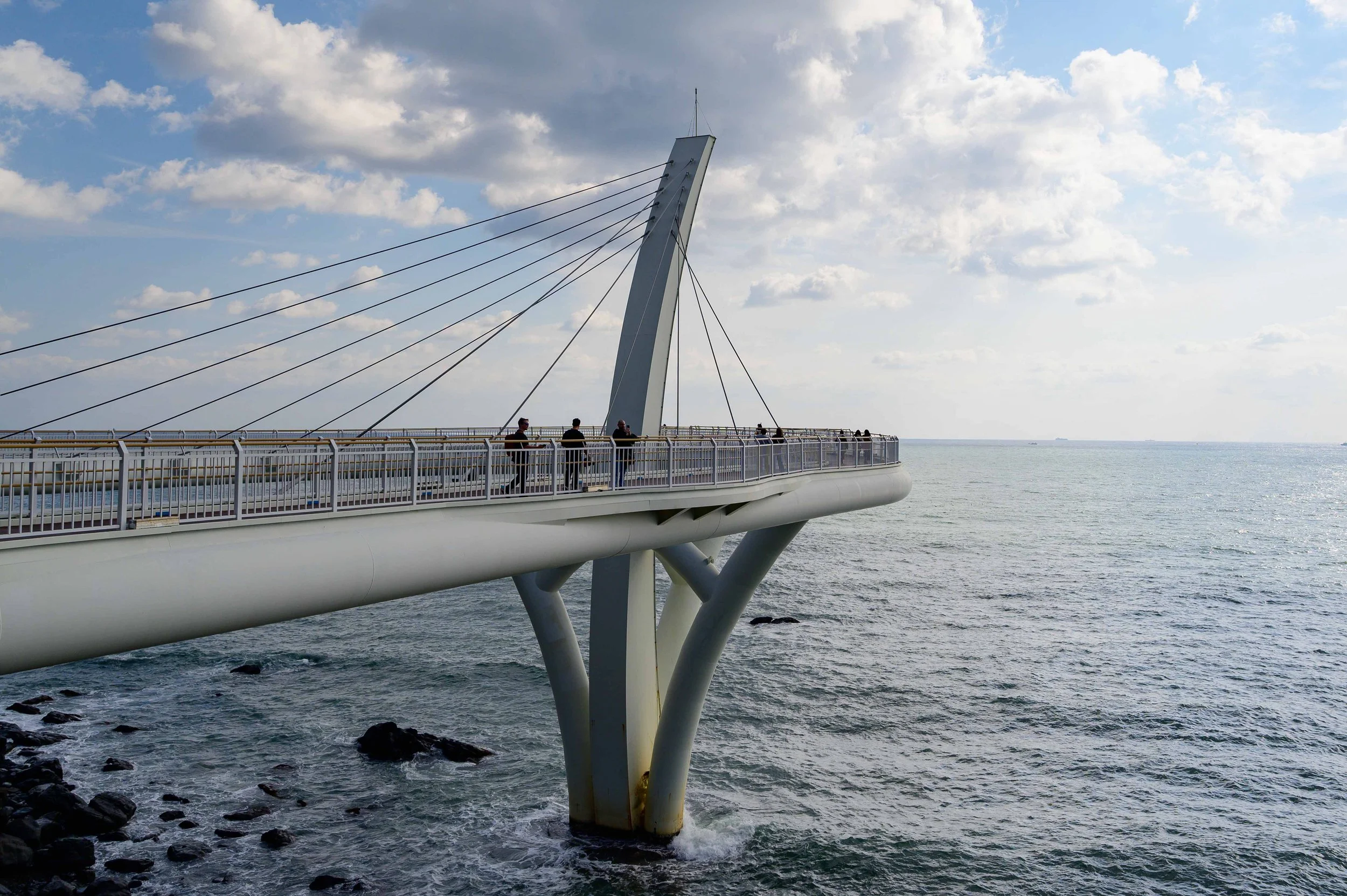
One thing you’ll quickly notice in Busan is its obsession with skywalks and coastal viewpoints. All along the coastline, you’ll find glass platforms, observatories and walkways that extend out over the sea, designed to give you uninterrupted views of the shoreline.
These aren’t just one-off attractions either; they’re scattered across the city, and each one offers a slightly different perspective depending on where you are.
A good example is the Haewol Observatory, which gives you a panoramic view along the coast and is an easy addition if you’re already exploring nearby areas like Cheongsapo or Haeundae. Standing out over the water with nothing but glass beneath your feet is a surprisingly immersive way to take in the scenery.
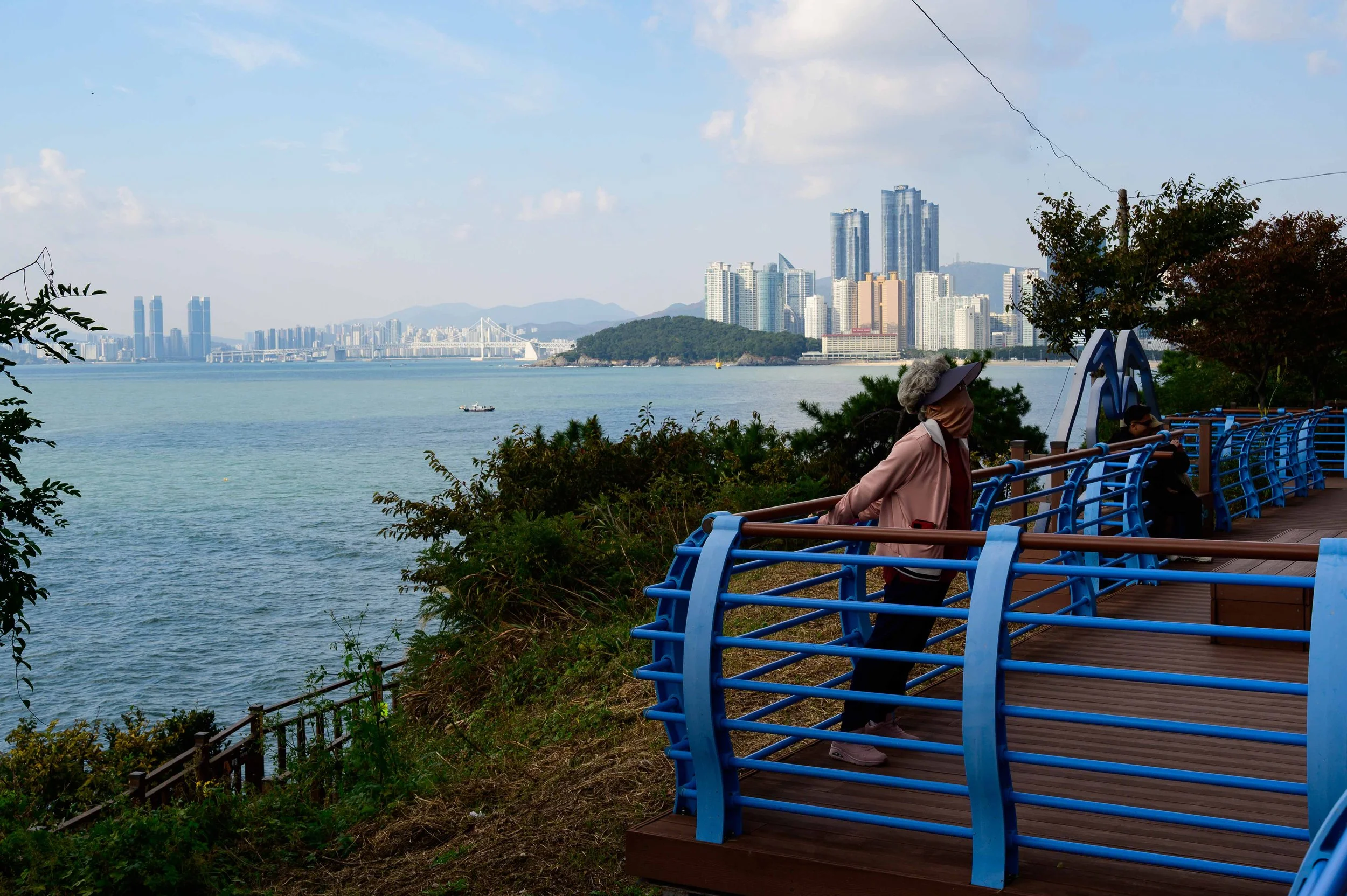
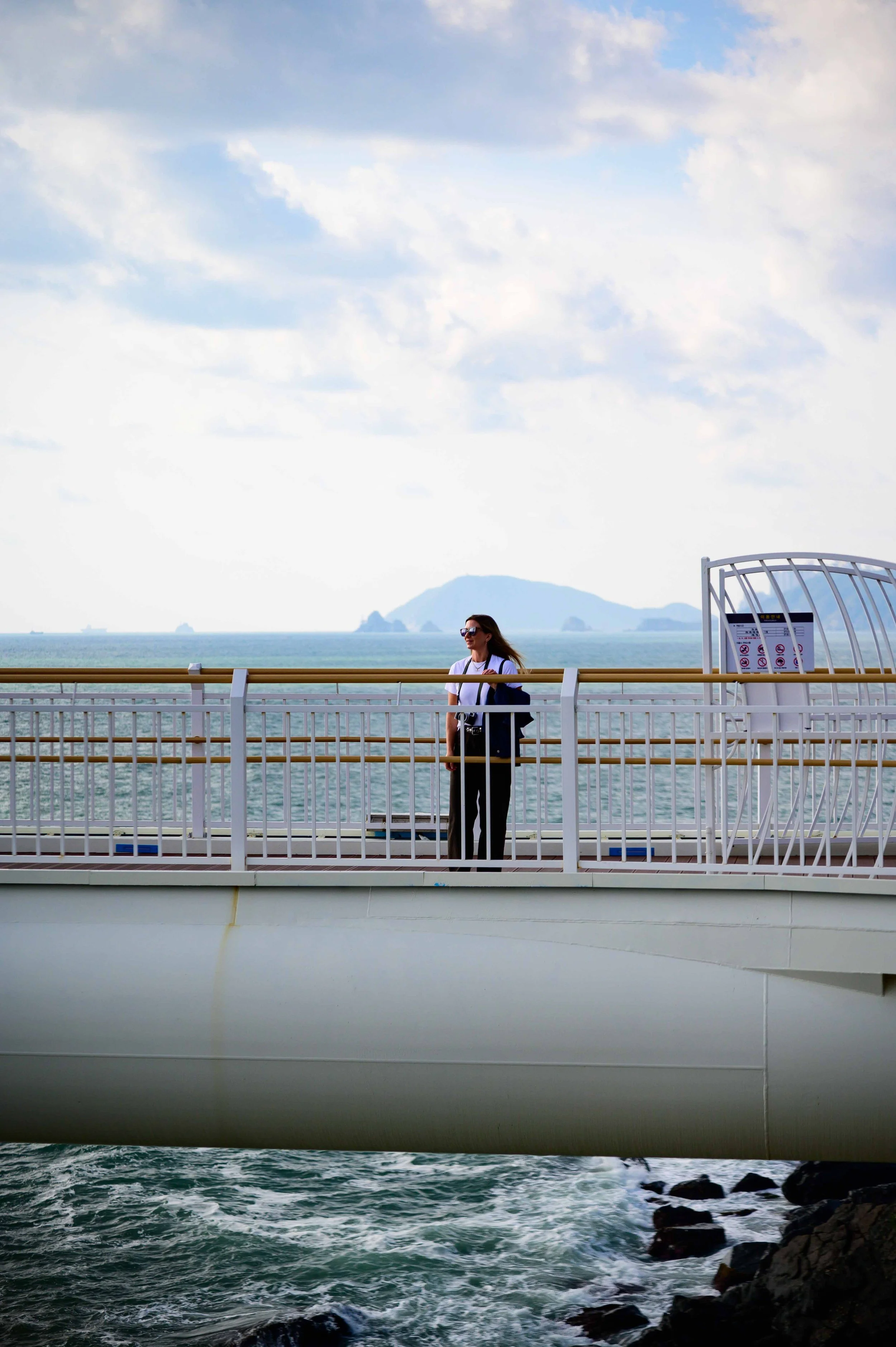
You’ll also come across smaller skywalks dotted along the coastal paths, particularly around Cheongsapo, which can be visited as part of a longer walk. These are often less crowded and feel a bit more natural, blending into the coastline rather than standing out as major attractions.
If you’re exploring Busan’s coastline properly, you’ll likely end up visiting a few of these without even planning to. They’re a simple but effective way to break up a walk, take in the views, and appreciate just how dramatic this part of South Korea’s coastline really is.
It’s not something you necessarily need to go out of your way for, but it’s definitely worth building into your route whenever you’re by the sea.
Try Surfing, Paddleboarding & Watersports
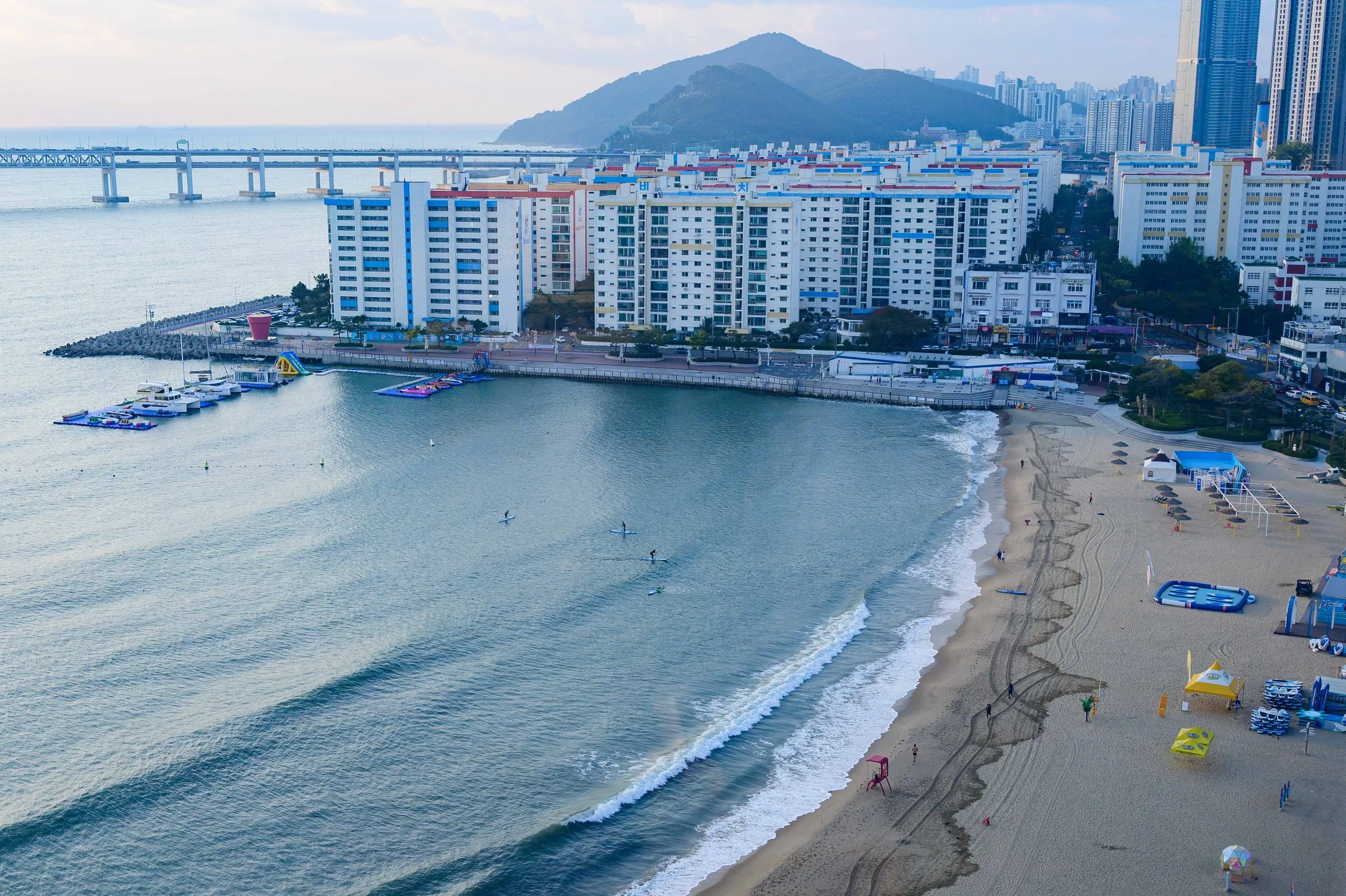
If you’re visiting in the warmer months, Busan is also a great place to get out on the water. Beaches like Haeundae and Gwangalli offer a range of activities including paddleboarding, kayaking and jet skiing, while nearby Songjeong Beach is known as one of the best spots in the area for surfing, particularly for beginners.
You’ll find several surf schools and rental shops along the beach, making it easy to try even if you’ve never done it before. Conditions vary depending on the season, but on a good day, it’s a fun way to experience a different side of Busan beyond just walking the coastline.
Wander Through Bosu Book Street
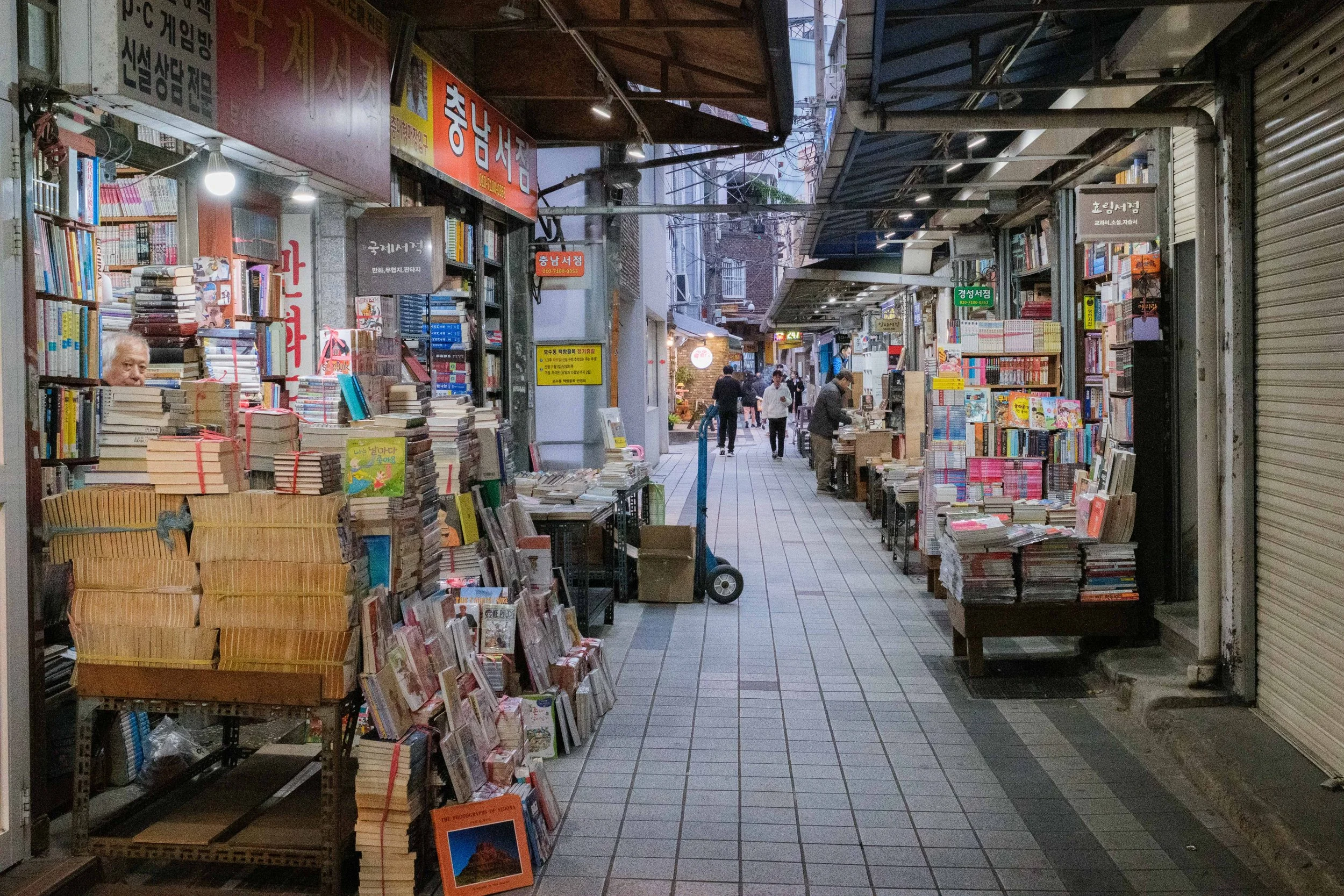
Tucked away near the busy shopping areas of Nampo-dong, Bosu Book Street offers something completely different to the rest of the city.
This is a small network of narrow alleyways lined with independent bookshops, many of which specialise in second-hand and vintage titles. You’ll also find stores selling comics, old magazines, rare finds and the occasional antique, giving the whole area a slightly nostalgic, time-warp feel.
Relax at Spa Land (A Proper Korean Spa Experience)
We weren’t quite sure what to expect from Spa Land Centum City before going. On paper, it sounds like it could be a slightly touristy or gimmicky experience, but in reality, it turned out to be one of the highlights of our time in Busan. (We went phone-free to relax, so we don’t have any pictures to show you.
Spa Land is a modern Korean jjimjilbang, a large multi-level spa designed for relaxation, and it’s done incredibly well.
There are two main sections to understand. The first is the bathhouse area, which is gender-separated and where you’ll find a range of hot and cold pools, steam rooms and different bathing experiences. It’s worth noting that this section is fully nude, which can feel unfamiliar at first, but is completely normal in Korea.
The second is the main shared area, and this is where you’ll likely spend most of your time. Spread across several floors, it’s filled with different themed sauna rooms, each with varying temperatures and materials, from salt rooms to clay and charcoal saunas. You get given a set of pyjamas and slippers to wear in this area.
Beyond that, there are relaxation spaces with reclining chairs and TVs, quiet napping areas, massage chairs, and even outdoor sections with foot baths. It’s the kind of place where you can easily lose track of time.
Entry gives you around four hours, and we ended up using every minute of it. If anything, we could have stayed longer. There’s also a restaurant and a ramen café inside, which we’d highly recommend trying. It’s a great way to break up the experience without having to leave.
What makes Spa Land stand out is that it doesn’t feel like a one-off attraction; it feels like a genuine part of Korean culture. It’s something locals do regularly, and experiencing it gives you a different perspective on daily life in Korea.
Visit Shinsegae Department Store, Centum City
Shinsegae Centum City is recognised as one of the largest department stores in the world, and once you step inside, it’s easy to see why. The space is vast, with multiple floors dedicated to everything from luxury brands and Korean fashion to beauty, homeware and electronics. Even if you’re not planning to shop, it’s worth visiting just to see the scale of it.
One of the highlights is the food hall, which is typically excellent in Korea. You’ll find a wide range of options here, from quick bites to more refined offerings, making it a good stop if you’re in the area and want something easy but high-quality.
What makes this place particularly useful is its location. It’s directly connected to Spa Land Centum City, so it’s very easy to combine the two. You can spend some time browsing or grabbing food before heading into the spa, or vice versa.
Momos Coffee (One of the Best Coffee Experiences in Korea)
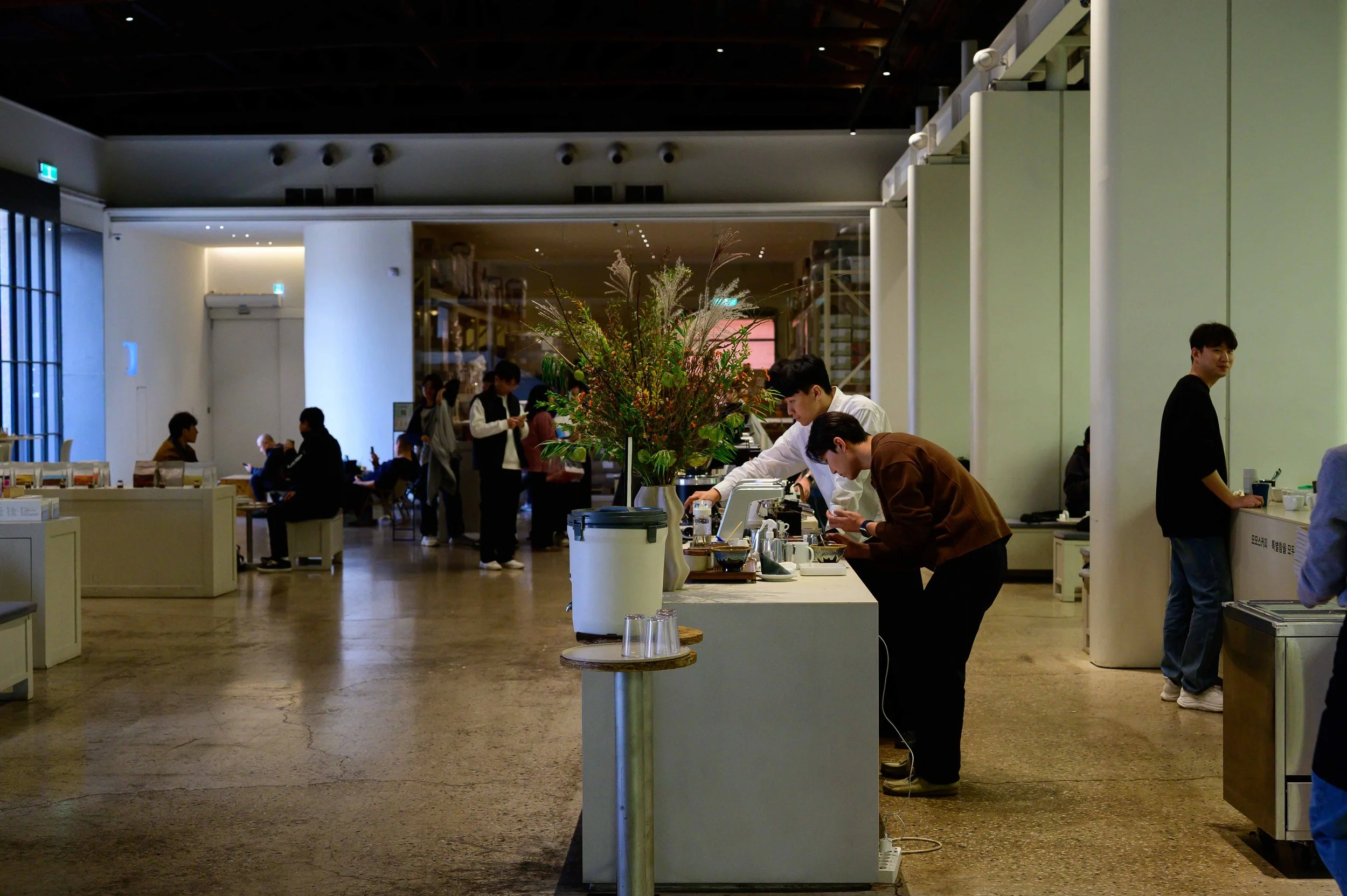
If you’re even remotely interested in coffee, a visit to Momos Coffee is essential.
Momo’s is one of the most respected coffee spots in South Korea, with multiple awards to its name, and after visiting, it’s easy to see why. We went to their original location and roastery near the harbour. The space is calm, minimal and thoughtfully designed, letting the coffee take centre stage.
What really stood out was how seriously they take flavour. This isn’t a place where you just order a flat white and move on. Their menu is built around carefully sourced beans, precise brewing methods, and most interestingly, pairing flavoured espressos with specific pastries designed to complement each bean.
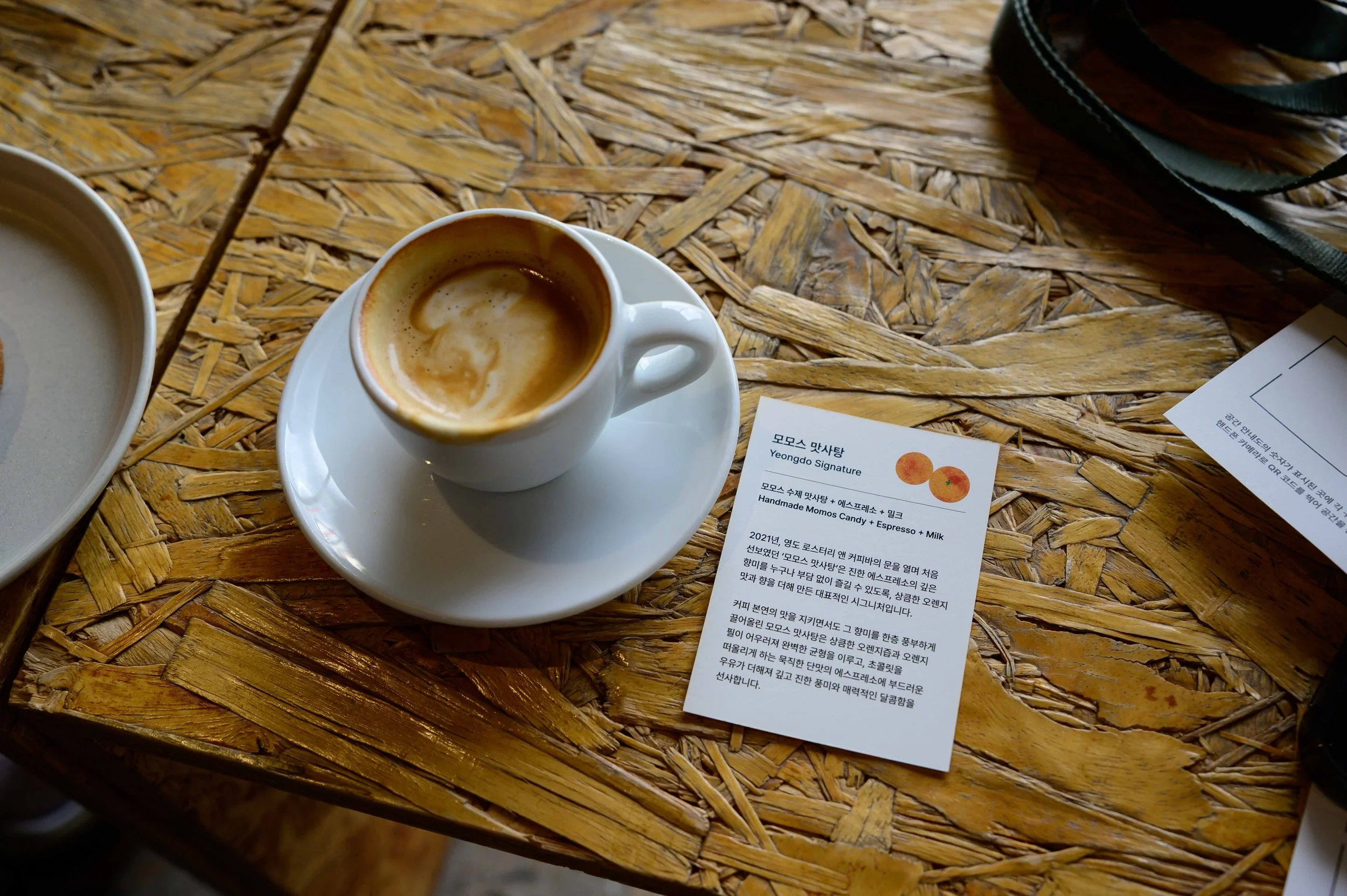
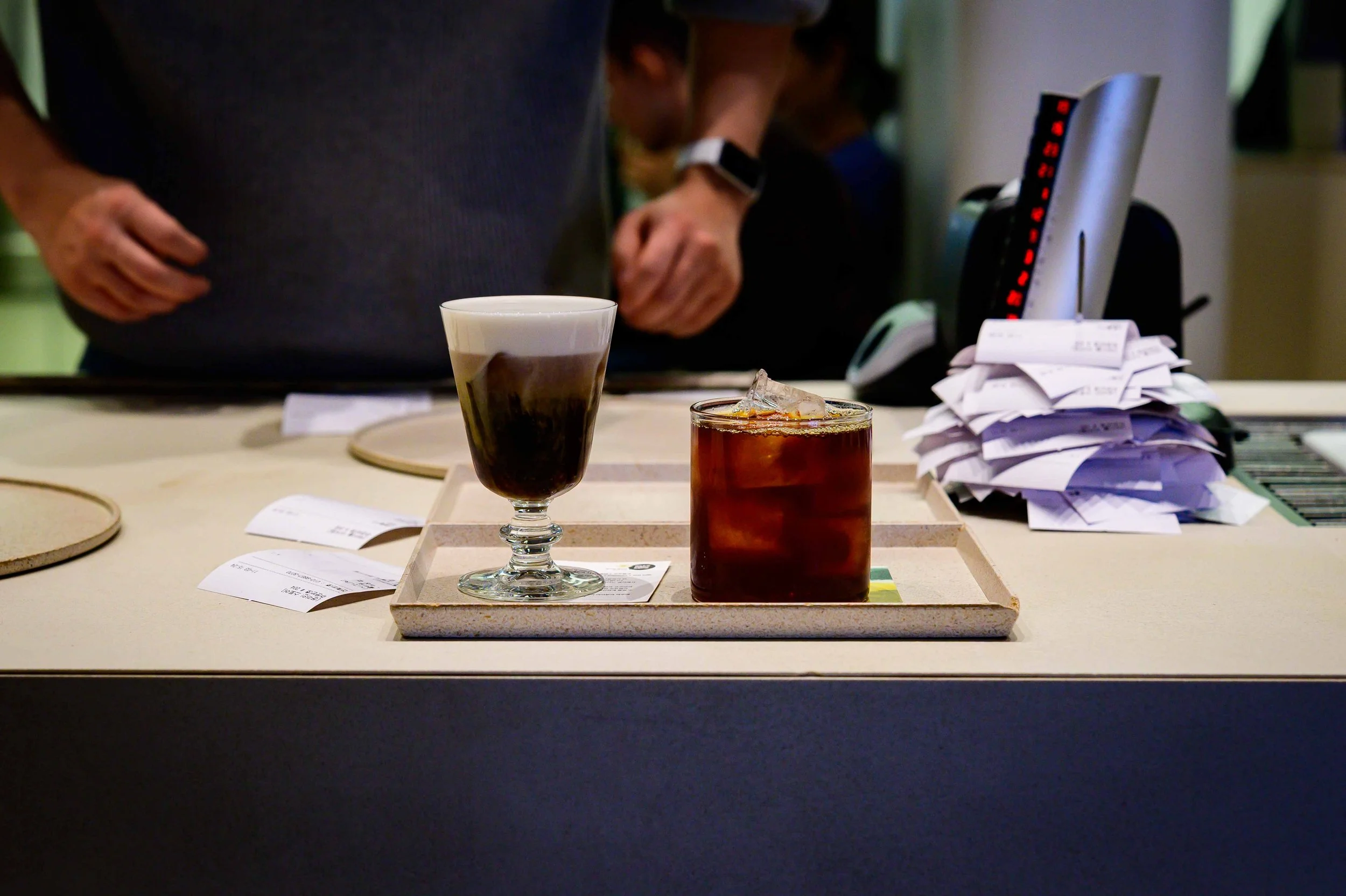
The coffee itself was exceptional, incredibly smooth, balanced, and clean. Their espresso was one of the best we’ve had, and the signature drinks were creative without feeling overdone. For us, this was easily one of the best coffee experiences we’ve had anywhere, not just in Busan.
Explore Jeonpo Café Street
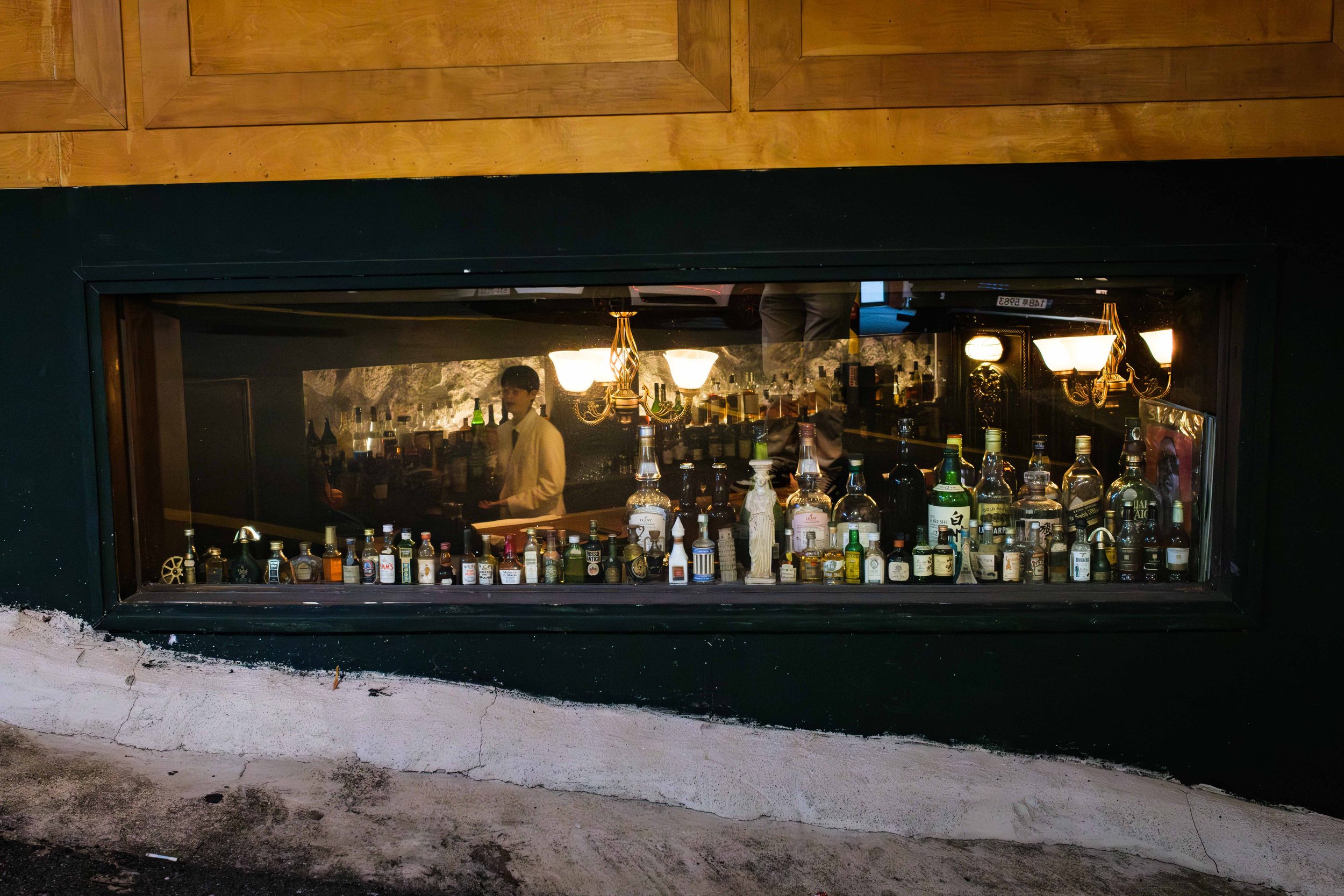
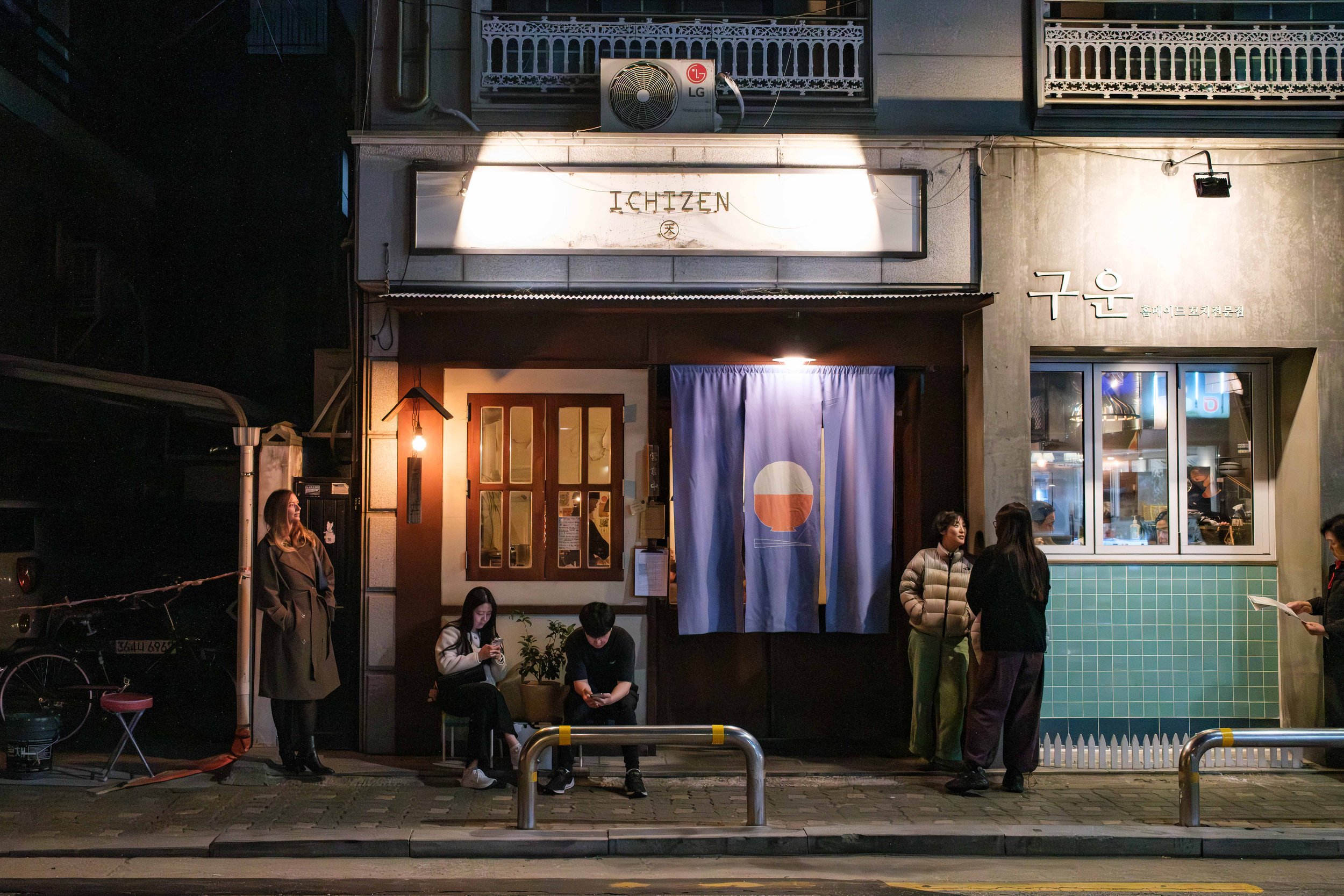
Jeonpo Cafe Street is one of the trendiest areas in the city, and a great place to experience Busan’s modern café and bar scene.
Located near Seomyeon, this neighbourhood is packed with independent cafés, wine bars, and small restaurants, each with its own distinct style.
During the day, Jeonpo leans more towards speciality coffee and relaxed brunch spots, with lots of thoughtfully designed interiors and creative menus. It’s a good place to slow down, especially if you’ve been moving around the city all day.
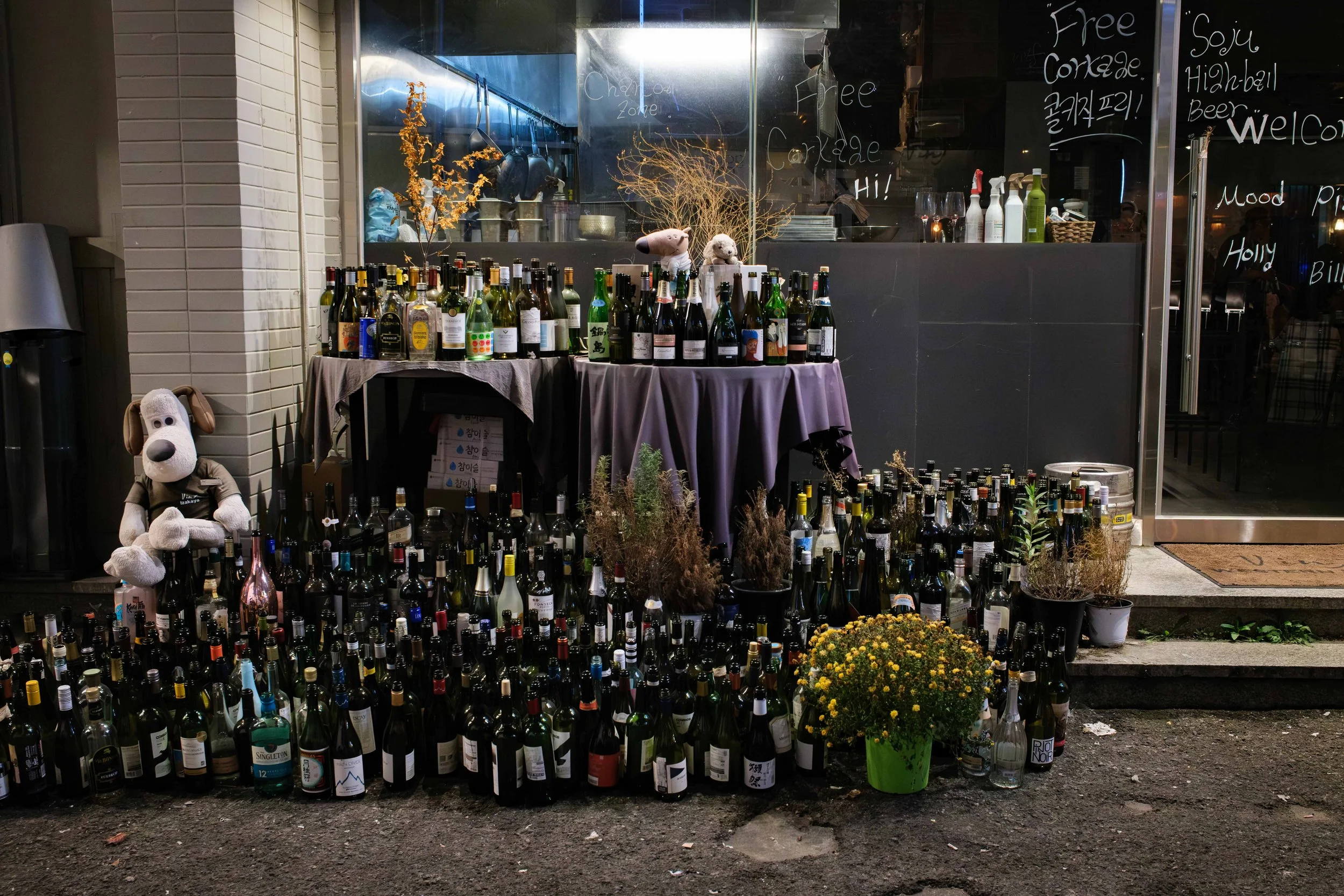
In the evening, the area shifts slightly. The cafés give way to wine bars and more intimate dining spots, making it a perfect place to come for a few drinks or a casual dinner.
If you’re staying in or around Seomyeon, this is an easy addition to your itinerary. But even if you’re not, it’s worth making the trip for a more local, contemporary side of Busan that contrasts nicely with the traditional markets and coastal areas.
Shop at Gwangbok-ro Fashion Street
Gwangbok-ro Fashion Street is one of Busan’s main shopping areas, located in the lively Nampo-dong district. If you’re in the mood for a bit of retail therapy, this is the place to come.
The street is lined with a mix of Korean fashion brands, international stores, and smaller independent shops, making it a good spot to browse and pick up something a little different. Compared to Seoul, shopping here feels slightly more relaxed and less overwhelming, but it still has plenty of variety.
Gwangbok-ro sits right alongside several other key attractions, including BIFF Square, Jagalchi Fish Market and Bosu Book Street, so it’s easy to combine everything into one afternoon or evening of exploring.
Eat Your Way Around Seomyeon Market
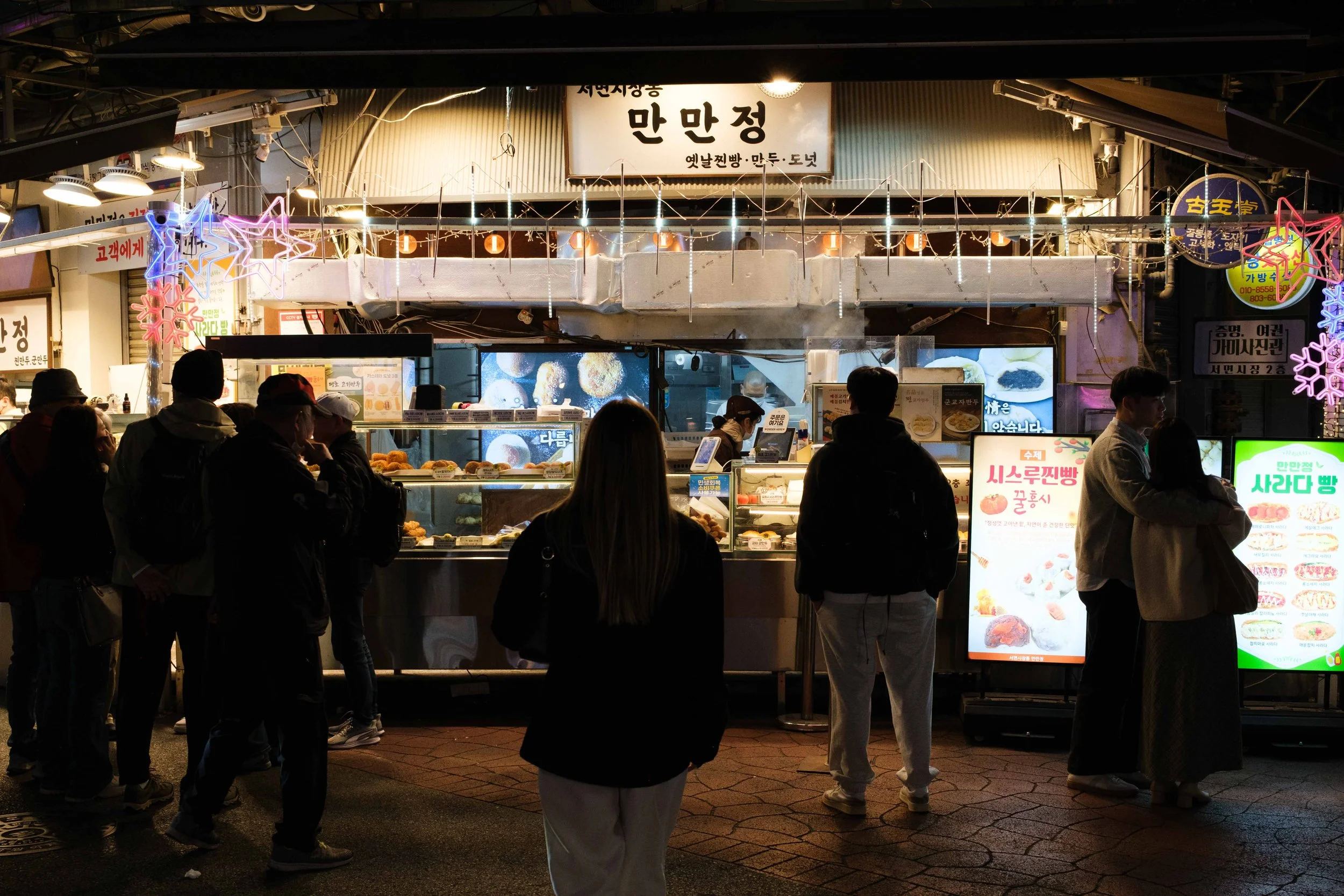
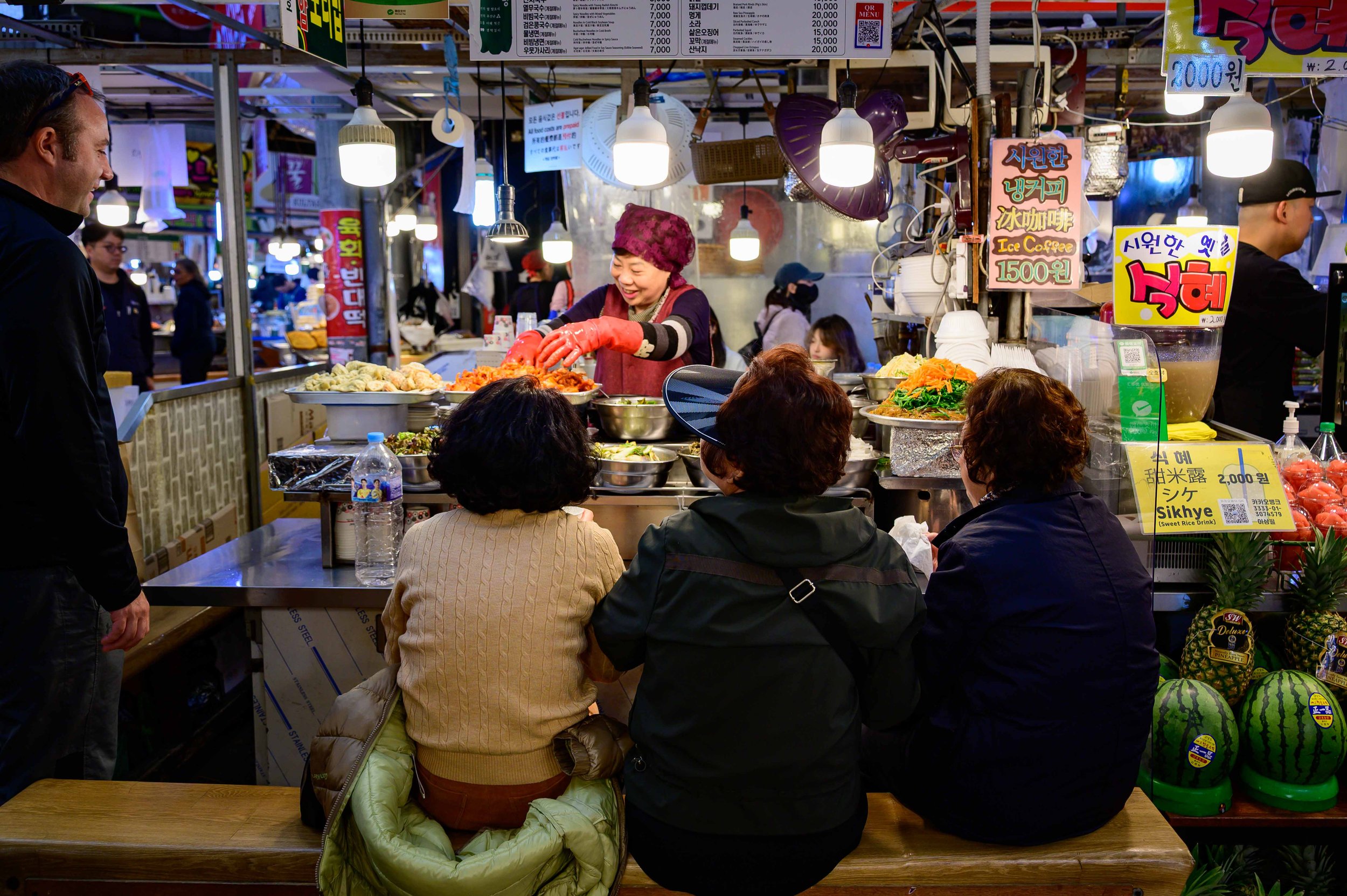
Located in the heart of the city, Seomyeon is Busan’s main central hub, and one of the best areas to experience its food scene.
Seomyeon Market itself is all about street food. As you walk through, you’ll find stalls serving up classic Korean favourites like tteokbokki, hotteok, skewers, fried snacks and plenty more. It’s fast, busy and full of energy, exactly what you want from a street food spot.
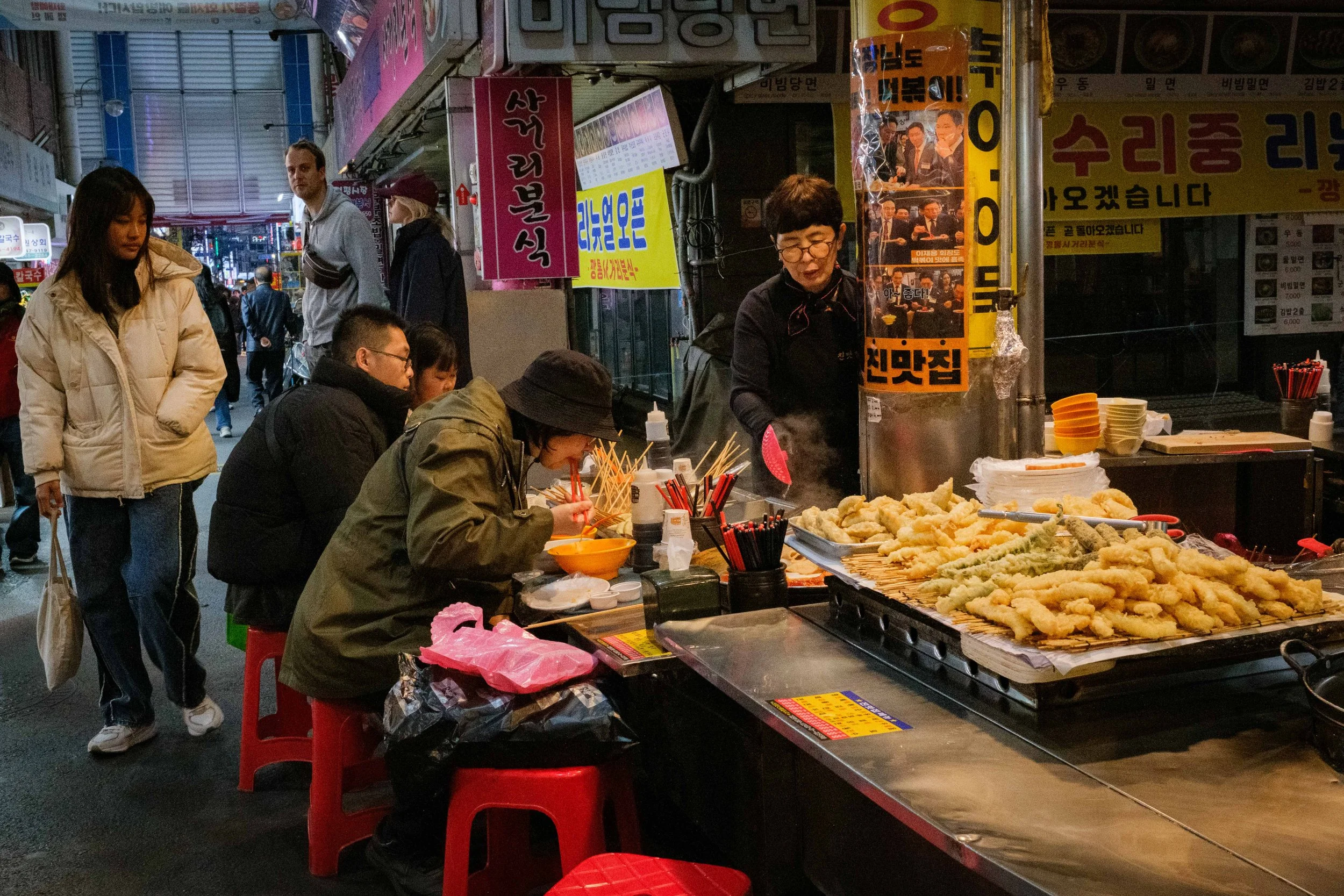
Beyond the street food, the wider Seomyeon area has even more to offer. You’ll find plenty of Korean fried chicken spots, perfect for a late-night meal, as well as a surprising number of sushi restaurants scattered throughout the area. It adds a nice bit of variety if you’re spending a few evenings here and want to mix things up.
Visit BIFF Square (Street Food & Film Culture)
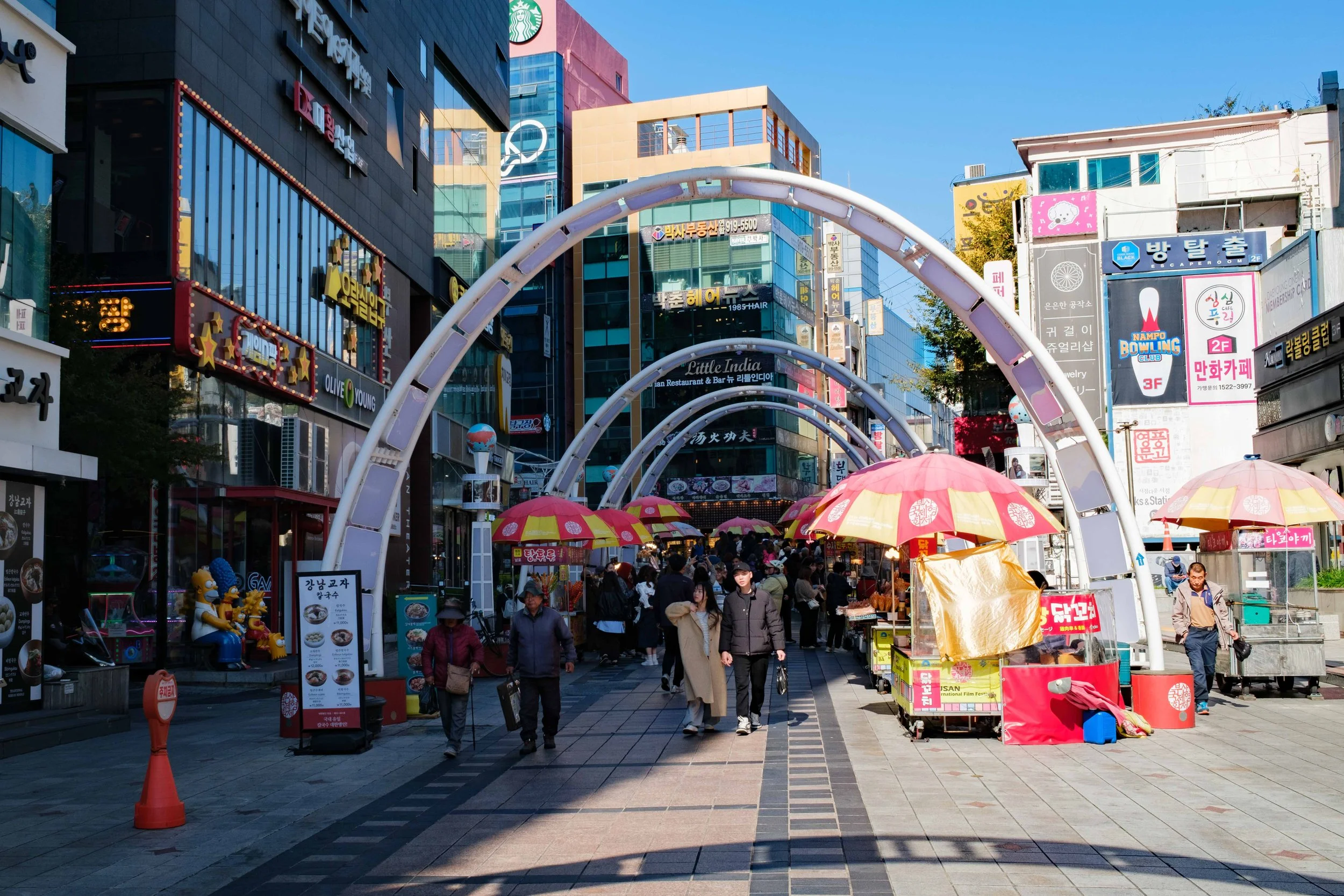
BIFF Square is a lively area in the heart of Nampo-dong, best known as the home of the Busan International Film Festival.
If you’re into Korean cinema, you’ll recognise the name straight away. The square features handprints of famous actors and filmmakers set into the ground, giving it a bit of cultural significance beyond just being another busy street.
The area is packed with street food stalls, many of which have become well known in their own right. One of the most popular things to try here is hotteok, a Korean sweet pancake, often filled with seeds, nuts and syrup. It’s simple, but done well, and you’ll see queues forming around the best vendors.
BIFF Square is definitely on the more touristy side, but it’s still worth visiting, especially if you’re already exploring nearby spots like Gwangbok-ro, Jagalchi Fish Market or Bosu Book Street.
More Things to Do in Busan
Our time in Busan was relatively short and, as always, focused heavily on food and local culture. That meant we didn’t get a chance to explore many of the city’s temples, viewpoints or more traditional attractions.
If you have more time, or want to balance your itinerary with a mix of nature, history and unique experiences, there’s plenty more to see. Here are some places worth considering:
Gamcheon Culture Village – A colourful hillside village filled with murals, art installations and small cafés.
Huinnyeoul Culture Village – Another coastal village with whitewashed houses and sea views, often referred to as the “Santorini of Busan”.
Ddakbatgol Mural Village – A quieter alternative to Gamcheon, with street art and fewer crowds.
Seokbulsa Temple – A lesser-known temple set into the mountains, famous for its intricate rock carvings.
Samgwangsa Temple – Particularly popular during the lantern festival, when the temple is covered in thousands of lights.
Haedong Yonggungsa Temple – One of Korea’s most famous temples, dramatically located right on the coastline.
Arte Museum Busan – A modern immersive digital art space with large-scale visual installations.
Busan National Science Museum – An interactive museum with hands-on exhibits, ideal for a more educational stop.
Busan Tower – A central observation tower offering panoramic views over the city and port.
Busan X the SKY – One of the highest observatories in Korea, offering incredible views from the Haeundae skyline.
Songdo Cable Car – A scenic cable car ride over the ocean with panoramic coastal views.
Somang Stairs Monorail – A small hillside monorail offering a unique and slightly quirky way to get up steep steps.
Bupyeong Kkangtong Market – A lively night market known for international street food and a more local feel.
Haeundae Traditional Market – A great place to try local snacks and experience a more traditional market atmosphere near the beach.
Gukje Market – One of Busan’s oldest markets, offering everything from street food to clothes and souvenirs.
Busan breweries – The city has a growing craft beer scene, with several local breweries worth checking out for something different in the evening.
Lotte World Adventure Busan – A large theme park offering rides and attractions, especially good if you’re travelling with family.
Songdo Cloud Trails – Glass-floored walkways along the coast, similar to other skywalks but in a different setting.
Dongbaekseom Island – A scenic coastal promenade with walking trails, greenery and views back towards the skyline.
Take a Day Trip to Gyeongju (The “Museum Without Walls”)
If you have the time, a day trip (or a night or 2) to Gyeongju should be on the cards.
Often referred to as the “museum without walls”, Gyeongju was the ancient capital of the Silla Kingdom and is now a UNESCO World Heritage area, filled with historical sites, temples and royal tombs. It’s a completely different experience to Busan, trading coastal energy for centuries of history and a much slower pace.
You’ll find large grassy burial mounds scattered throughout the city, traditional architecture, and landmarks like Bulguksa Temple and Donggung Palace that give you a real sense of Korea’s past. It’s the kind of place where history isn’t confined to a single site, it’s spread across the entire city.
Interestingly, during our time in South Korea, Gyeongju was hosting the APEC South Korea 2025, bringing together international leaders and placing a global spotlight on a city that is otherwise rooted in ancient history.
Final Thoughts on Busan
Busan ended up being one of the most memorable stops on our South Korea trip. It has a completely different energy to the rest of the country, more relaxed, more spread out, and deeply connected to the sea.
What stood out most to us was the variety. In the space of a few days, you can move from fresh seafood markets like Jagalchi Fish Market to quiet coastal spots like Cheongsapo, from modern café culture at Momos Coffee to traditional spa experiences at Spa Land Centum City. It’s a city that offers a bit of everything, without ever feeling overwhelming.
It’s also a place that rewards a slower pace. Because of how spread out it is, you’re better off picking a few areas each day and really exploring them properly, rather than trying to rush around and see everything.
More from South Korea

Discover the best things to do in Busan, from beaches and seafood markets to cafés, sky capsules and hidden coastal gems.