Seoul is an incredible city to eat your way through, but not every food experience needs to revolve around crowded street stalls and viral bites. This food tour we took with 8 Birds Travel was something very different. Instead of just hopping between TikTok-famous vendors, we got to experience the rhythms of Korean life, starting in a real Seoul apartment with a home-cooked meal and ending at a local neighbourhood market.
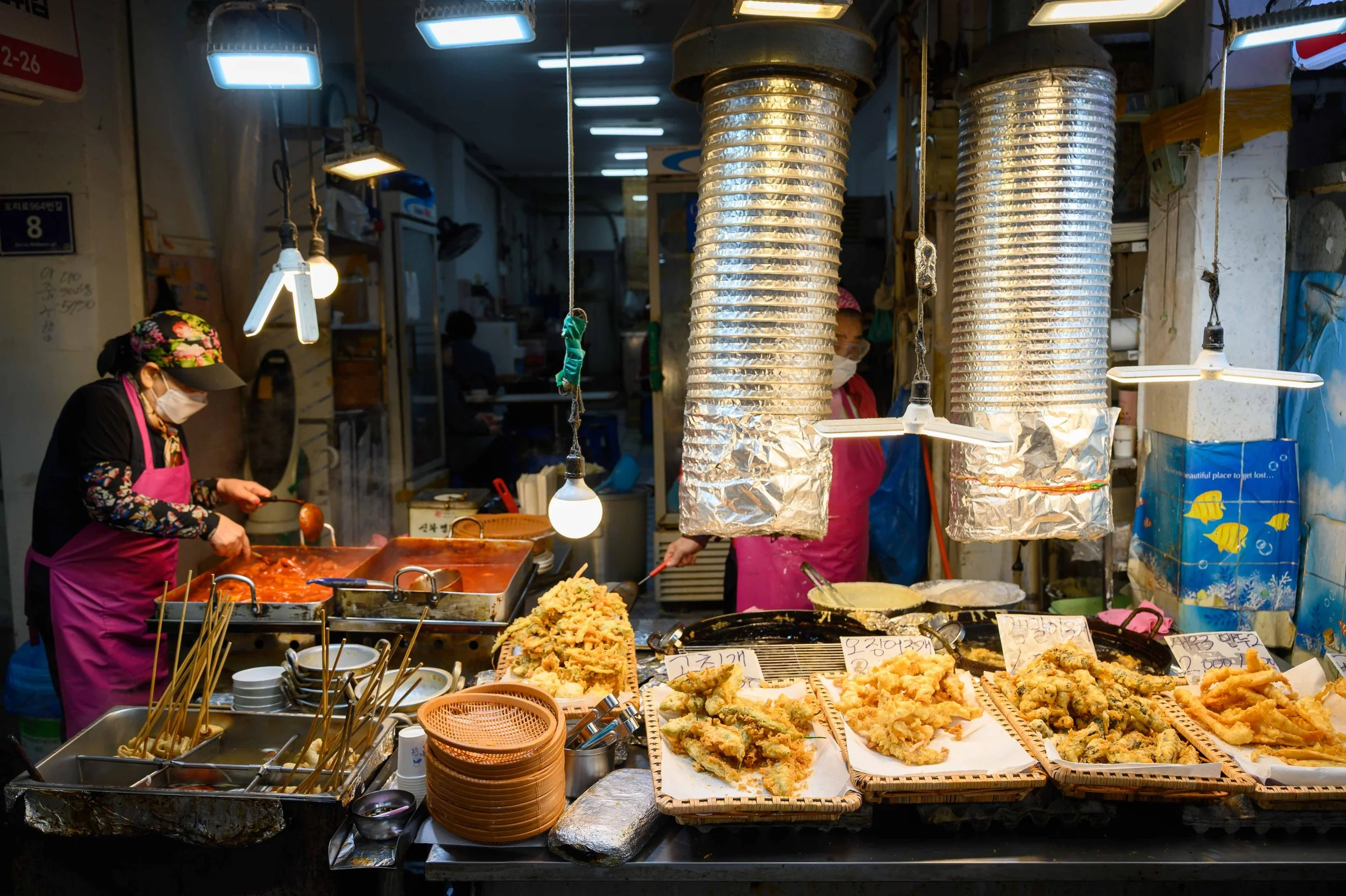
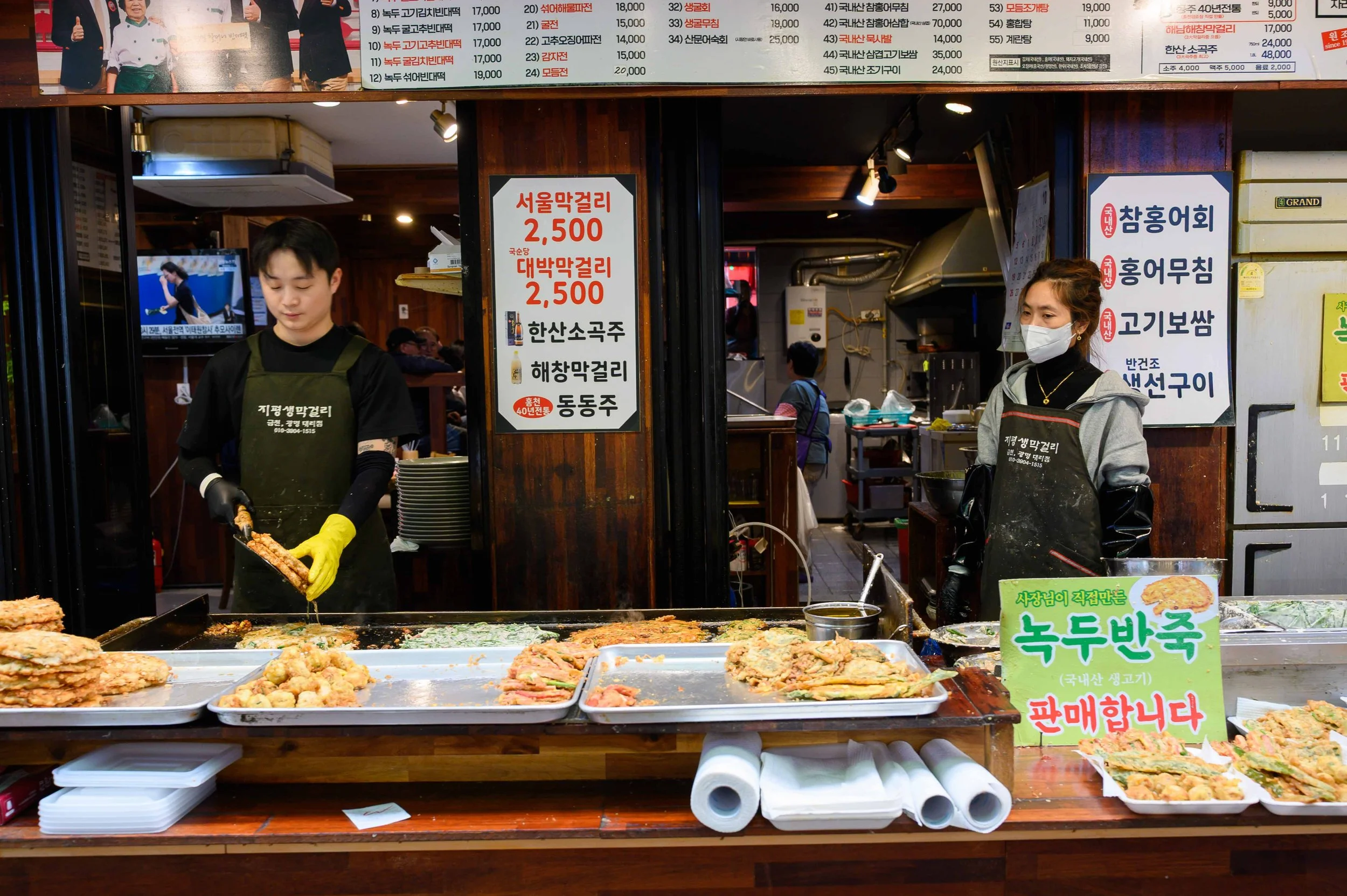
Twigim - Fried goods stall in Gwangmyeong Traditional Market
This article is less about ticking off famous dishes and more about understanding how Koreans actually eat, cook, and live. If you are looking for an experience that goes beyond the usual street food crawl and offers genuine cultural insight through food, this tour delivers something far more personal and memorable in our opinion.
Quick links if you want to skip to:
** Disclaimer: We experienced this tour as part of a collaboration with Dan, who kindly hosted us free of charge. As always, our writing reflects our genuine experience and honest opinions. If you would like to book the same tour or another tour with 8 Birds Travel, bookings are made via their website contact form. Mention our code HSRAMEN when you enquire to receive a free gift. **
Groceries Like A Local
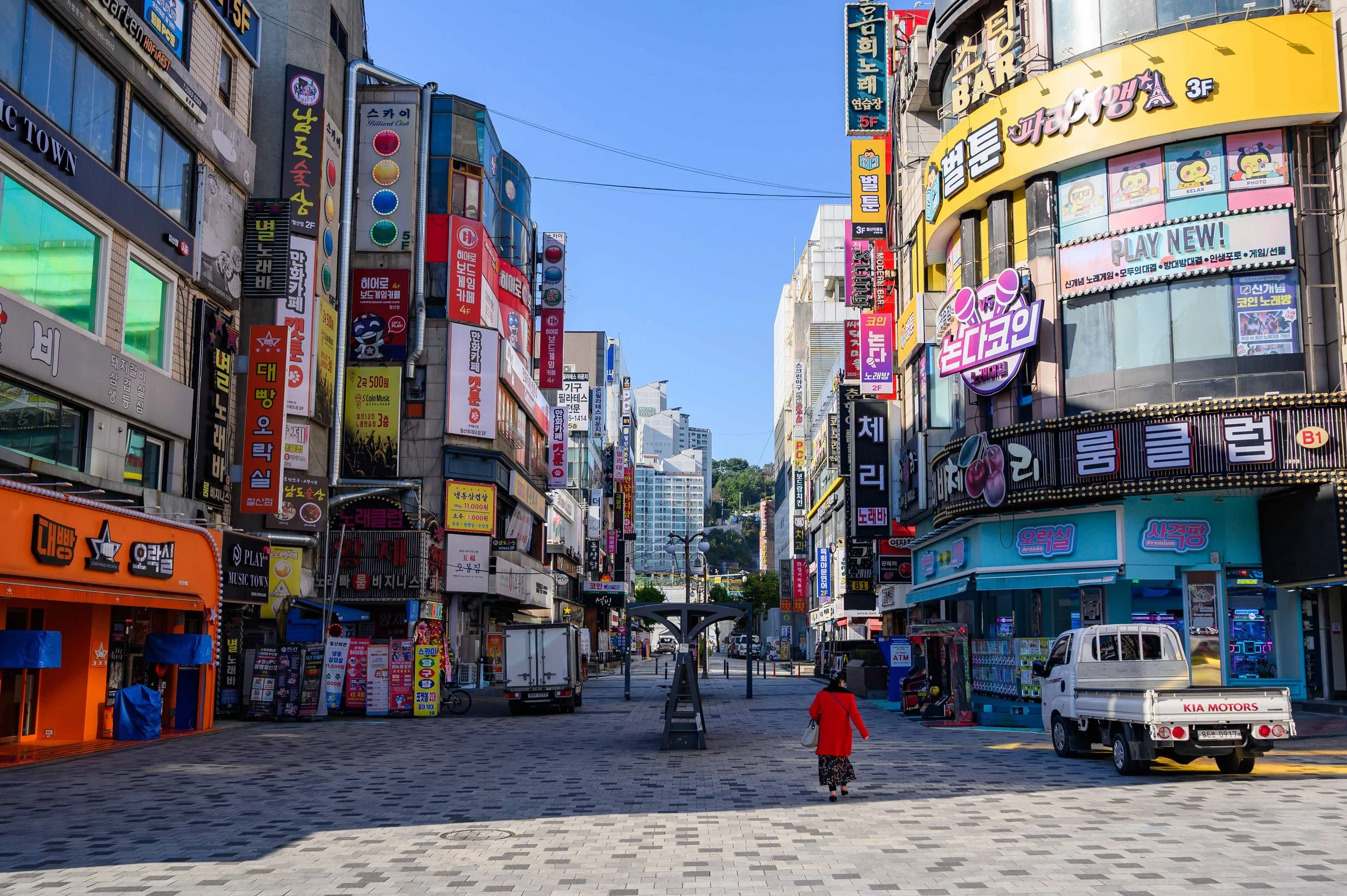
Gwangmyeong-dong
When we say we were ‘far from touristy’ Seoul, we really mean it. Our day began with a train journey out to Gwangmyeong-dong in the southwestern suburbs of the city. This is everyday Seoul, residential and quietly busy, where visitors rarely find themselves without a reason.
We met Daniel Lee Grey at the station, founder of 8 Birds Travel and our guide for the day. From there, we walked and talked our way over to his apartment complex, as he casually mentioned that somewhere high up in the concrete towers ahead of us, his mother was preparing us breakfast.
As we meandered, Dan explained how deeply apartment living is woven into Korean life. Owning an apartment in Seoul, he told us, is a sign you have ‘made it’. Unlike in the UK, where houses are often the aspiration, Koreans are obsessed with apartments. They represent security, status, and success, shaping how people work, save, and plan their futures.
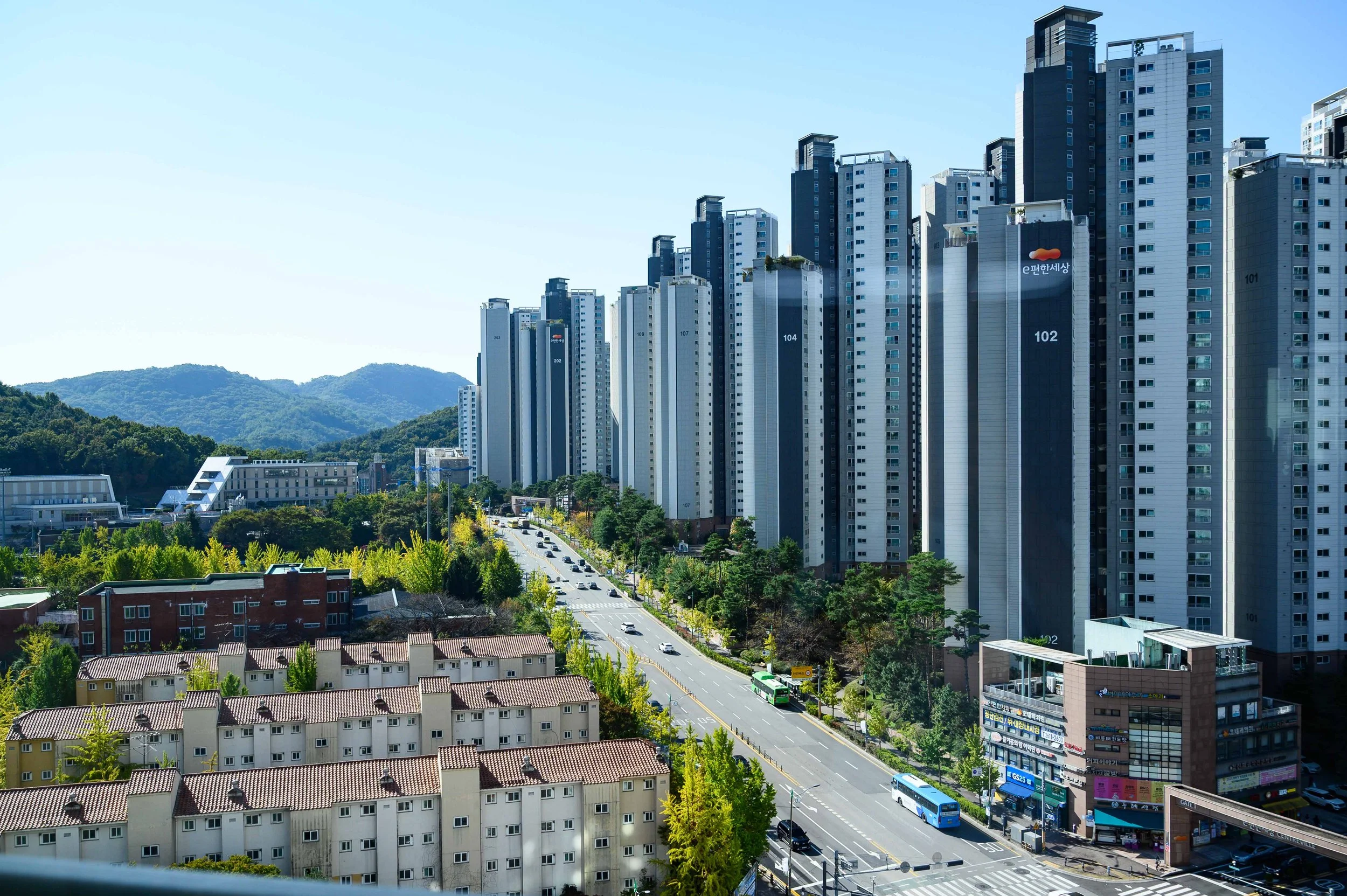
Views from Dan’s appartment
Before heading upstairs, Dan took us on a tour of the complex itself. Gated and self-contained, it felt like a small town wrapped inside the city. There were landscaped gardens and shared walkways. He explained that most complexes include arcades where residents spend their downtime together. These spaces house cinemas, entertainment centres, gyms, and, most importantly for daily life, supermarkets.
We will often find ourselves exploring the shelves of the local supermarkets wherever we travel, often spending far too long wandering the aisles to understand what people actually eat at home. This stop was no different. Dan needed to pick up a few things, and as we walked through the shop together, he pointed out everyday staples and small comforts. Coffee syrups, instant ramen, ice creams, and chocolates. He showed us his kids favourite snacks, which brands he reaches for, and what ends up in their basket most weeks.
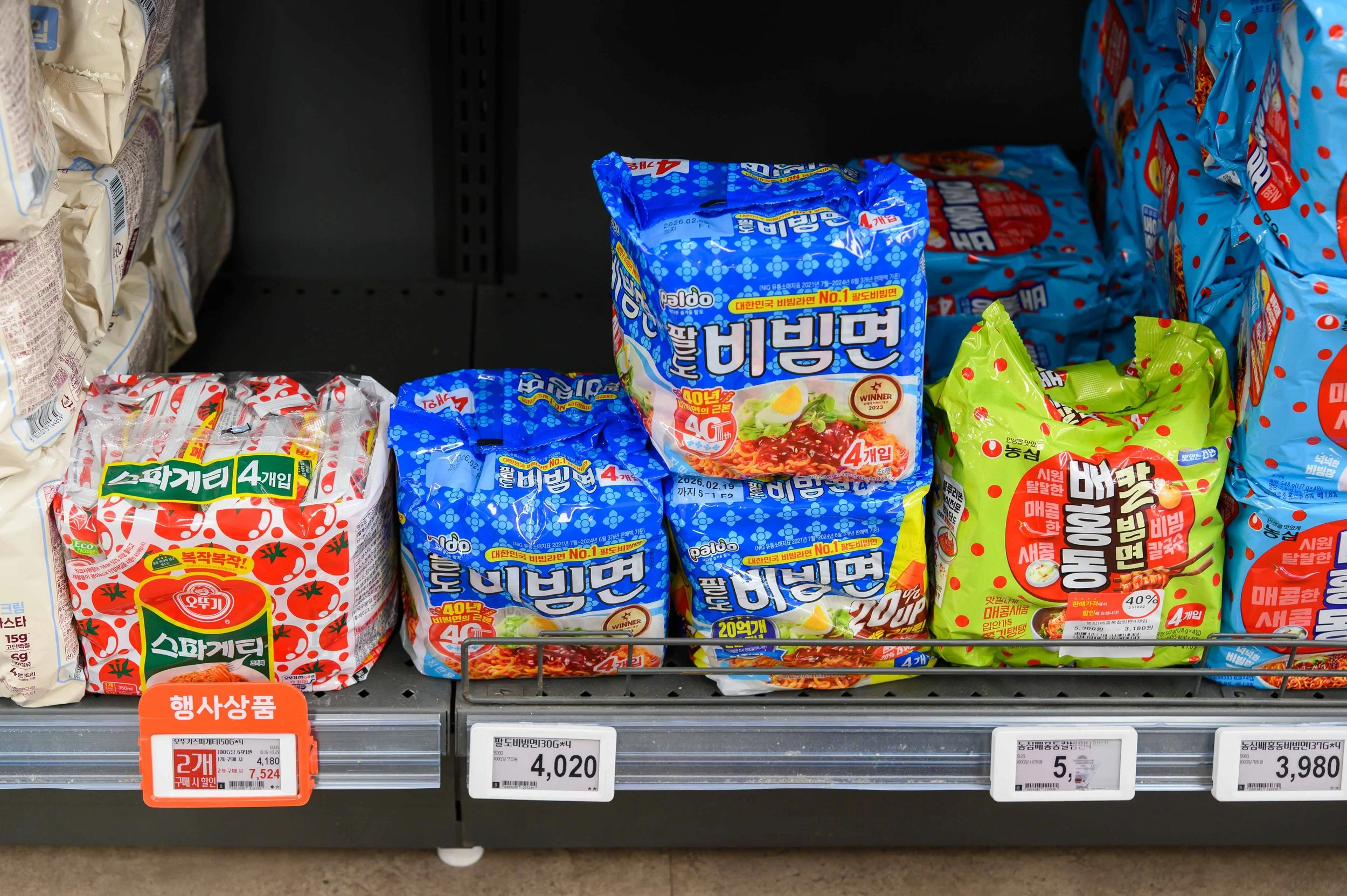
Korean Family Life
After picking up the groceries, including a ginseng-based health drink from the pharmacy as a small gift for his mother, Dan welcomed us into his apartment and showed us around.
Family life is something you only really understand once you step indoors. It is common for families to sleep together, often on the floor rather than on raised beds. Bamboo mats are widely used, laid out at night and cleared away during the day, allowing rooms to remain flexible and uncluttered. Dan showed us his own setup, including a Mahjong mat used as a mattress topper. It helps with temperature regulation and hygiene, particularly during humid summers, and is far more common than we realised.
You get a real sense of the home layout and how it functions day to day when you see it in motion. We will be sharing more of that visually when we publish the video of this tour on our YouTube channel.
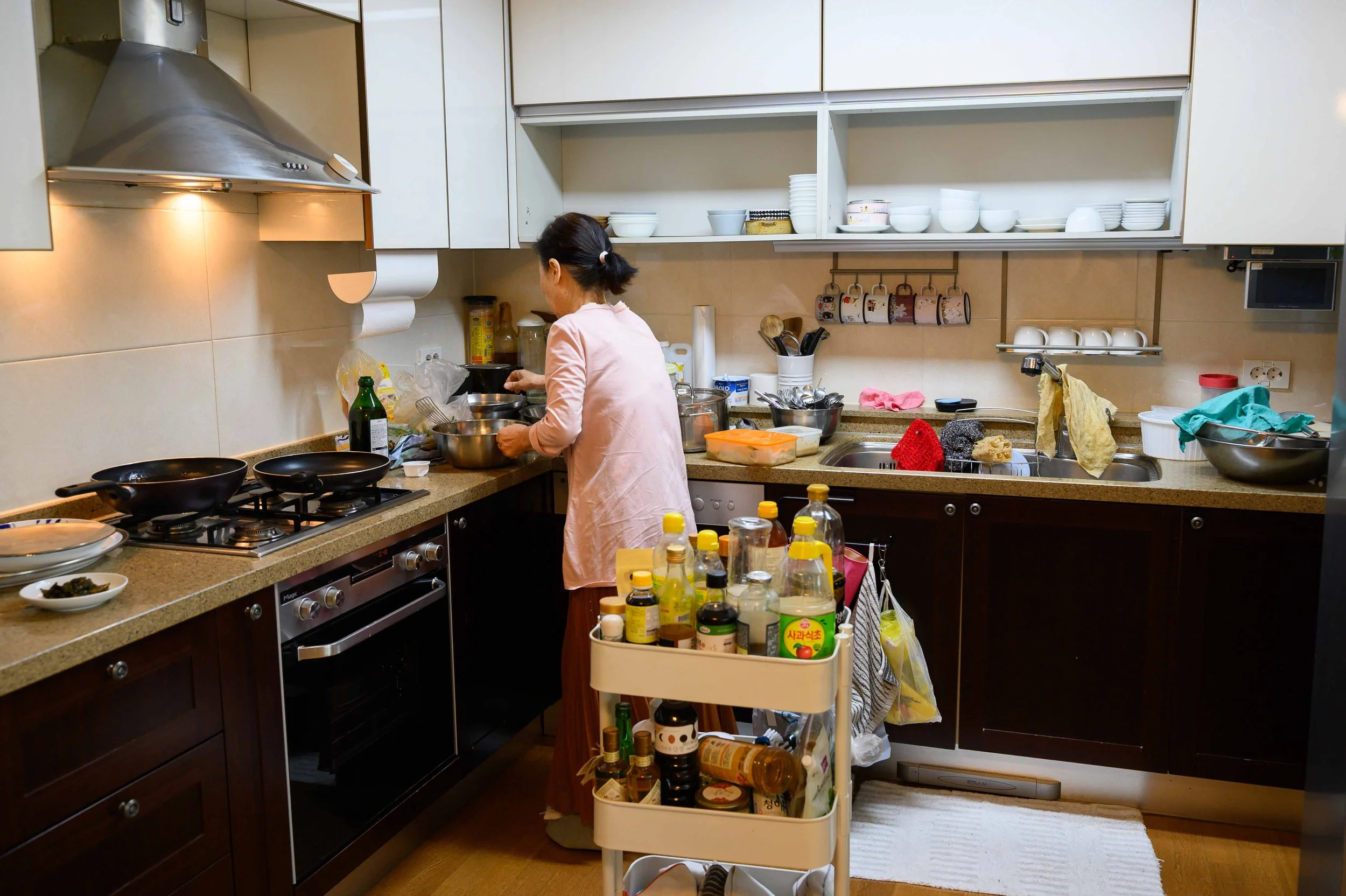
All the while, Dan’s mother was quietly at work in the kitchen. As we nosied around, she was busy in the kitchen preparing our meal, moving with the ease of someone who has cooked those dishes countless times.
A Home Cooked Traditional Korean Meal
In a Korean home, meals are rarely about a single main dish. Instead, everything is placed on the table at once and shared. Rice sits at the centre, surrounded by an assortment of banchan, small side dishes that change daily depending on the season, what is in the fridge, and how much time they have on their hands to cook. Some are cooked, some are fermented, some are leftovers from the day before. All of them matter.
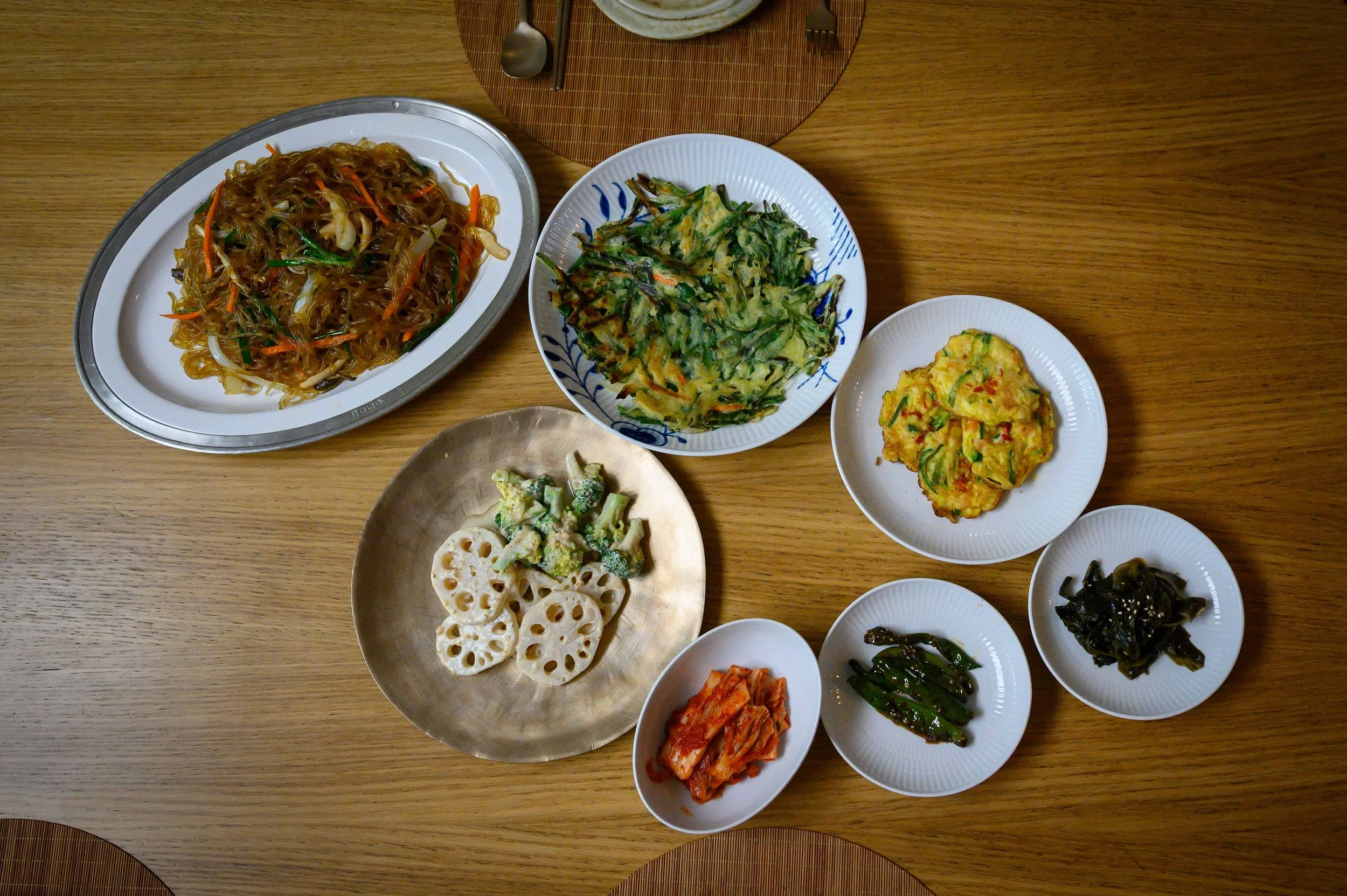
This particular spread would be considered a typical family meal, especially when guests are involved. Japchae, the glossy glass noodles stir-fried with vegetables, is often made when someone is visiting, as it takes time and care. The various jeon (pancakes), savoury vegetable pancakes, are another sign of effort, pan-fried one by one and served warm. Alongside them were simpler banchan, seasoned greens, seaweed, lotus root and kimchi. Dishes that appear on tables across Korea every day, adjusted slightly from household to household.
What struck us most was the balance. There is no hierarchy on the table. You eat a bit of everything, moving between flavours and textures. Meals are unhurried, often eaten sitting close together, sometimes on the floor, and food is as much about nourishment as it is about routine and care.
This is how Korean food is meant to be understood. Not as individual dishes ordered from a menu, but as a collection of small, thoughtful components. Sitting at that table, with Dan’s mother cooking in the background, it felt less like a breakfast we arranged through a tour and more like being folded briefly into someone else’s daily rhythm.
Here’s what was on the table
Japchae (잡채) - Sweet potato glass noodles stir-fried with vegetables and seasoned with soy sauce and sesame oil. A dish often made for guests or special occasions due to the time and care involved.
Bap (밥) - Steamed white rice, the foundation of most Korean meals. It anchors the table and is eaten alongside every dish rather than on its own.
Kimchi (김치) - Fermented napa cabbage seasoned with chilli, garlic, and salted seafood. A constant presence at Korean meals, regardless of the time of day.
Yachaejeon (야채전) - A savoury vegetable pancake, pan-fried until lightly crisp. Jeon are classic home dishes, typically shared in the centre of the table rather than eaten individually.
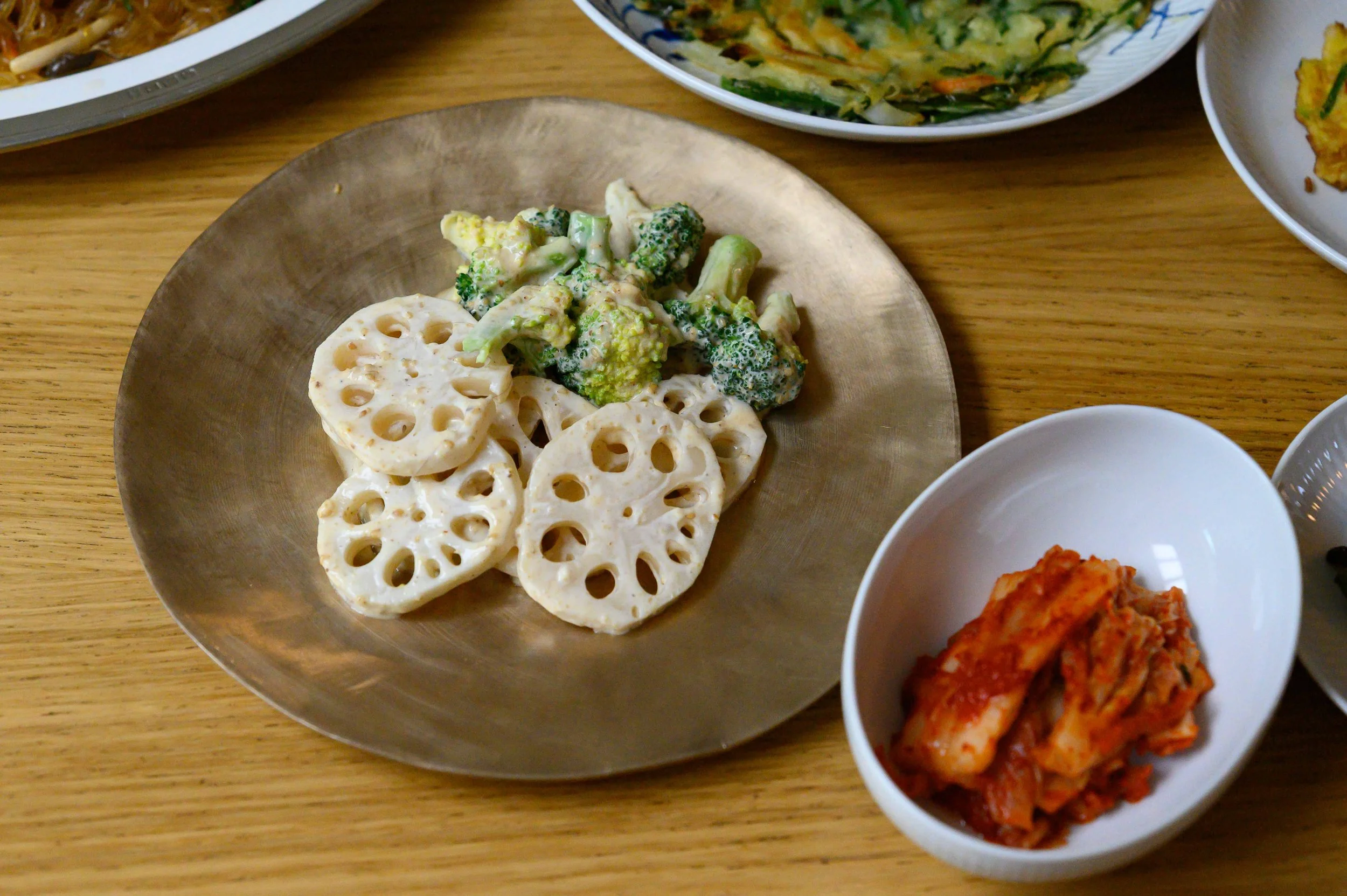
Yeongeun-broccoli Muchim (연근 브로콜리 무침) - Lotus root and broccoli dressed in a light sesame dressing. Crunchy, nutty, and refreshing, this is a typical home banchan that balances richer dishes on the table.
Miyeok Muchim (미역무침) - Seasoned seaweed salad made from wakame, lightly dressed with sesame oil and finished with sesame seeds.
Gochu Muchim (고추무침) - Seasoned green peppers or chillies, adding freshness and heat to the table. Eaten in small bites alongside rice and other dishes.
Cha (차) - Tea served alongside the meal.
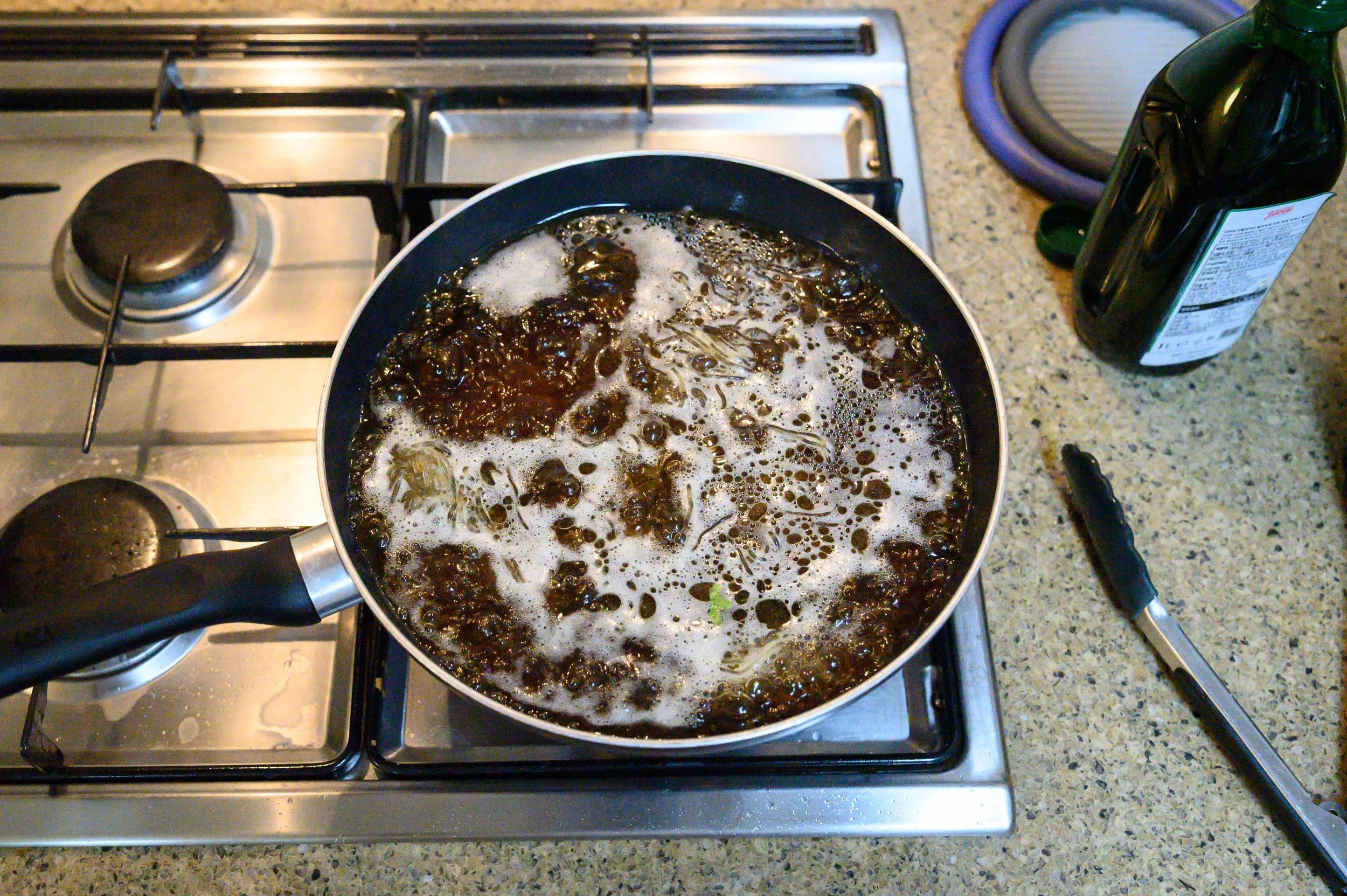
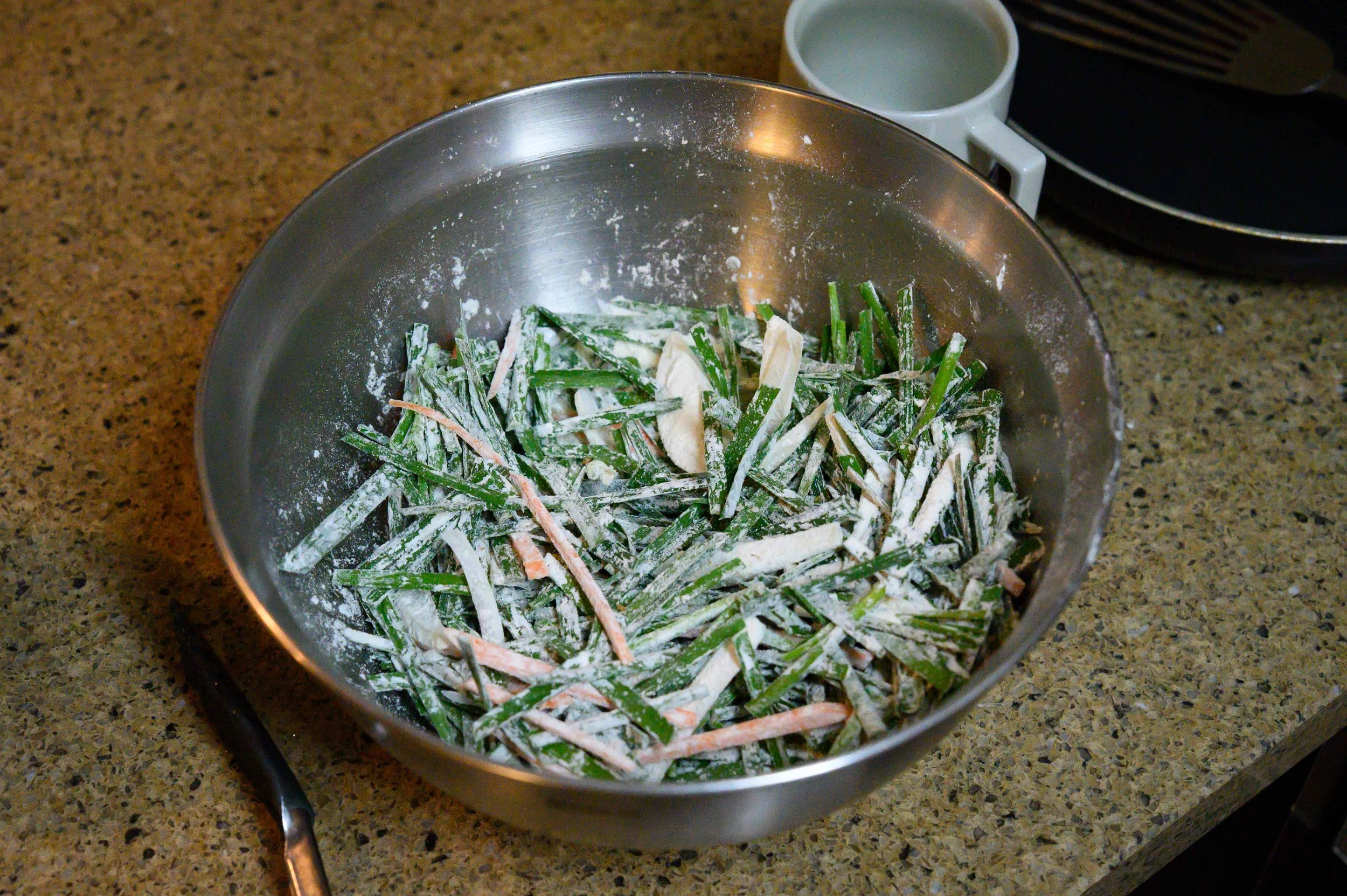
Once the meal was ready, we all gathered around the table in the living room and began eating together. The food itself was simple, but everything was so precisely balanced that it felt complete. Nothing shouted for attention, yet every dish held its own. We say this often, but our most memorable dining experiences rarely happen in fine dining restaurants. They happen in intimate spaces like this, where the food has been cooked with care and eaten with good company.
As we worked our way through the dishes, Dan continued to talk us through life in Korea, slipping seamlessly from food into history, culture, and the small details you would never pick up on your own. Dining etiquette came up quickly, starting with rice.
In Korea, rice is eaten with a spoon, not chopsticks. Lifting the bowl to your mouth, as you might in China or Japan, is considered poor manners, something Koreans jokingly call “eating like a pig”. Rice is the foundation of the meal, the main dish, with everything else acting as a supporting cast.
He also taught us that someone who eats only rice, ignoring the banchan, can be jokingly labelled a ‘bapbo’, a mildly derogatory term implying a lack of balance or appreciation.
Korean chopsticks themselves tell a story. Usually made from metal and square rather than wooden and round, they are noticeably harder to use. Historically, Koreans often carried their own chopsticks, and their design became part of everyday discipline and habit.
There is also a deeper historical layer. During the Japanese occupation, wooden chopsticks were promoted as part of an attempt to erode Korean cultural practices. After the Korean War, metal chopsticks re-emerged as the standard, reclaiming a distinctly Korean way of eating that has endured to this day.
Sharing dishes is central to Korean dining, and the etiquette around it is practical rather than fussy. It is completely acceptable to use both hands with your chopsticks to break apart jeon or divide shared dishes, especially in a home setting. The emphasis is on eating together, not on rigid formality.
By the time the table was cleared, the meal had done exactly what it was meant to do. It had fed us, slowed us down, and opened the door to conversation. And then, naturally, we headed out for more food; this time to a local market, ready for more delicious treats.
If you would like to book the same tour or another tour with 8 Birds Travel, you can do so via their website contact form. Mention our code ‘HSRAMEN’ when you enquire to receive a free gift.
Gwangmyeong Traditional Market
After finishing our meal, we headed back out into the neighbourhood, this time towards Gwangmyeong Traditional Market. If the morning had been about understanding life inside the home, this was its natural extension.
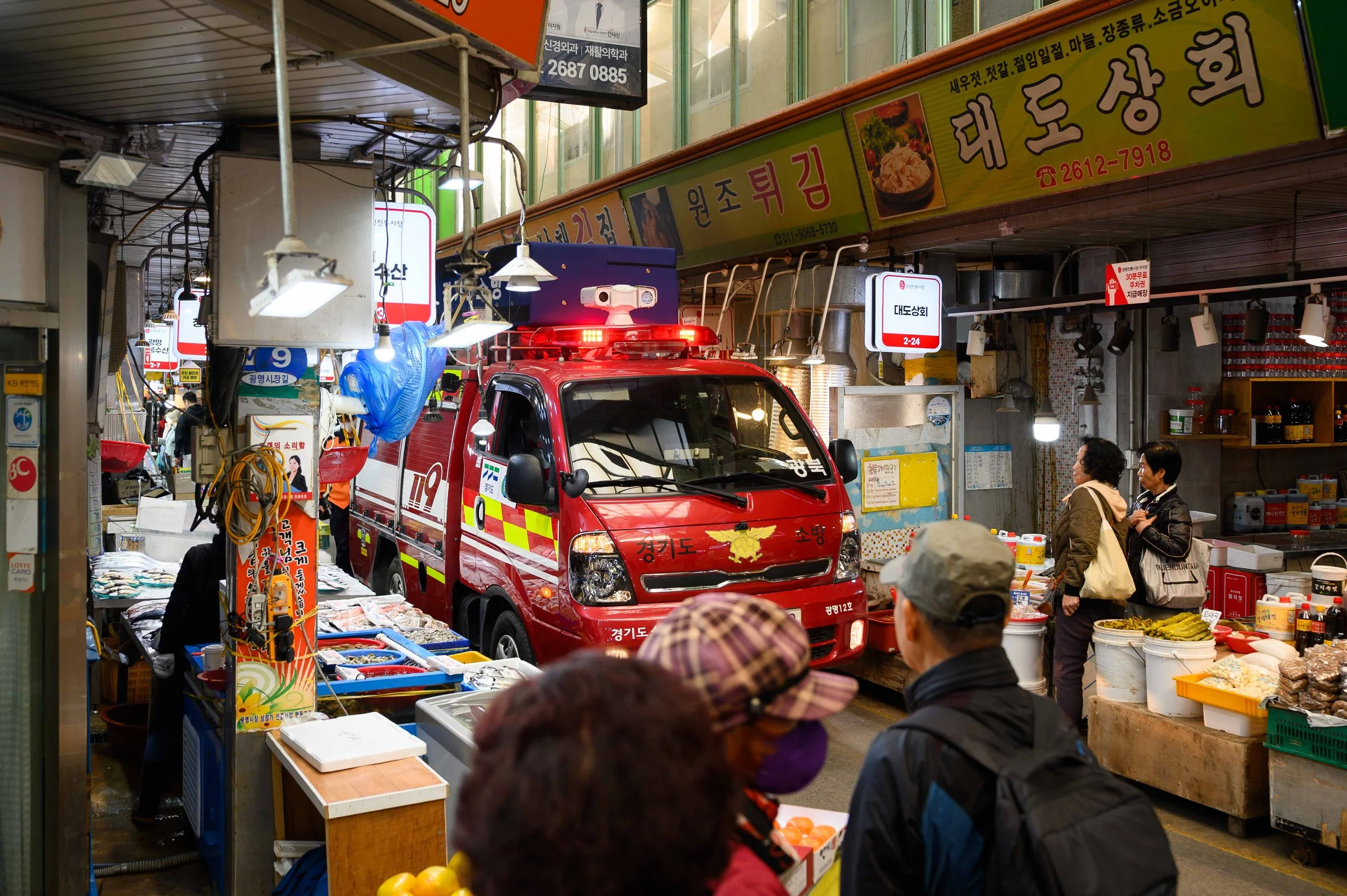
Yes, that’s a fire truck, squeezing its way through the market!
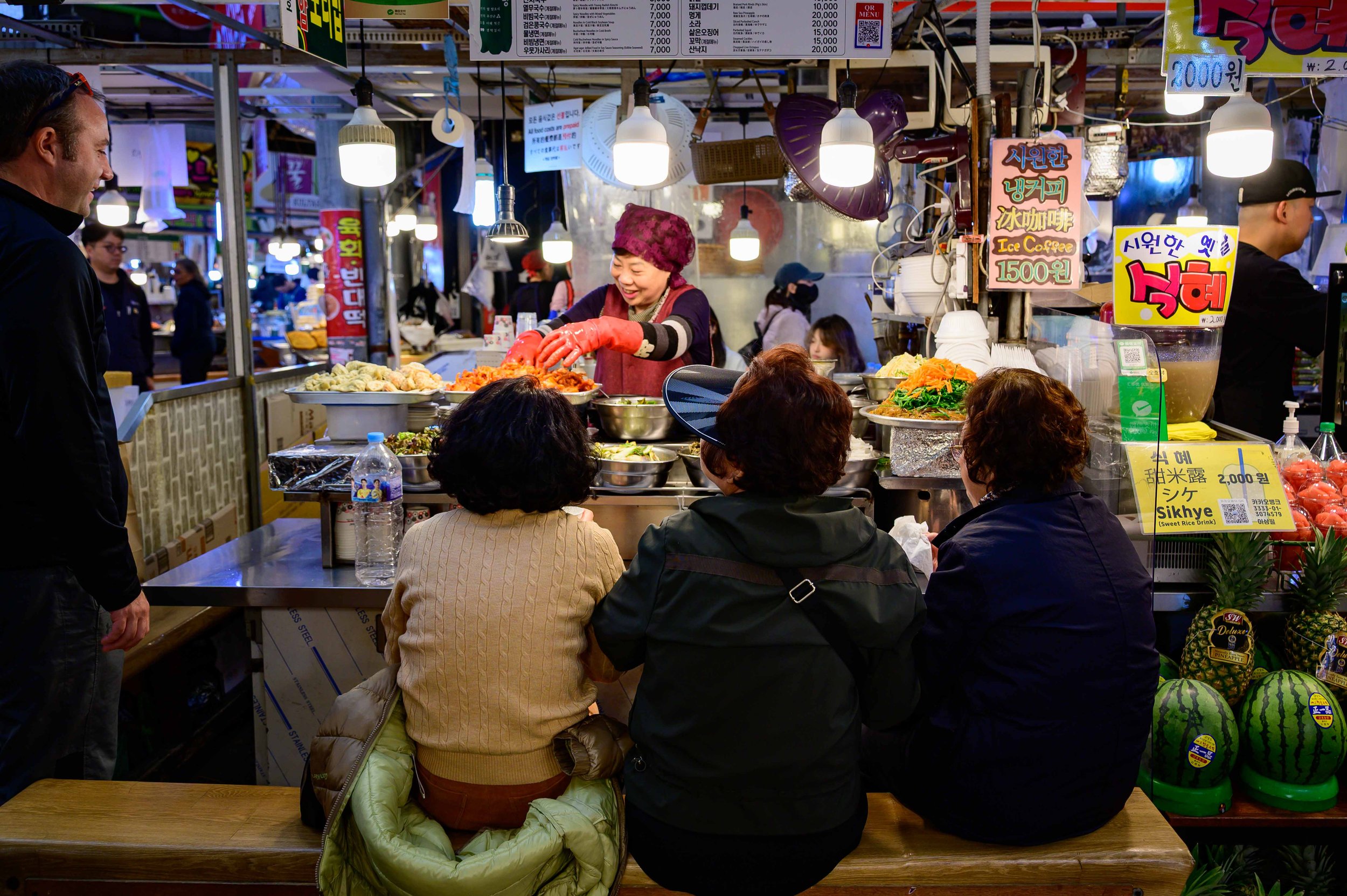
The market stretches out as a long corridor of stalls, each one focused on something specific. Fresh produce, prepared foods, and small street snacks are being cooked to order. It was lively, but unmistakably local. There were no tour groups, no cameras being waved about (apart from ours), just local residents moving through the space as part of their day.
Being shown around by Dan, who knows all about this food and culture, made all the difference. Vendors greeted Dan warmly, took time to explain what they were making, and were genuinely welcoming. It turned what could have been a quick walk-through into something slower and more immersive, the kind of experience you simply do not get when exploring markets alone.
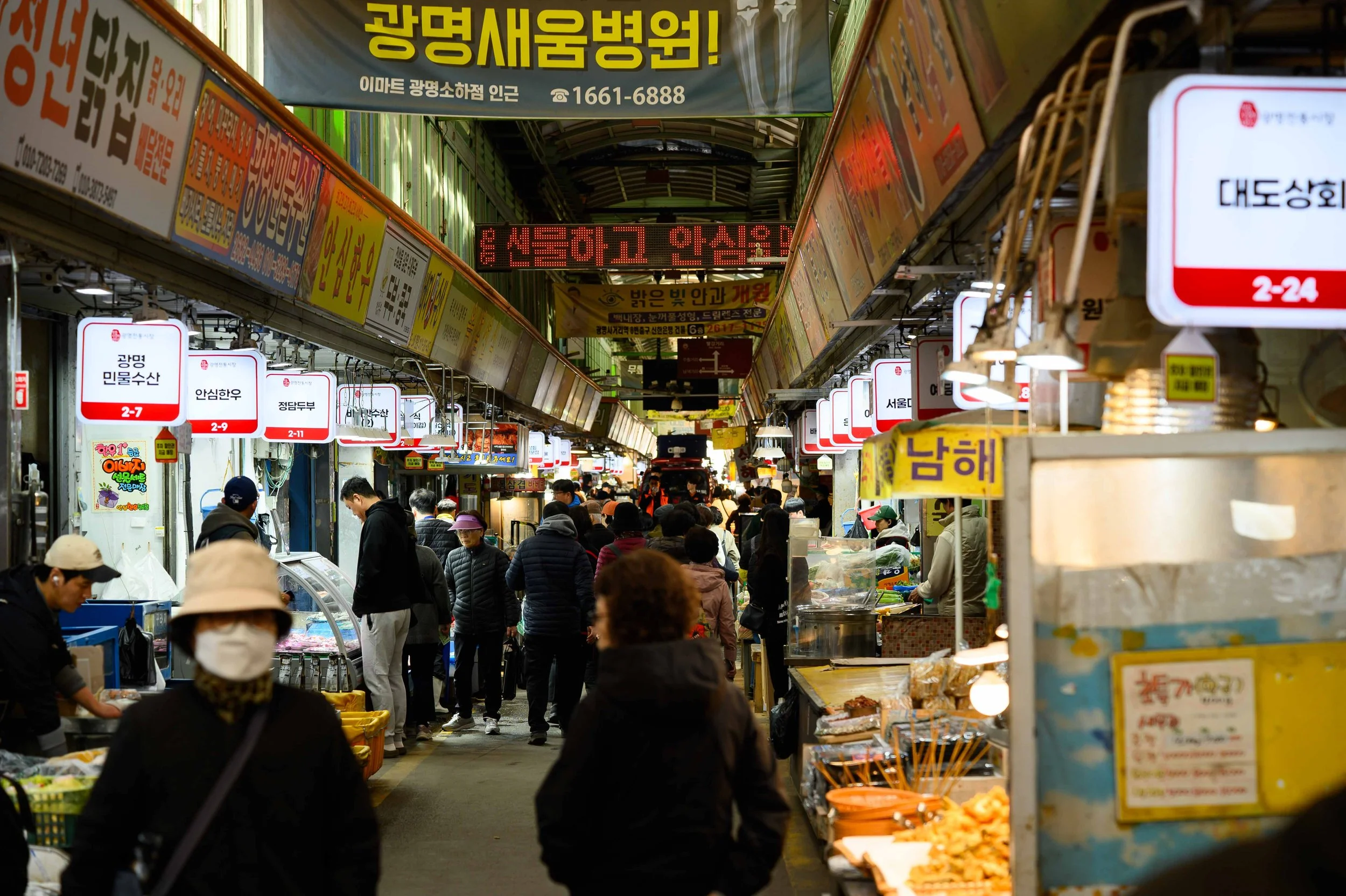
Now, we didn’t eat everything on the list below, but we wanted to show you a selection of what was on offer at this incredible market.
Yoghurt carts - Small street carts run by local women selling probiotic yoghurt drinks in glass bottles. These are a nostalgic staple across Korea, known for their gut health benefits and slightly sweet, tangy flavour. Many locals drink them daily. We carved this in to our daily routine; we were unable to walk past one without indulging.
Gukhwa-ppang (국화빵) - A warm street snack shaped like a chrysanthemum flower, similar in spirit to taiyaki. Traditionally filled with sweet red bean paste, though custard cream is now just as common. Cheap, comforting, and eaten on the go.
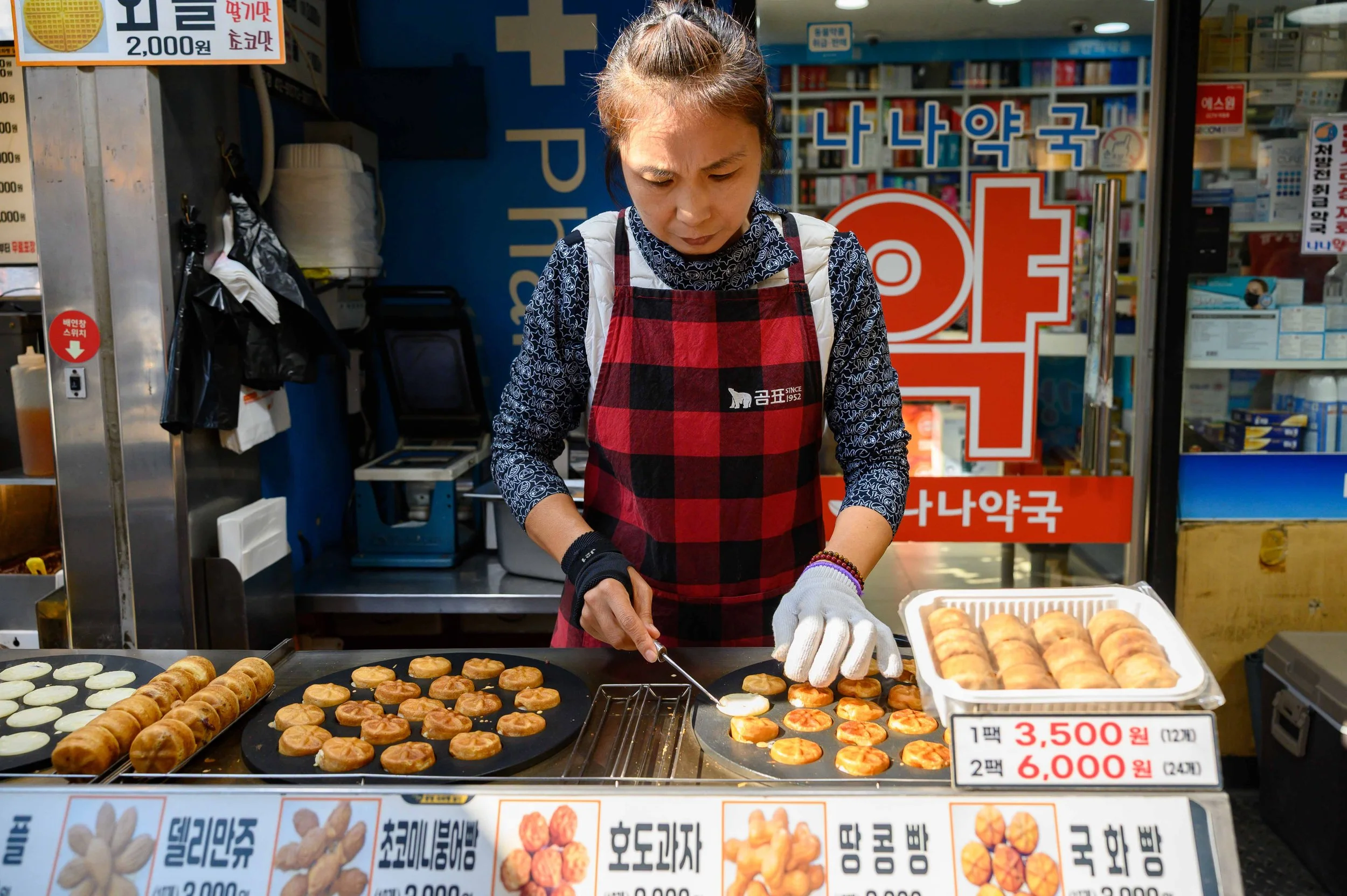
Gukhwa-ppang (국화빵)
Dried seafood - Long displays of squid, anchovies, pollock, and seaweed, dried for preservation and flavour concentration. These ingredients form the backbone of Korean cooking, especially for stocks, broths, and banchan.
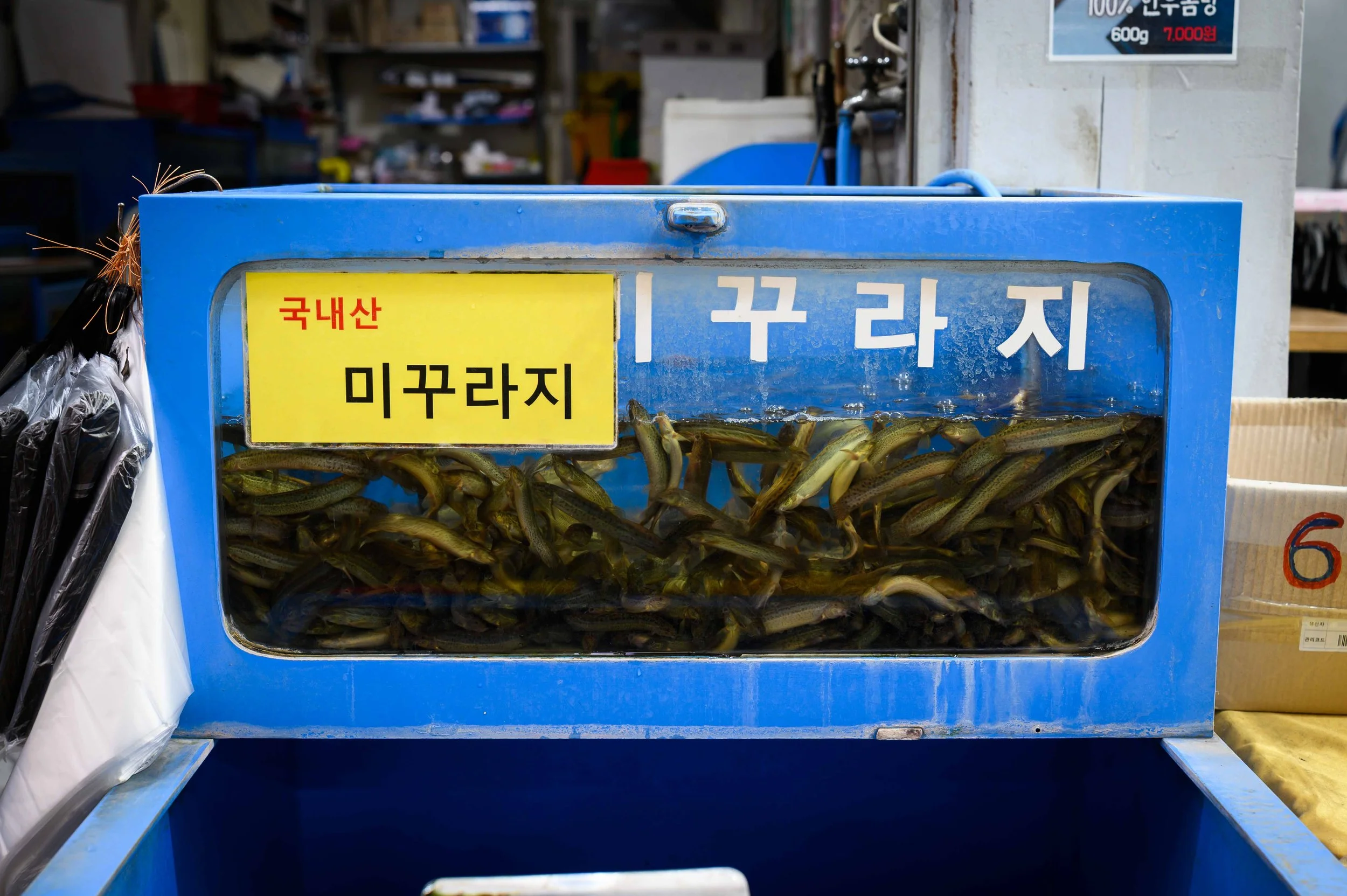
Live seafood - Tanks and trays filled with live shellfish and fish, highlighting how closely Korean cooking is tied to freshness. Many customers buy seafood here to take home for same-day cooking.

Banchan - Rows of ready-made side dishes prepared daily, designed to be taken home and eaten with freshly cooked rice. These stalls make it possible to have a varied meal without cooking everything from scratch.
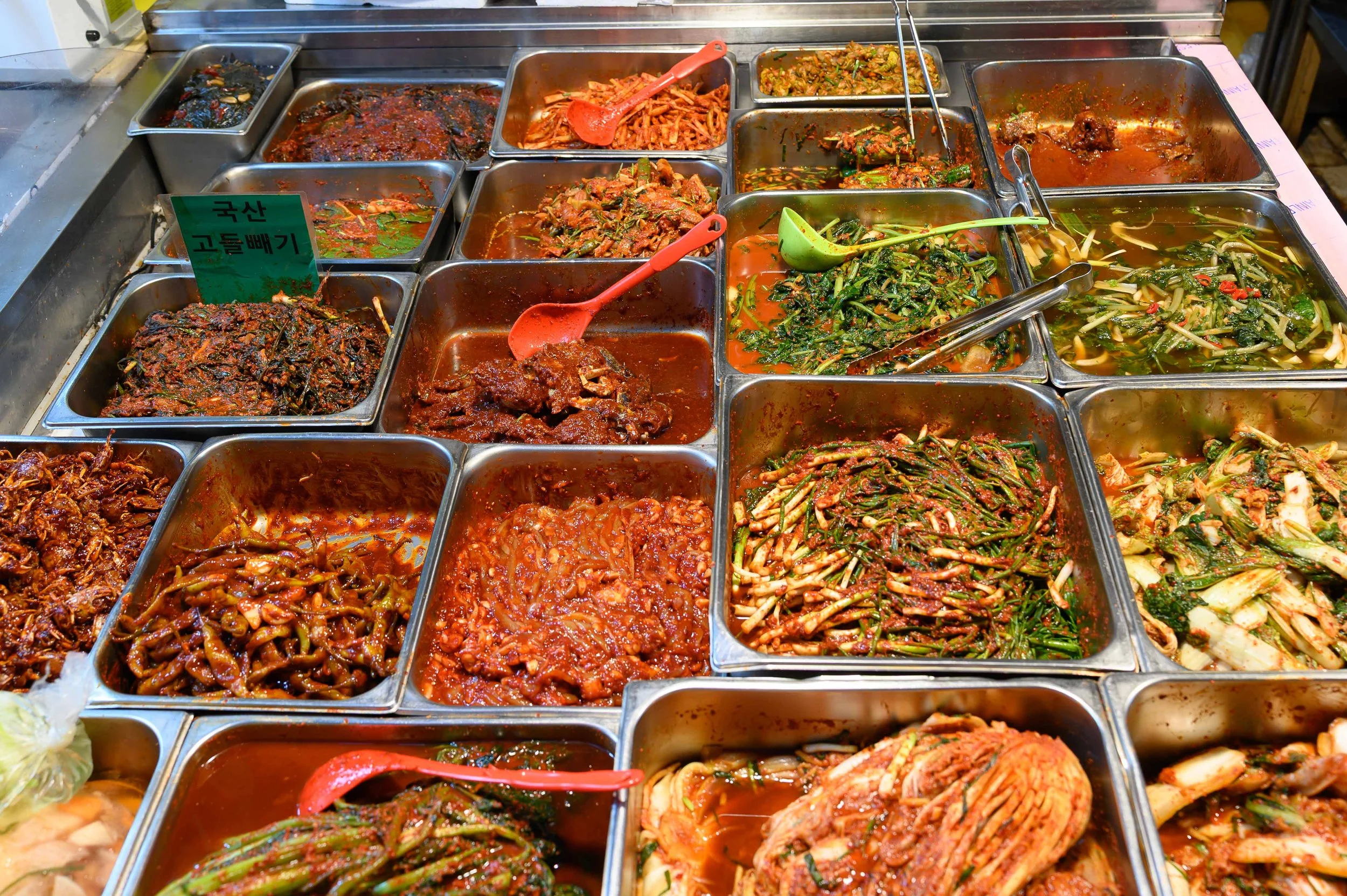
Hanwoo beef - Hanwoo is Korea’s prized native cattle, comparable to wagyu in marbling and texture. The snowflake-like fat distribution is a mark of quality, and the beef is graded, with higher grades commanding premium prices. Often reserved for special occasions.
Sundae - A vendor preparing sundae, Korea’s blood sausage made from pig’s intestines stuffed with glass noodles and blood. Served with slices of liver and lung, this is a classic market dish, hearty and deeply traditional.
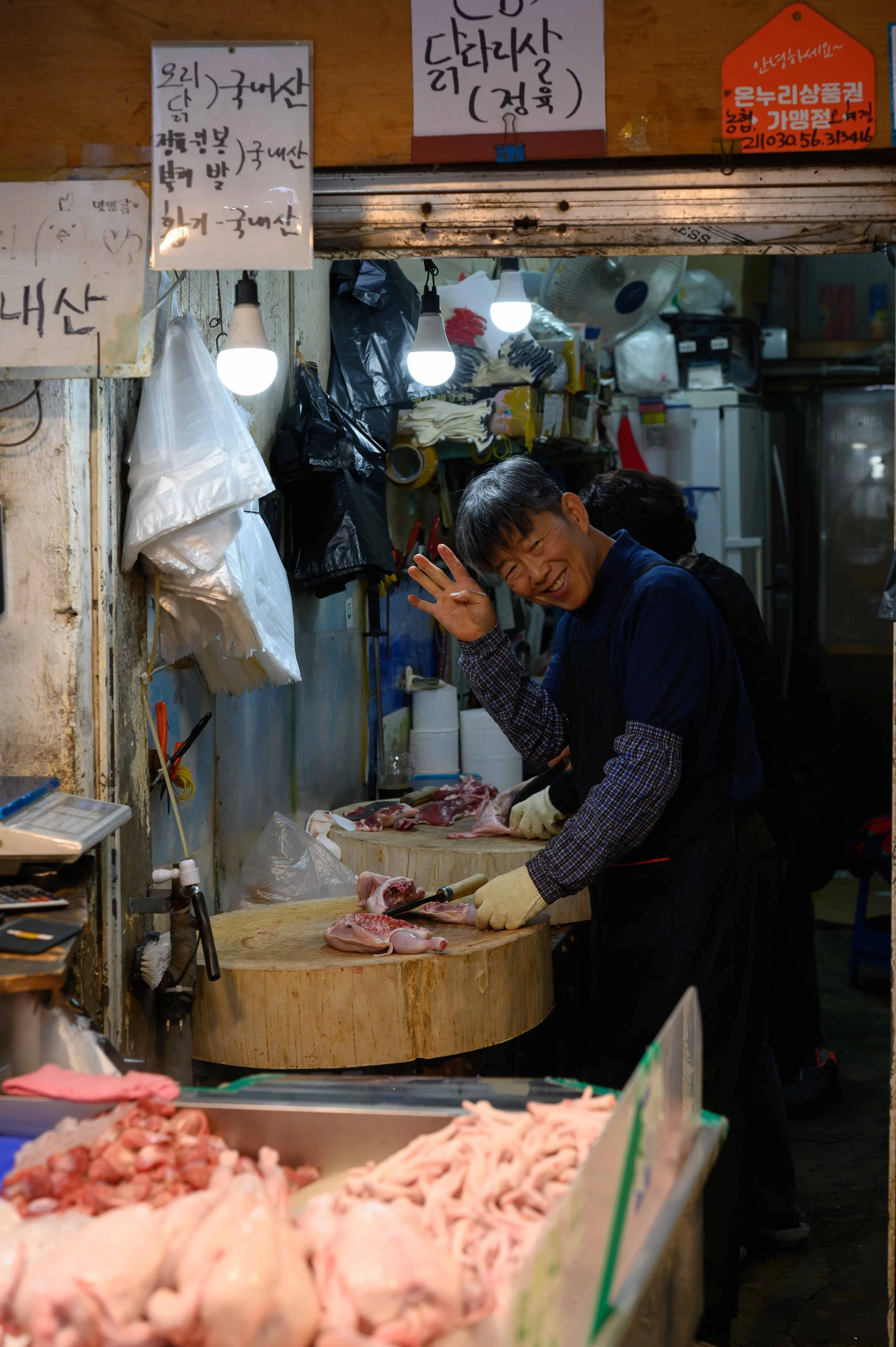
Smoked / grilled chicken and duck - Whole birds roasted or smoked, sliced to order. Popular for takeaway meals, often eaten with simple sides or wrapped in leaves at home.
Fresh tofu - Tofu made on site, still warm, with a soft and delicate texture that is completely different from packaged tofu. Fresh tofu is often eaten the same day with soy sauce or chilli seasoning.
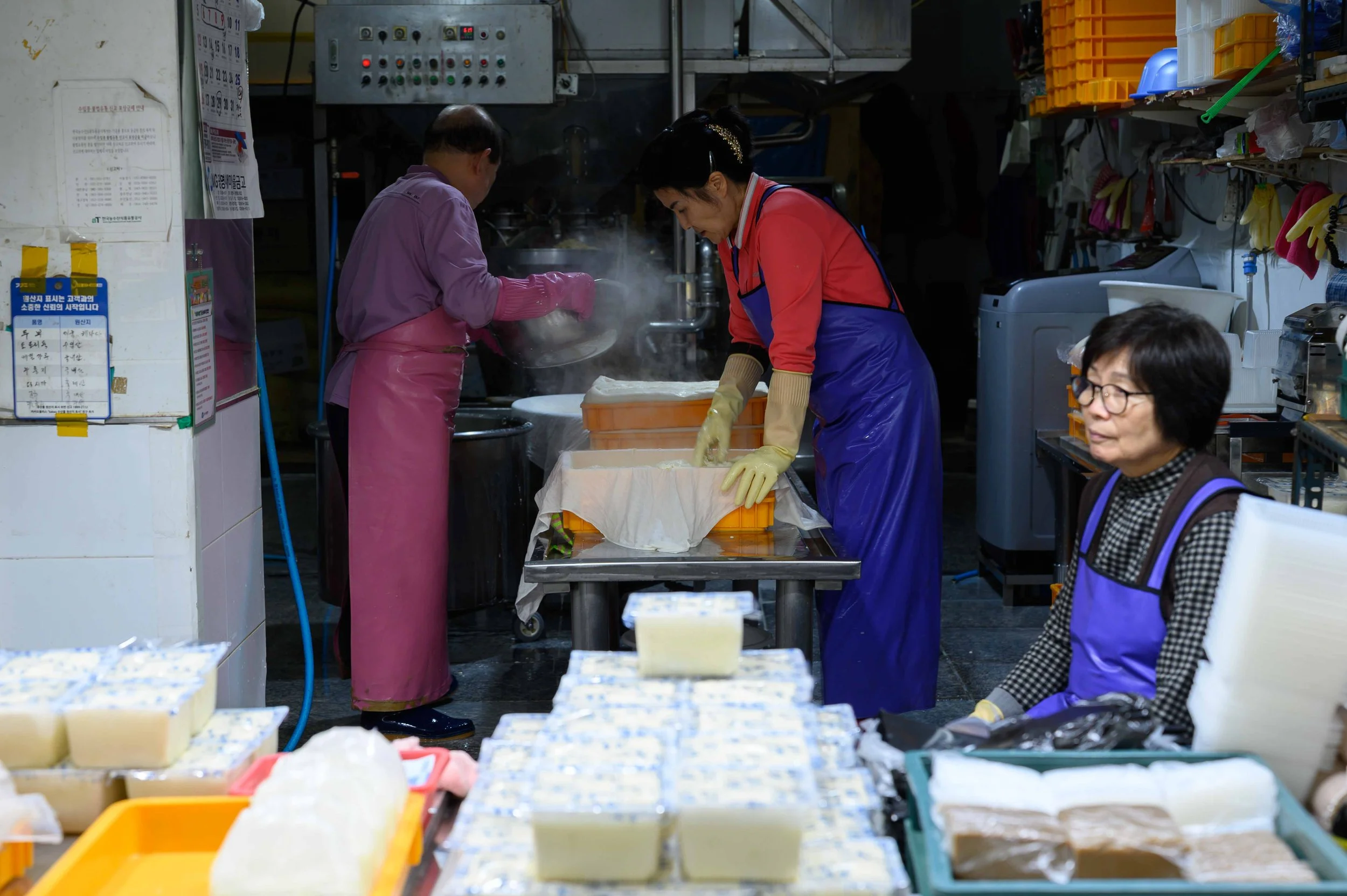
Fresh tofu being made
Scorched rice snacks - Made from nurungji, the crispy layer of rice left at the bottom of the pot. Sold as a snack or steeped in hot water as a comforting drink, especially popular with older generations.
Fresh sesame oil stall - Sesame seeds ground and pressed on the spot, producing intensely fragrant oil. Fresh sesame oil contains sediment and needs refrigeration, as it can spoil more quickly than bottled versions.
Twigim (튀김) - A collective term for Korean market fritters. Squid, sweet potato, and gimmari are battered and fried to order, then often dipped straight into tteokbokki sauce, one of the most common and loved ways to eat them (See the picture at the top of the article).
Tteokbokki & Eomuk (떡볶이 & 어묵) - Spicy rice cakes simmered in a gochujang-based sauce alongside fish cakes. We dipped our twigim straight into the rich, sweet, deeply savoury sauce. Dan explained that tteokbokki is considered happy food, something eaten with friends when you are in a good mood. In Korea, where and what you eat is often tied closely to how you are feeling.
Fried chicken - Korean fried chicken coated in a sticky gochujang sauce, served with pieces of tteok that act like chips, soaking up the glaze. Sweet, spicy, and impossible to stop eating.
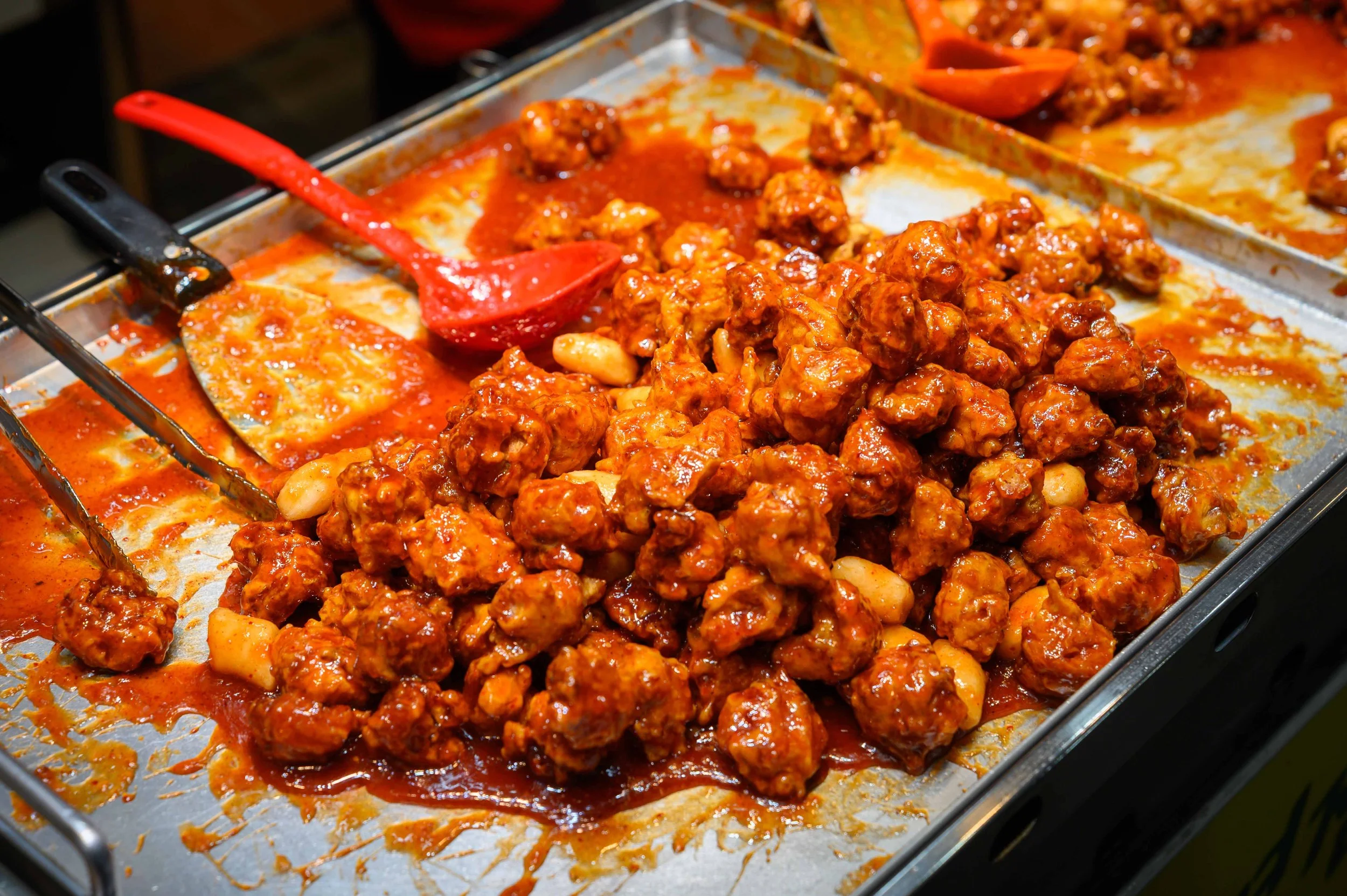
Korean fried chicken
Porridge - red bean porridge and pumpkin porridge, are both traditionally associated with comfort and nourishment. These are often eaten when someone is tired, unwell, or simply wants something gentle.
Korean sweets - Traditional rice cakes and sweets made with red bean, mugwort, and rice flour. These are less sugary than Western desserts and often have earthy, herbal flavours.
Gimbap - Seaweed rice rolls filled with vegetables and sometimes meat or egg. A classic everyday food, eaten for lunch, picnics, or as a quick market snack.
Kalguksu - we visited a busy noodle spot specialising in these knife-cut noodles and hand-pulled noodles served in hot broth. Extremely popular with locals and often judged by the texture and freshness of the noodles rather than the toppings.
Fresh fruit and vegetable stalls - Seasonal produce stacked neatly, including persimmons when in season.
Even with all of that, we barely scratched the surface. Other stalls were selling things we did not have time to stop for, snacks we could not identify straight away, and ingredients clearly destined for someone’s dinner table later that evening.
We said goodbye to Dan, and the longer we stayed, the more we noticed how layered the market was, and how easily you could spend hours wandering, tasting, watching, and still leave knowing there was far more you had not yet seen.
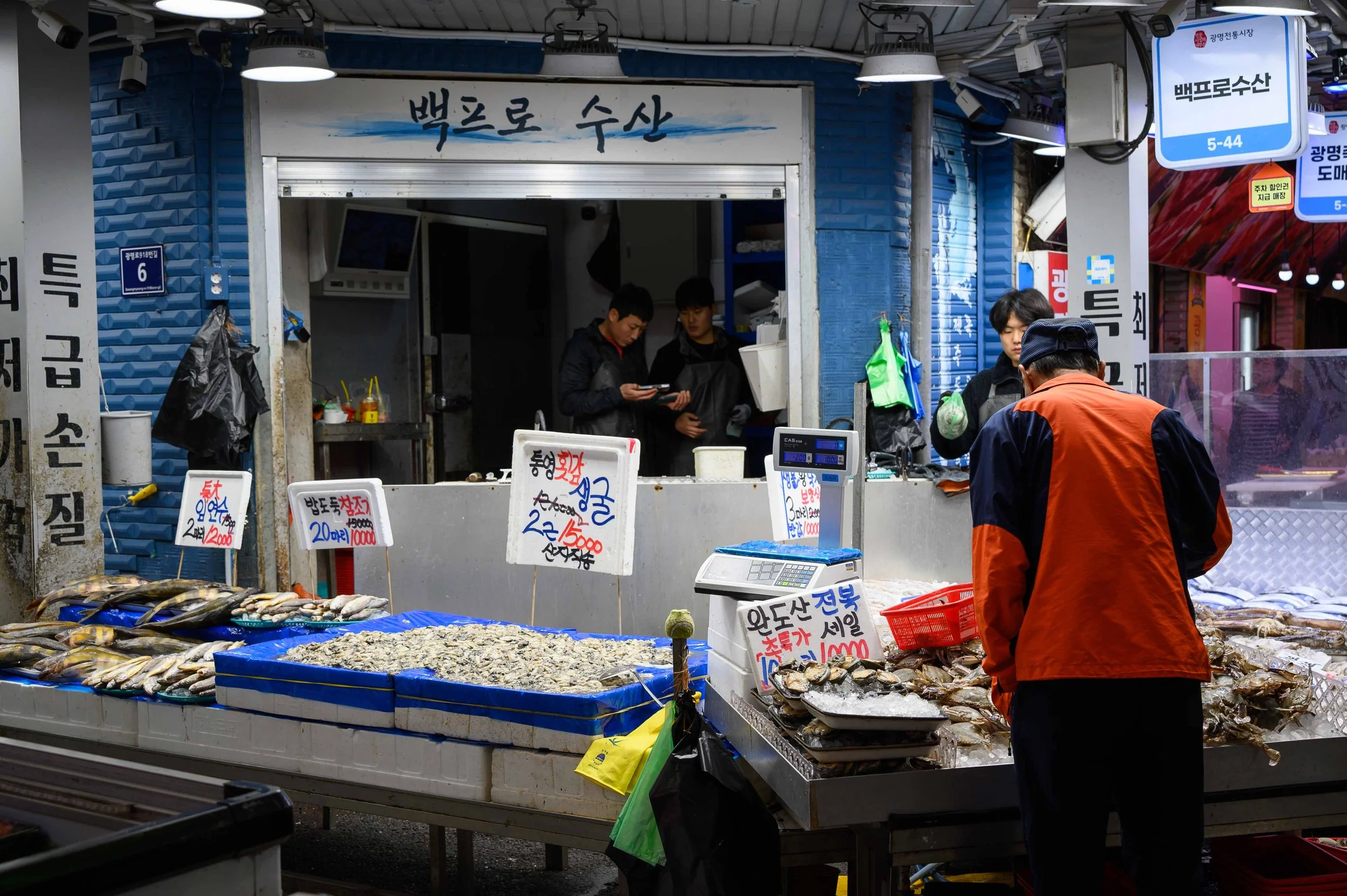
One of the more unexpected moments came at a live seafood stall. The owner clocked us straight away as “YouTubers” and shouted it out with a grin, despite not speaking any English. His stall was filled with tanks of live fish and a shallow tray of prawns that were still jumping around.
He asked, through gestures, if we wanted to try one. I said yes, before fully thinking it through. In one smooth motion, he picked up a live prawn, removed its head, cleaned it expertly, and handed it straight to me. I love raw seafood, but seeing it go from alive to handed in front of me was definitely a first.
The preparation was incredibly clean and precise, and yes, it was delicious. Alice and I could not stop laughing at how surreal the whole thing felt, especially as Dan had left by this point, so we had zero context on what was going on.
One minute the prawn was still moving, and two minutes later it was in my belly!
Spending a few hours with someone who genuinely knows a place has a way of reshaping how you experience it. This tour did exactly that. In the space of a morning and afternoon, Seoul stopped feeling like a destination and started to feel like a city we understood on a deeper level.
Through Dan, we were invited into everyday spaces. A family home, a local supermarket and a neighbourhood market. We learned how people live, what they eat, and why certain habits and traditions still matter. By the end of it, we were not just full, but better informed, more confident, and far more connected to the city.
Dan also left us with a long list of recommendations for the rest of our time in Seoul, places we never would have found on our own and experiences that continued to shape the trip long after the tour ended.
If you are visiting Seoul and want more than surface-level highlights, we cannot recommend one of his tours enough. A few hours with a local like Dan can completely change how you see, eat, and enjoy a city.
About Dan and 8 Birds Travel
Our guide, Dan (the founder of 8 Birds Travel), is from Seoul and has spent years working behind the scenes on international food and travel productions, including Netflix’s Street Food: Asia and Parts Unknown with Anthony Bourdain. But rather than recreating what you may have already seen on screen, his aim is to show you what rarely makes it there. How people live in Seoul. What a typical apartment looks like. How food fits into family life, workdays, and routines that never feature on a tourist map.
Use our code ‘HSRAMEN’ for a free gift on any tour you book.
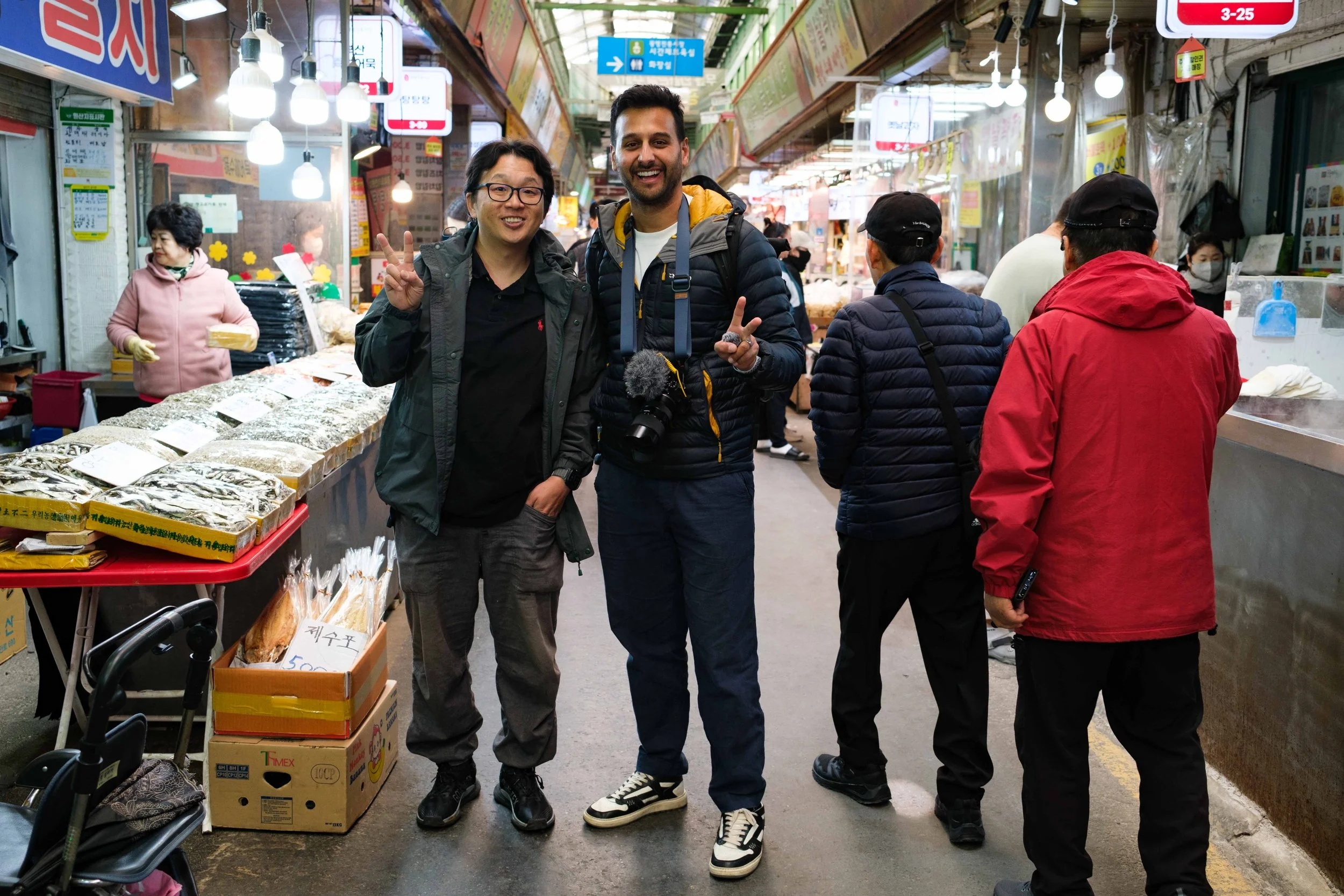
Dan and Zaeem enjoying the market
More From Seoul