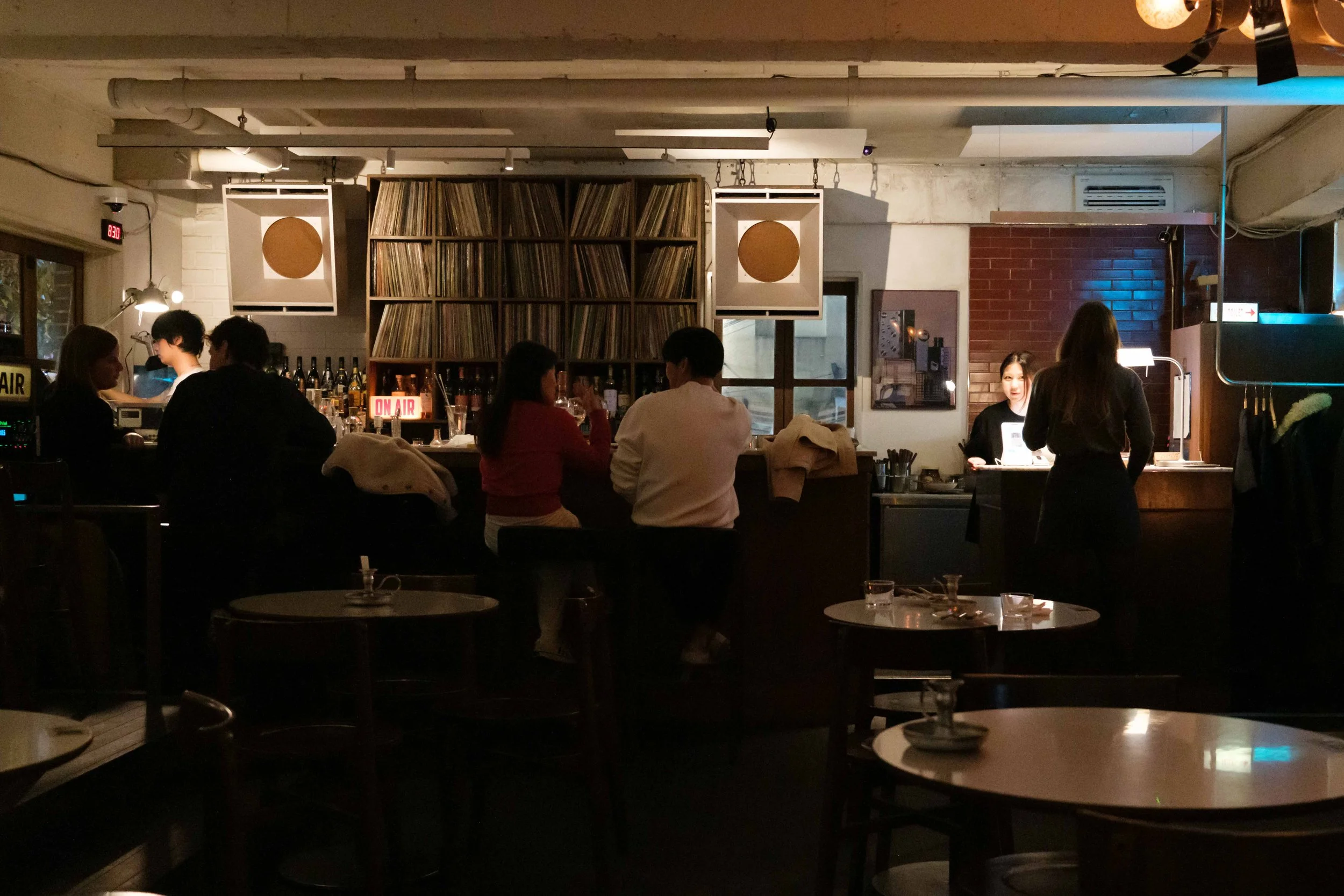
Cooking Classic Korean Food With Seoul Cooking Club
If you have been following us for a while, you will already know how much we love cooking. Whenever we travel, we try to book a cooking class or two early in the trip. It is such a good way to understand the local food culture, pick up recipes to recreate at home, and meet locals who know the best places to eat for the rest of your stay.
In Seoul, we had two food experiences planned for the first couple of days of our 2-week trip. One was a morning in a local Korean’s home hosted by Dan from 8 Birds Tours, which we will be writing about shortly. The other, on day three of our trip, was a hands-on cooking class at Seoul Cooking Club.
We absolutely loved our experience. Our teacher, Olivia, was warm, knowledgeable, and made everything feel fun and achievable. We cooked a range of Korean classics while Olivia explained the ingredients, shared their history, and happily answered every question we threw her way.
There was a lot of food, and everything we made was neatly packaged so we could take our leftovers back to the hotel (we kept them for the train to Jeonju the next day).
In this post, we will show you what we cooked, share our favourite moments, and hopefully inspire you to book a similar experience for your trip to Seoul.
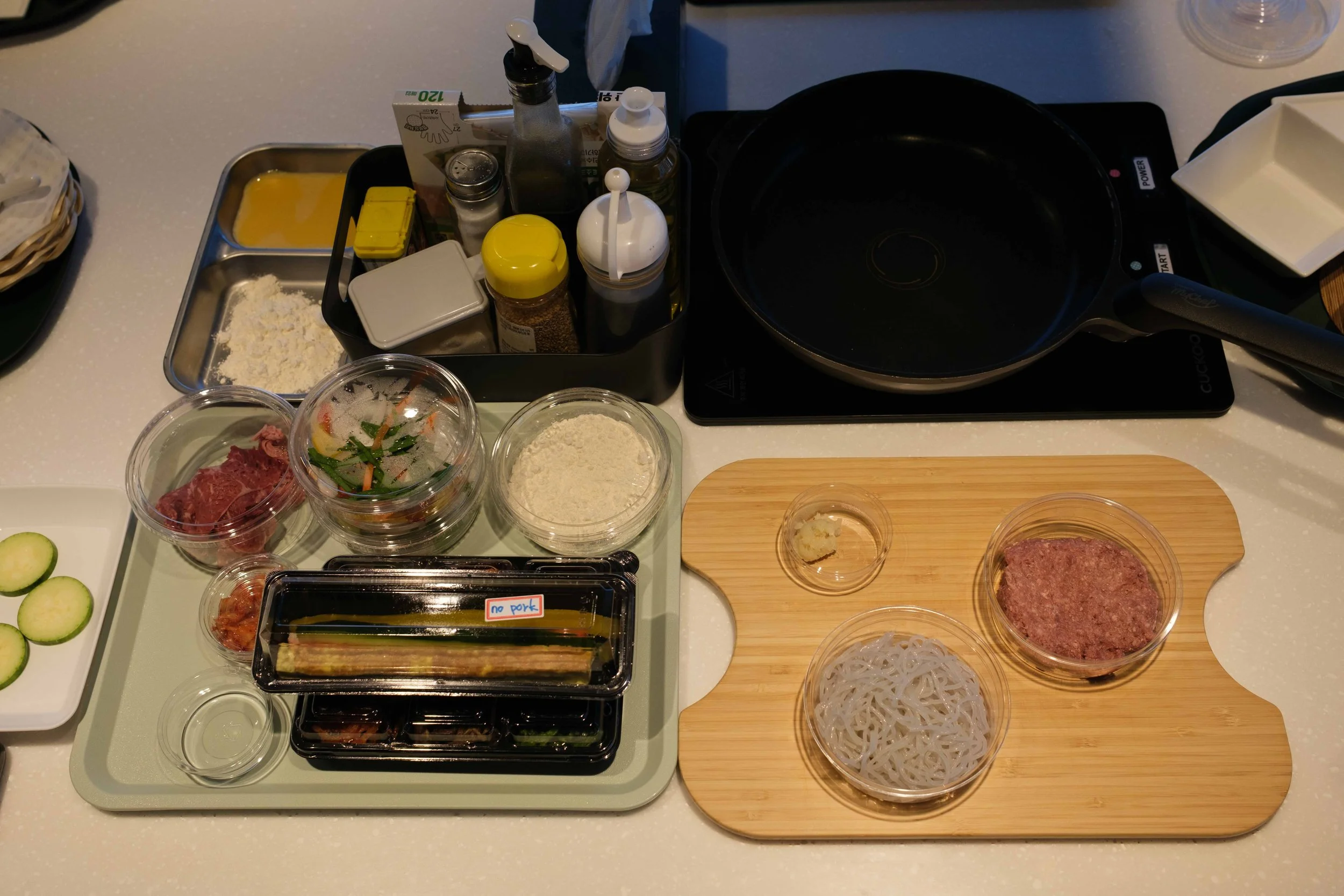
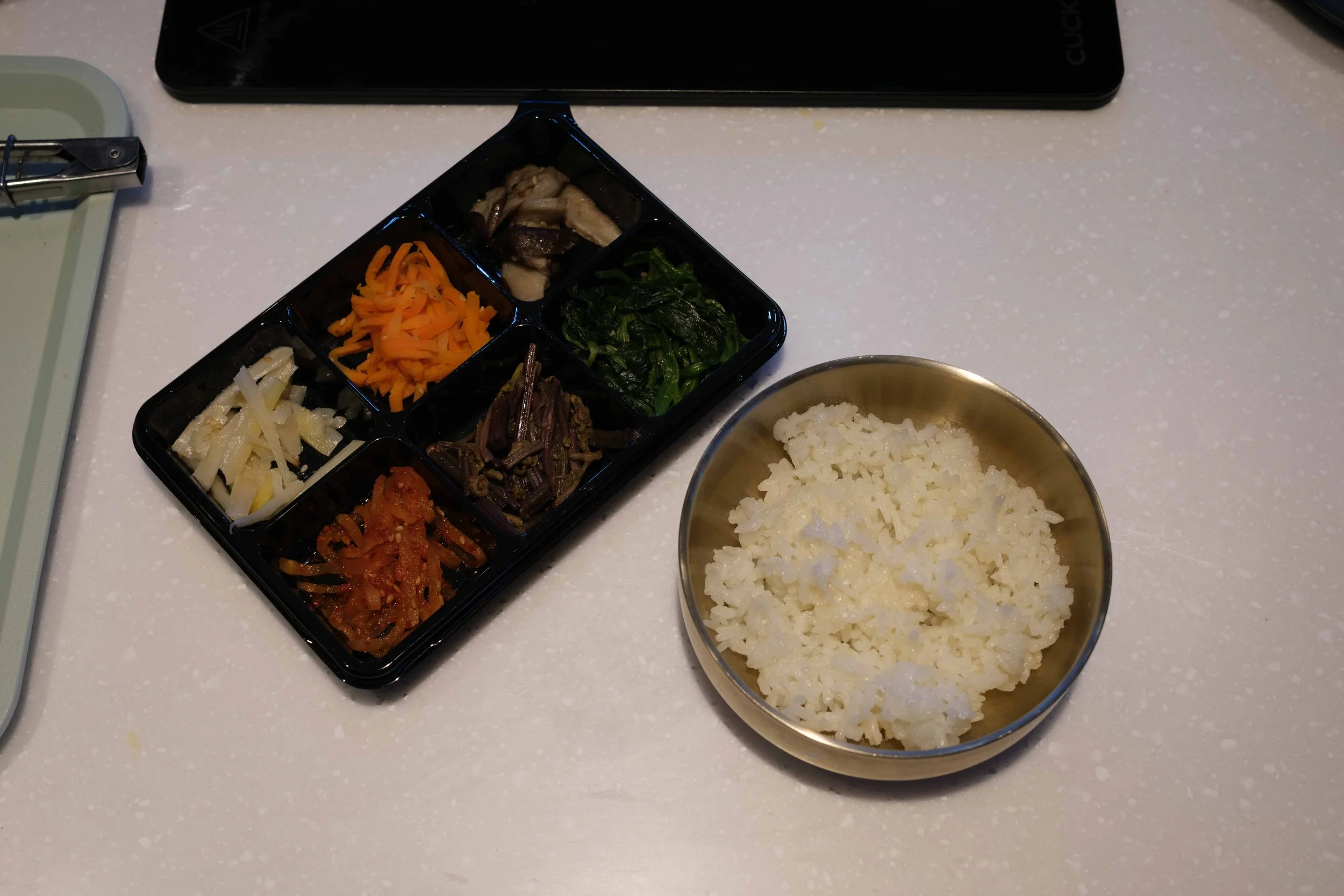
Our mise-en-place
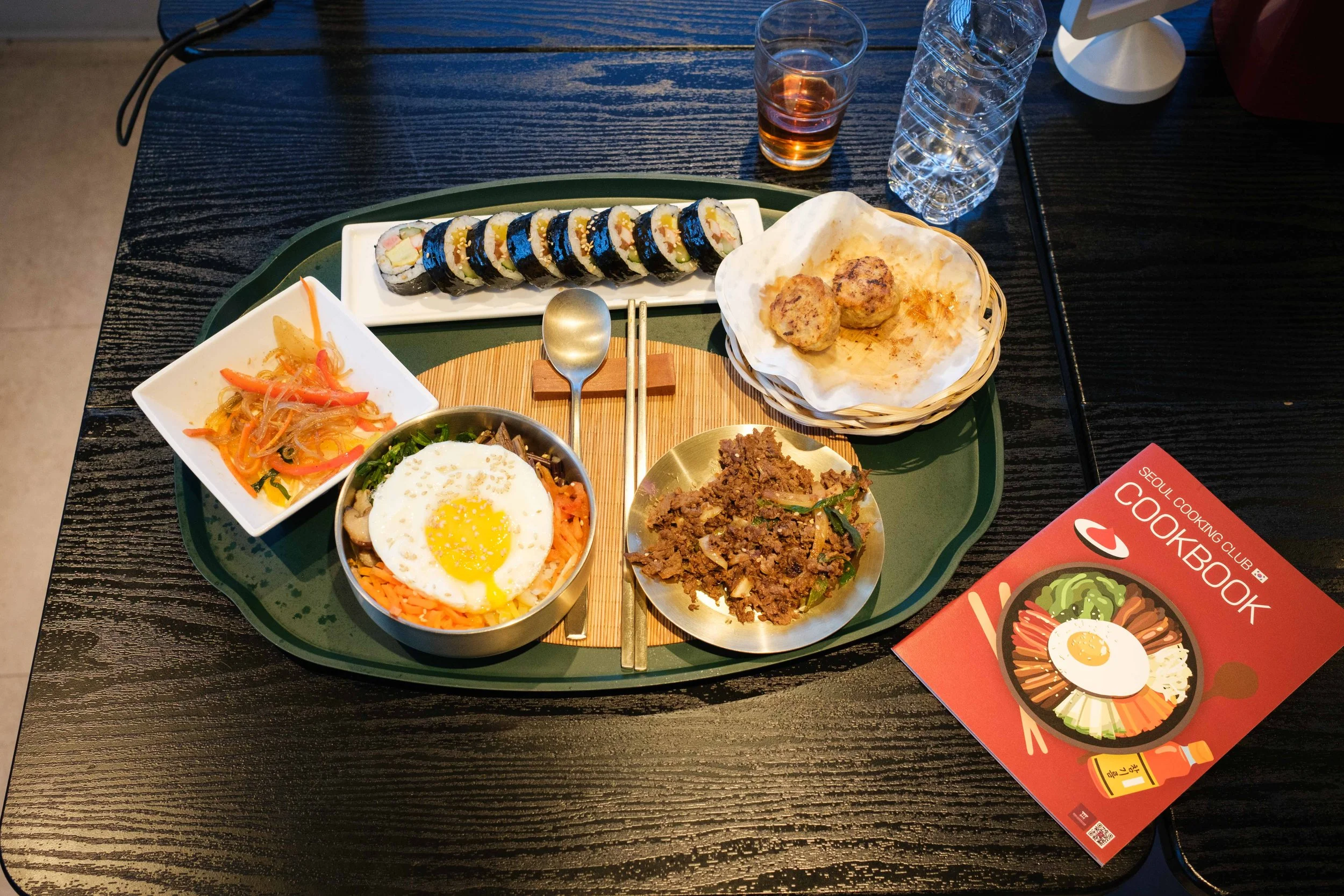
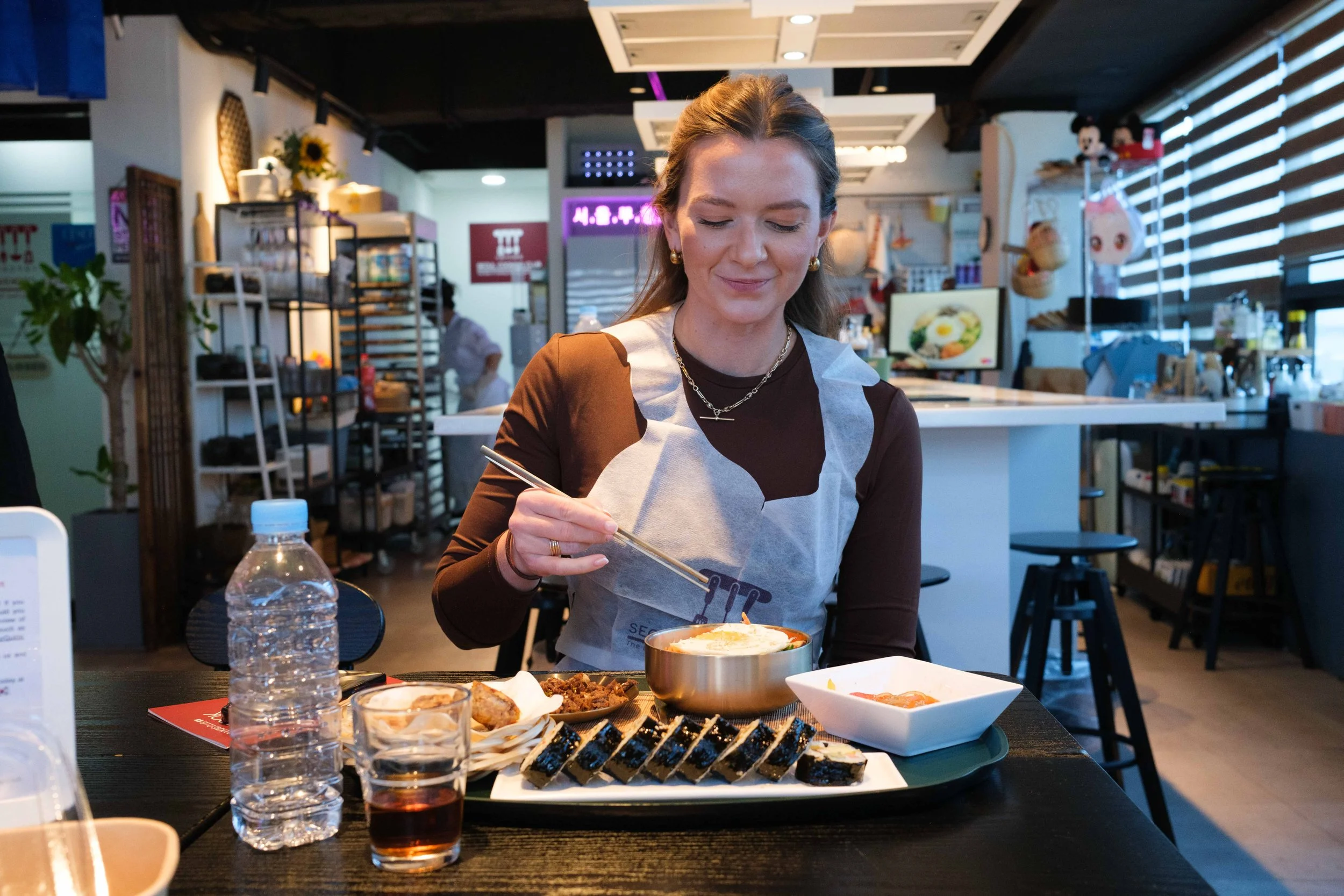
Our cooked meal
Disclaimer: This blog post contains affiliate links, which means that if you use our links to book this course, we earn a small commission at no extra cost to you. It is how we fund this website. This class was also provided to us free of charge in exchange for this review, although Seoul Cooking Club have no say in what we write.
About Seoul Cooking Club
Seoul Cooking Club is the creation of Julian Kim and Shane Jeon, who are both avid foodies and travel enthusiasts. They set up the cooking club in 2024 to share traditional Korean cooking with people visiting Seoul.
They offer three sessions: Brunch (10:00), Lunch (13:00) and Dinner (16:00)
The class lasts around 2.5 hours
You make several different dishes (we made 7), including starters and main courses
The class costs from £80 | $100 | ₩150 | €85 per person
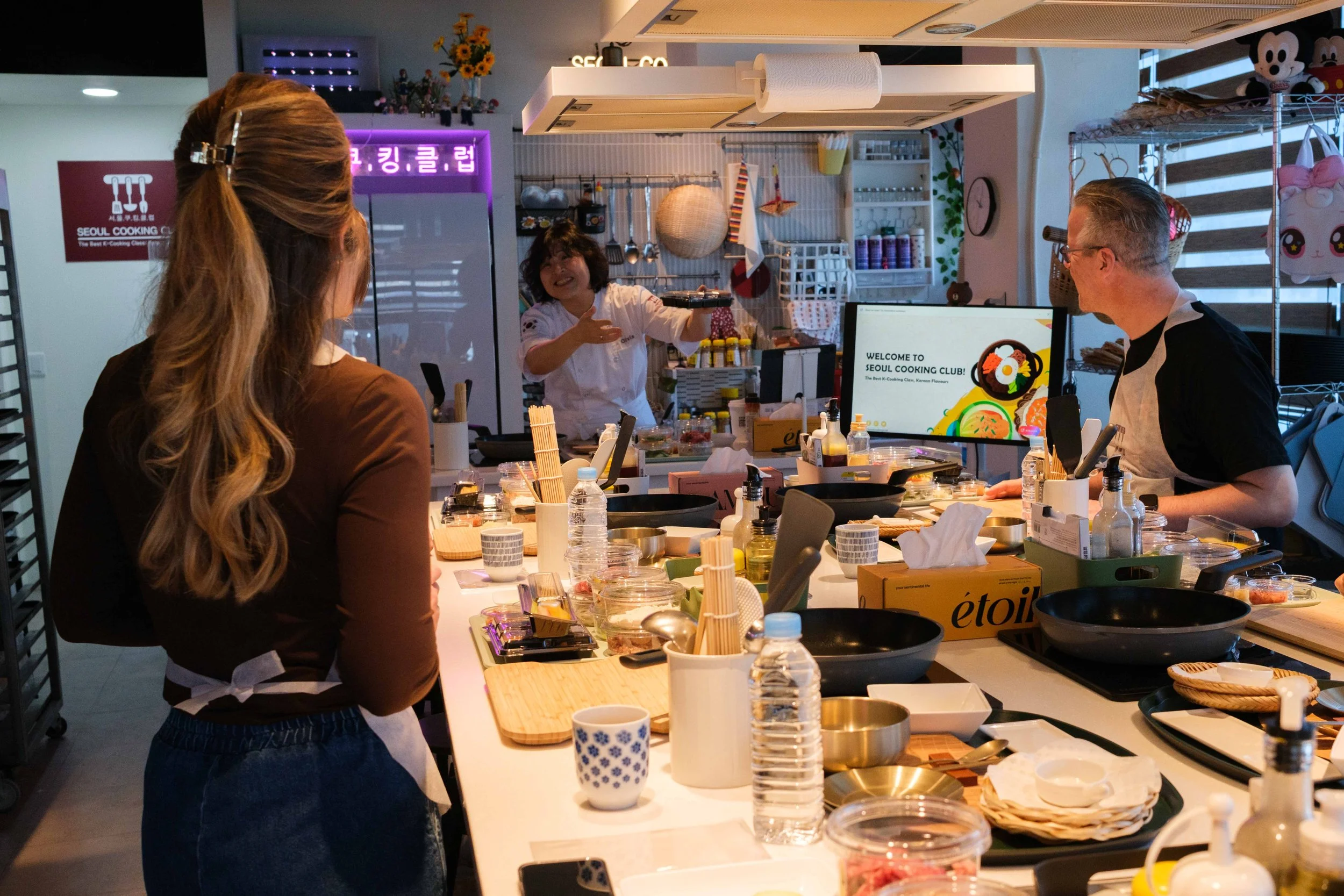
It takes place in their custom-built teaching kitchen
It’s located right in the centre of Seoul (Insa-Dong), a short walk from Myeongdong
Website | Google Maps Link | Naver Maps Link
Viator Booking Link (affiliate link that supports our blog)
Our teacher for the day was Olivia, who was incredibly sweet, spoke perfect English and was very helpful throughout the class, explaining the dishes, their history and how they fit into modern Korean culture.
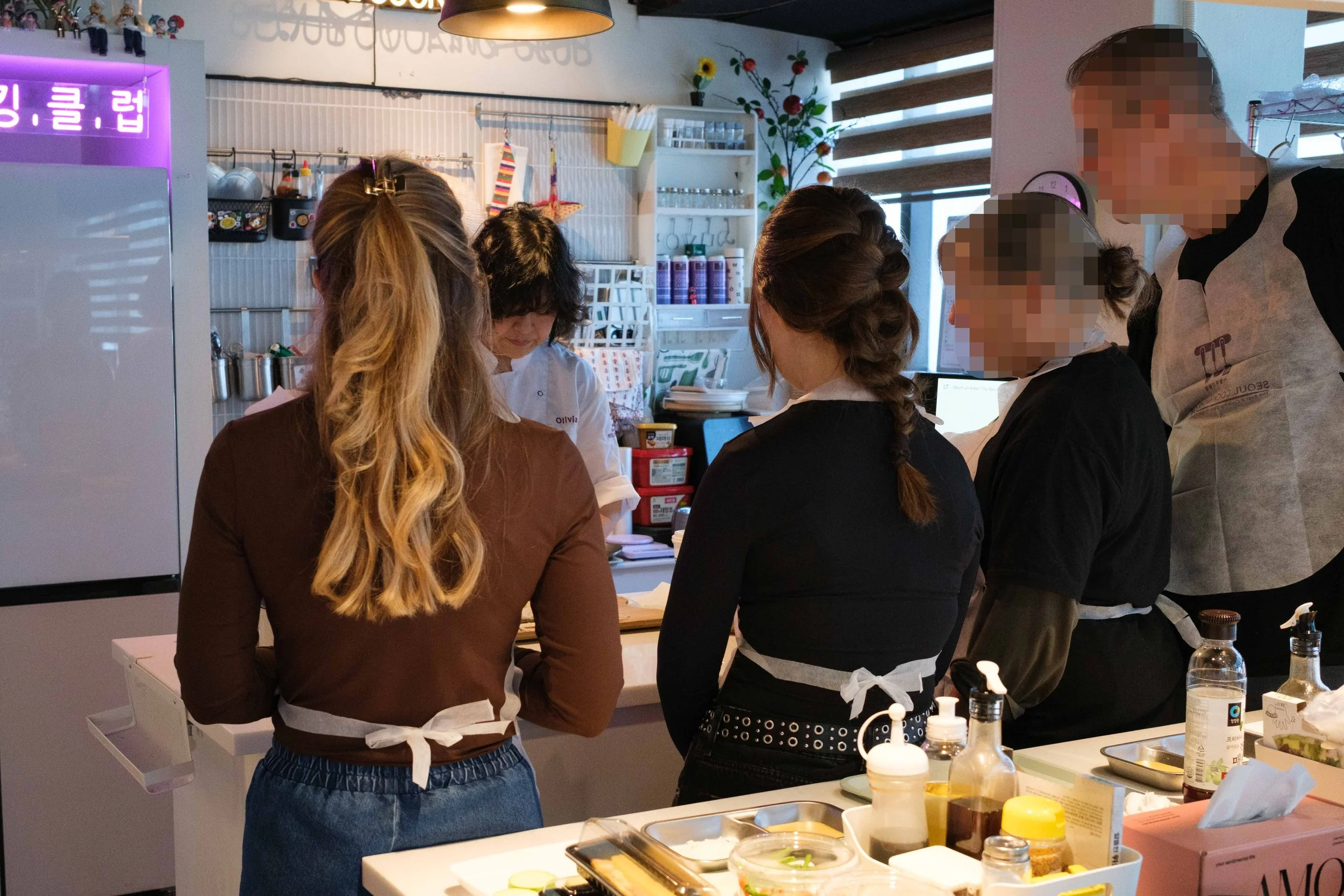
Olivia demonstrating our next dish
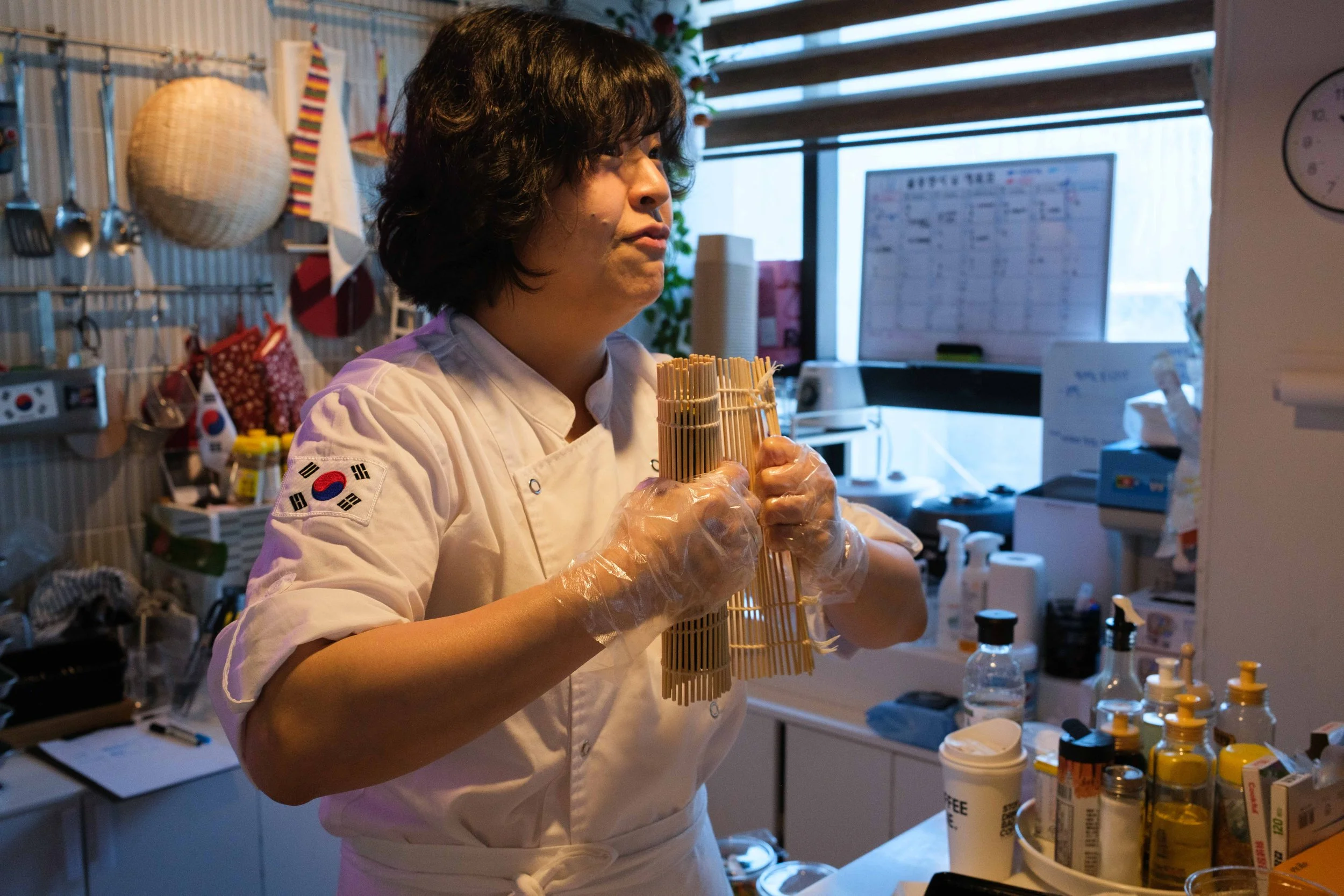
Olivia showing us how to roll Gimbap
There were five people in our class: both of us and a German family of three, which was lovely becuase we had a great time chatting with them, but the class was still intimate, meaning we got a lot of help with our cooking and had the freedom to ask any questions we wanted.
We started with some tea and coffee, got introduced to each other, and then school was in session. Olivia went over our mise-en-place and explained all the dishes we were going to make during the class.
The structure was that we would make each dish one by one, taste it to make sure it was right, and then sit down at the table at the end to enjoy our meal together.
The Dishes We Cooked
We cooked a total of seven dishes in this class, which meant it was an incredible amount of food, and every single one was incredibly tasty!
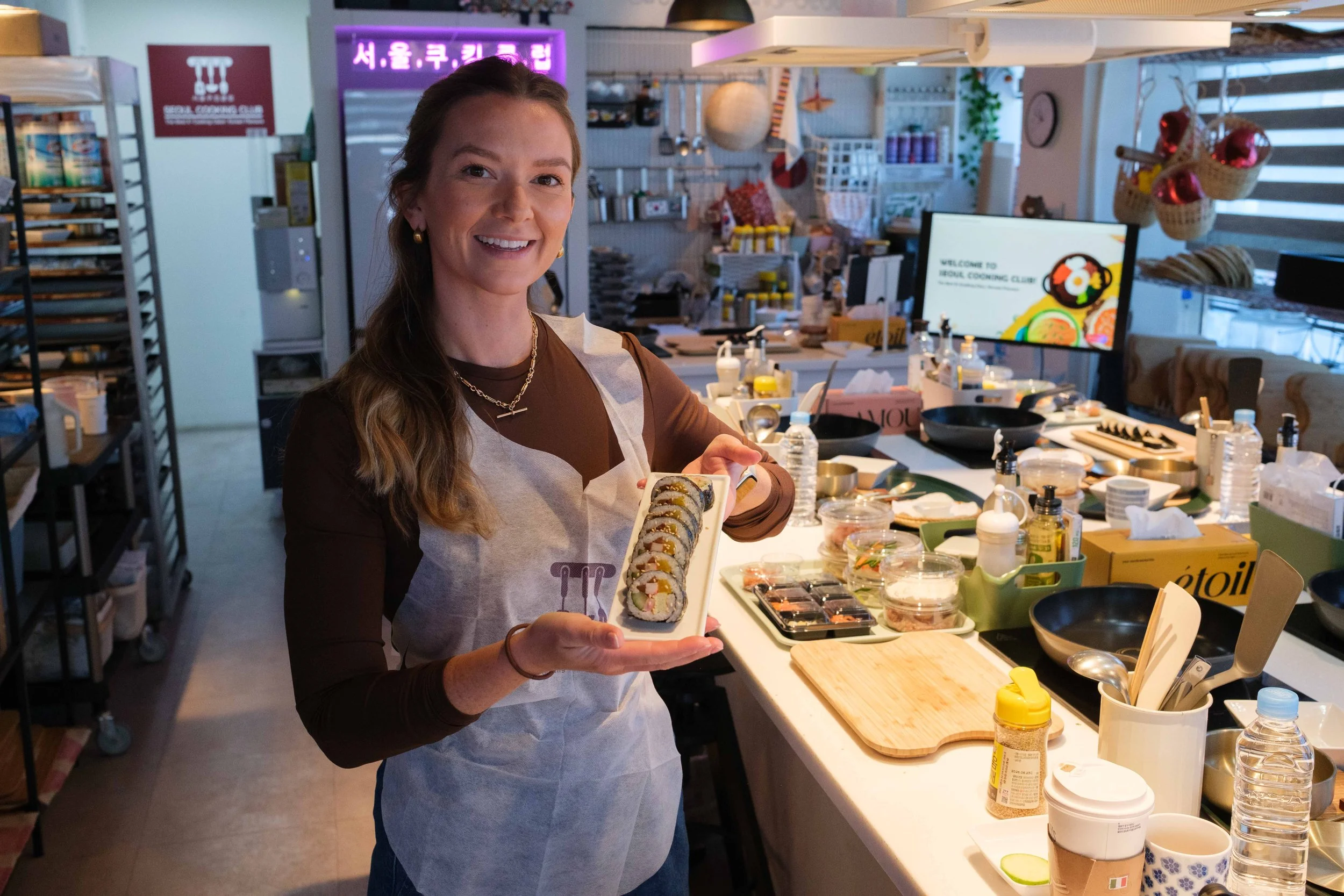
Gimbap 김밥
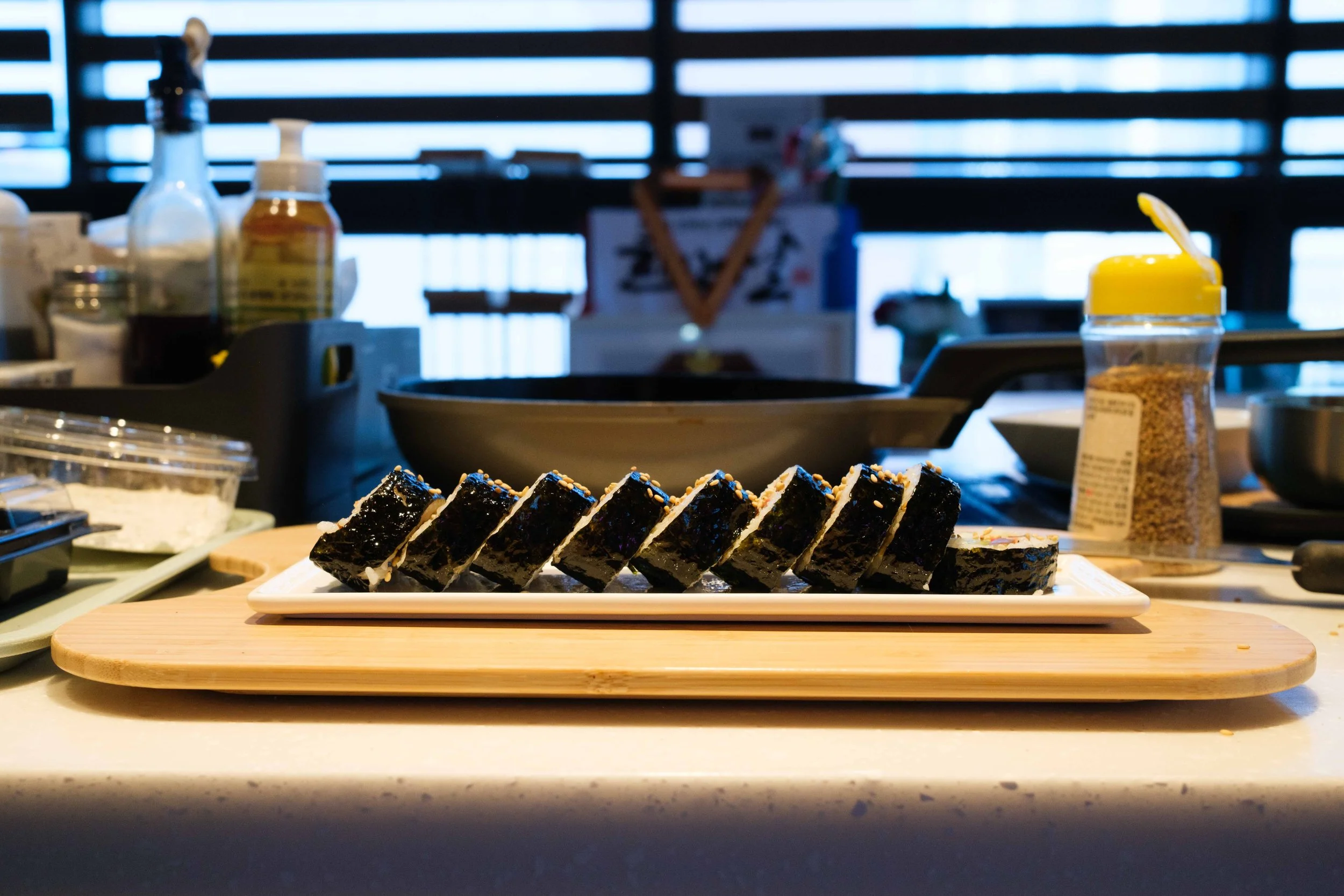
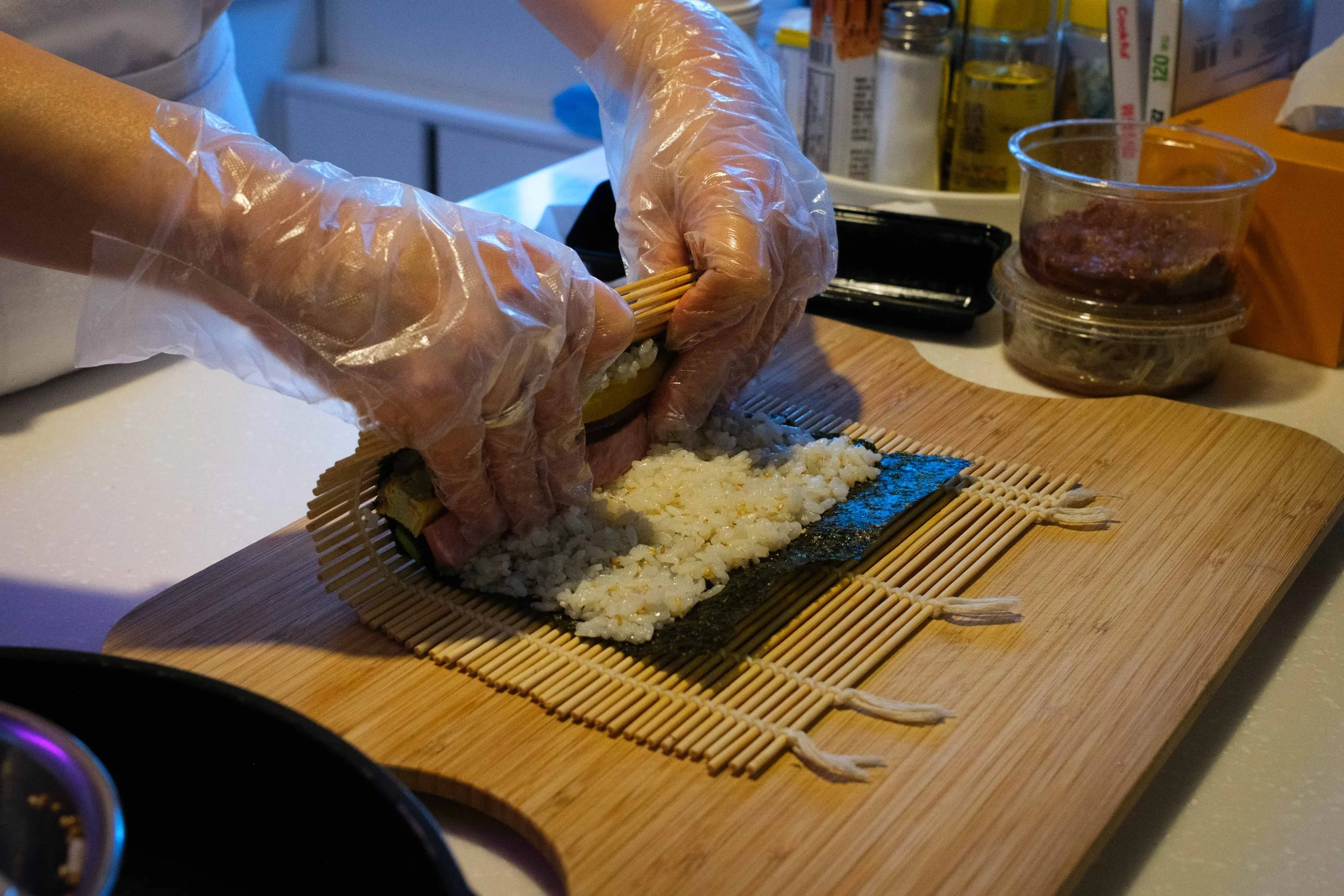
Gimbap is one of Korea’s most loved everyday foods. It looks a little like Japanese sushi rolls, but the flavours and fillings are entirely Korean. Steamed rice is seasoned with sesame oil, then rolled in seaweed sheets with colourful strips of vegetables, egg and sometimes meat. It is a popular lunchbox item, perfect for picnics, train journeys or a quick grab-and-go snack.
You will see Gimbap being served everywhere across Korea.
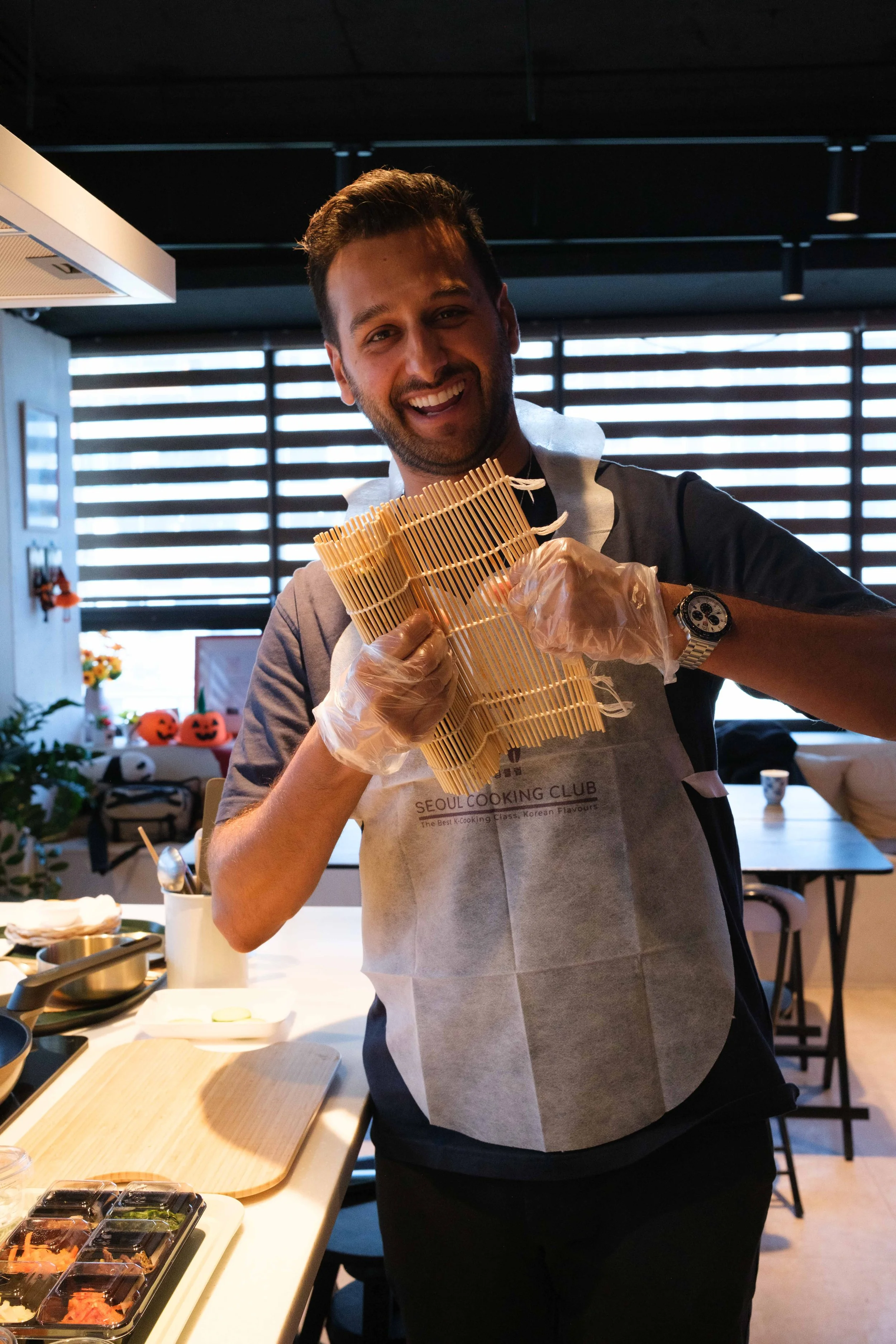
Kimchi Jeon 김치전

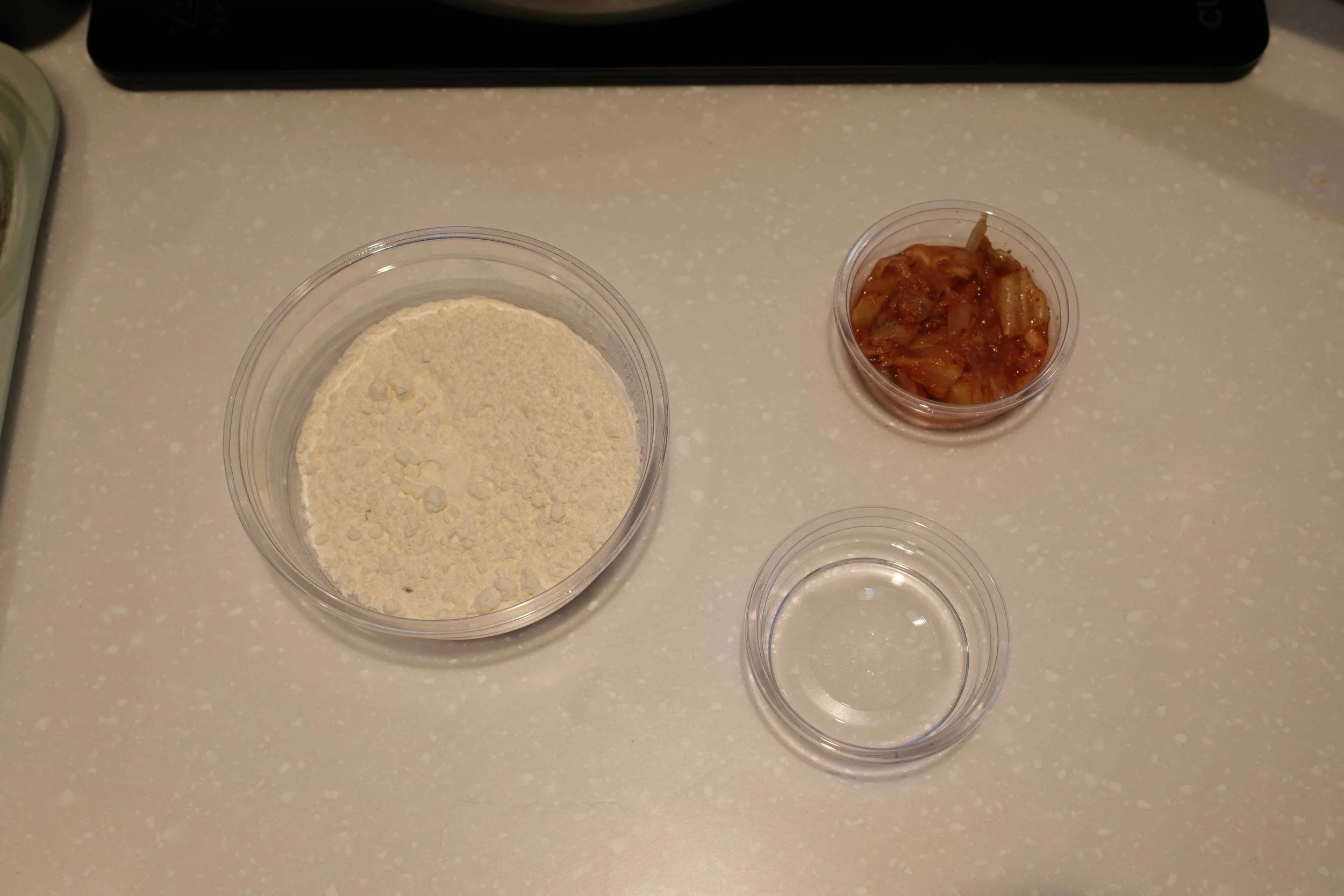
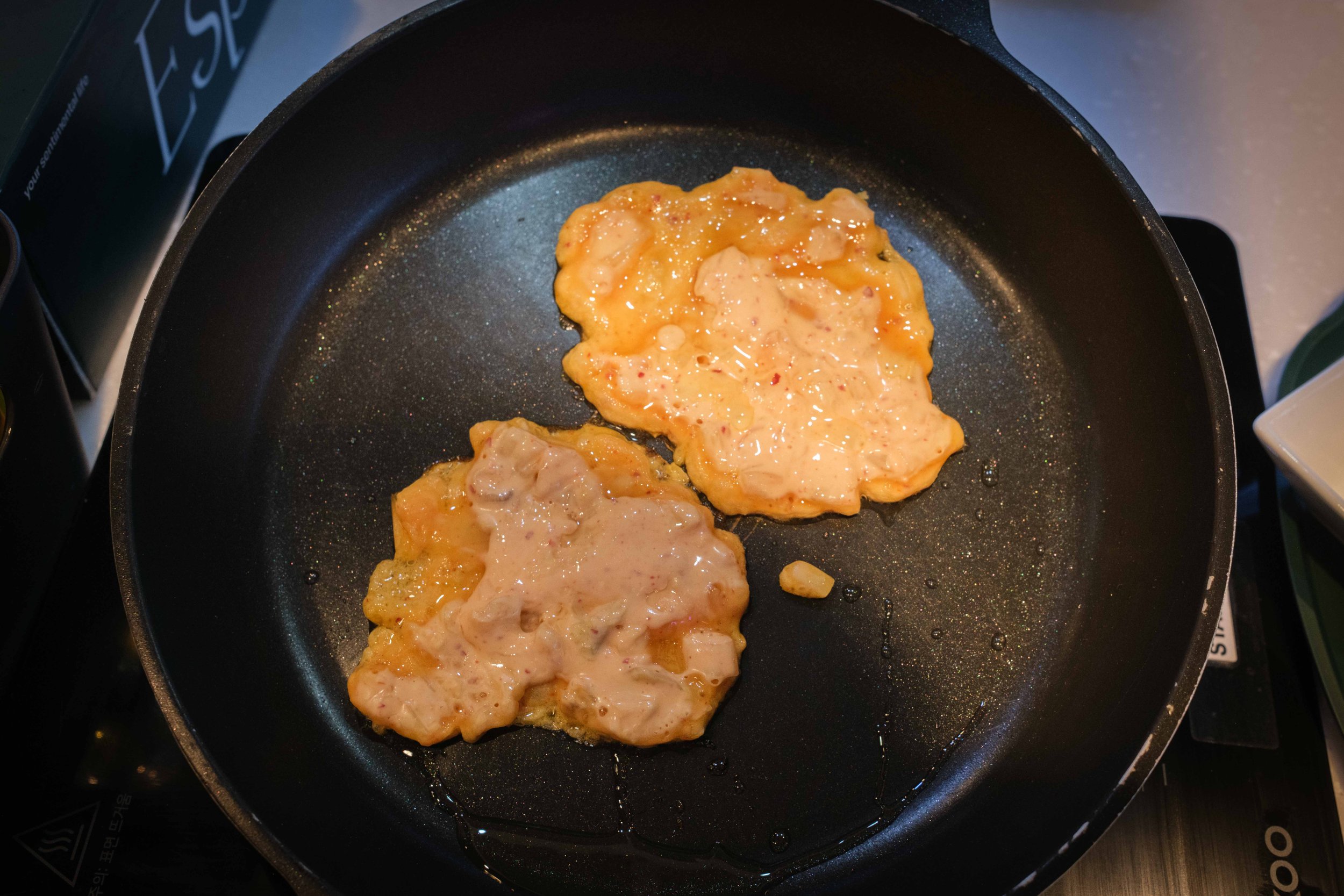
Kimchi jeon is a comforting savoury pancake. The batter is mixed with chopped kimchi and a little of its salty, spicy brine, which gives the pancake its bold flavour and slight chew. It cooks quickly in a hot pan until the edges turn crisp and golden while the centre stays soft. It is one of the easiest Korean dishes to make and pairs perfectly with a dipping sauce or a cold drink.
Hobak Jeon 호박전
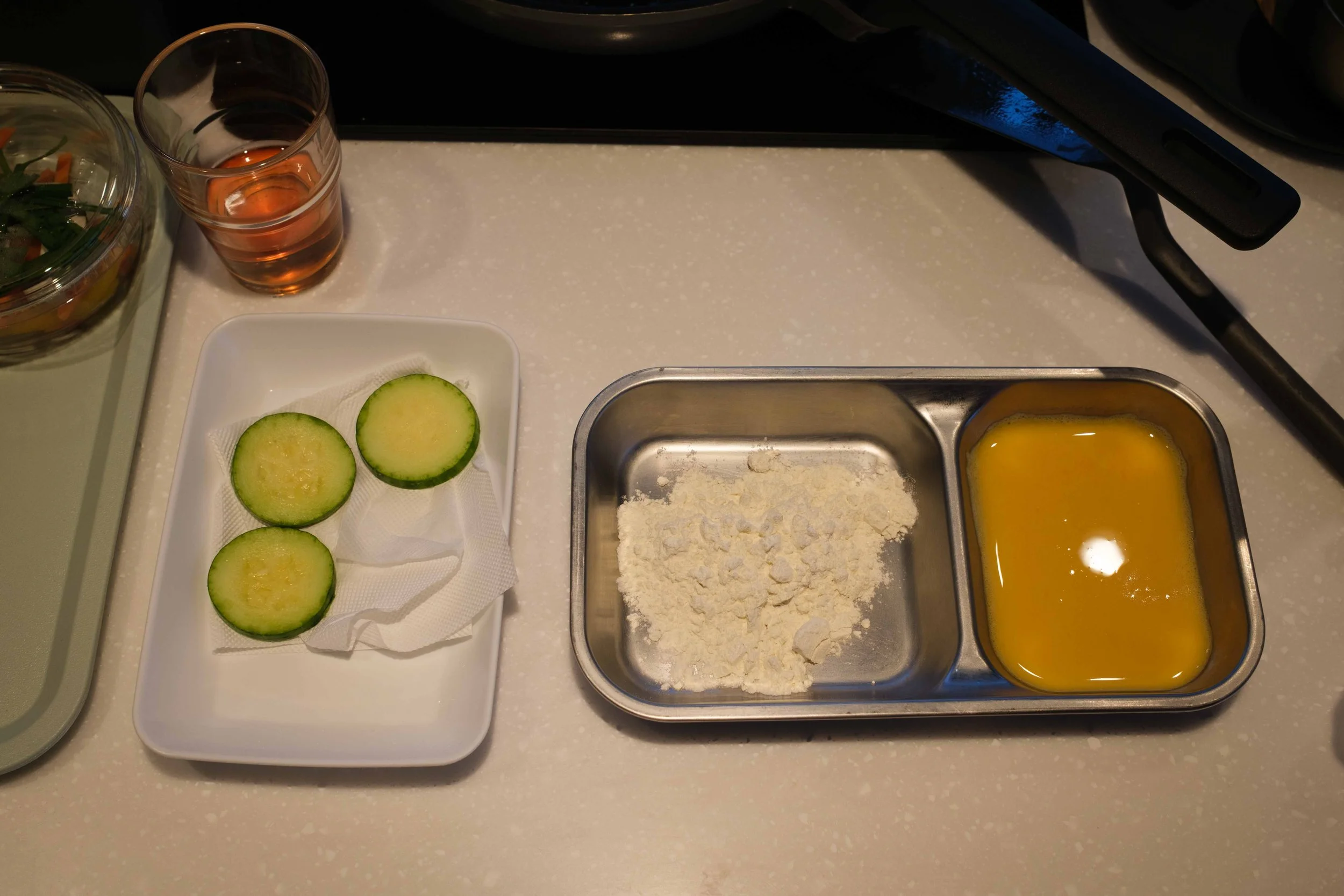
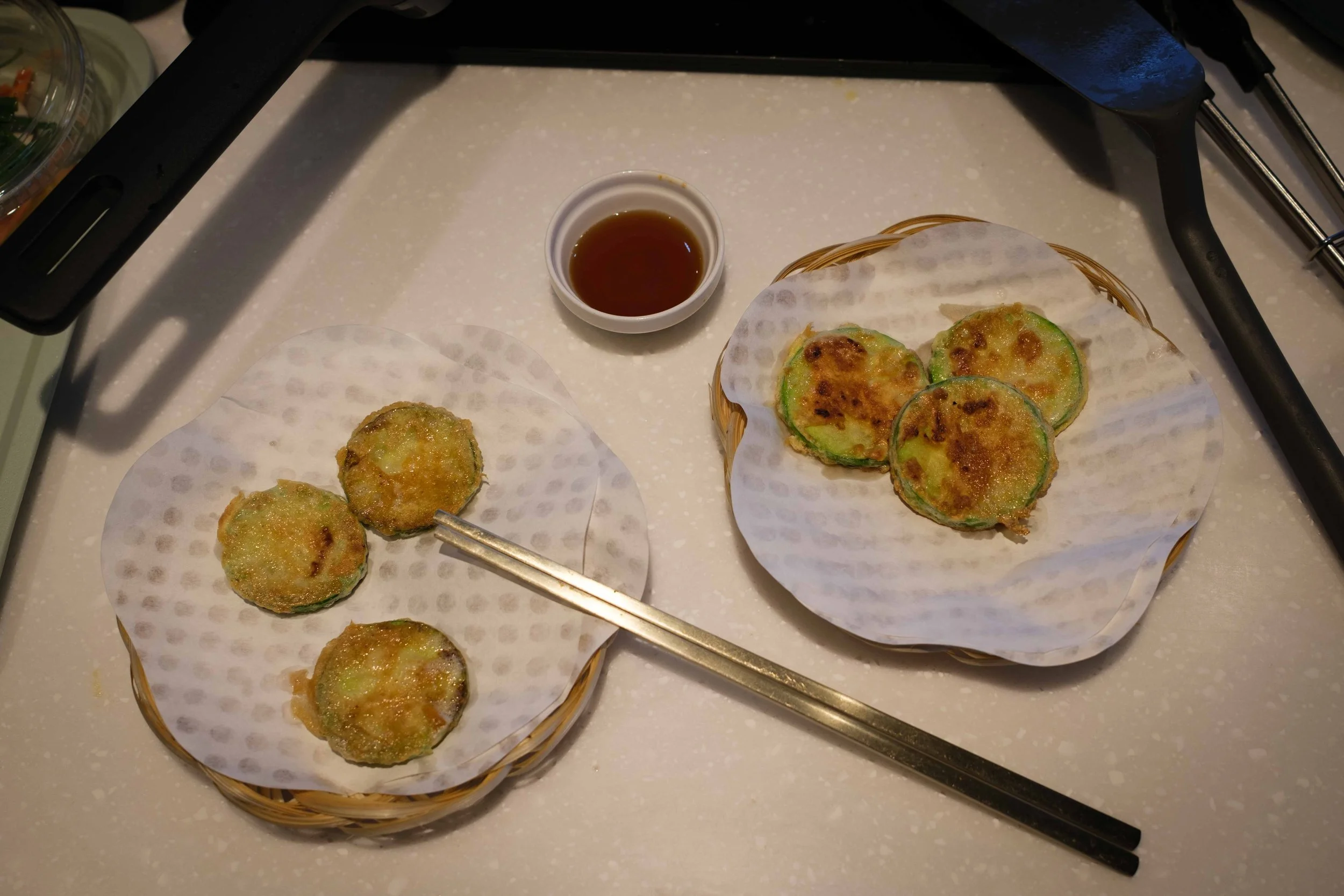
Hobak jeon is a courgette pancake that feels light and fresh. Thin slices of courgette are lightly coated in flour and egg before being pan-fried until tender with a gentle golden crust. It is a common side dish in Korean homes, often served warm alongside rice and other small plates.
Donggeuangttaeng 동그랑땡
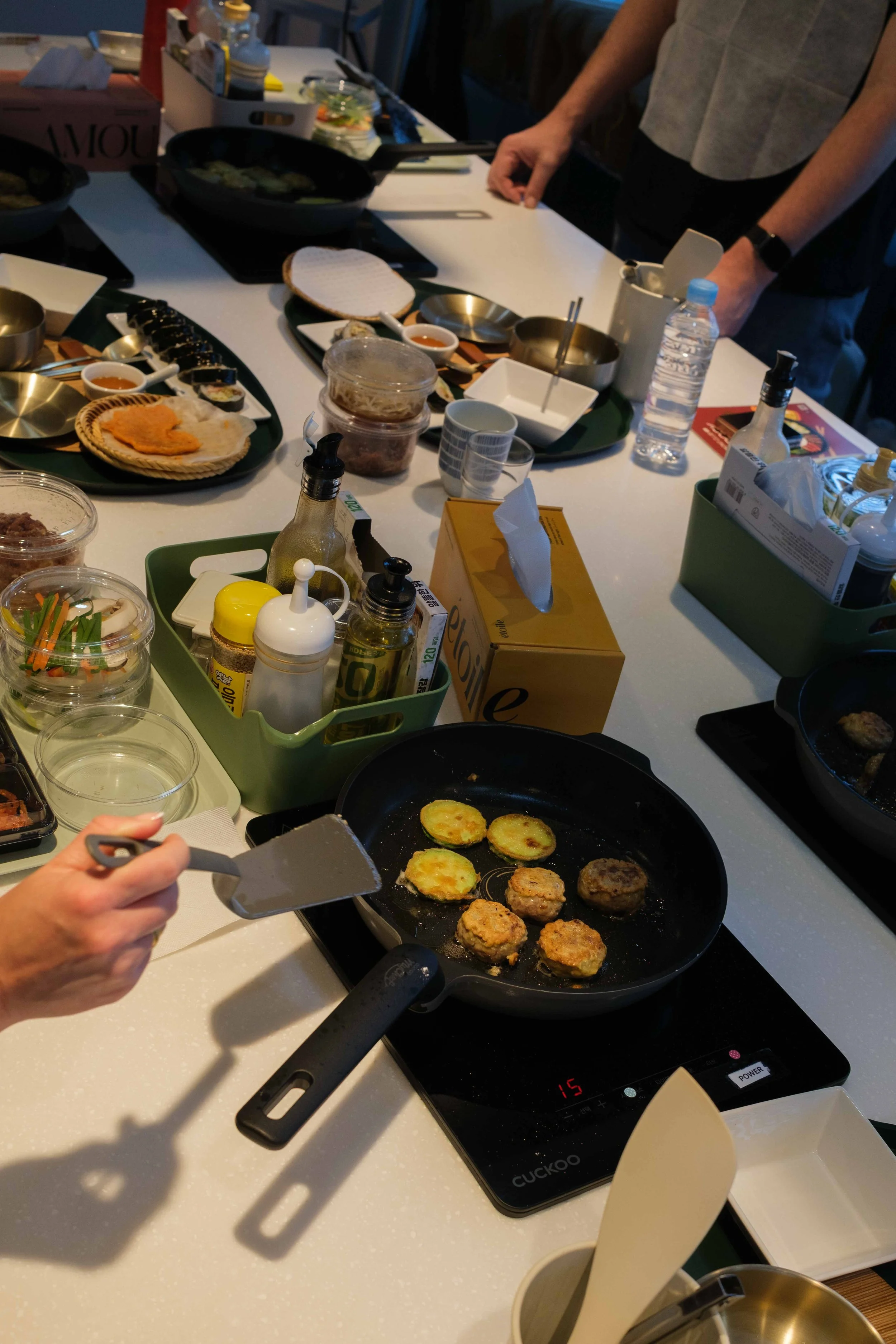
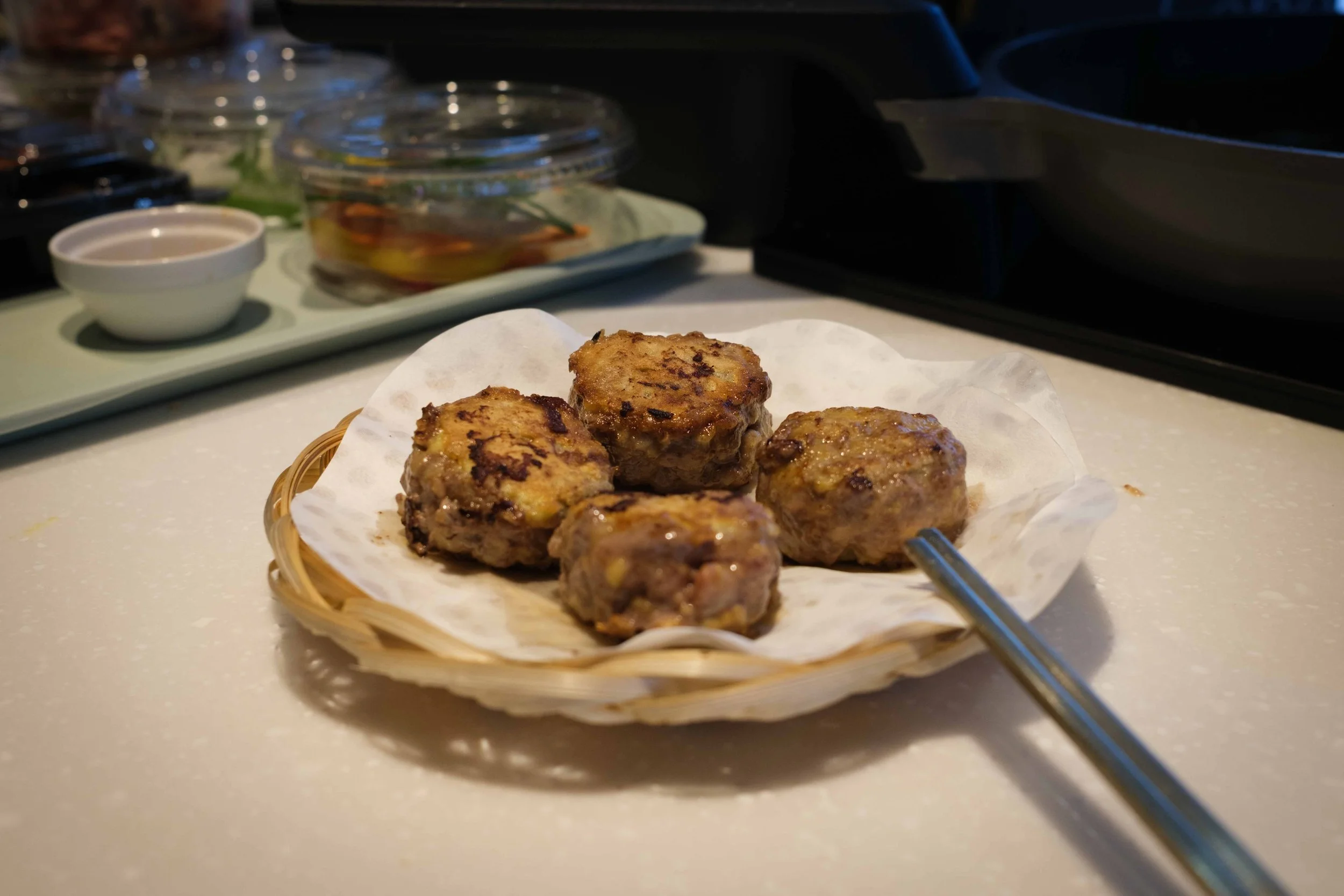
Donggeuangttaeng is a classic Korean-style meatball made with minced pork and tofu (mine was made with beef instead). The mixture is seasoned with garlic, spring onion and a touch of soy, which keeps the flavour gentle and savoury rather than spicy. Each patty is shaped small and round, then lightly coated in flour and egg before being pan-fried until the outside is golden and the inside stays soft. It is a popular dish in Korean home cooking, often served as part of a wider table of small plates.
Bulgogi 불고기
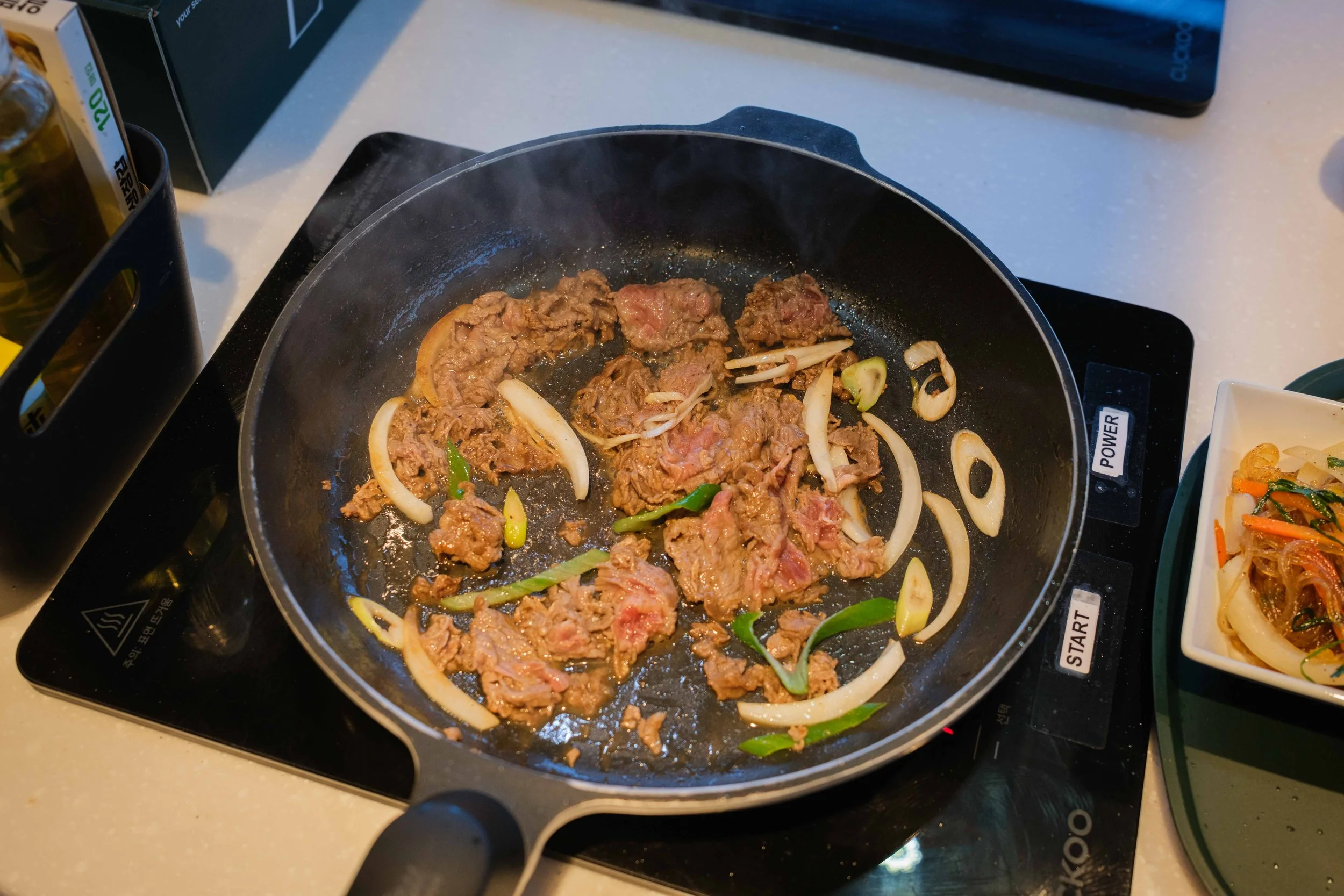
Bulgogi is one of the most famous dishes in Korea for very good reason. Thin slices of beef are marinated in a mixture of soy sauce, garlic, ginger and just enough sugar or pear to help the meat caramelise as it cooks. When it hits a hot pan, the edges turn slightly crispy while the inside stays tender and juicy. It has that perfect balance of sweet and savoury, which makes it so addictive. It is a dish you find everywhere in Korea, from home kitchens to casual restaurants, and it is surprisingly easy to recreate once you know the basics of the marinade.
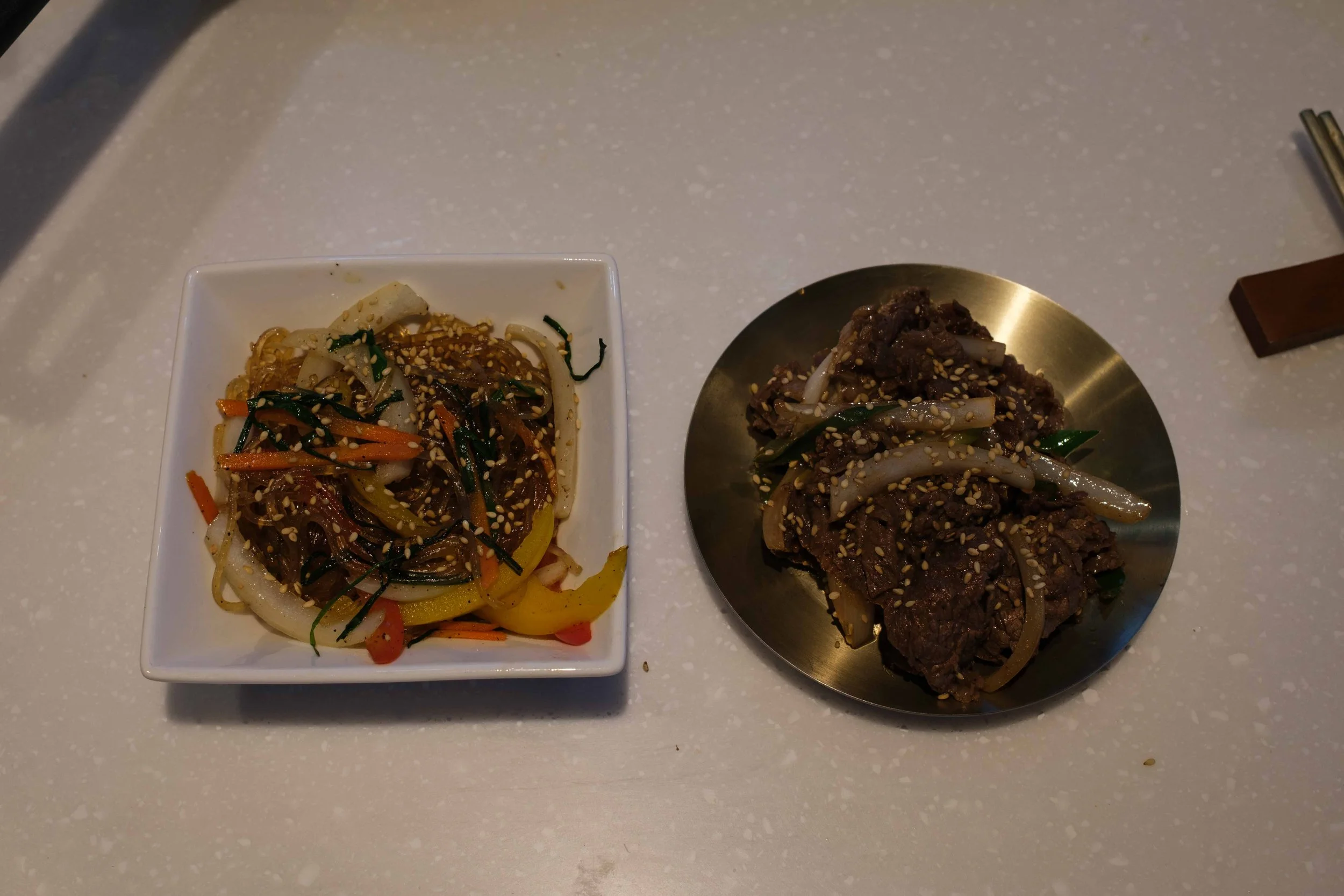
Japchae 잡채
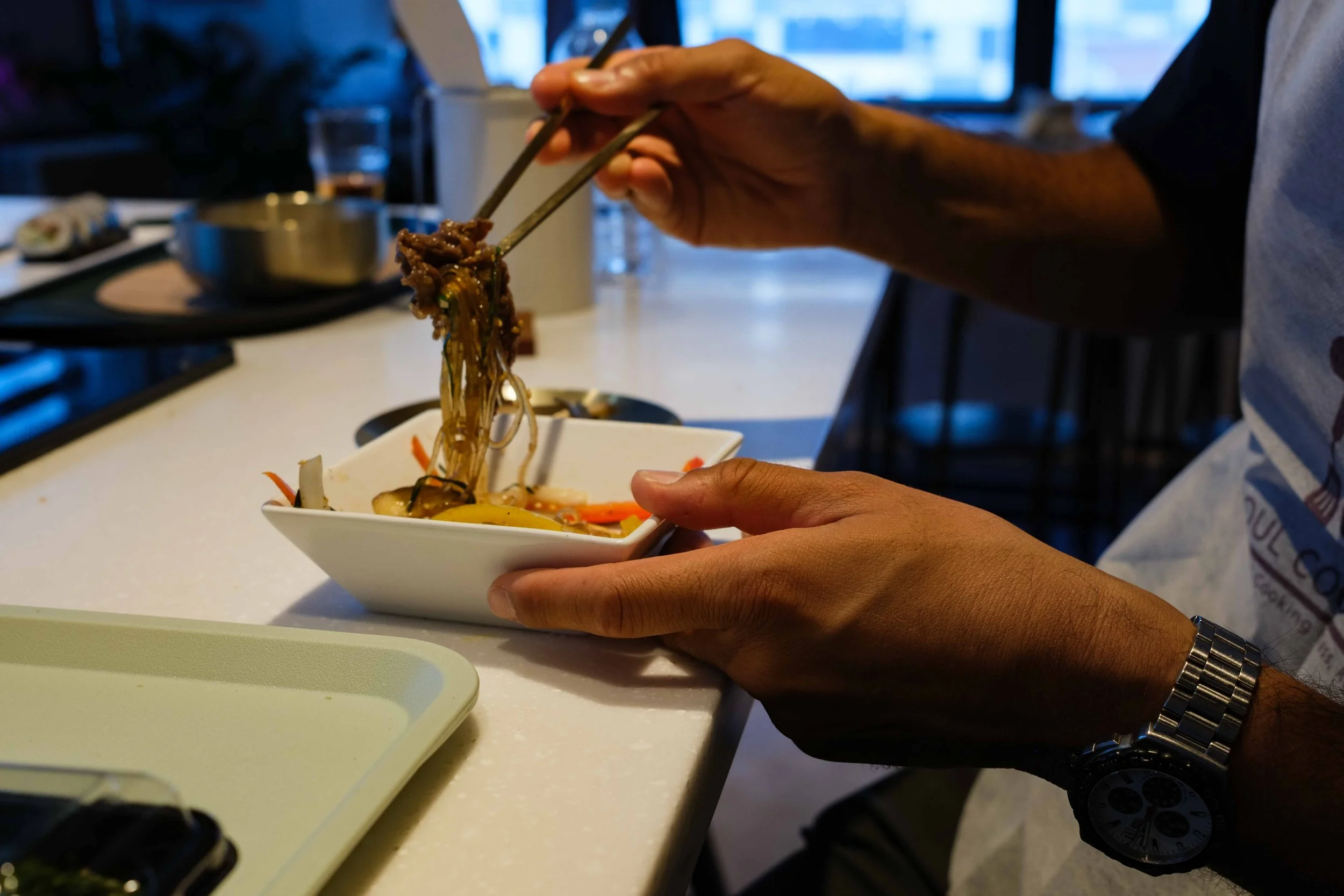
Japchae is a beloved noodle dish made with sweet potato glass noodles, which have a springy, chewy texture that is completely different to wheat pasta. The noodles are stir-fried with vegetables such as spinach, carrots and mushrooms, along with soy sauce and sesame oil, for a savoury, slightly sweet flavour.
The aroma of the sesame as it hits the warm pan is incredible. When making this at home, it instantly transports us back to Korea and will probably always remind us of this trip.
Japchae often appears at celebrations because it looks colourful and feels special, yet it is still comforting and familiar. Once you have tried making it, you realise it is much easier than it looks and tastes just as good cold the next day.
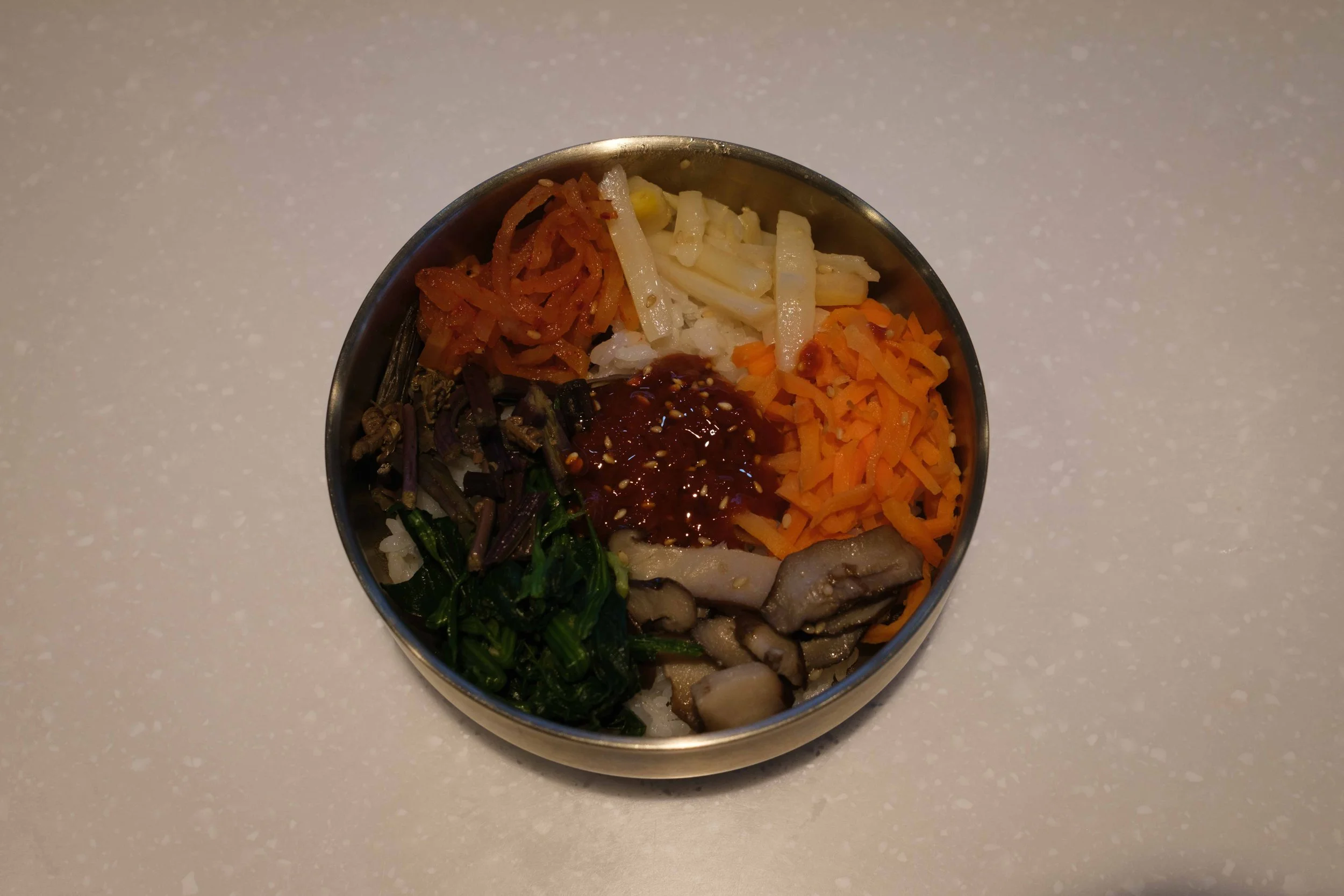
Jeonju Bibimbap 전주비빔밥
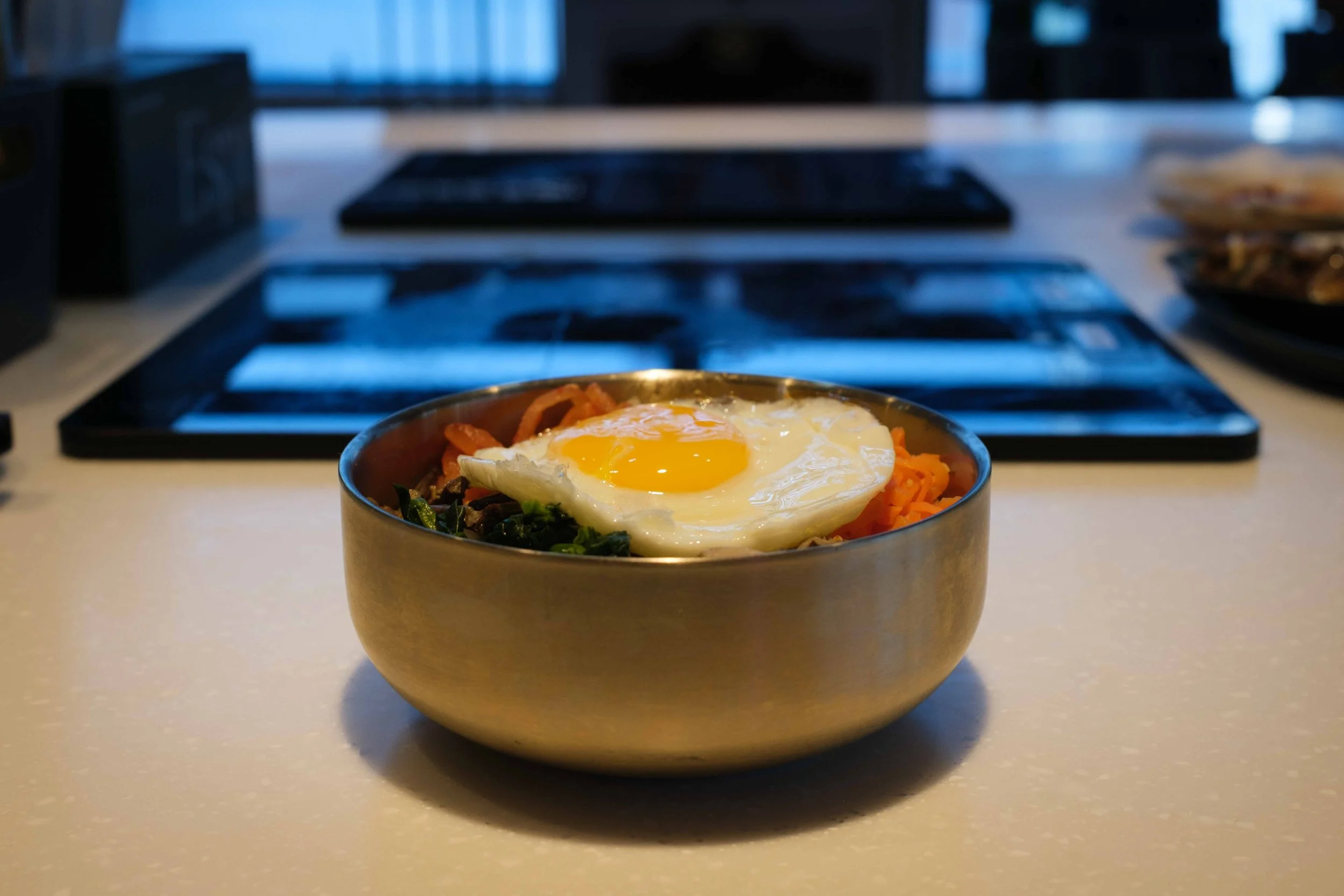
Bibimbap is one of Korea’s signature dishes, and Jeonju is known as its spiritual home. It is a bowl of warm rice layered with seasoned vegetables, beef, and a fried egg on top, all brought together with a generous spoonful of gochujang. The version from Jeonju is especially famous for its freshness and balance, with each ingredient prepared separately so you can taste every flavour and texture. Mixing everything together at the table is part of the fun. It is colourful, nourishing and full of contrast, from crisp vegetables to soft rice and savoury meat.
After all of the cooking, we sat down at the table to tuck into our delicious food (as much of it as we could fit anyway. Olivia also served us some Hotteok 호떡, a soft, warm pancake filled with a sweet mixture of brown sugar, cinnamon and crushed nuts.
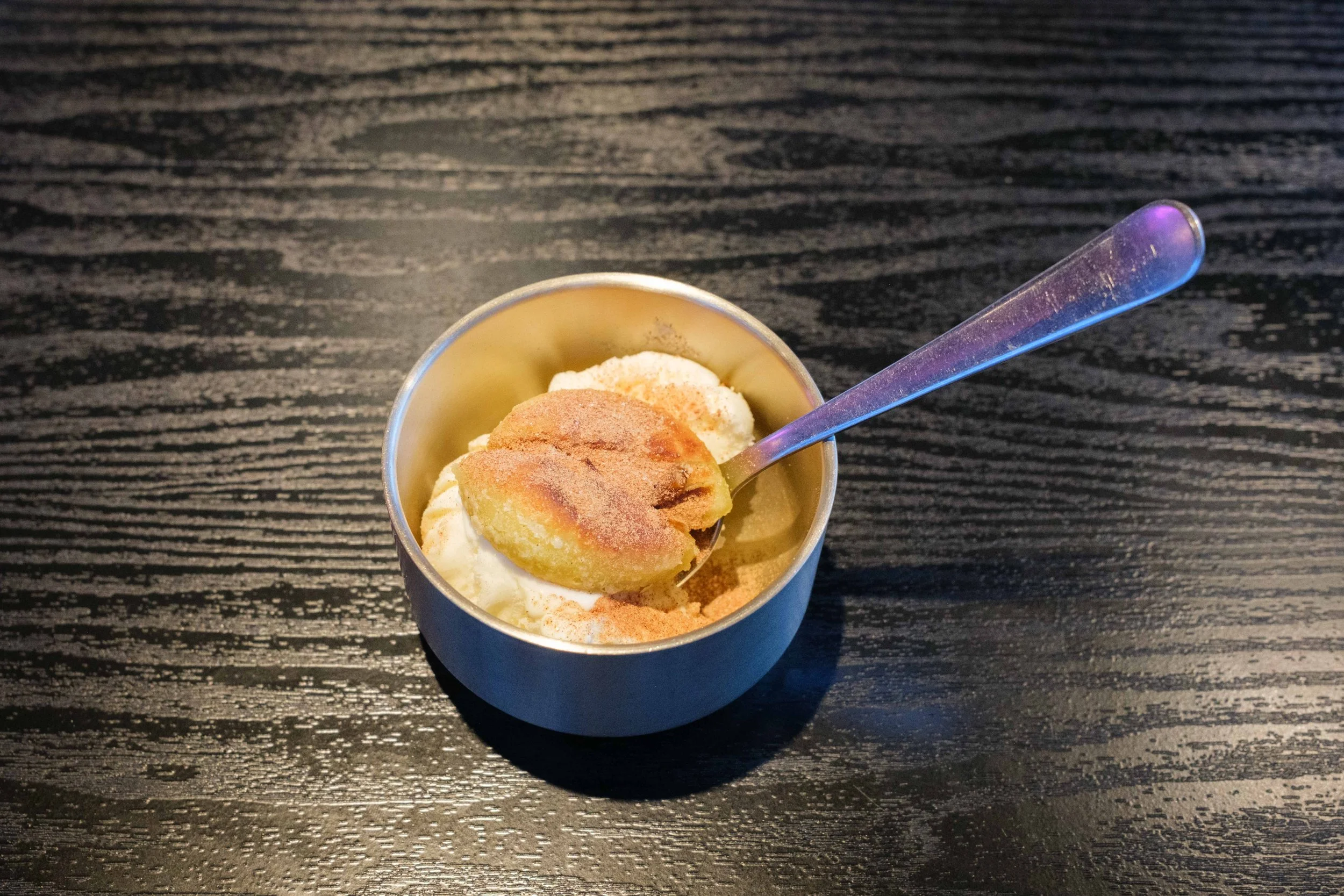
Hotteok 호떡
Overall Thoughts of the Cooking Class
We came away from Seoul Cooking Club feeling genuinely delighted. The food was fantastic, the company was fun, and the teaching was exactly what we hoped for. Olivia was a brilliant instructor who made everything easy to understand and gave us plenty of confidence to try the recipes again at home.
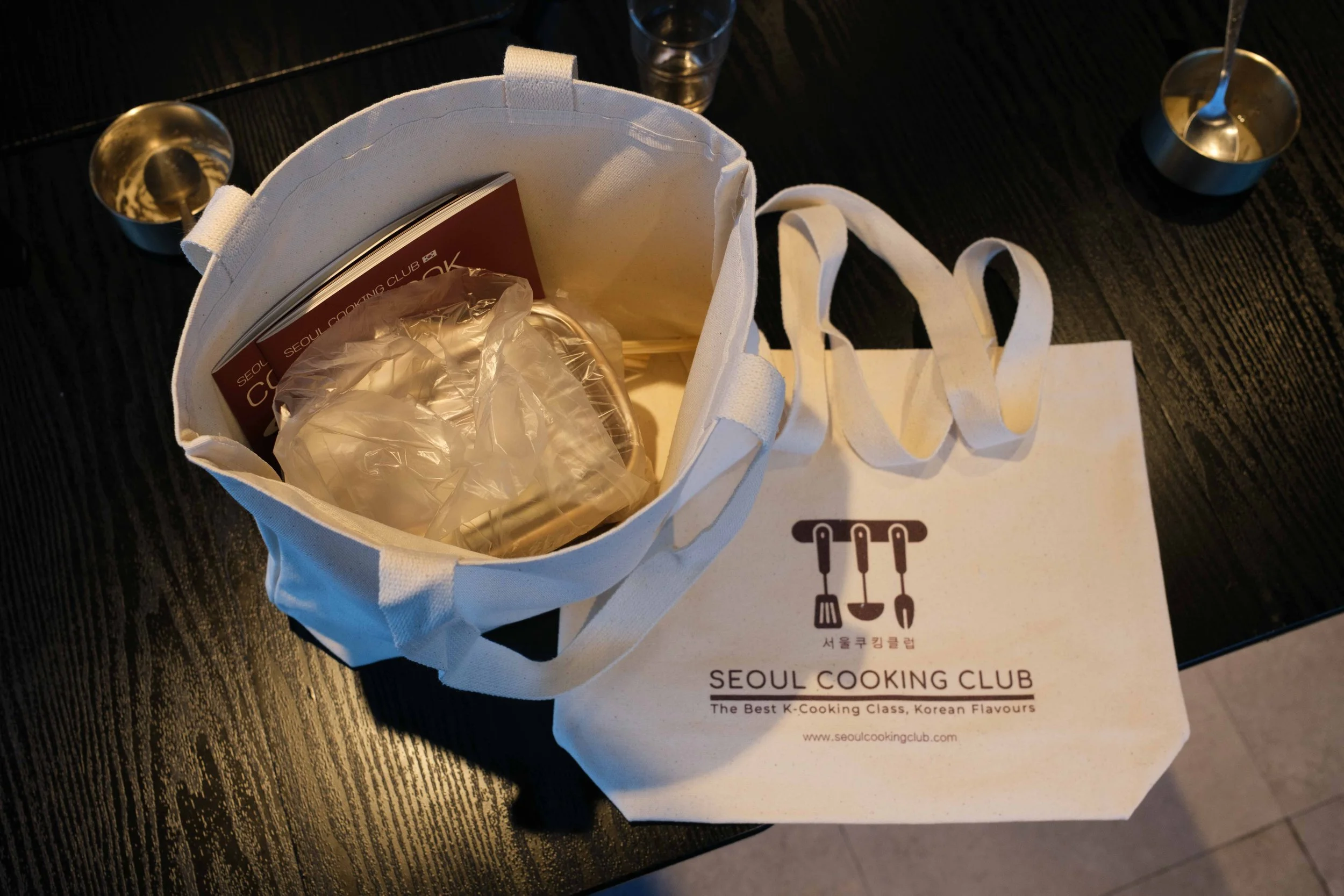
Each dish is something you can recreate without any special equipment, and Seoul Cooking Club give you a neat little recipe booklet to take away. Ours is sitting here as I write this, and even glancing at it makes my mouth water.
If you do book this class let us know how you get on. And if you try any other cooking experiences in Seoul, we would love to hear your recommendations in the comments.
More From Seoul