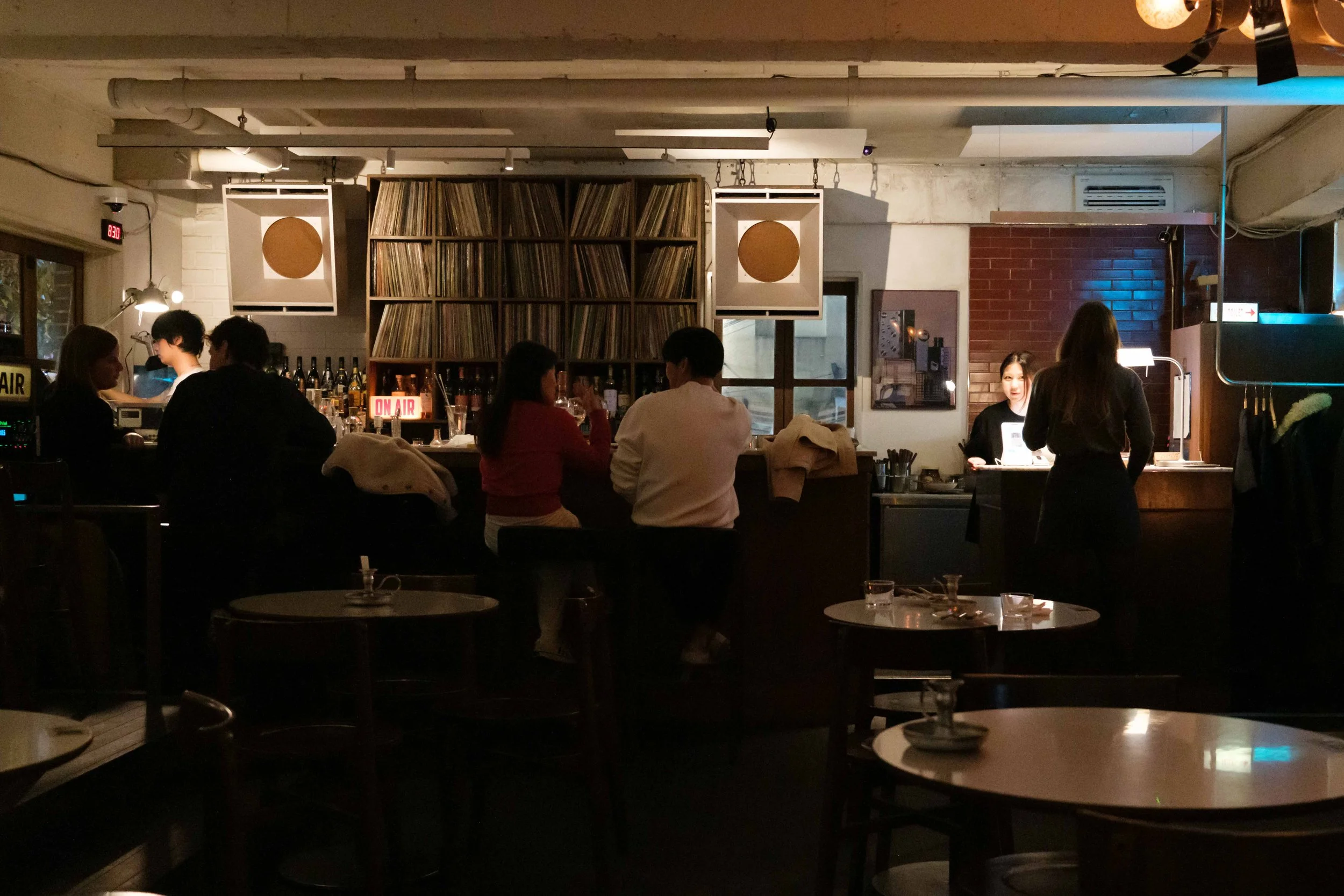
Where To Stay In Seoul - An Area Guide To The City
Seoul is massive. When we first opened Google Maps to figure out where to stay, it felt far more overwhelming than planning a typical European city break. In most European cities, the solution is simple: book somewhere central and you are fine. In Seoul, the scale of the city combined with the language barrier makes that decision much harder.
We spent two weeks in South Korea and based ourselves in three different neighbourhoods across Seoul, travelling widely and slowly getting to grips with how the city works. What we quickly realised is that Seoul is vast, layered and neighbourhood-driven rather than one homogenous city centre.
If you are wondering where to stay in Seoul, the real answer depends entirely on the kind of trip you are planning.
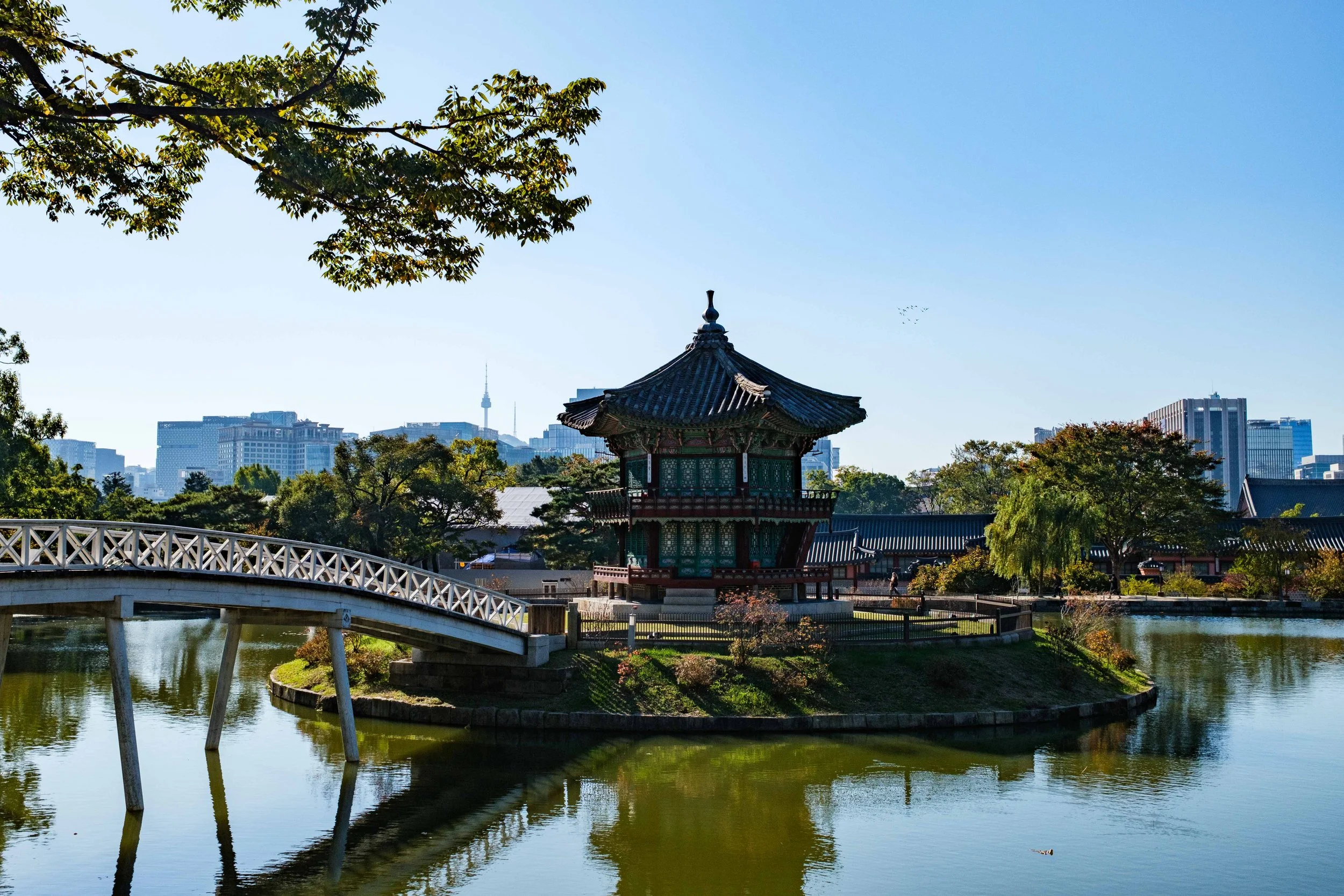
We split our time across three very different areas and genuinely liked all of them for different reasons. Each offered a distinct experience of the city.
Insadong felt central and traditional, right in the historic core without being in a tourist trap.
Hongdae had a more lived-in neighbourhood energy with late-night food and café culture.
Gangnam was modern, glossy and incredibly convenient for skincare clinics and high-end nightlife.
There is no single best area to stay in Seoul. Instead, there are neighbourhoods that suit different types of travellers. Although don’t stress about it too much. Getting around Seoul on the public transport system is really easy, and Uber is very cheap compared to places like London or New York.
In this guide, we’ll break down the best areas to stay in Seoul, who they suit, and the hotels that make the most sense in each.
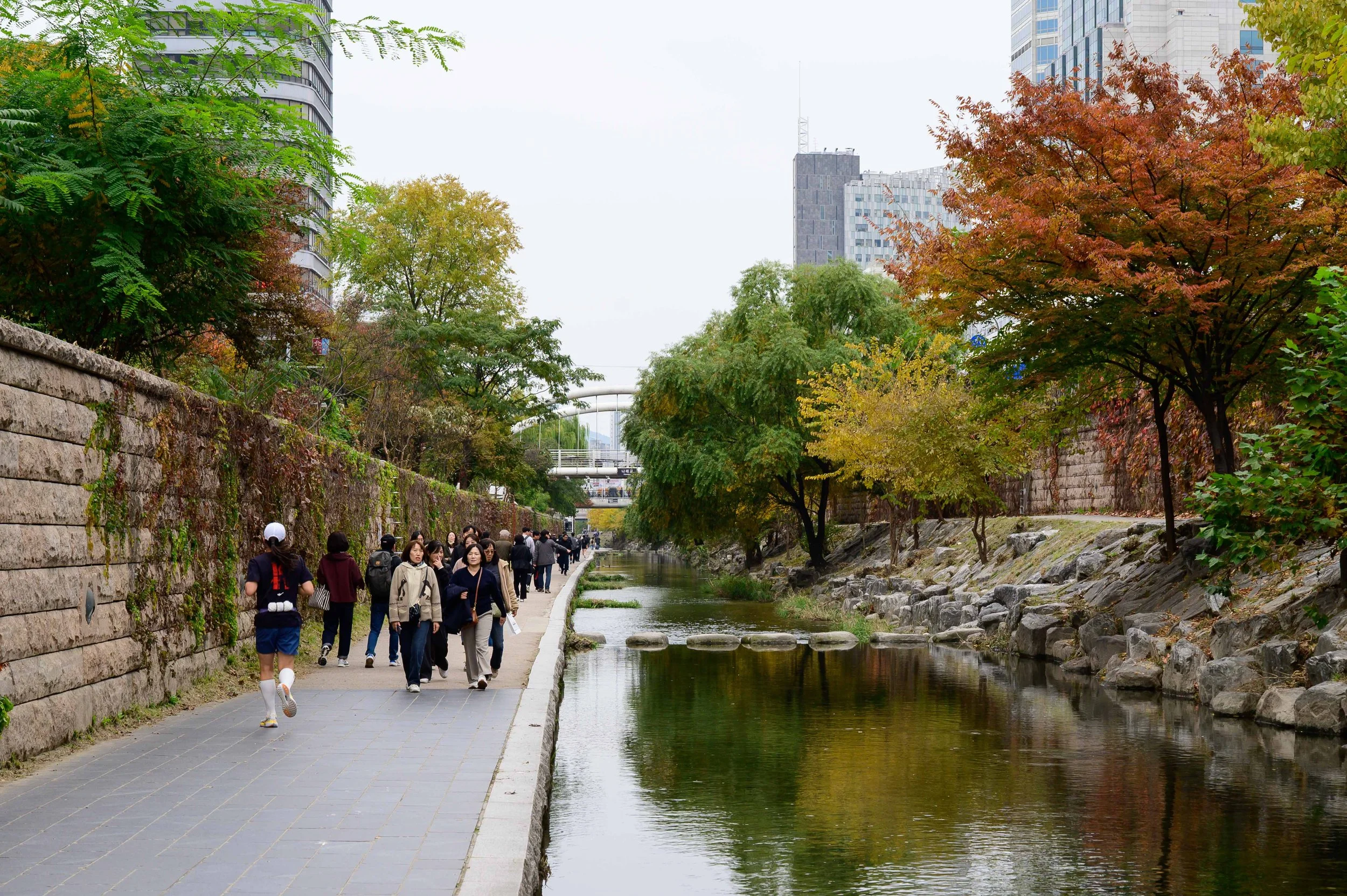
Cheonggyecheon Stream
The Best Areas to Stay in Seoul at a Glance
If you want the short version, here is how the main neighbourhoods we recommend compare. If we were visiting Seoul for the first time again, we would split our time between Insadong/Itaewon and Hongdae.
Insadong (Central)
Best for: First-time visitors and sightseeing, since you’re right in the middle of the city and near the palaces. It’s also just a bit quieter than Myeongdong without losing any access.
Vibe: Traditional, central, walkable
Hotels: Nine Tree by Parnas Seoul | Moxy Seoul | AMID Hotel Seoul
Hongdae (West)
Best for: More local feel with less high-rise buildings, lots of quaint cafés and youthful energy
Vibe: Creative, lively, neighbourhood-driven
Hotels: Local Stitch Creator Town Seogyo | L7 Hongdae by Lotte Hotels | RYSE, Autograph Collection
Gangnam (East)
Best for: Skincare clinics, luxury shopping and high-end clubs
Vibe: Glossy, modern, spacious
Hotels:
All three areas are well connected by the subway, so the choice is less about access and more about how you want your days and evenings to feel, although Insadong is right in the centre.
Focus on the Dong - Understanding Korean Place Names
Korean place names can feel confusing. You will see words like si, gu, dong, ro and gil attached to almost every address. It can make the map look far more complicated than it actually is.
Here is a simple way to decode it.
Si (시) means city. So Seoul-si simply refers to the city of Seoul.
Gu (구) refers to a larger district within the city. Think of it like a borough in London. For example, Gangnam-gu is a major district in southern Seoul.
Dong (동) is a smaller neighbourhood within a district. This is the level that matters most when choosing where to stay or explore. Places like Itaewon-dong or Hannam-dong are specific neighbourhoods within a wider district and usually small enough to walk around.
Ro (로) means road or main street.
Gil (길) usually refers to a smaller lane branching off a main road.
So when you see a name like Hannam-dong, you are looking at the actual neighbourhood you will experience day to day. When you see something like Gangnam-gu, that is a broader administrative district containing multiple neighbourhoods.
For travellers, focus on the dong. That is what determines the atmosphere, walkability and nearby cafés, restaurants and bars. Once we understood this structure, navigating Seoul felt far less overwhelming.
Insadong (인사동)
Right in the centre of the city, close to major attractions and historic palaces, yet just removed from the intensity and tourist crowds of Myeongdong (명동).
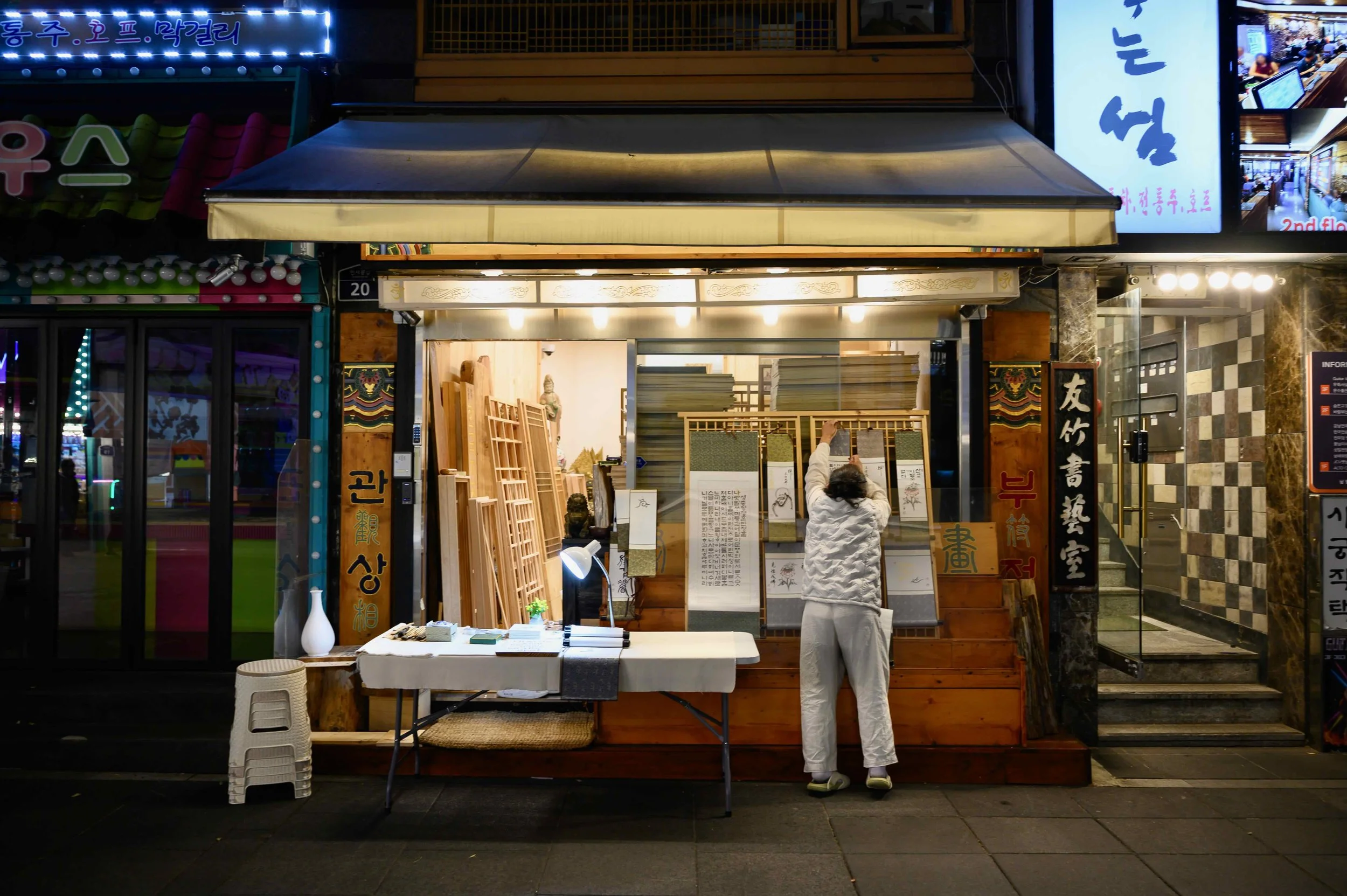
Insadong
Insadong, in Seoul's historic core, makes an excellent base if it is your first time in the city. From here, you can walk to the major palaces, browse traditional craft shops and step into tea houses. It’s central without being overwhelming, and the subway connections make it easy to explore further afield.
We found it a much more relaxed alternative to Myeongdong. You still get the same convenience and access, but with a calmer atmosphere and a bit more character.
Evenings here are quieter than in areas like Hongdae, but there is still plenty of good food within walking distance. For us, it was the ideal starting point to understand Seoul before moving into its more neighbourhood-driven districts.
Where to Stay in Insadong
Insadong Highlights
Insadong-gil - A lovely small street with craft stalls, shops and food vendors. Towards the southern end, you’ll find a large cluster of Korean BBQ places.
Gyeongbokgung Palace and Changdeokgung are both within walking distance
Insa Dodam - Korean restaurant in a Hanok-style setting
Gyeol by BEAN BROTHERS - A lovely coffee shop that’s open early (a rare find in Korea)
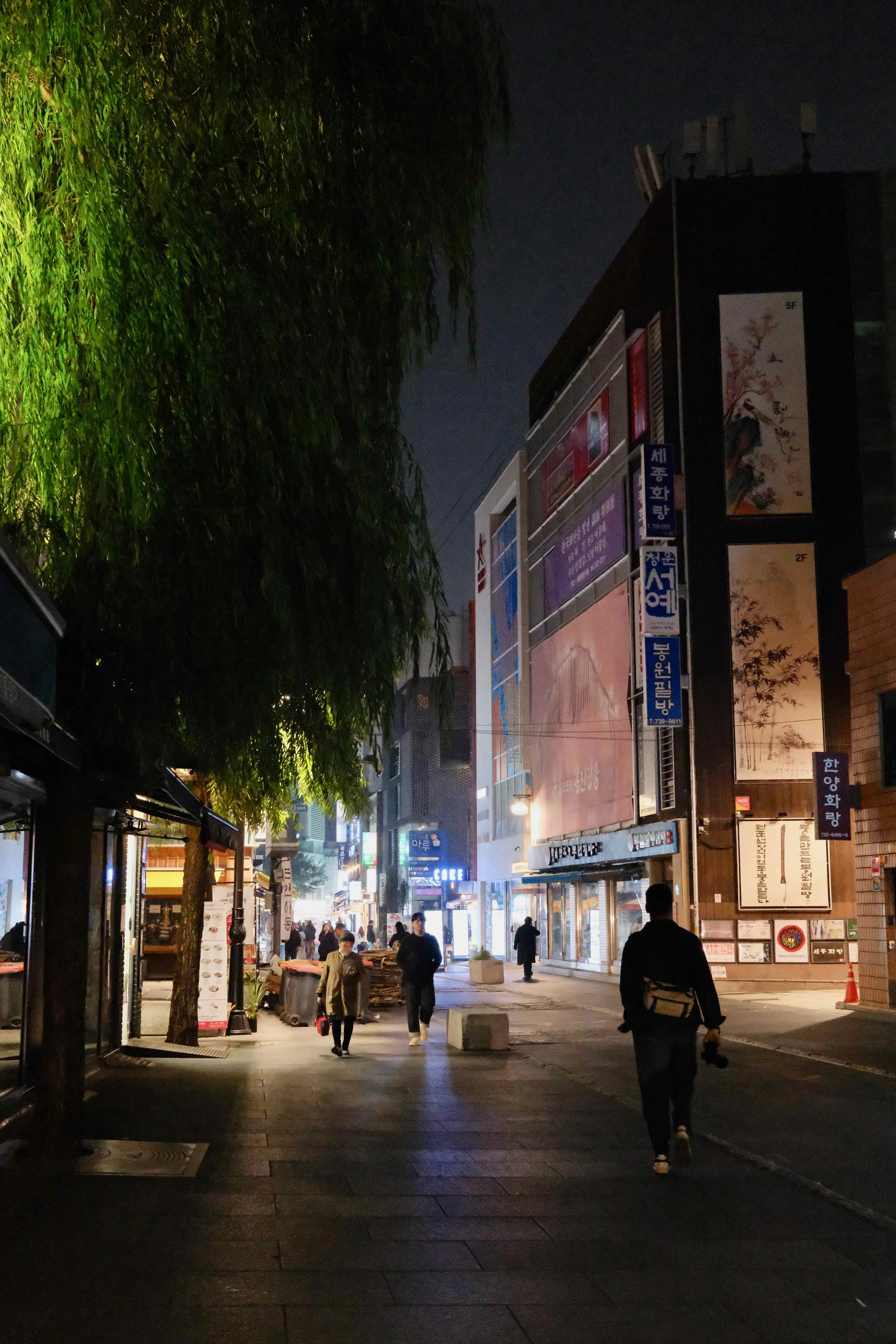
Insadong
Hongdae (홍대)
A youthful, energetic neighbourhood near Hongik University, packed with cafés, late-night food spots and some of the best nightlife in the city. There are also little quiet pockets of residential areas with lovely cafes and Izakaya-style eateries.
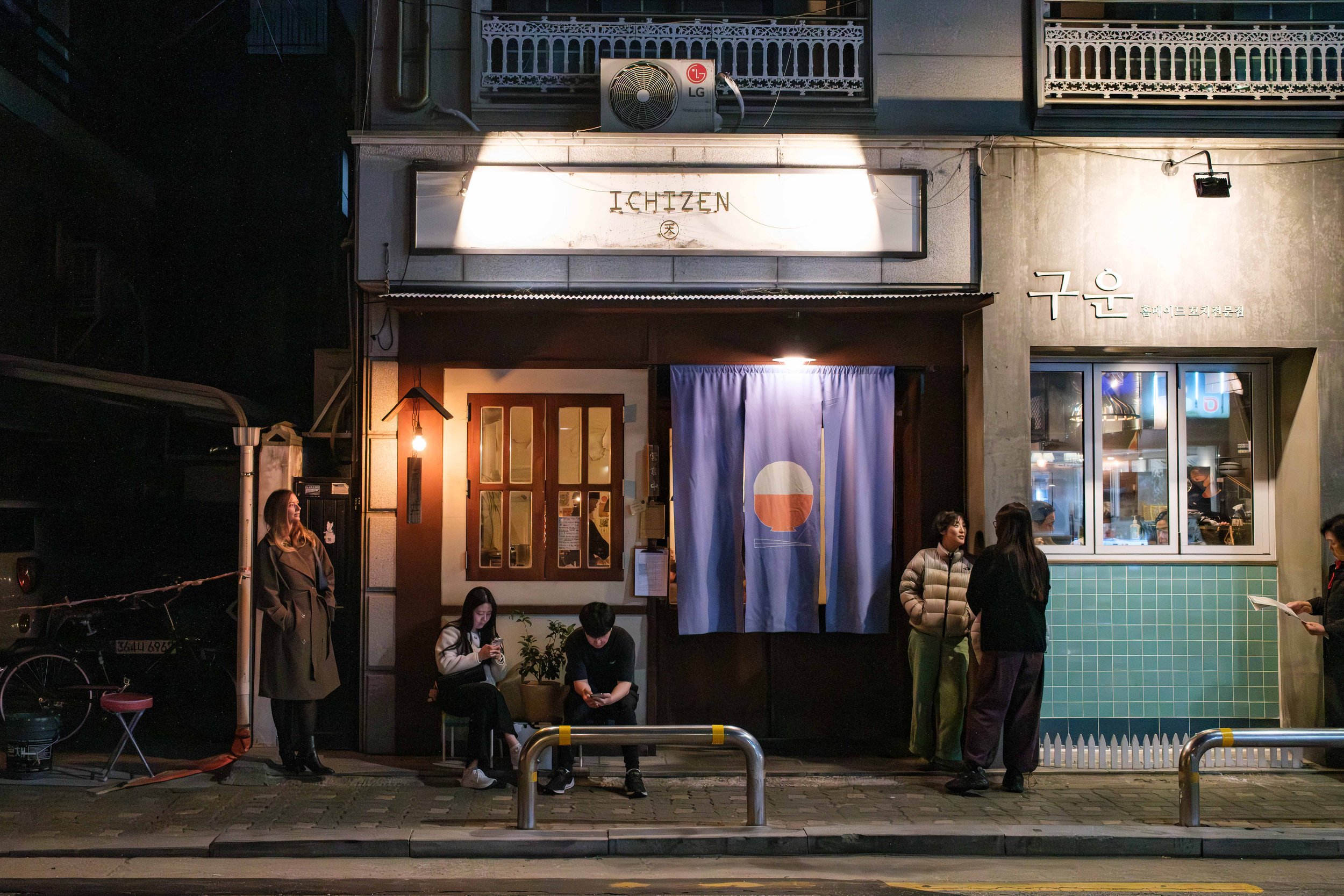
Ichizen, an incredible little Izakaya in Hongdae
Hongdae feels completely different to Insadong. Where Insadong is historic and calm, Hongdae is creative, lively and slightly chaotic in the best way. Street performers gather in the evenings, independent fashion shops spill onto side streets, and you are never far from an LP bar or fried chicken spot open past midnight. It’s a university district.
Hongdae felt more lived-in and local, less sightseeing-focused and more about wandering without a strict plan. If your idea of a good evening involves bar hopping, discovering small restaurants and grabbing late-night snacks, Hongdae makes a lot of sense.
It is also extremely well connected, with a direct airport train link, which makes arrival and departure straightforward. Hongdae is a big district, so you should know that:
The area between Hongik Univ. station and Hapjeong Station is the lively bit
The area around Mangwon station is the quieter, more local, and neighbourhood bit.
Where to Stay in Hongdae
Hongdae Highlights
Komfy - A beautiful LP/winebar perfect for a date night
Always August Roasters - A local gem of a coffee shop, one of the best we went to in Korea. (You will see speciality coffee shops EVERYWHERE you go around here)
Ichizen - A Japanese Izakaya-style restaurant serving delicious panko-fried meals
Hongdae Street - For the neon lit buildings and street performances
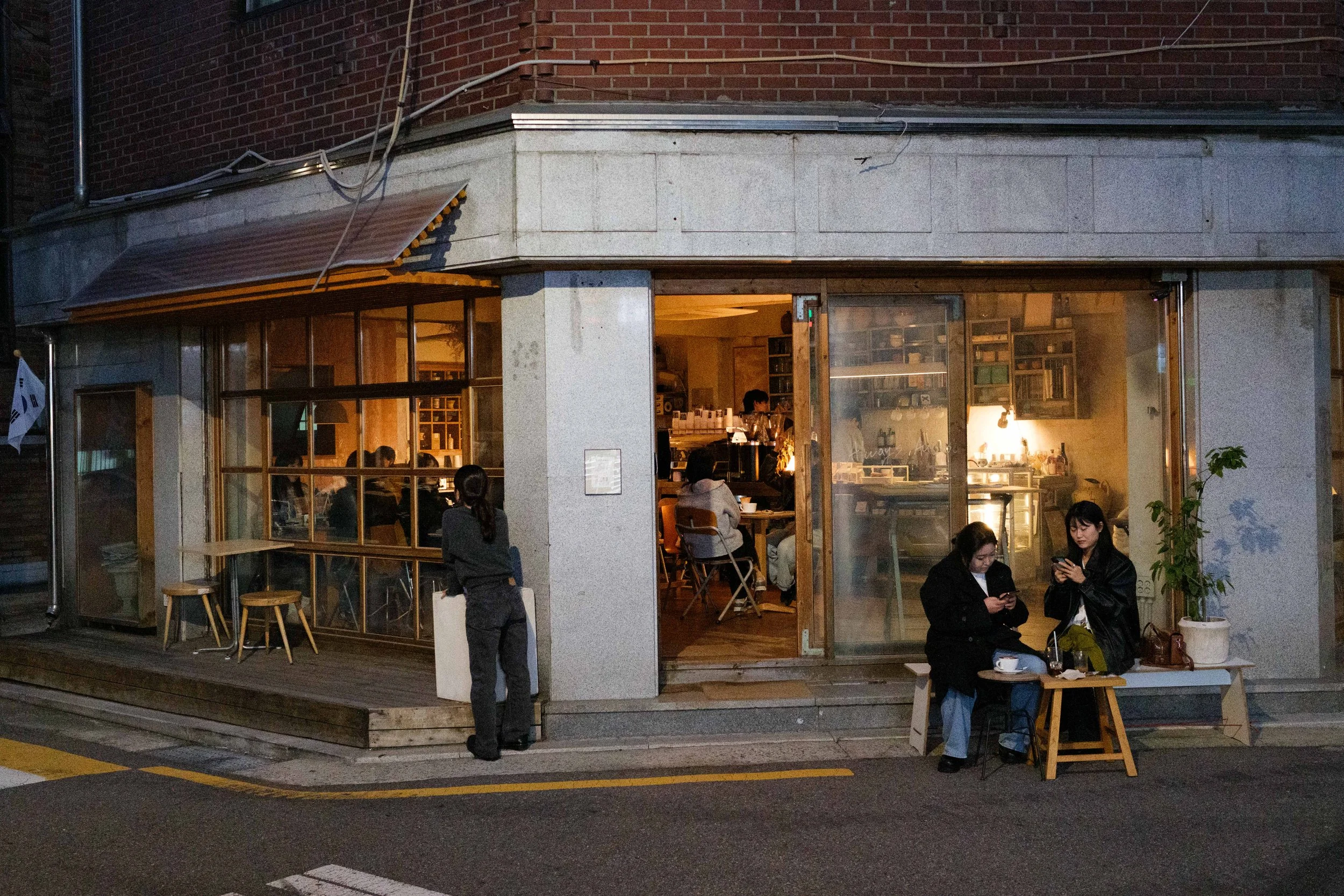
Always August, Hondae - One of our favourite coffees in the city
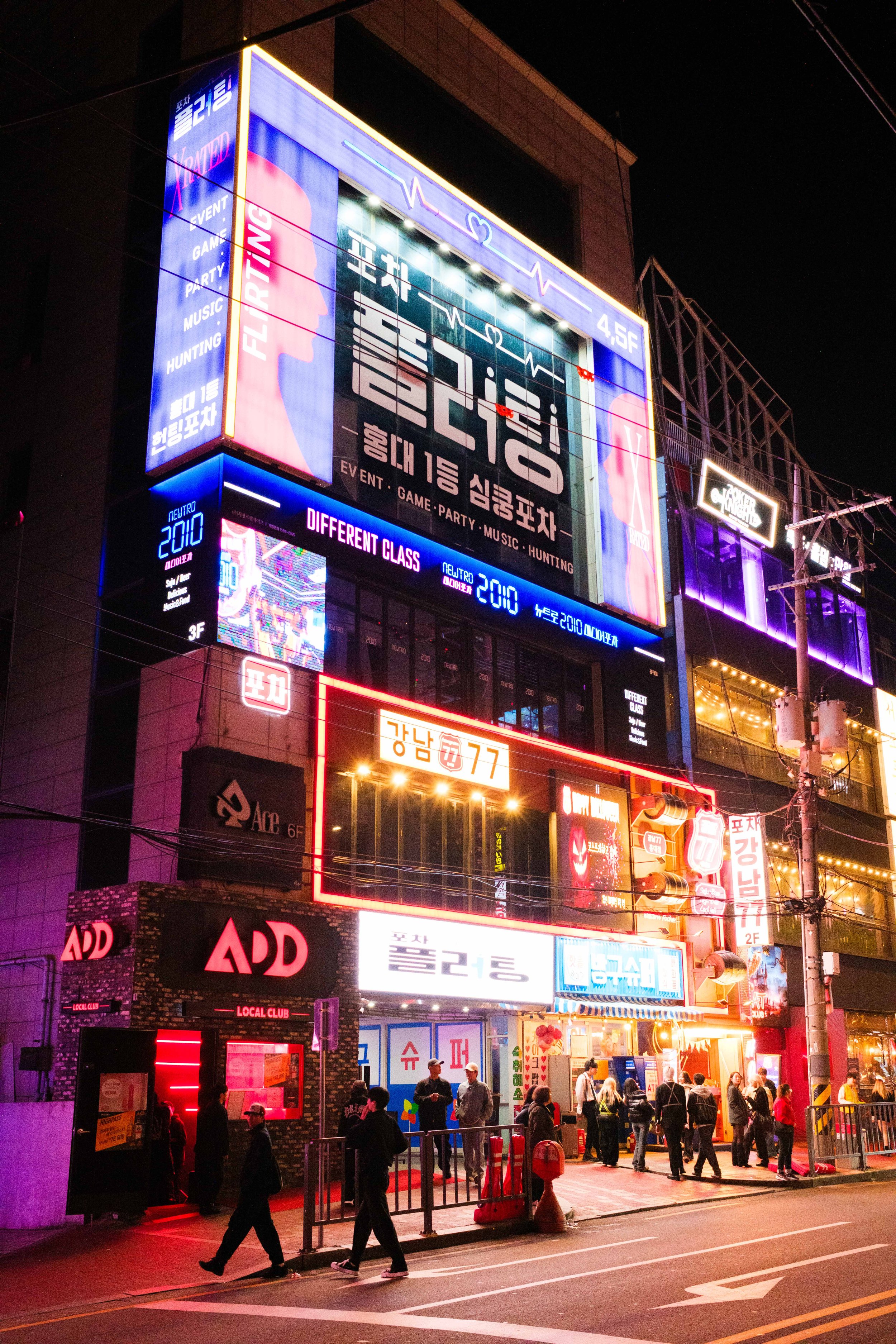
Gangnam (강남)
Modern, glossy and spread out, Gangnam represents the sleek, rich and modern side of Seoul that most people picture before they visit. Everyone here has glass skin.
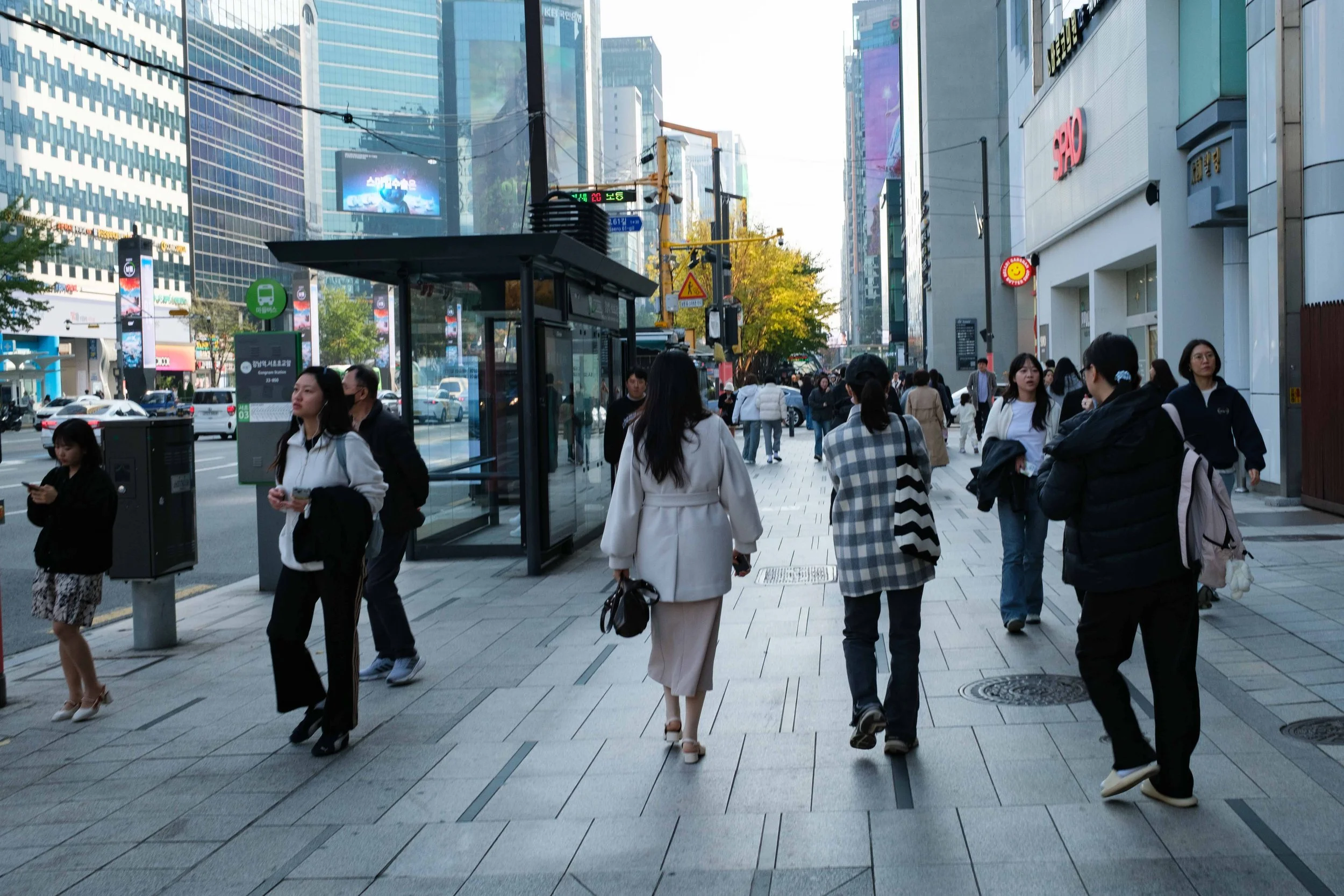
High-rise buildings, wide roads, luxury shopping malls and some of the city’s most well-known skincare and dermatology clinics are concentrated here. If Insadong feels historic and Hongdae feels creative, Gangnam feels contemporary and ambitious. Buying an apartment in Gangnam is the ‘Korean Dream’.
We chose to stay here for a couple of nights, just to get a feel for the area (yes, because of the song) and because many of the major skin clinics are here. If you are booking consultations or treatments, staying nearby makes life significantly easier. You can walk to appointments, return to your hotel to rest and avoid long subway journeys afterwards.
Gangnam offers upscale restaurants, stylish cocktail bars and high-end clubs. It is less compact than the other neighbourhoods, but the transport links remain excellent, and hotel rooms tend to be more spacious.
This is not the area we would choose for a first-time sightseeing-heavy trip. But if your focus is beauty, shopping or modern nightlife, it can be practical.
Where to Stay in Gangnam
Gangnam Highlights
Starfield Coex Mall - For all your shopping needs, and if you really want that Insta snap of the famous library
AMOA 640 Skin Clinic - The skin clinic we went to. Treatment carried out by a dermatologist and a brilliant English-speaking co-ordinator. Very good prices too!
Jogakbo - A lovely high-end Korean dining experience. Our meal at the end of the trip included several dishes, all of which we recognised from different parts of our Korean trip.
We aren’t big clubbers, so we can’t really vouch for the nightlife and club scene… sorry.
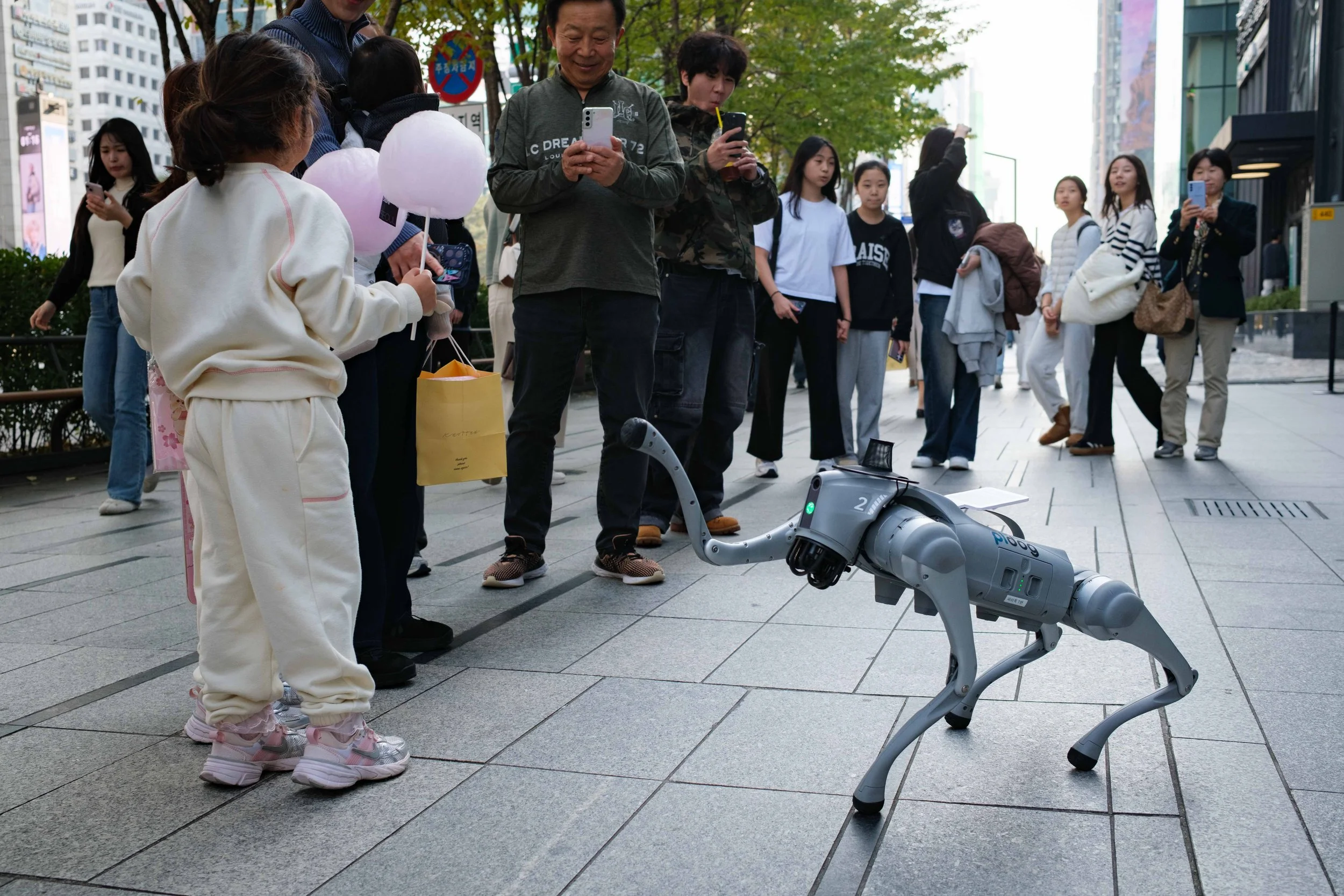
While Insadong, Hongdae and Gangnam are the three areas we personally based ourselves in, they are far from the only neighbourhoods worth considering.
One of the best ways to experience Seoul is to choose an area and simply spend a few hours wandering. Each district has its own personality, from historic streets lined with hanok houses to creative pockets filled with cafés, wine bars and independent shops. Rather than rushing between landmarks, we found that slowing down and exploring different neighbourhoods gave us a much better feel for the city.
Below are some of the other areas we explored and enjoyed, even if we did not stay overnight.
Itaewon-dong (이태원동) and Yongsan-dong (용산동)
International, food-focused and lively after dark. You’ll probably spend a few evenings here!
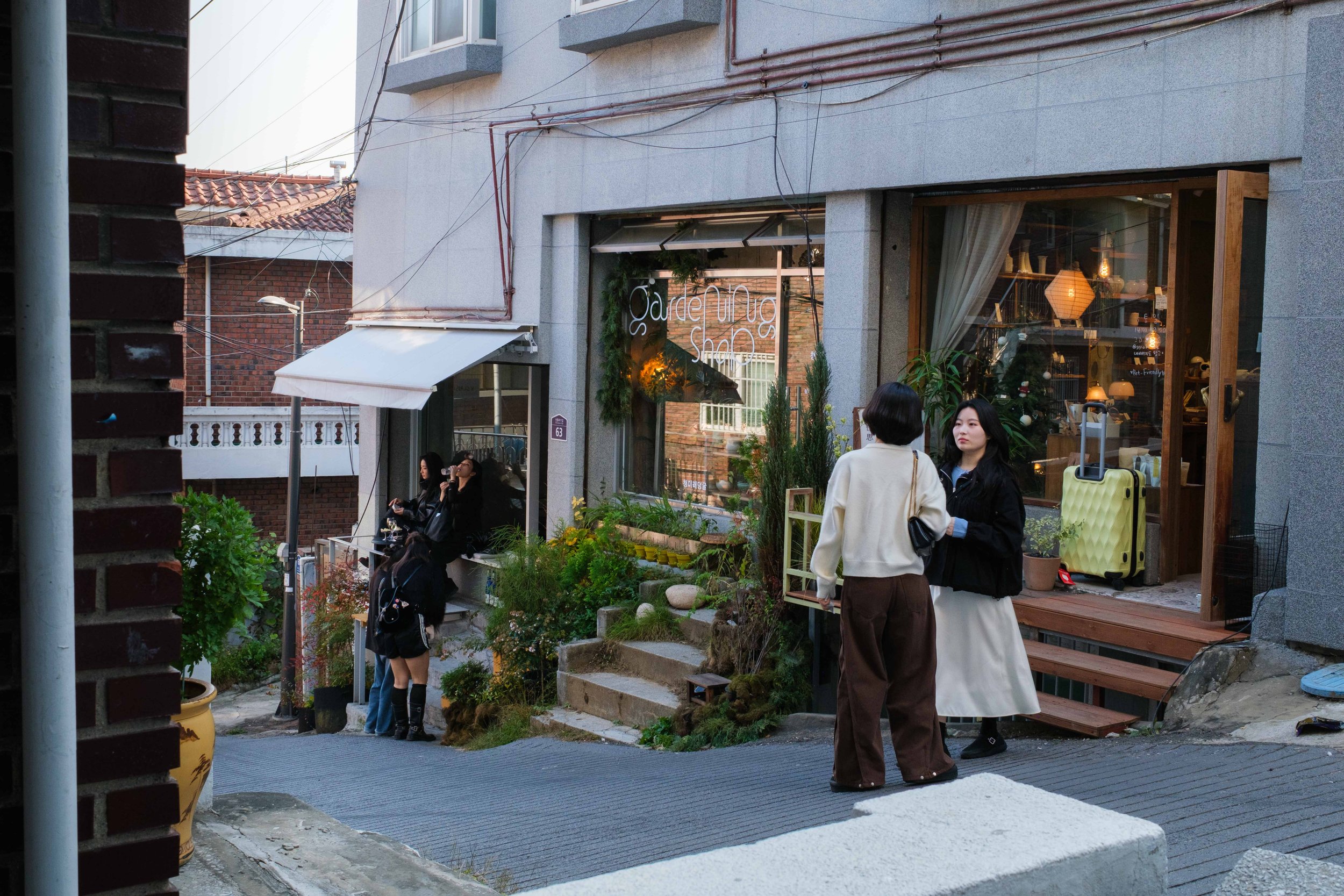
Located just south of Namsan Park, Itaewon has long been known as one of Seoul’s most globally influenced neighbourhoods. You will find everything here, from Korean barbecue and modern tasting menus to Middle Eastern restaurants and late-night cocktail bars. It feels more diverse than many other parts of the city, both in its food and its crowd.
In the evenings, Itaewon becomes one of Seoul’s main nightlife hubs. The streets fill with people moving between bars and clubs, and the atmosphere is noticeably more energetic than in areas like Insadong.
Neighbouring Yongsan-dong feels slightly calmer and more residential, while still offering excellent food and easy access to central Seoul. Staying here can give you a little more breathing space while keeping you close to the action.
If your trip revolves around restaurants and evenings out, or you enjoy a more international feel, this part of the city is worth considering.
Where to Stay in Itaewon/Yongsan
Area Highlights
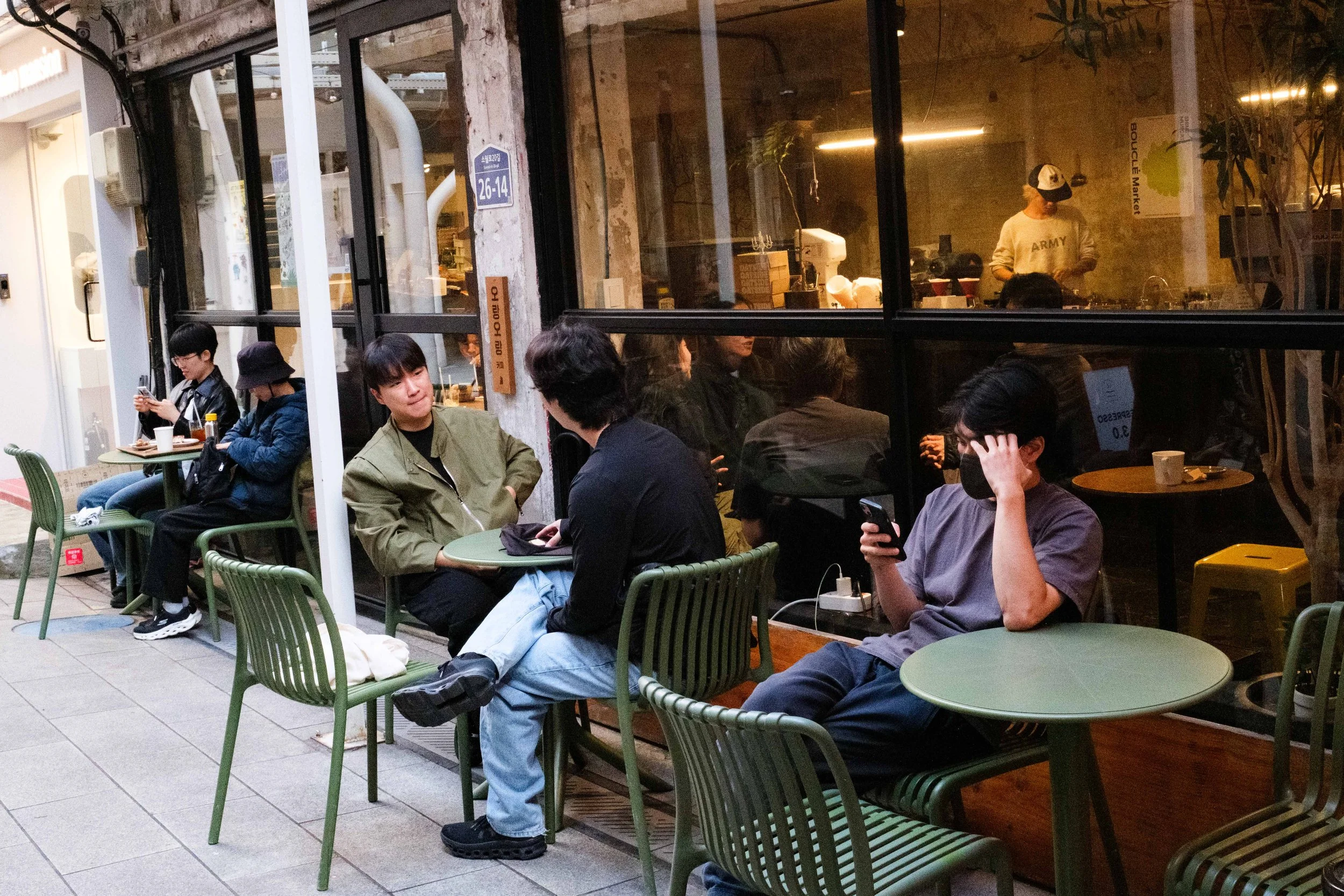
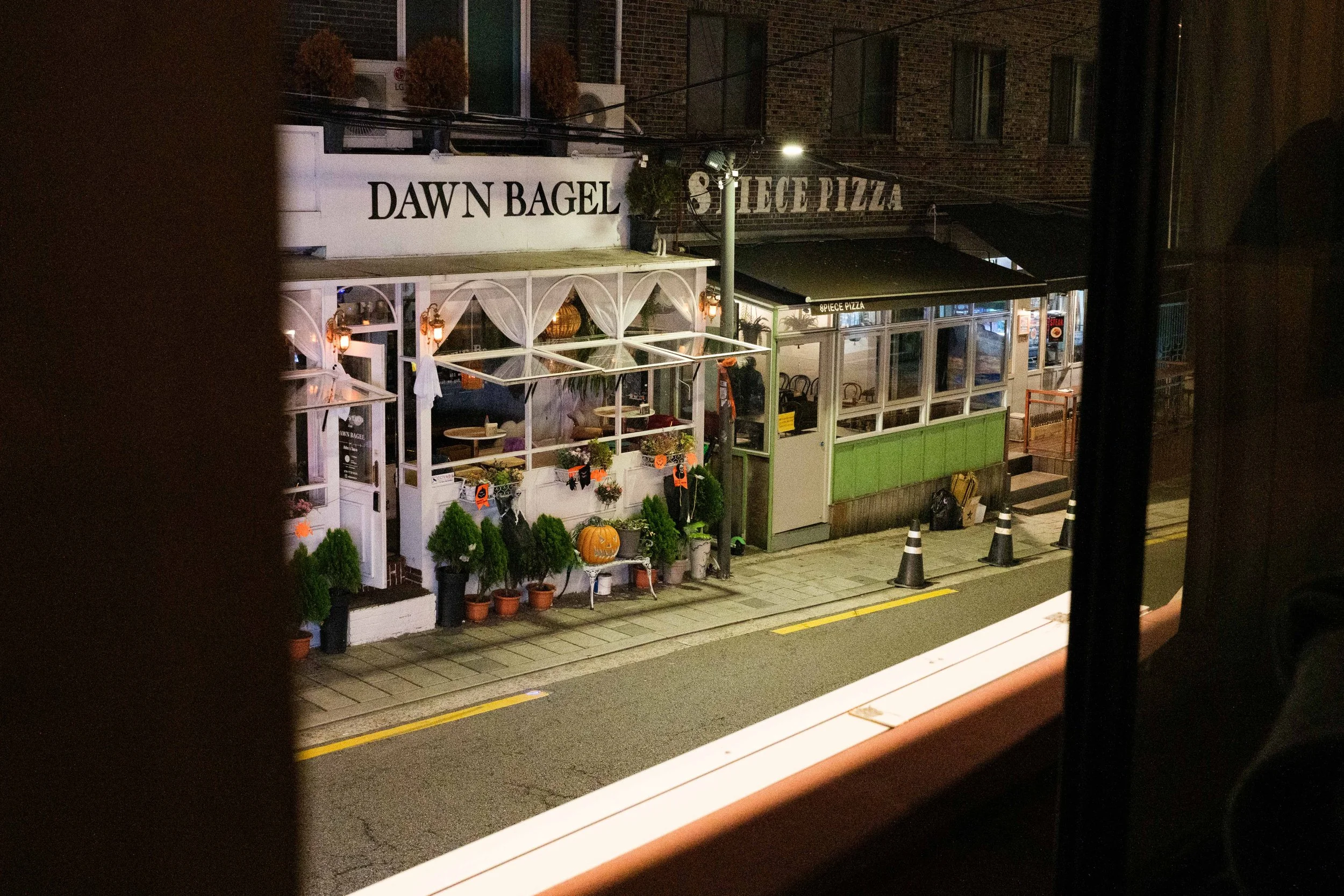
Sinheung-ro - A road with several eateries, bars, cafes and shops to dip in and out of. Our favourites include Tymm (a cassette/winebar), and Chimac Life for fried chicken and Soju.
Tortoise Haebangchon - For incredible mochi pancakes
Kyochon Pilbang for friend chicken
Southside Parlor - For great cocktails, chatty waiters and surprisingly good burgers. Big comfy chairs that you can sit at the bar in for hours.
Rain Report - The famous coffee shop that replicates rain
Myeongdong (명동)
Busy, central and extremely convenient.
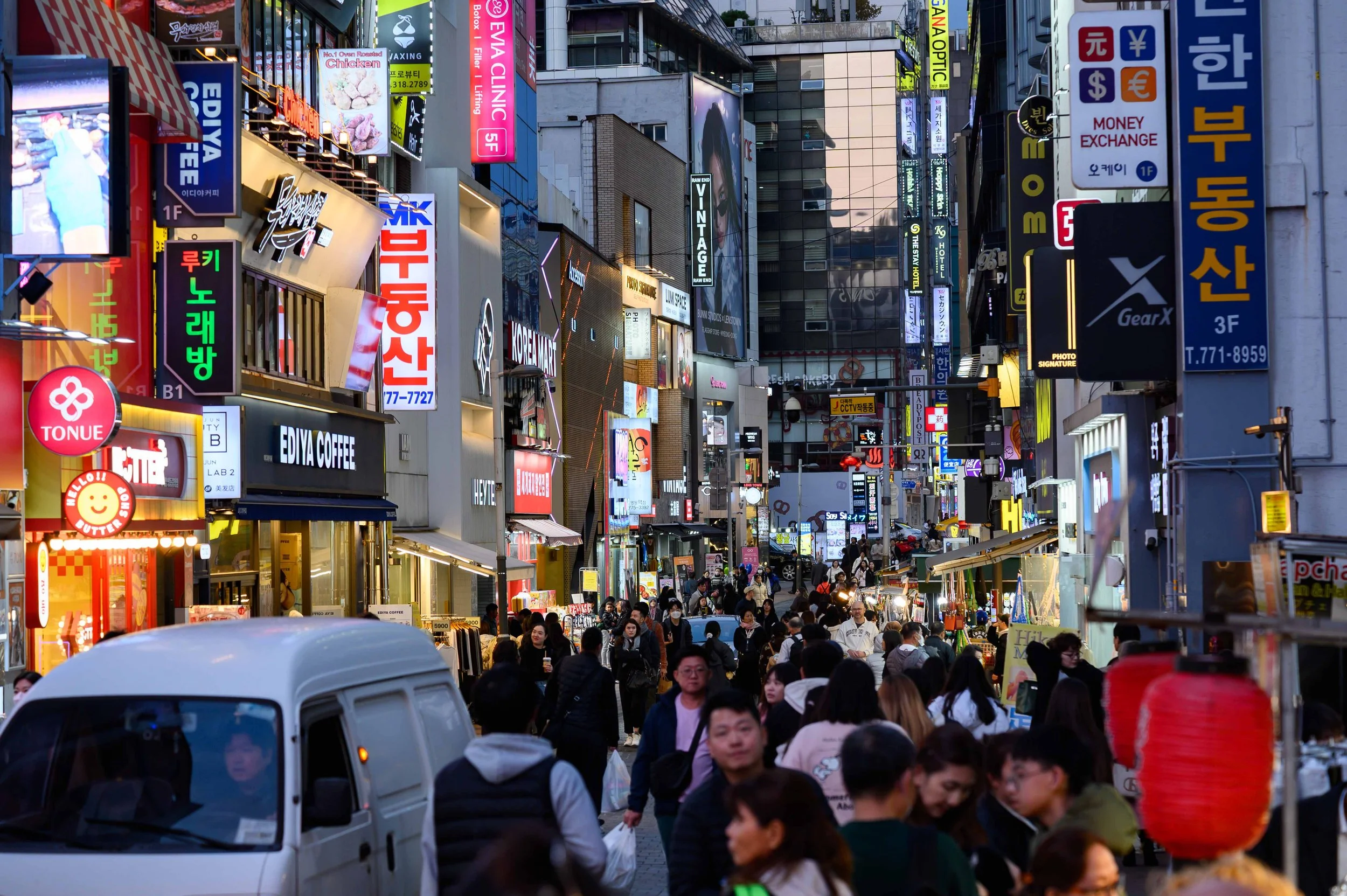
Myeongdong is one of the most well-known areas in Seoul and often the first place visitors look when deciding where to stay. The streets are lined with cosmetics shops, fashion stores and street food stalls, and in the evenings it comes alive with a night market and late-night clothing stores.
It is undeniably tourist-heavy, but that is also part of its convenience. You are centrally located, well-connected by subway and surrounded by shops and restaurants at all hours.
We chose not to base ourselves here because we preferred something slightly calmer, but it sits right next to Insadong and offers similar access to the historic core. If you like energy, bright lights and having everything immediately on your doorstep, Myeongdong can make sense.
If you are hoping for a more local or relaxed atmosphere, neighbouring areas such as Insadong or Itaewon may feel more balanced.
Where to Stay in Myeongdong
Myeongdong Highlights
Myeongdong Night Market - Has to be mentioned, but it’s overpriced, busy and very touristy. There are plenty of other great food options in the city! But worth a bite if you’re around
Shopping - Myeongdong literally has everything!
Park Jun Beauty Lab - For a 15-step head-spa experience, it really is worth it, especially if you have a rainy day!
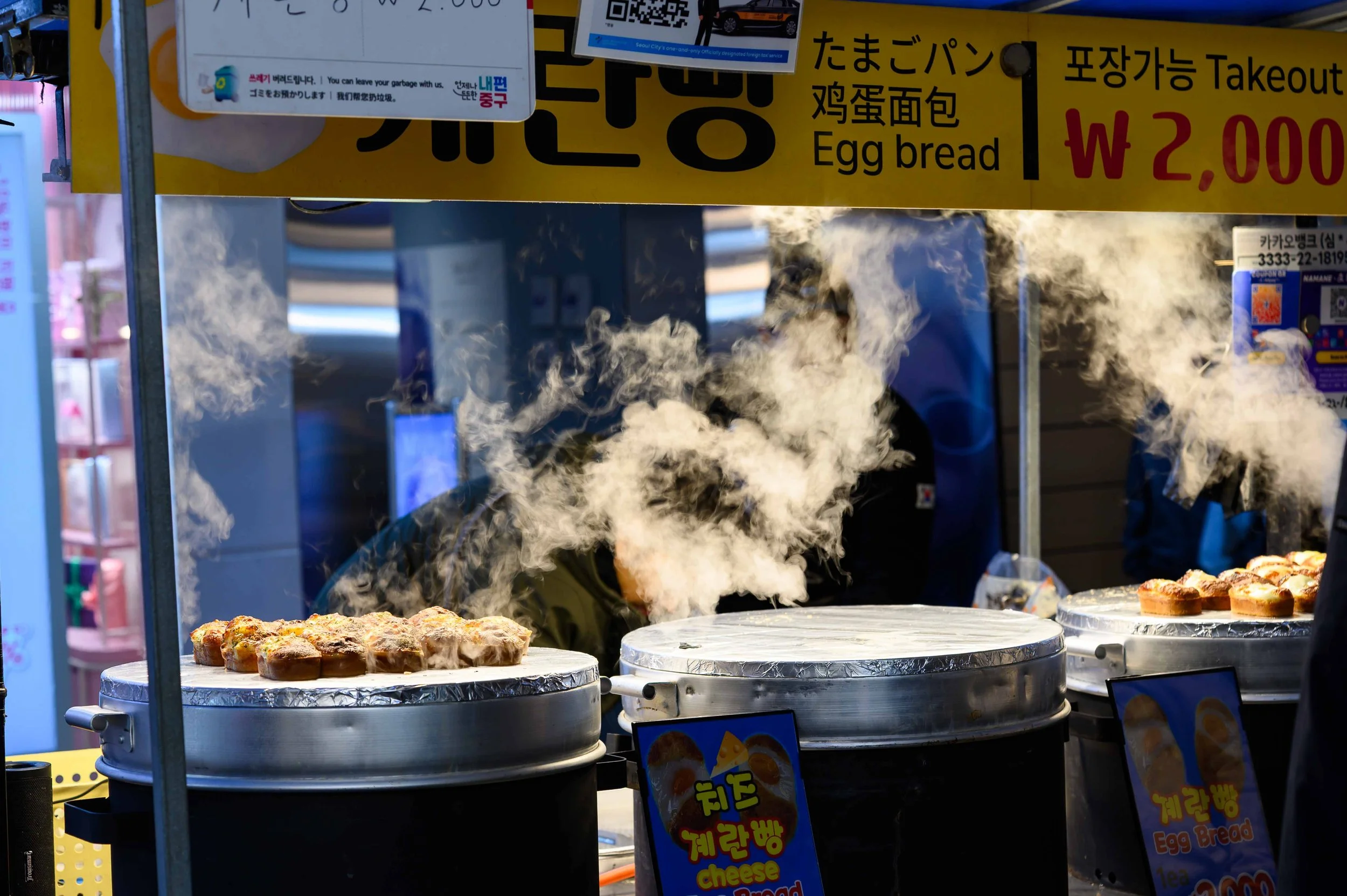
Myeongdong night market - It’s quite touristy and pricey. There are several other markets to visit in Seoul that are better.
Seongsu-dong (성수동)
Creative, industrial and one of Seoul’s trendiest districts.
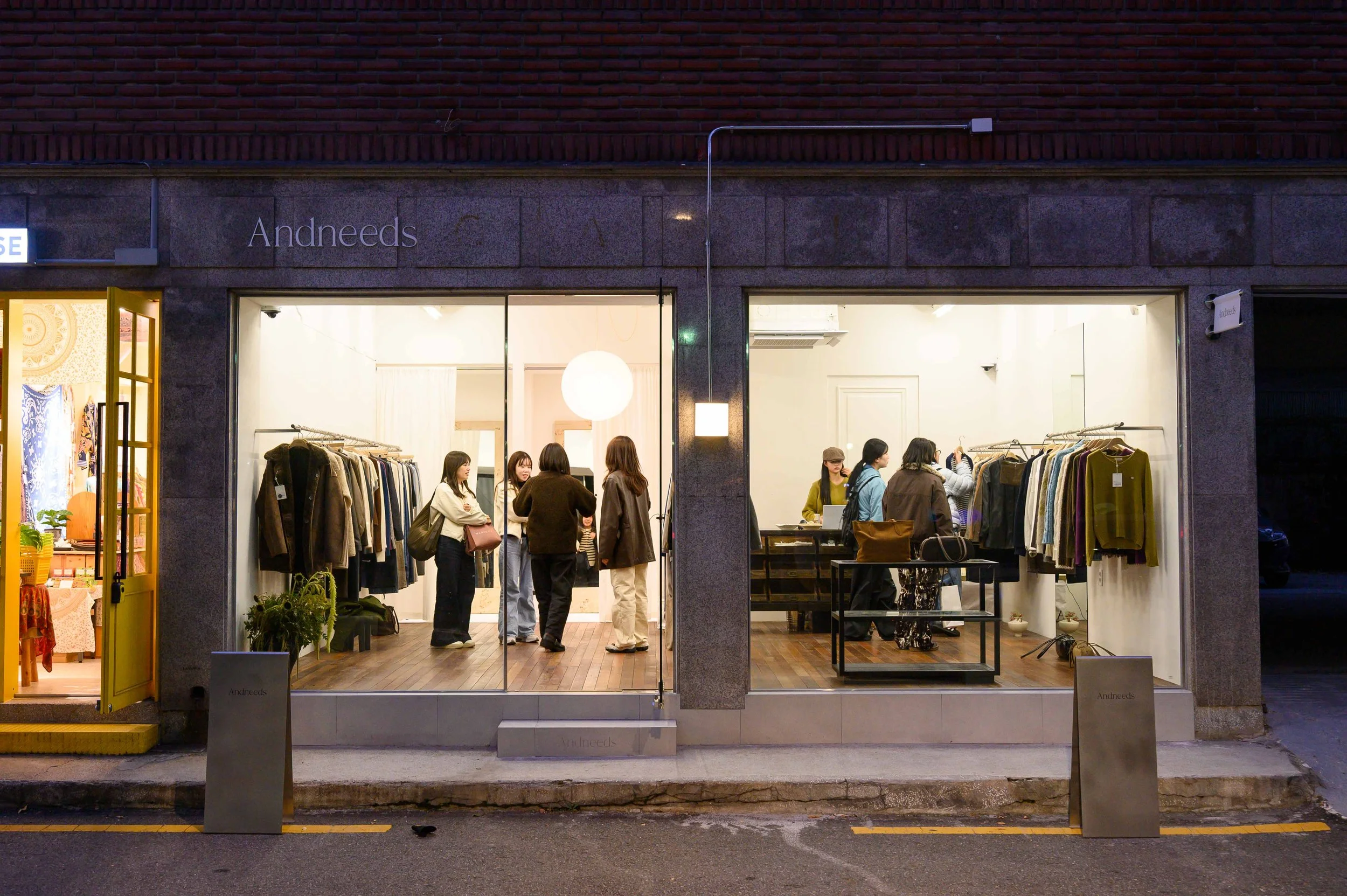
Often compared to Shoreditch or Brooklyn, Seongsu is a former industrial area that has transformed into one of the city’s most fashionable neighbourhoods. Old warehouses and factories now house vast cafés, minimalist bakeries, fashion pop-ups and concept stores.
This is where you come to see modern Korean branding and design culture at its best. Interiors are carefully curated, queues form outside newly opened cafés, and the crowd tends to be young, stylish, and very camera-aware.
It is not as central for sightseeing as Insadong, and evenings are more about relaxed dinners and café hopping than big nights out. But if you are drawn to creative spaces, contemporary culture and shopping, Seongsu is one of the most interesting areas in Seoul to explore.
Where to Stay in Seongsu
Seongsu Highlights
Olive Young N Seongsu - The biggest Olve young in Korea for all of your K-beauty purchases
Seoul Forest Park - Lovely greenspace for a walk/run
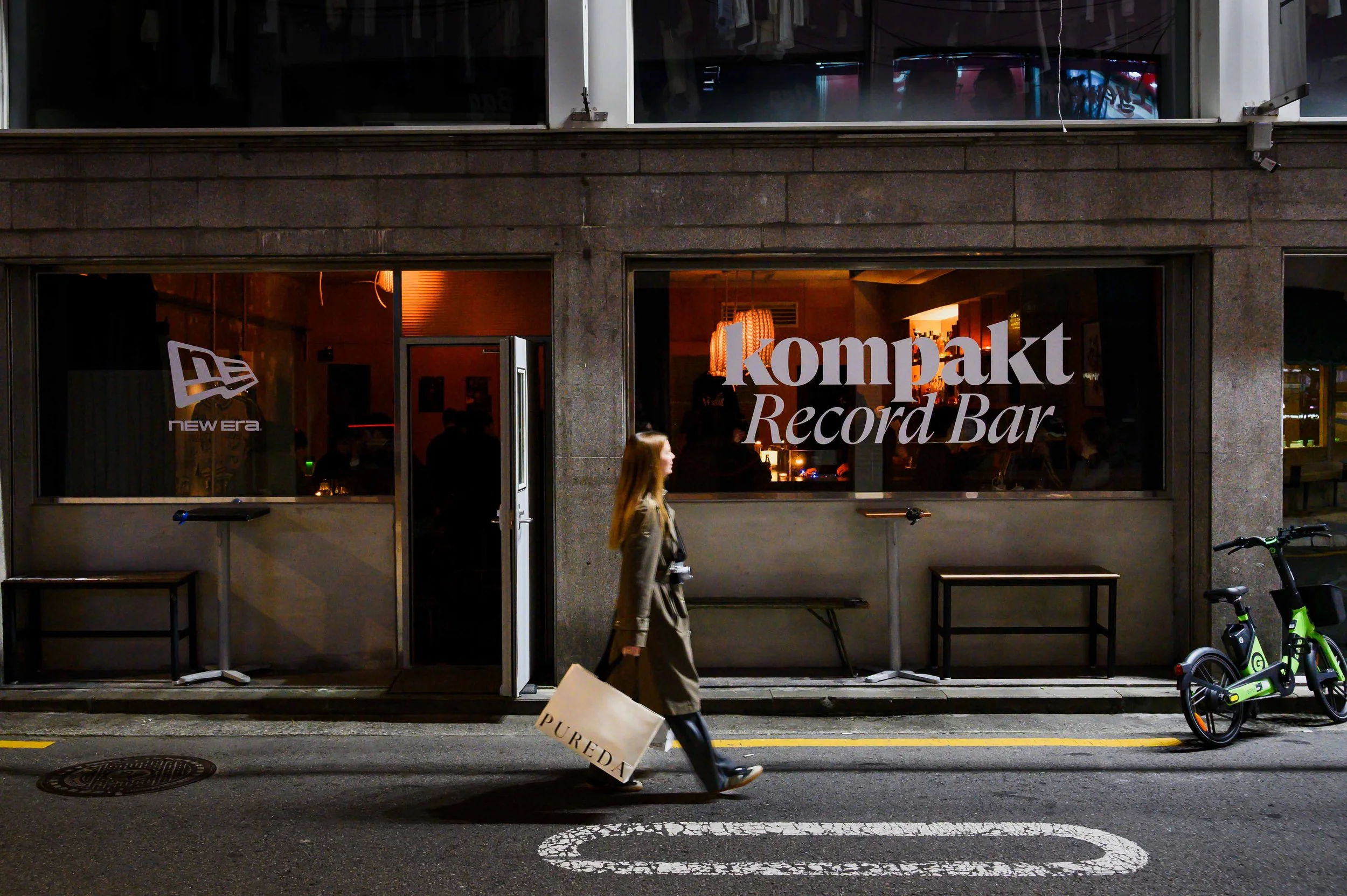
Kompakt Recordbar Ver. 3 - A lovely LP bar for a cocktail and laid-back tunes
Loads of trendy shopping with a lot of it being reasonably priced!
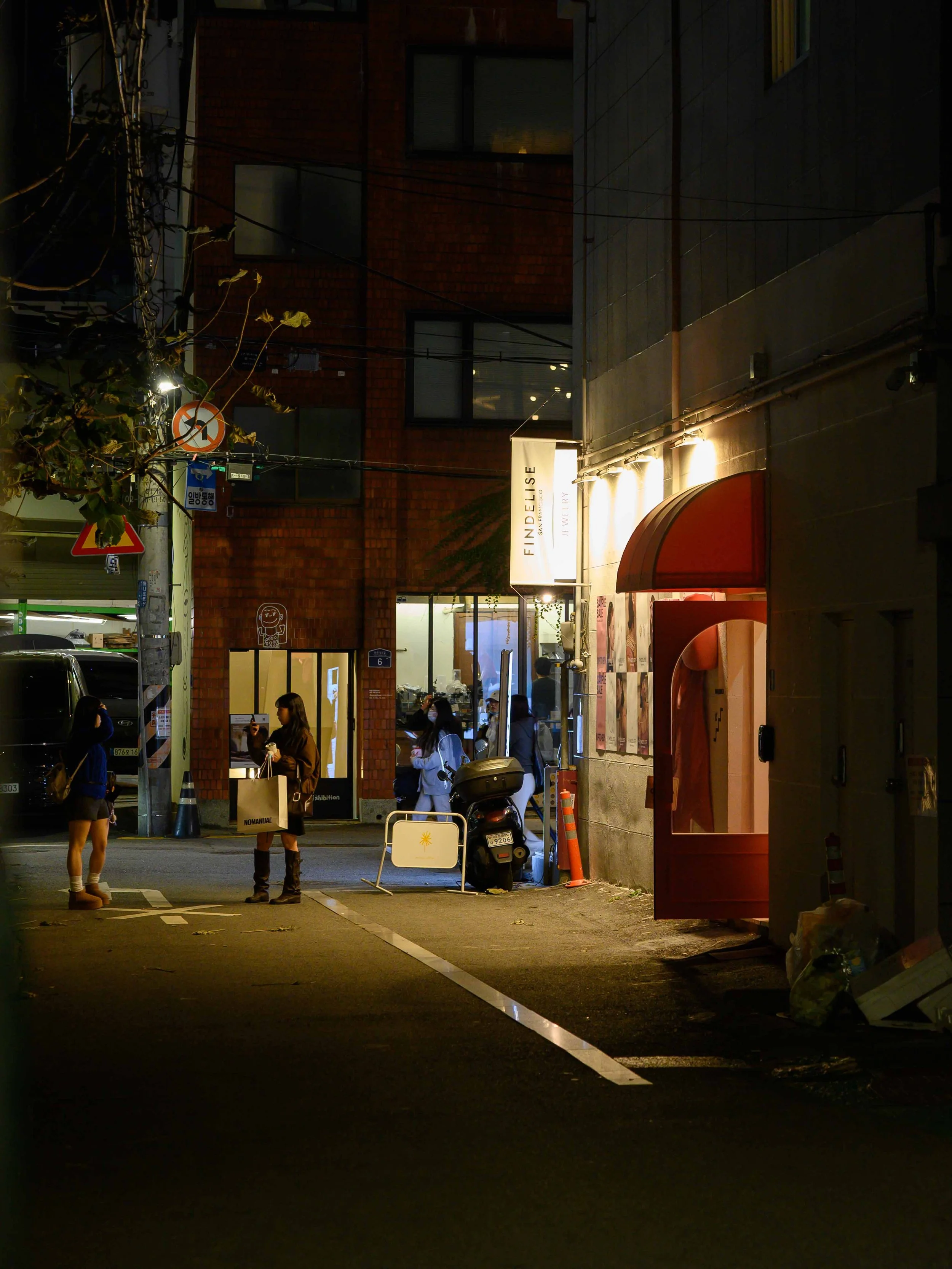
Hannam-dong (한남동)
Low-key, stylish and one of the best areas in Seoul for a relaxed evening.
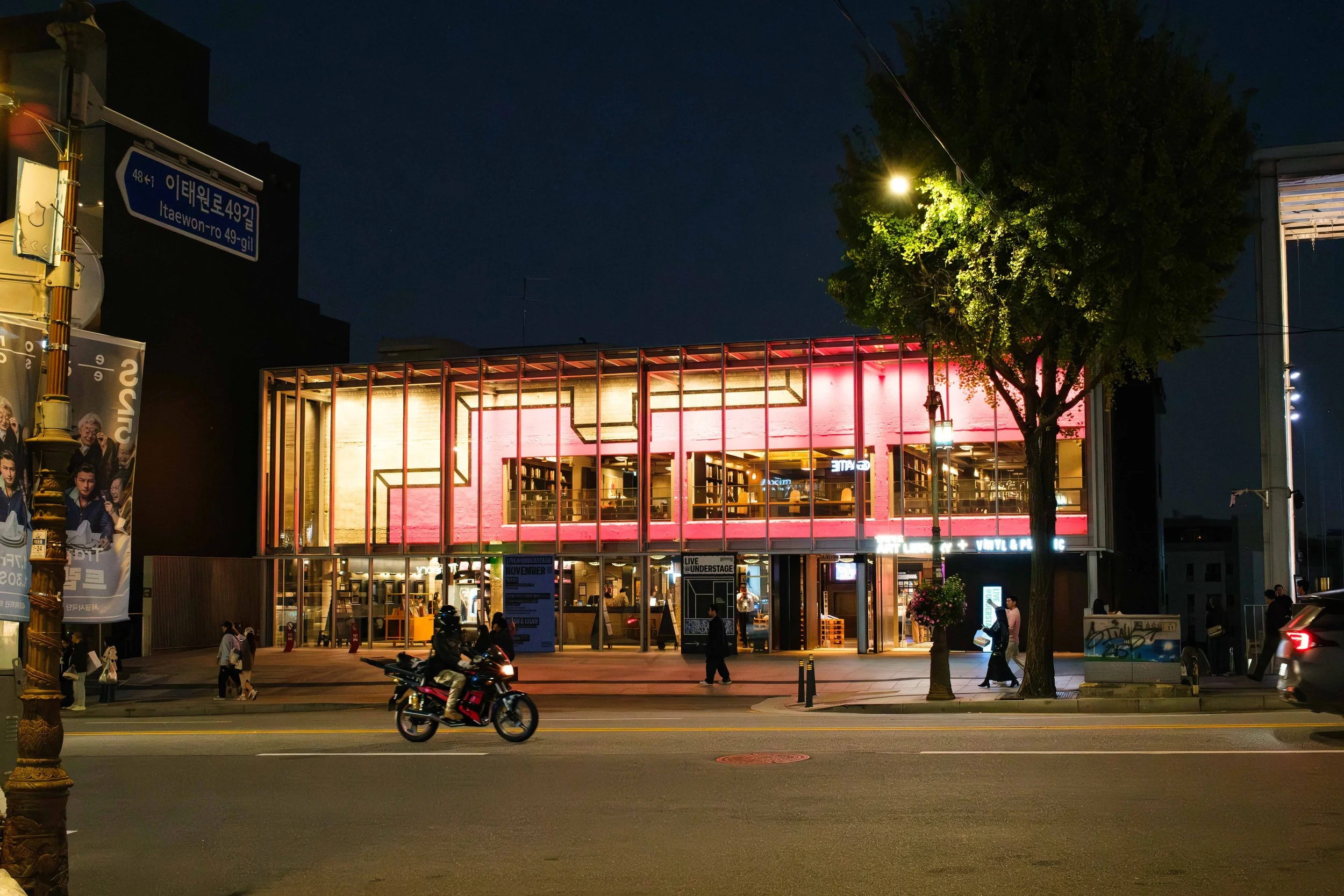
Hannam-dong sits between Itaewon and the Han River and has developed a reputation as one of the city’s most quietly fashionable neighbourhoods. It is smaller and calmer than Seongsu, but packed with excellent wine bars, LP bars and boutique shops tucked along its side streets.
The atmosphere here feels curated without being loud. Instead of neon and street performers, you get softly lit interiors, good playlists and wine bars.
We were told by a local that this is where Seoul’s ‘genuinely cool’ crowd actually spends their evenings (Itaewon wasn’t good enough for him), and it felt that way. If your ideal trip includes wine bars and slow evenings rather than sightseeing-packed days, Hannam-dong is worth looking at.
Hannam-Dong Highlights
Hyundai Card Music Library - A brilliant vinyl library which is free to use with several record players you can plug into.
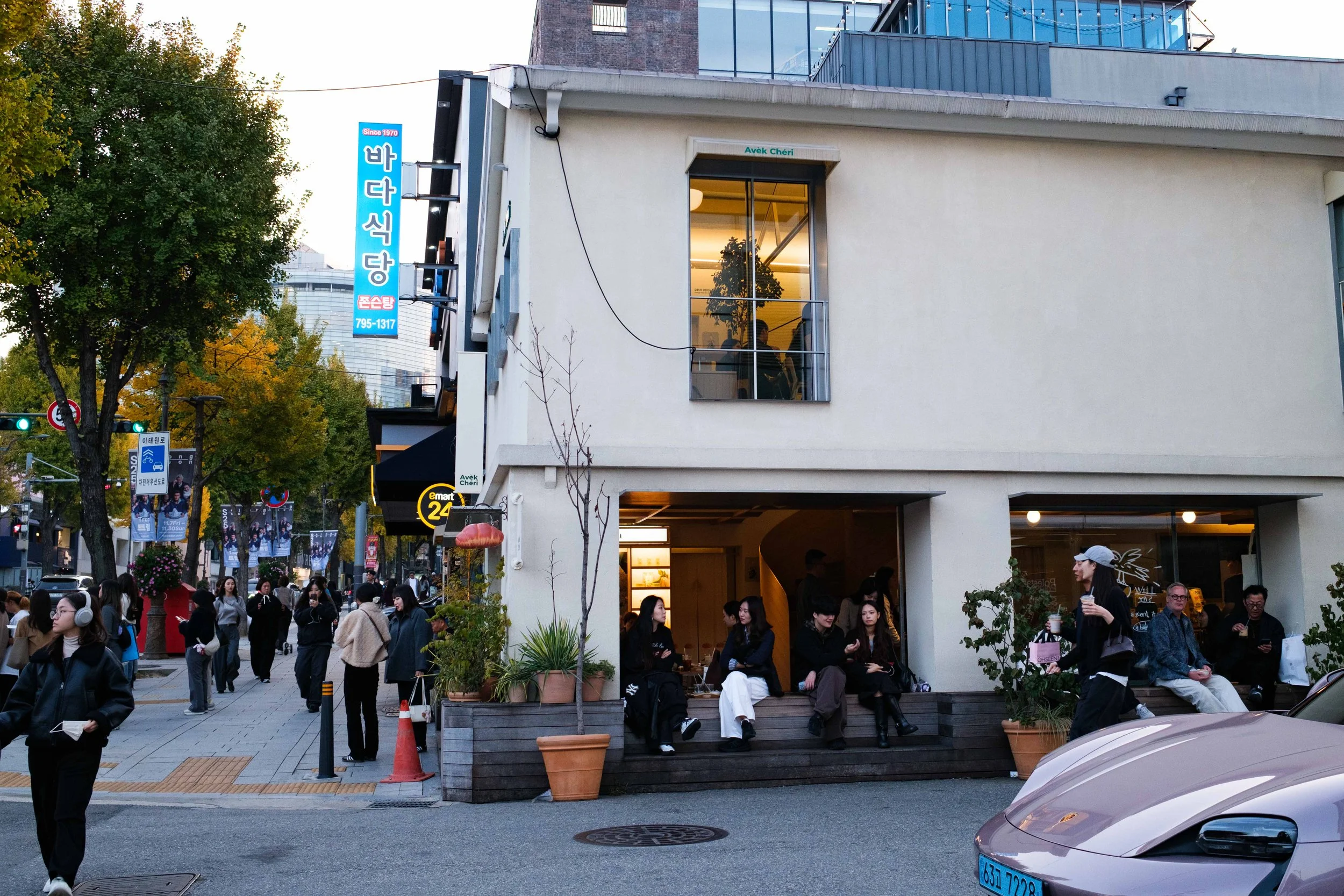
Seochon (서촌)
Traditional, residential and quietly charming. One of our favourite little areas of Seoul!
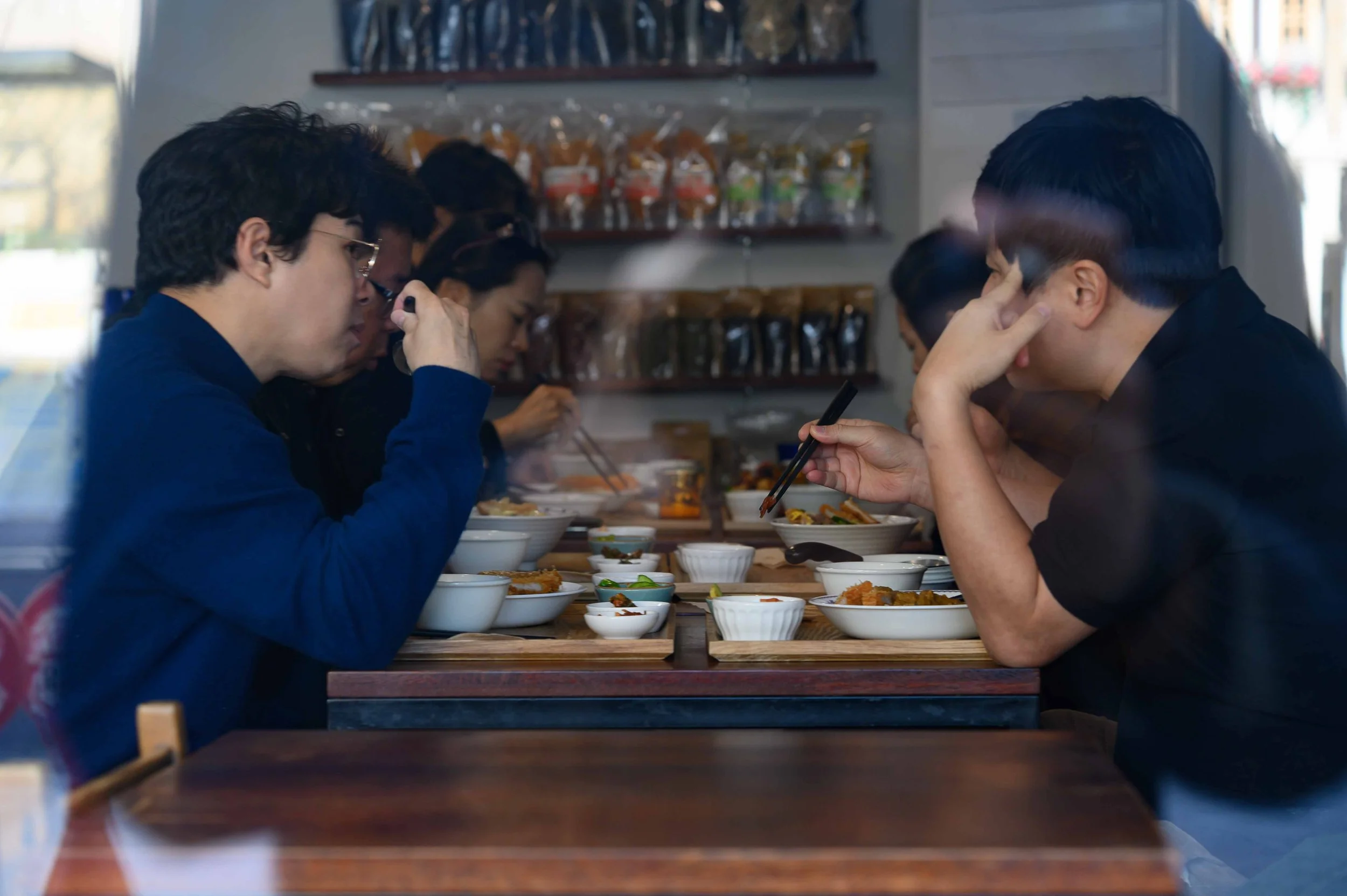
Located just west of Gyeongbokgung Palace, Seochon feels like a softer, more local pocket of central Seoul. Narrow streets are lined with hanok houses, small independent restaurants and understated cafés rather than big chains or glossy storefronts.
It is the kind of neighbourhood where you wander without a plan, turning into quiet alleys and discovering family-run eateries or tiny galleries. Despite its traditional feel, it does not feel staged or overly tourist-focused like Bukchon Hanok Village.
From here, you can also walk up into Inwangsan Mountain Park for views across the city, which makes it a lovely base if you enjoy mixing urban exploration with short scenic walks.
Where to Stay in Seochon
Seochon Highlights
Inwangsan Mountain Park - Walk from Seochon up to the mountain park for tree-lined hikes and city views
Bap+ - A lovely local restaurant serving katsu curries and ramen
土俗村蔘雞湯 - Hanok style restaurant with Ginseng chicken soup
Mirabeau Chocolate - A lovely hot chocolate cafe
Tongin Traditional Market - A greta food market operating on an old-school coin based system
Bukchon Hanok Village (북촌한옥마을)
Traditional hanok stays in the heart of historic Seoul.
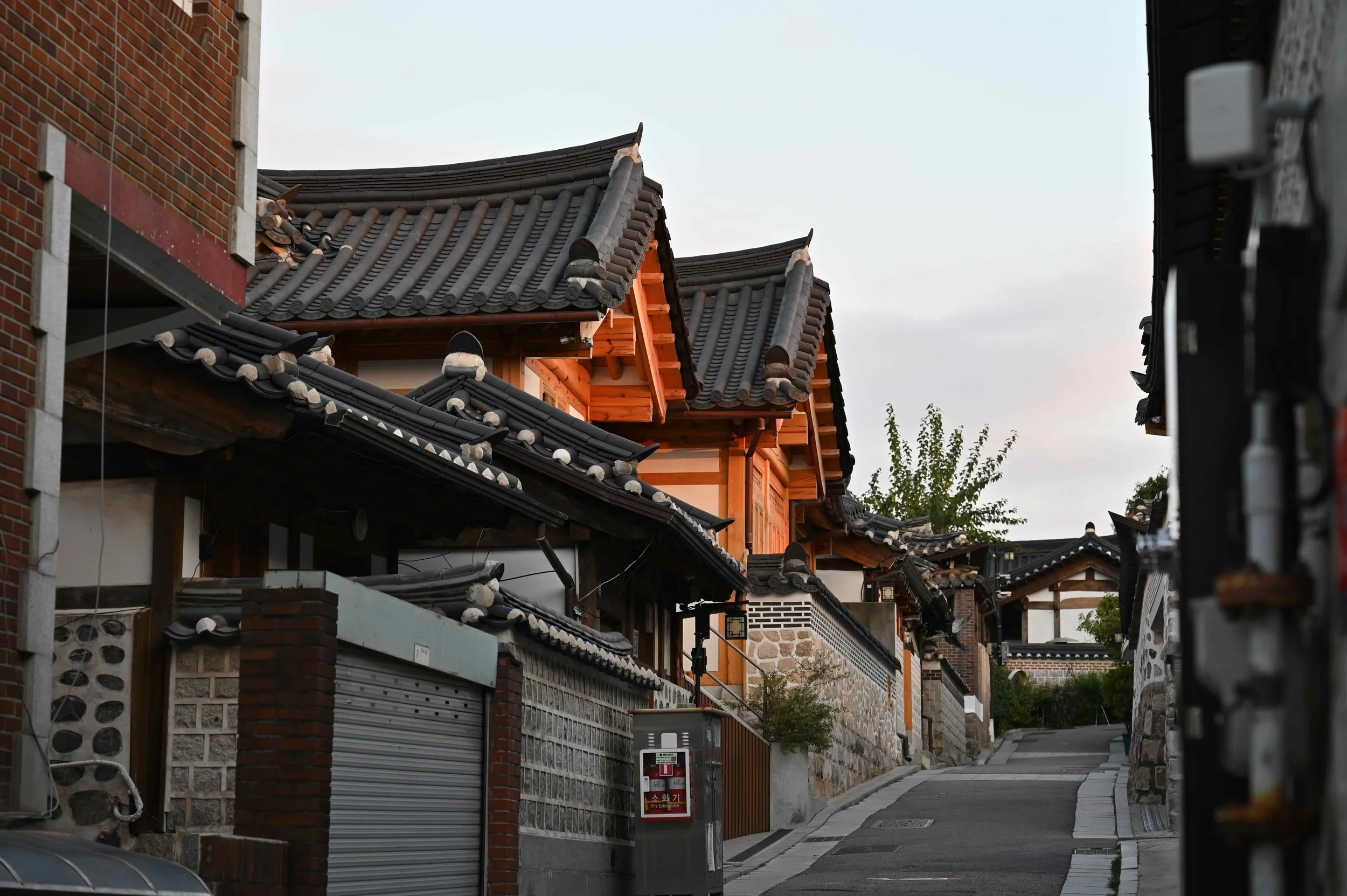
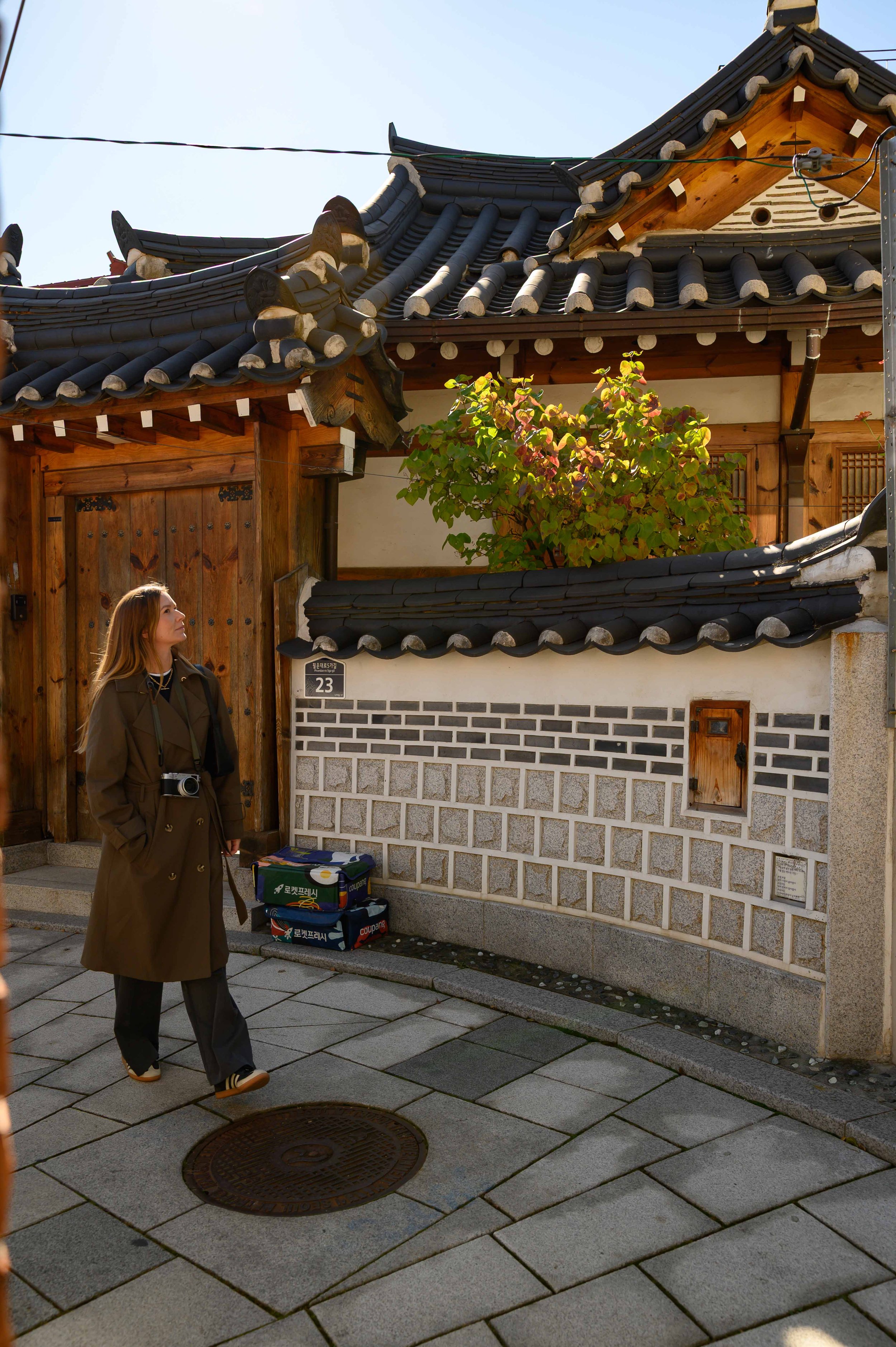
Bukchon Hanok Village sits between Gyeongbokgung Palace and Changdeokgung Palace and is one of the most photographed areas in the city. The neighbourhood is filled with preserved hanok houses, traditional wooden homes with tiled roofs and inner courtyards.
For many of you, staying in a hanok will be high on the list. Waking up on heated ondol floors and opening wooden sliding doors onto a small courtyard is a very different experience from a modern hotel tower.
However, there are a few things to consider.
Bukchon is primarily residential and extremely popular during the day. Tour groups arrive early, and the narrow streets can become very crowded. If you stay here, evenings and early mornings are peaceful, but the daytime atmosphere is busy and heavily photographed.
Hanok stays also tend to have:
Futon style bedding rather than raised beds
Smaller bathrooms
Limited luggage space
More traditional layouts
For some people, that traditional experience is exactly the appeal. For others, particularly on longer trips, it can feel less practical.
We considered staying in Bukchon during our trip, but after reading a large number of reviews, we decided against it. A common theme was how difficult some visitors found sleeping on traditional floor bedding, especially if they were used to Western mattresses. Several people mentioned back pain and disrupted sleep, affecting the rest of their holiday.
It is also worth asking how much of a traditional experience you truly get when you are staying in the middle of a busy modern city. During the day, Bukchon is heavily visited and photographed, so while the architecture is beautiful, it does not always feel peaceful or secluded.
For one or two nights, a hanok stay could be a memorable cultural experience. For a full week in Seoul, you may prefer the comfort and consistency of a modern hotel.
Hanok Stays in Bukchon Hanok Village
Alternatives to Bukchon Hanok Village
If you want the hanok experience but slightly fewer crowds, consider:
Seochon (서촌) – Just west of Gyeongbokgung Palace, Seochon has a number of beautifully restored hanok guesthouses in quieter residential streets. It feels more local and less tour-focused than Bukchon.
Parts of Insadong (인사동) – You can find traditional-style stays here while remaining central and well-connected.
Our advice would be to find a nice Hanok in one of the areas that have the cultural architecture but modern living spaces, so that you can still sleep well and enjoy the rest of your trip.
How to Choose the Right Area to Stay in Seoul
If you are still unsure where to stay in Seoul, the easiest way to decide is to think about how you want your days and evenings to feel.
If this is your first visit and you want to be within walking distance of palaces and historic streets, Insadong makes life simple. It is central, cultural and easy to navigate.
If your ideal trip includes café hopping, late-night food and wandering lively streets, Hongdae offers a more neighbourhood-driven atmosphere.
If you are booking skincare treatments, shopping in modern malls or planning evenings in high-end bars and clubs, Gangnam is the most practical base.
If you are drawn to wine bars and understated cool, Hannam-dong is worth considering. If you prefer industrial cafés and contemporary design culture, Seongsu-dong delivers that in abundance. And if you are tempted by a traditional hanok stay, look at Bukchon or quieter alternatives like Seochon.
The good news is that Seoul’s subway system is excellent. You are rarely more than 45 minutes from anywhere else in the city. The key difference is not accessibility, but atmosphere.
Choose the neighbourhood that matches the kind of trip you want, and the city will feel far less overwhelming.
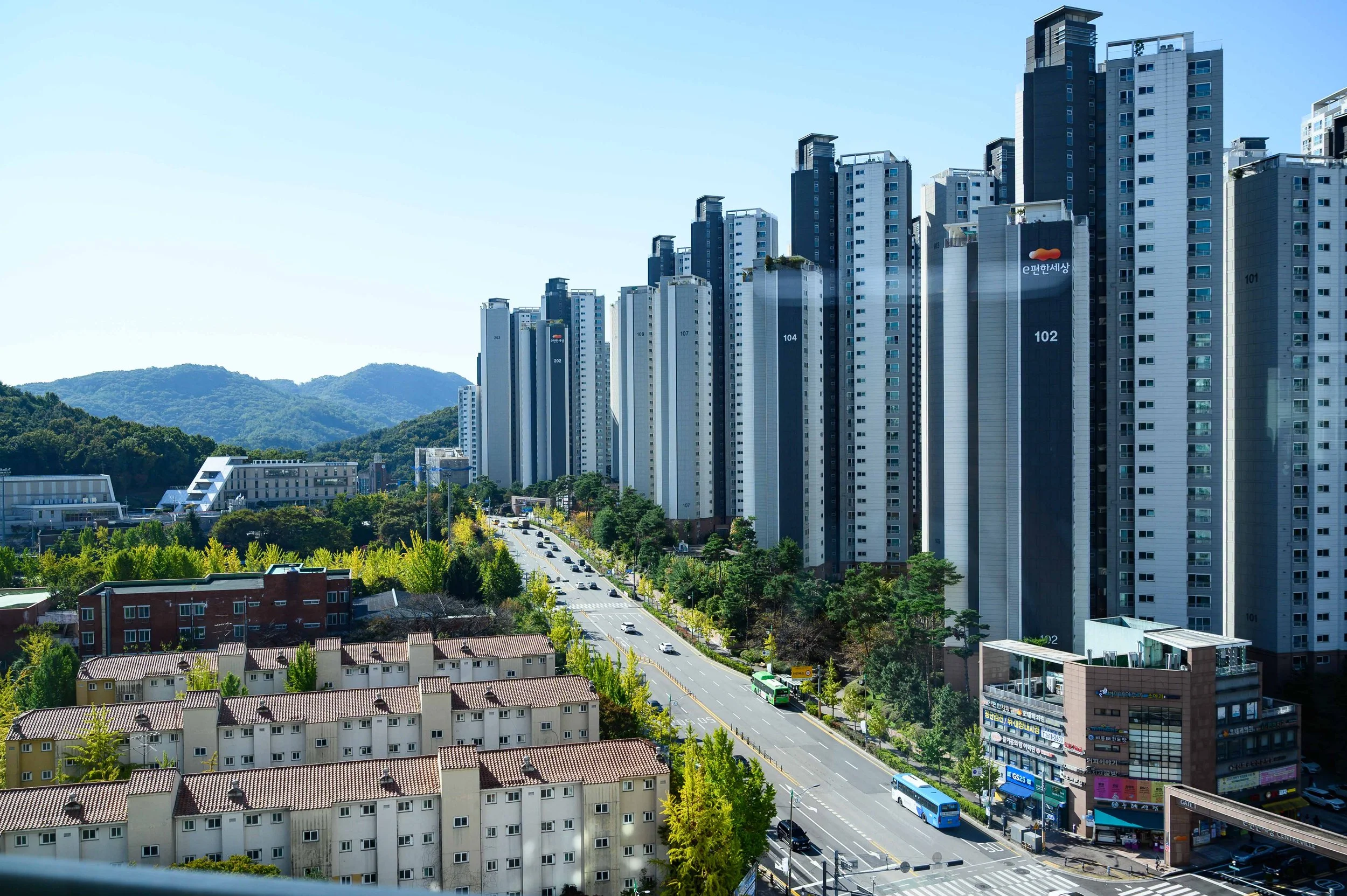
A suburban apartment complex in Gwangmyeong (SW of Seoul) - Read more about our visit here
More From Seoul