
Spina - Folegandros, Greece (Review)
Our Rating: ★★★ | ££££ (£80pp) - Fire-cooked Italian food on a Cycladic clifftop, and comfortably one of our top five meals of the last few years. (How we rate restaurants)
Osteria Spina exists because two Italian friends couldn't stop coming back to an island.
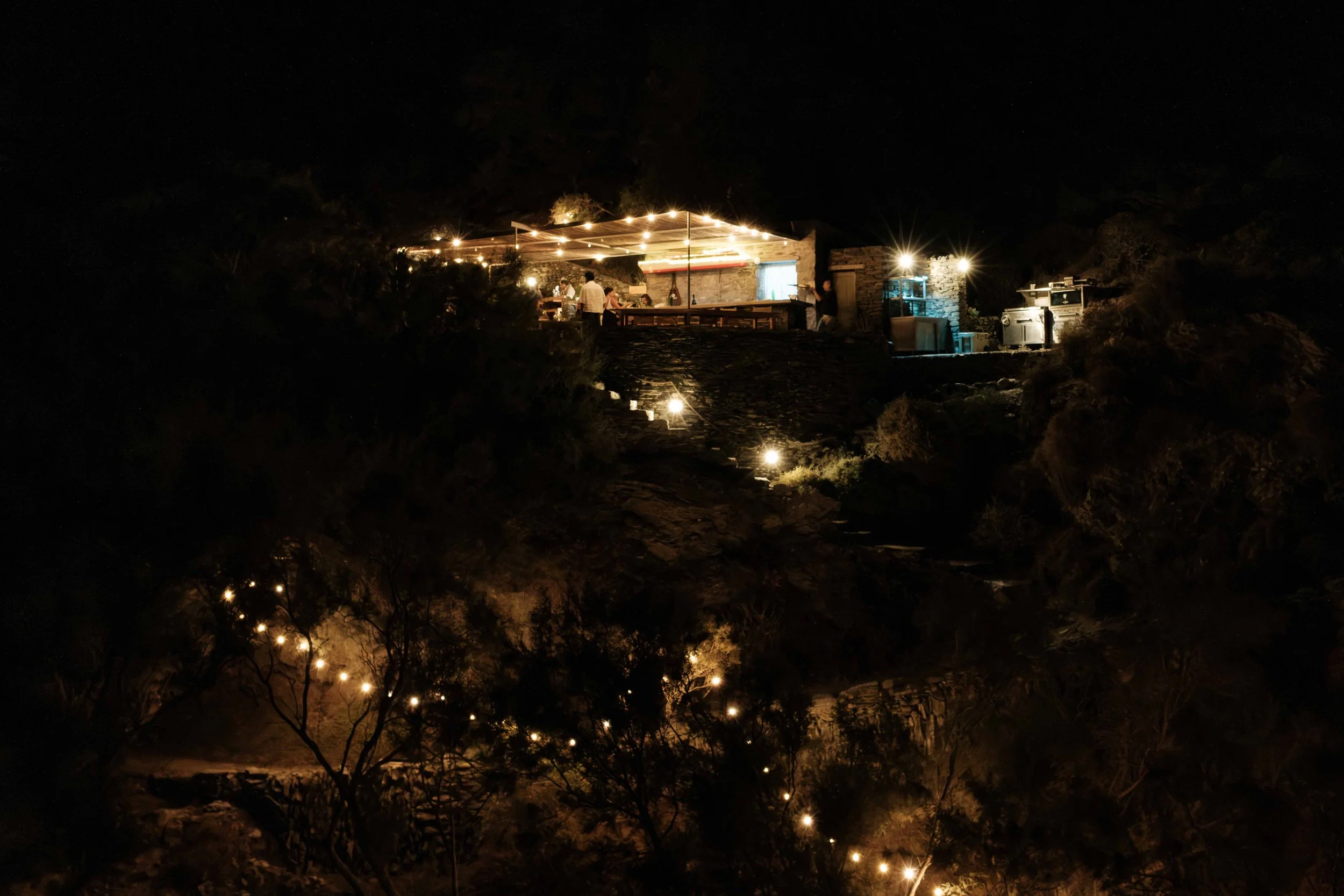
Matteo Serri, a photographer and keen sailor, and chef Alessandro Pagnoni (Alle to everyone here) spent the best part of twenty summers on Folegandros before deciding to build something of their own. It was a local fisherman, Minos, who first took them by boat to Ambeli, a tiny pebbly cove at the far end of the island, and that was that. After almost a decade of planning and building into the rock with local stone, Spina opened in 2024: an osteria and a handful of suites set into the cliff above Ambeli Bay. The name ‘Spina’ (Italian for ‘thorn’) comes from the wild thistles that grow among the rocks here, which the owners see as the emblem of the island.
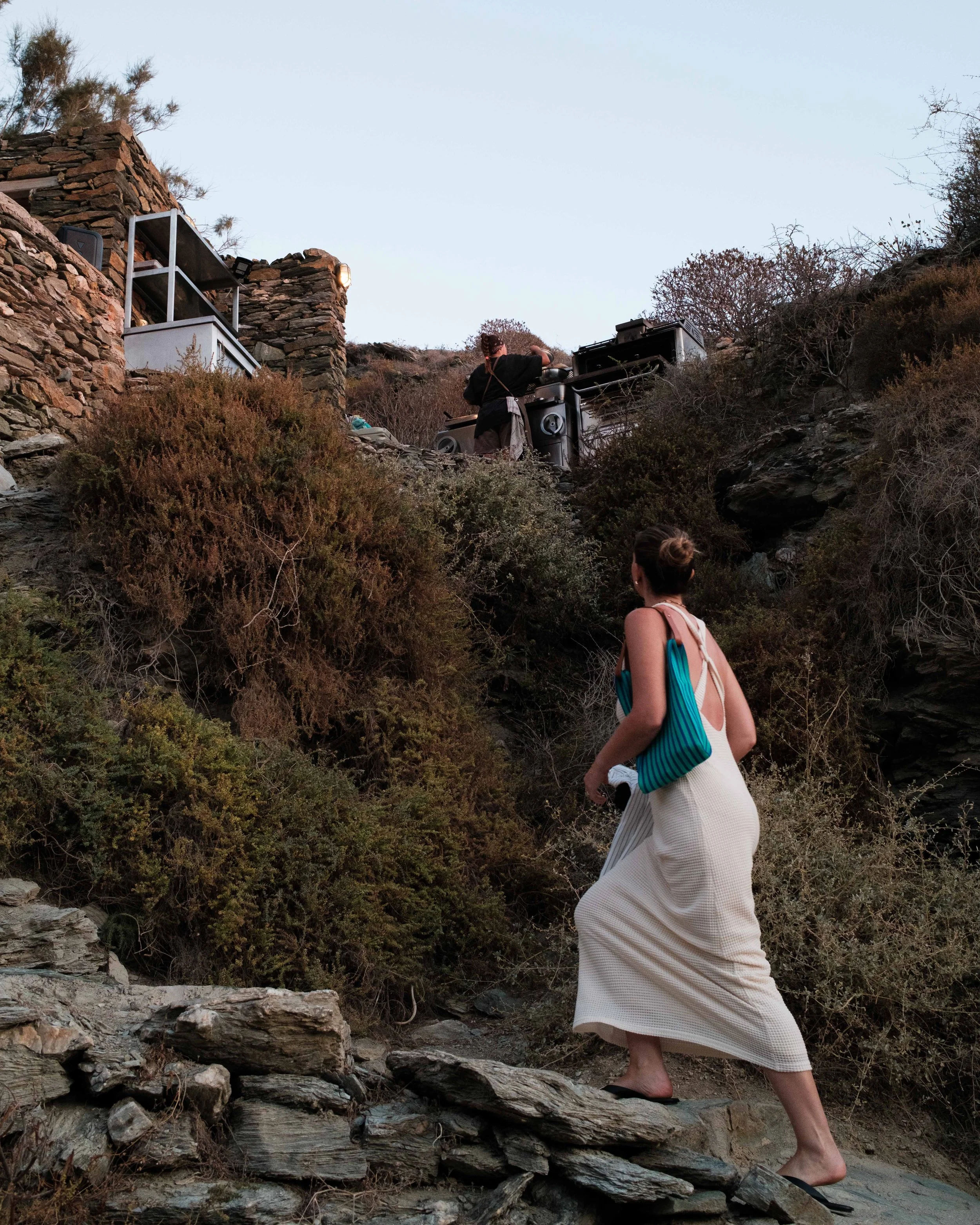
Alle made his name in Modena and has serious pedigree. He has cooked in Michelin-starred kitchens, including Amerigo 1934 in the hills outside Bologna, spent time in Massimo Bottura's world at Franceschetta58, and went on to run the kitchen at Prospero, a modern bistro a few steps from Osteria Francescana. His approach is to put one ingredient at the centre of the plate and build everything else around it, and here that means Italian technique applied to Cycladic produce.
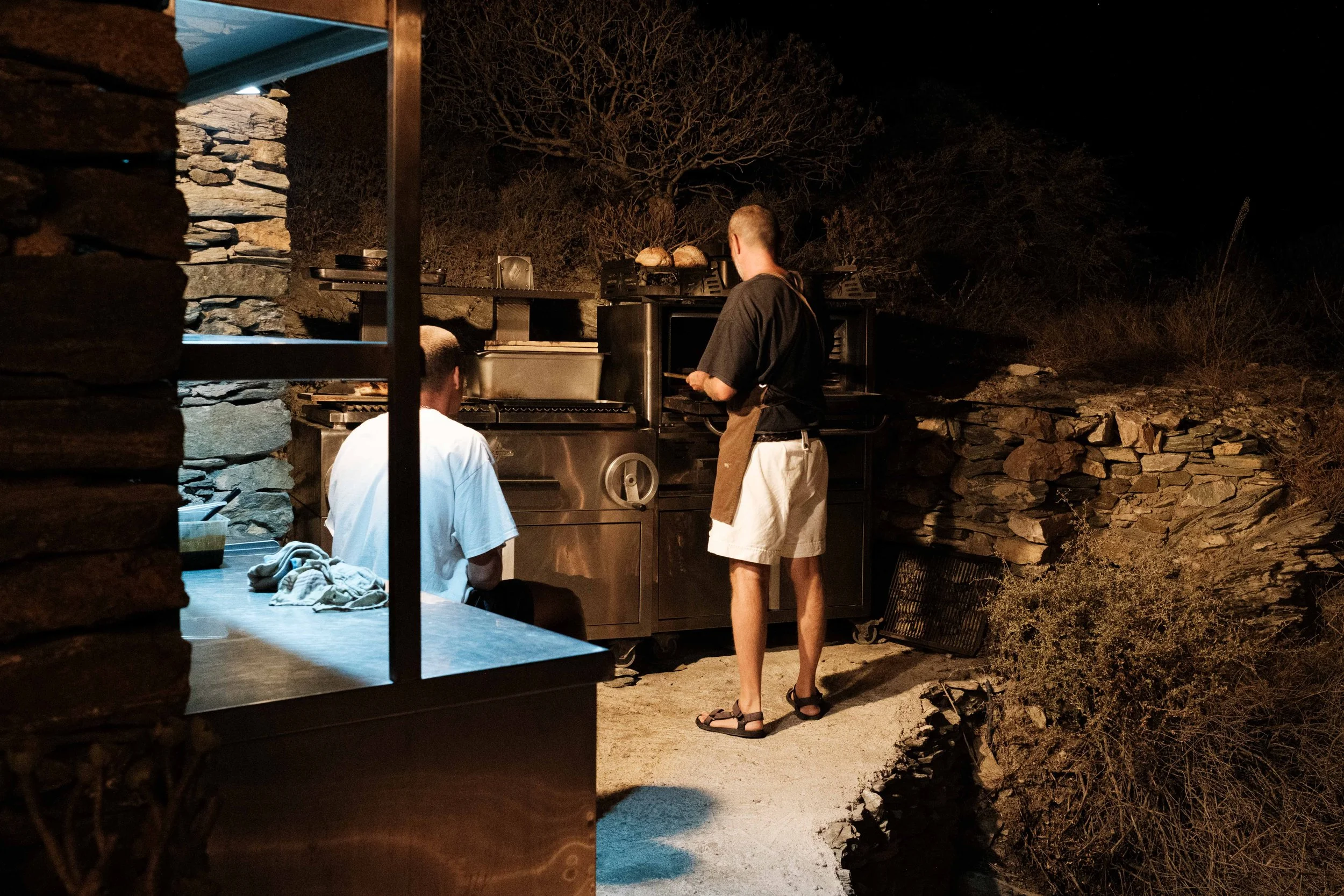
The food at Spina is mostly cooked on the grill or barbecue, using only organic produce from their gardens in the valley, the island and the sea in front of you.
The team is Italian through and through, from Turin and Modena, with just three people cooking in the kitchen for 35 seats. Out front, Giulia, Spina's head of hospitality, runs the show, and she and the team are a huge part of why the evening feels so special. They also happen to be friends with the team behind Cantina on Sifnos, which made total sense to us the moment we arrived. Cantina is one of our favourite meals anywhere, and Spina has the same magic: a small, passionate team cooking seasonal food in a jaw-dropping spot on a wild bit of Cycladic coastline.
We booked this dinner well in advance, back when we first started planning our trip to Folegandros, and we're very glad we did. Matteo told us that in August they had around 100 people on the waitlist.
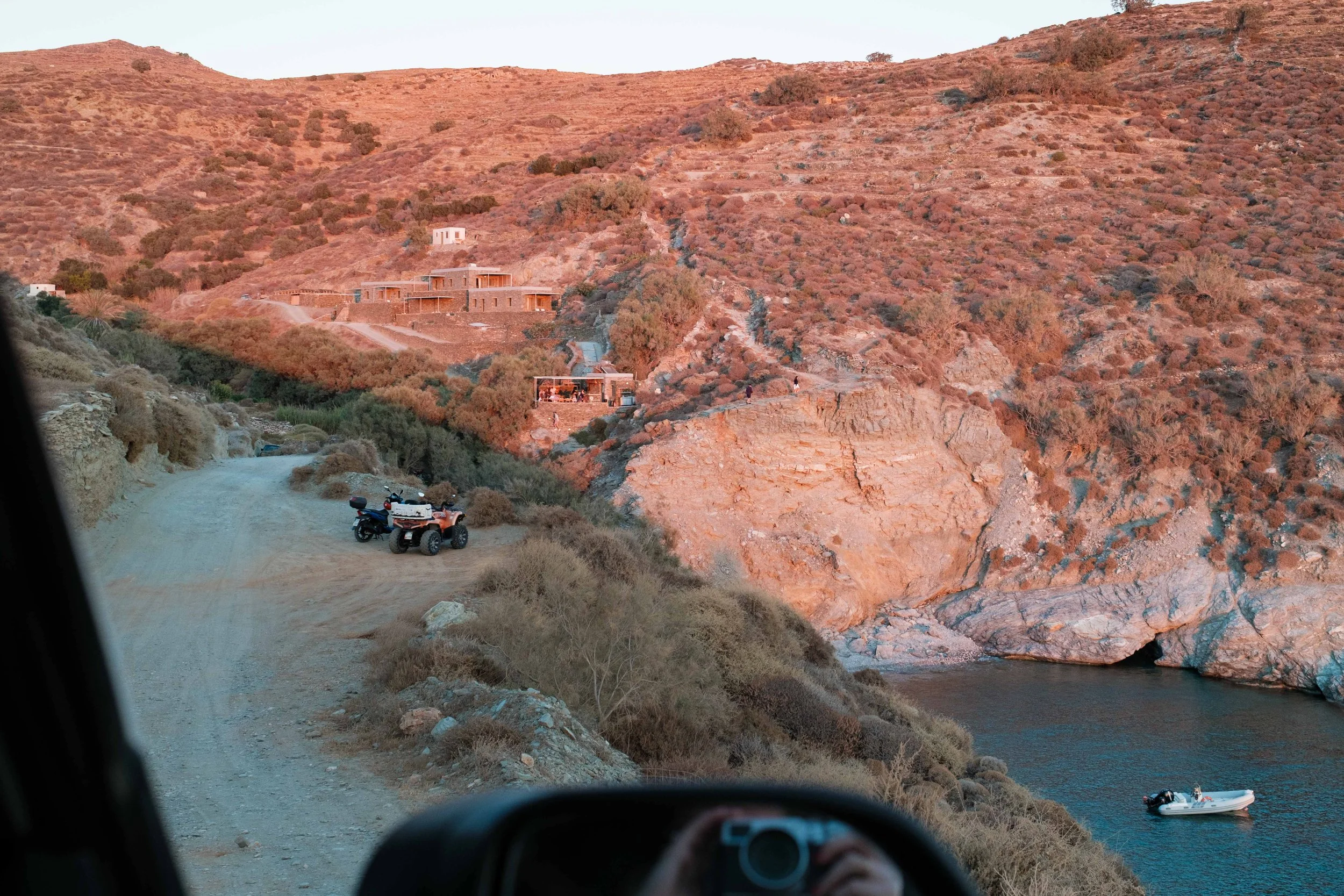
Getting to Spina is an adventure in itself. The road out towards Ambeli gives way to a steep, bumpy dirt track down to the bay, with two particularly steep stretches. We did it in a small car, and made it there and back (the return leg in the dark). If you're not a confident driver, hire an ATV or a mini SUV to tackle the road. Honestly though, don't let it put you off. You'll manage, and it makes the arrival feel even more special.
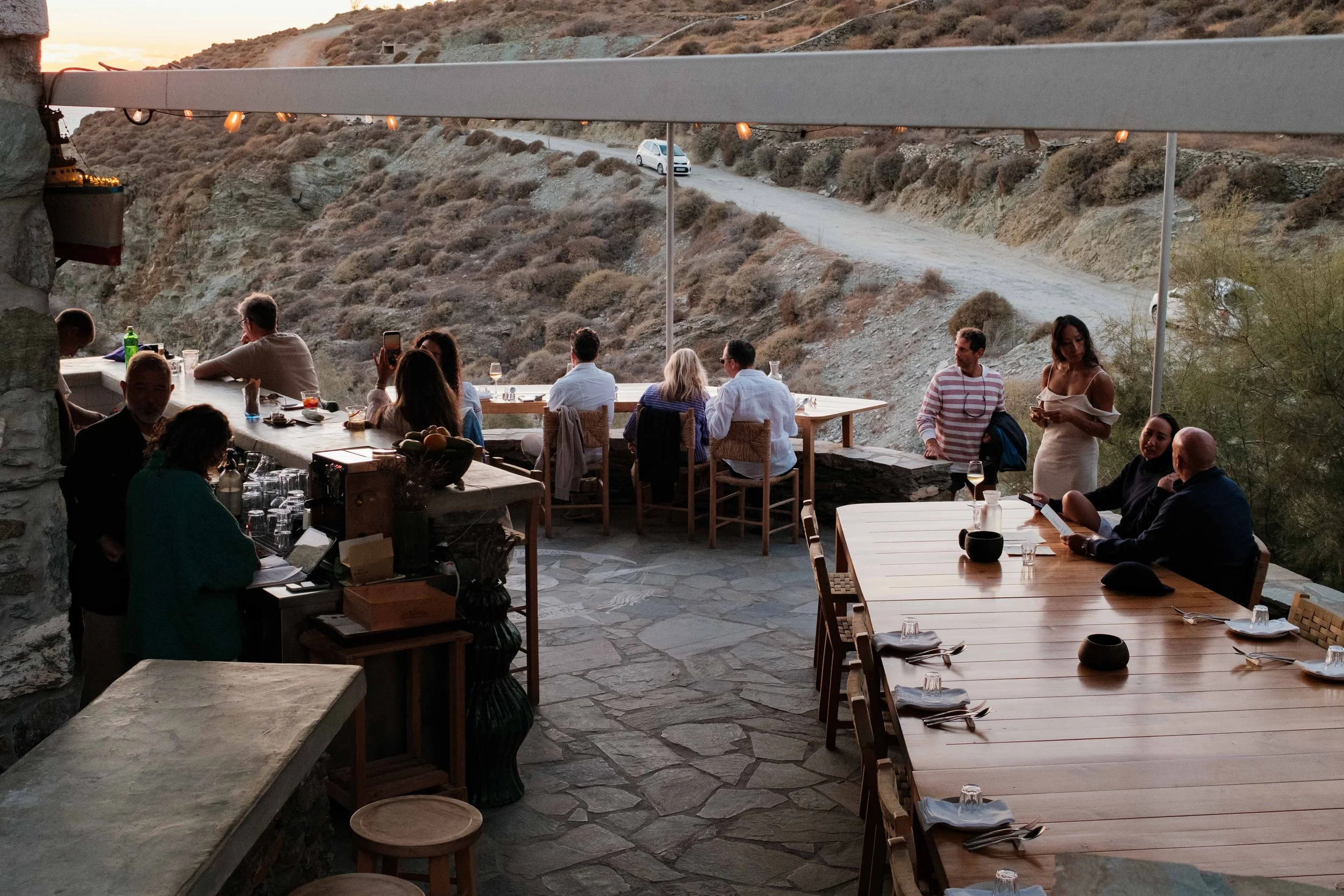
The whole place is built around a boat theme (the founders liken Spina to a boat resting on the sea), right down to the huge communal table, which is designed like a boat's deck. Seating is first come, first served, and you've got three options:
the sharing table, which encourages conversation but is big and spaced out enough that you still get your own moments
seats looking straight out over the bay
or a spot at the bar, watching the team prep and plate.
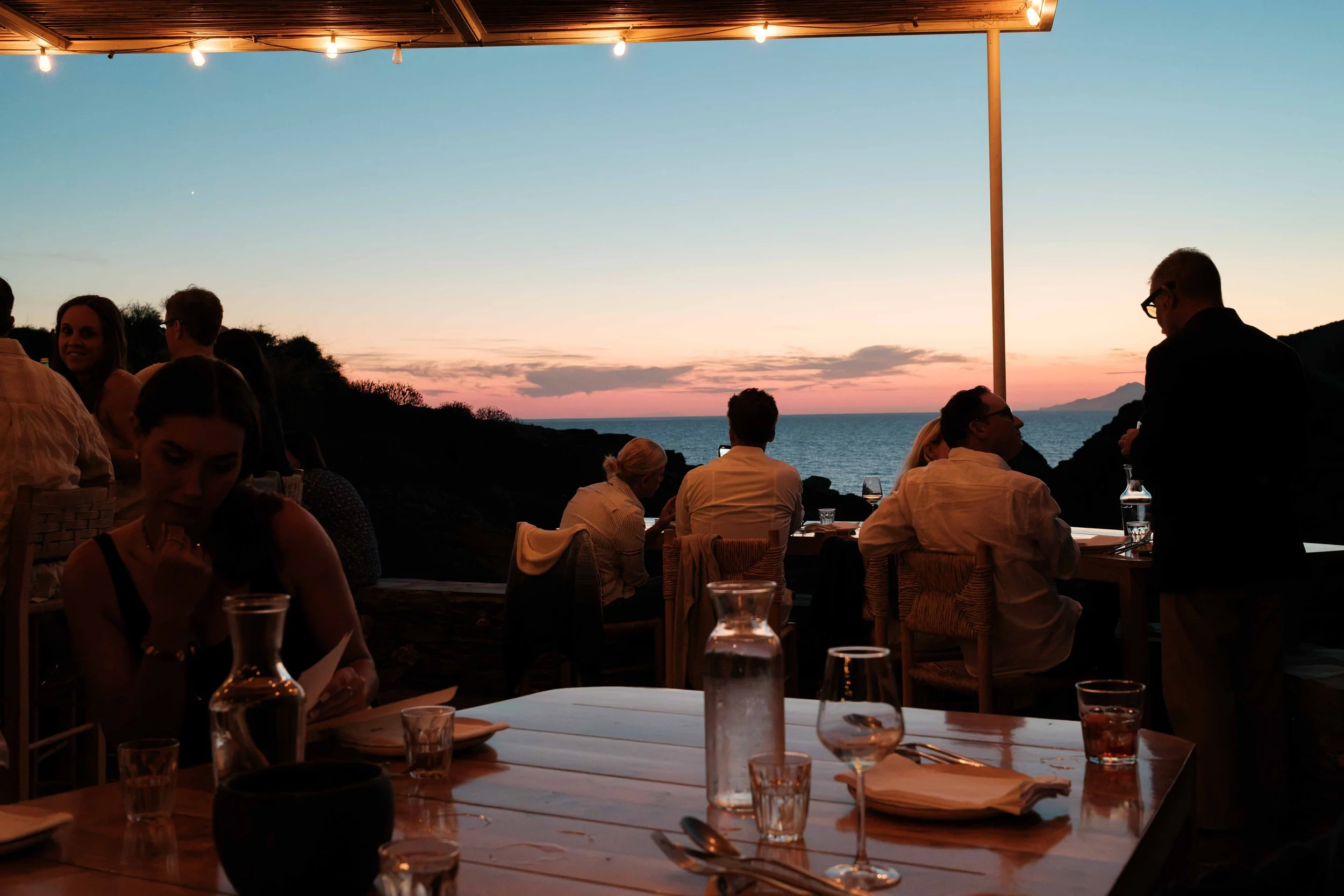
Our tip: turn up early. Dinner is served after sunset, with one seating each evening at 20:00, but you can arrive from 18:30, which means watching the sun go down with a well-made cocktail in hand and getting first pick of the seats.
Dinner is a €70 tasting menu in four parts: the Aperitivo Mediterraneo (a spread of small plates), then a fish course, a pasta and meat course, and dessert. It changes daily depending on what the garden, the boats and the ferry bring in, and the team are great at making changes if you have dietary requirements.
What We Ate
The menu changes every day, so treat this as a snapshot of what Alle cooked on our night. Dishes marked with an asterisk (*) were our standouts.
Gazpacho Rapa Rossa (beetroot gazpacho)*
Skordalià (Greek garlic and potato dip)
Pomodoro Pomodoro (tomatoes)*
Melanzana Parmigiana (aubergine parmigiana)*
Carota alla Brace (char-grilled carrot)
Scapece Zucchini (marinated courgettes)
Aneto Caesar Salad (dill Caesar salad)*
Peperone Marinato (marinated pepper)
Panella Ceci Aioli Paprika (chickpea panella with paprika aioli)
Tonno Brace Pomodoro e Fico (chargrilled tuna with tomato and fig)*
Pasta Mista Cacio Pepe, Ragù Genovese, Peperone Crusco (mixed pasta cacio e pepe with beef and onion Genovese ragù and crispy dried pepper)*
Lemon Curd*
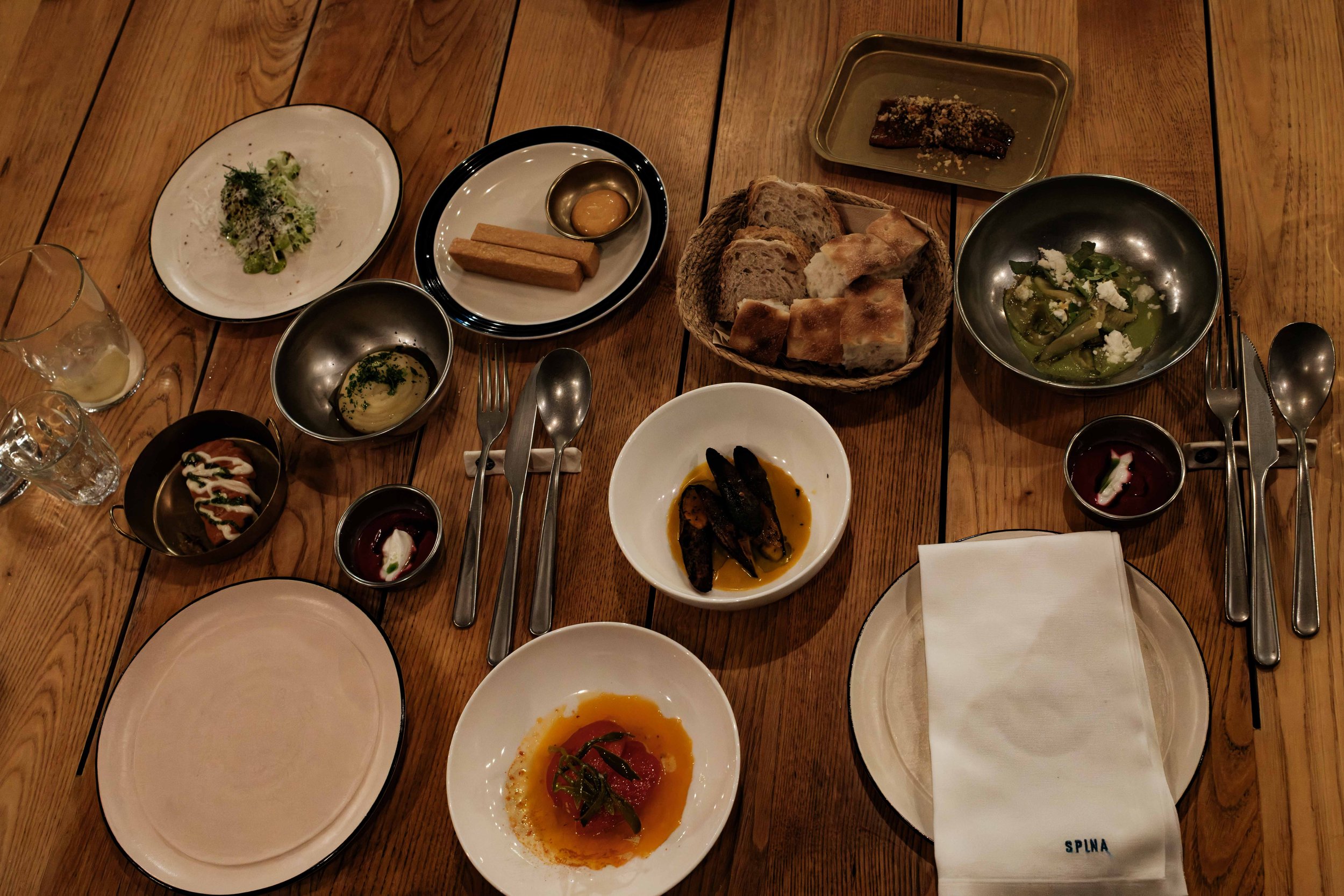
The Aperitivo Mediterraneo is where the garden comes in. Spina's vegetable patch is the biggest in the area, walled with dry stone beside the sea and fed by an underground spring. This was where Spina first won us over. It would have been easy to send out a few trays of dips and call it a course, but every little dish here was cooked and prepped with real care and was delicious in its own right.
The Gazpacho Rapa Rossa (beetroot gazpacho) was a highlight: cold, vibrant and earthy-sweet, finished with a creamy swirl, and a brilliant way to start on a warm evening. It sat next to Skordalià, the garlicky Greek potato dip, which is a classic Greek pairing (more on that in the Nerdy Bits). Pomodoro Pomodoro did exactly what it says: a whole tomato sitting in a bright pool of tomato. The Carota alla Brace (char-grilled carrot) came with a carrot and coriander curry purée, such a clever idea that we'll be stealing it for our own kitchen. The Melanzana Parmigiana swapped the classic layered bake for a single slice of aubergine under a lovely sauce.
There was also Scapece Zucchini (scapece being the Neapolitan way of marinating courgettes with vinegar and mint), an Aneto Caesar Salad (aneto is Italian for dill) with a bright green paste, and Peperone Marinato, sweet marinated pepper hiding a layer of local cheese underneath. Last but not least, Panella Ceci Aioli Paprika: golden chickpea chips with a paprika aioli for dipping, and a straight nod to Palermo's panelle (more on those below too).
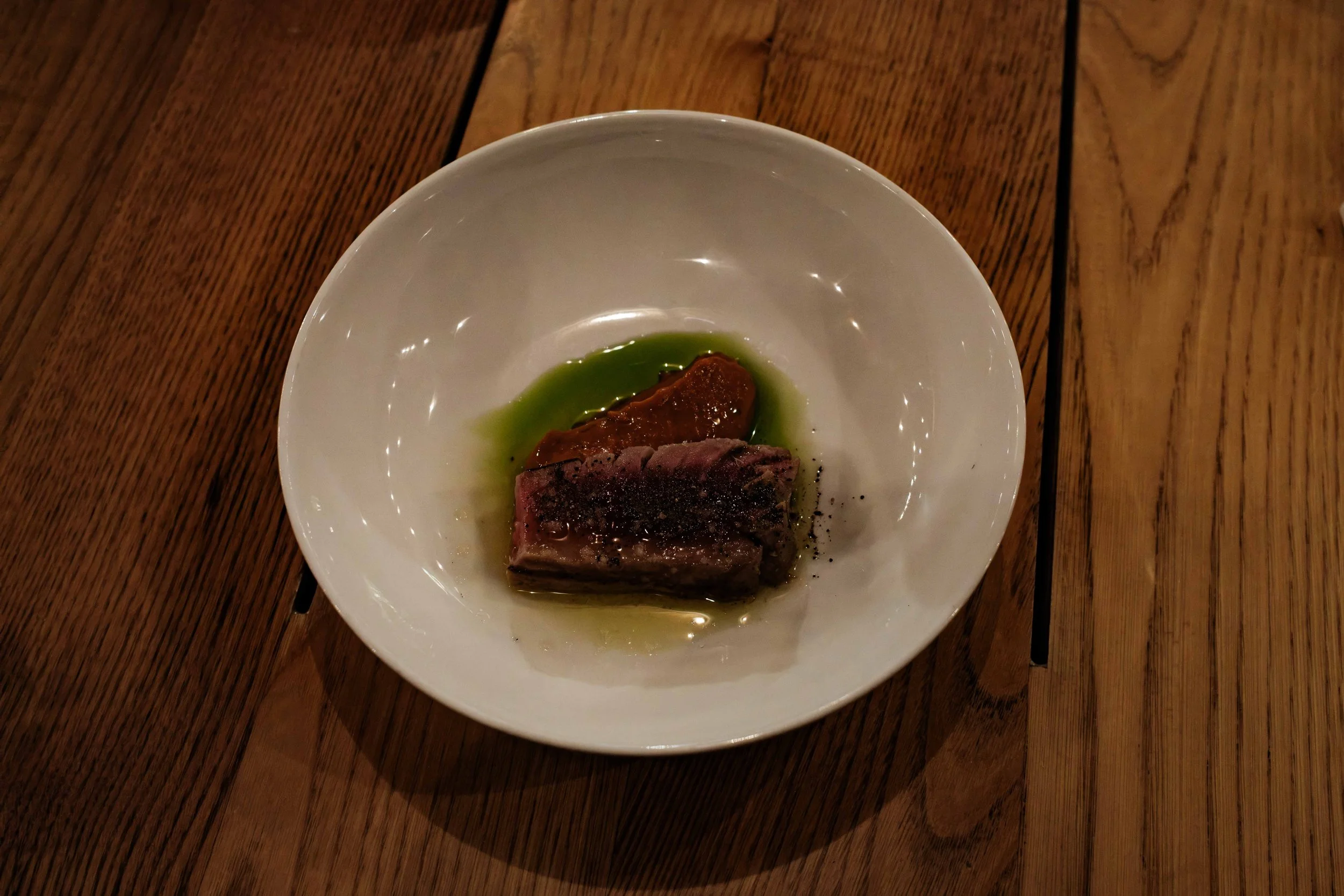
For the fish course, Tonno Brace Pomodoro e Fico: tuna caught the day before, seared on the grill tataki-style so it stayed really soft, almost melting, inside, with a strong, full flavour, and served with tomato and fig. (We went deep on the tataki technique in our Blue Pelican review).
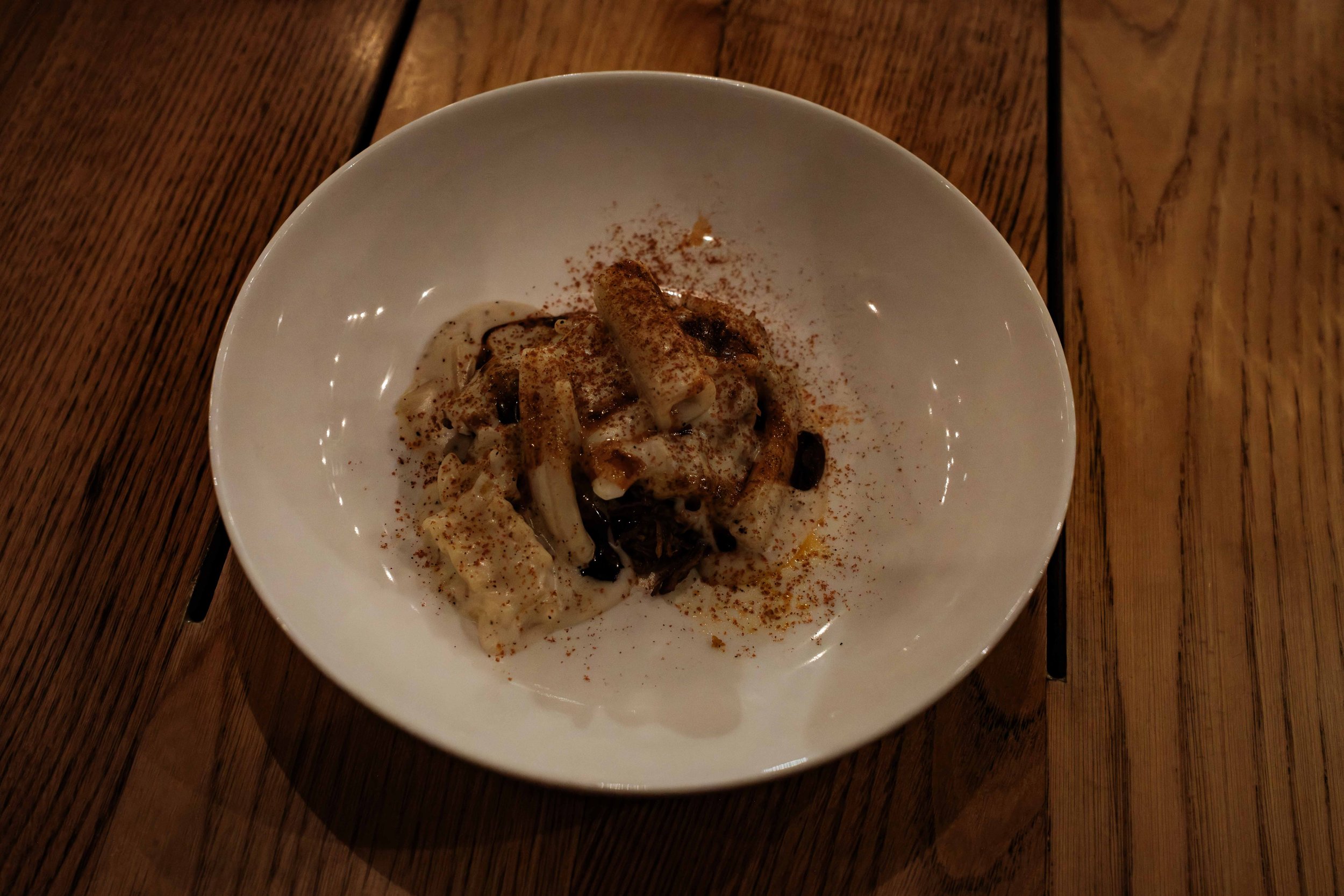
Then came the main course. The Pasta Mista Cacio Pepe, Ragù Genovese, Peperone Crusco brings together a whole tour of Italy: Rome's cacio e pepe, Naples' slow-cooked beef and onion Genovese, and crunchy dried peppers from Basilicata. The sauce was extremely rich, peppery and cheesy, and underneath sat a generous portion of pull-apart beef. Outstanding. The team even offered us a top-up, which in hindsight wasn't the wisest move given how full we already were, but in the moment there was absolutely no way we were saying no.
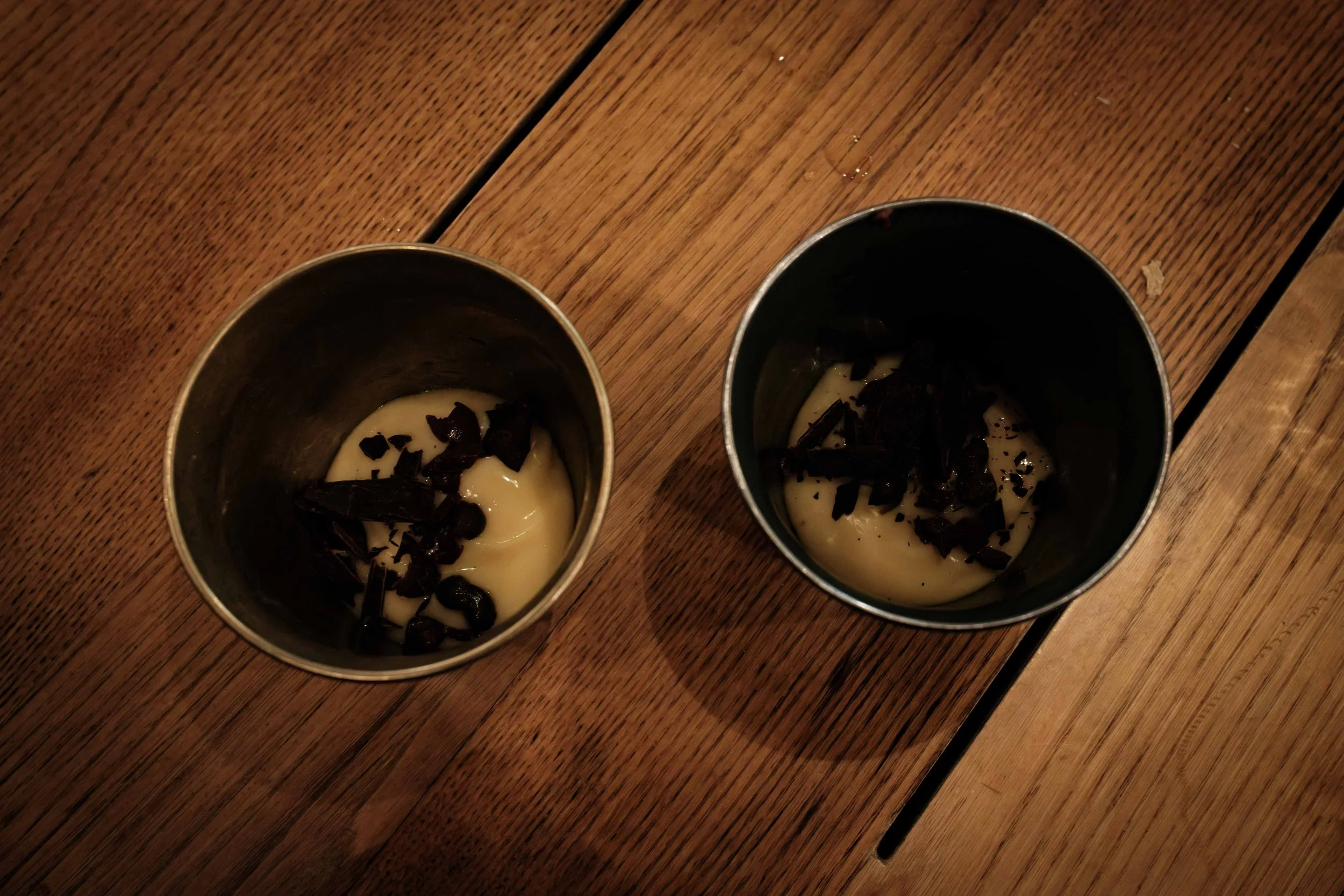
Dessert was a massive hit. The menu simply says Lemon Curd, which undersells it: lemon curd with candied capers, olive and chocolate, served as a little something you hold in your hand, which we loved. Candied capers were a completely new sensation for us: sweet at first, then a salty, tangy hit that worked brilliantly with the chocolate and the sharp lemon curd. It's exactly the kind of Cycladic twist we'd hoped for (and yes, there's more on capers below).
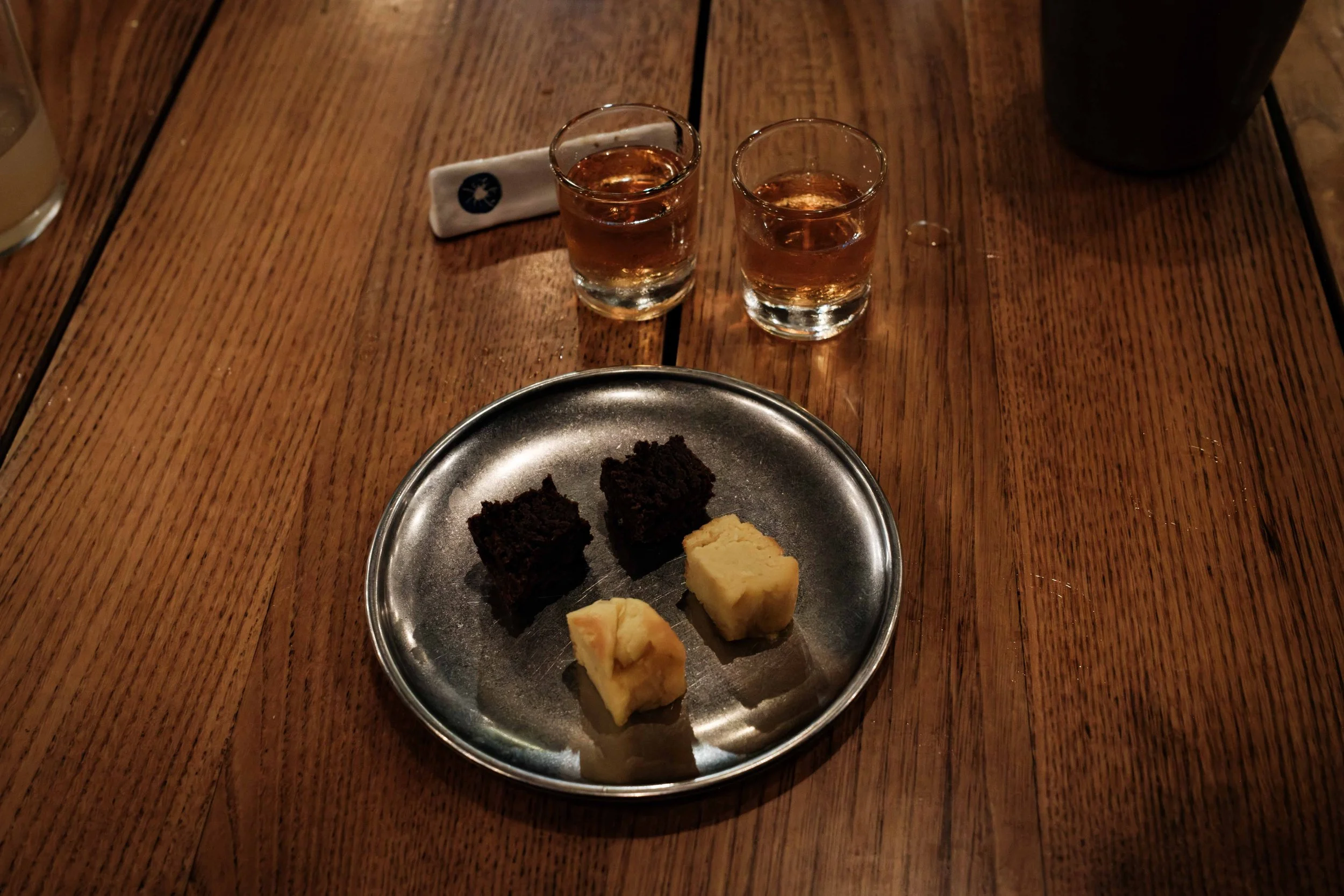
On the drinks, we skipped the €50 wine pairing and asked the team to recommend a glass to go with each course instead, and every one was spot on. The list leans towards natural and artisan wines, and they clearly know it inside out. The aperitivo cocktails at sunset were just as well made, and a digestivo to finish was the perfect full stop.
Overall thoughts
We loved everything about this meal. The food, the setting, the vibes and the service were all outstanding, and it's comfortably one of our top five dining experiences of the last few years. Giulia and the team are lovely and create a brilliant atmosphere. You can really tell they love what they do and put a lot of passion into it.
At €70 for the tasting menu, it's also incredibly well priced for what you get, given the standard of cooking, the setting and the service.
The only heads-ups are practical ones. Book as early as you can, give yourself time for the drive (in something that can handle a steep dirt track), and come hungry. Between nine small plates and that pasta (twice), we drove home very, very full.
Between Spina, Cantina on Sifnos and O! Hamos on Milos, the Cyclades keep serving up some of our all-time favourite meals. We loved Spina so much that we came back to stay for a night later in the trip, which you can read about here (coming soon)
Details
Website: www.spinafolegandros.com
Instagram: @spinafolegandros (and follow chef Alle at @pagno74 and Matteo at @matteoserri)
Booking: Through the "Book a Table" link on their website. Bookings open each spring, and it's worth getting in as soon as they do; there was a 100-person waitlist in August.
Price: Tasting menu €70 per person, with an optional wine pairing for €50.
Service: Sunset dinner only, with one seating each evening at 20:00. Arrive from 18:30 for sunset and aperitivo.
The menu: Four courses (the Aperitivo Mediterraneo, fish, pasta and dessert) that change daily. Let them know about any dietary requirements when you book; they're very accommodating.
Seating: First come, first served: the communal boat-deck table, seats overlooking the bay, or the bar.
Getting there: Spina is at Ambeli Bay, near Ano Meria at the far end of the island. The final stretch is a steep, bumpy dirt track with two particularly steep sections. An ATV or small SUV is ideal, and allow extra time for the drive back in the dark. The access is worth bearing in mind if mobility is a concern.
Stay: Spina has five suites on site. Read about our night there (coming soon).
Soundtrack: Their "sea escape" playlist is linked from their website and on Spotify.
Map
Ampeli, Folegandros 840 11, Greece
Menu
The Nerdy Bits
Capers: from stone wall to dessert plate
Once you start looking, capers are everywhere in the Cyclades. The caper bush thrives where almost nothing else will, sprouting out of dry-stone walls, rock crevices and sea cliffs. Its Latin name is Capparis spinosa, spinosa meaning thorny, after the little hooked spines at the base of each leaf, which we like to think makes it an honorary member of the Spina family.
What we eat as capers are the plant's unopened flower buds, picked by hand before they bloom. Left alone, each bud opens into a large, beautiful white flower with a burst of long pink-purple stamens that lasts barely a day. Fresh buds are bitter and pretty much inedible; it's curing them in salt or brine that brings out that tangy, mustardy, savoury flavour we know. Caper berries, the bigger ones on stalks you sometimes see in jars, are the plant's fruit, which forms after the flower has been pollinated. And in Greece nothing goes to waste: on islands like Santorini, the tender leaves are pickled too and scattered through salads.
Candying them is a clever move. Rinse away the salt, cook the buds gently in sugar syrup, and you're left with something sweet, salty and tangy all at once, which is exactly why they worked so well against rich chocolate and sharp lemon curd.
Pasta mista, cacio e pepe, Genovese and peperone crusco: Italy in one bowl
Our pasta course was a mash-up of four separate Italian traditions, each with its own story.
Pasta mista (literally "mixed pasta") is a Neapolitan classic born out of thrift. Shops used to sell the broken pieces and odds and ends left at the bottom of pasta sacks for next to nothing, and cooks threw them all in together. The mix of shapes and sizes gives you lots of different textures in one mouthful, which is why it's still the go-to pasta for Neapolitan staples like pasta e patate and pasta e fagioli. These days you can buy it ready-mixed.
Cacio e pepe is pure Rome: Pecorino Romano, plenty of black pepper and starchy pasta water, whisked into a glossy sauce. It's said to have started as shepherds' food in the Roman countryside, built on ingredients that kept well on long journeys: a hard sheep's cheese and a bag of peppercorns. Simple on paper, notoriously easy to get wrong (too hot and the cheese clumps).
Then there's the Genovese, which, despite its name, has nothing to do with Genoa, and definitely nothing to do with pesto alla genovese. It's one of Naples' great sauces: a mountain of onions and a piece of beef, cooked slowly for hours until the onions melt into a sweet, amber sauce and the beef falls apart. Nobody is entirely sure where the name comes from. The most popular theory is that cooks from Genoa working in Naples' port taverns centuries ago made it their own, while others point to a local cook with the surname Genovese (a common one in Campania). Traditionally it's served with ziti, broken by hand before cooking.
And the finishing touch, peperone crusco, comes from Basilicata, in the instep of Italy's boot. These are thin-skinned red peppers from around the town of Senise (protected with IGP status since 1996), hung in long strings to dry in the sun, then flash-fried in olive oil until they shatter like crisps. Crusco means crunchy in the local dialect, and despite the fiery colour, they're mild, sweet and slightly smoky. They're known locally as the red gold of Basilicata, and they're brilliant crumbled over pasta.
Skordalià: a Greek garlic dip with an Italian accent
Skordalià is a Greek dip made by pounding garlic (lots of it) into a base of potato or soaked stale bread, sometimes with almonds or walnuts, then loosening it with olive oil and sharpening it with vinegar or lemon. It's a fitting thing for an Italian kitchen in Greece to serve, because the name itself is a Greek-Italian mash-up: it's thought to combine skordo, Greek for garlic, with the Italian agliata, a garlicky sauce, so it essentially means garlic twice over. On the Ionian islands, which spent centuries under Venetian rule, it still goes by aliada.
Its big day is 25 March, a double holiday marking both Greek Independence Day and the Annunciation. It falls during Lent, but fish is allowed that day, so families across Greece sit down to bakaliaros skordalia: battered, fried salt cod with a big bowl of skordalià, often with a beetroot salad on the side. Which makes serving it next to a beetroot gazpacho feel very Greek indeed.
Panella and the chickpea family tree
Spina's Panella Ceci belongs to a family of chickpea snacks found all along the Mediterranean coast. The method is always the same: chickpea flour is whisked with water and cooked into a thick porridge, spread out to set, then cut into slices or batons and fried until crisp outside and creamy within. In Palermo they're panelle, thin fritters stuffed into a sesame roll (pane e panelle) as street food. In Liguria it's panissa, and in Marseille and Nice they're panisse, usually cut into chunky chips, which is closer to the shape we had here.
Chickpeas run deep in the Cyclades too. On Sifnos, revithada (chickpeas slow-baked in a clay pot, traditionally overnight in a wood-fired oven) is the island's Sunday lunch, and one of the dishes behind its foodie reputation. You can find out where to eat it in our best restaurants in Sifnos guide, and we had some cracking chickpeas at O! Hamos on Milos too.
