The Blue Pelican - Deal, Kent
Our Rating: ★★★ (worth travelling to from London) | ££££ (£65pp) - Incredible, unique Japanese-inspired seafood, cooked perfectly in a brilliant environment. A must visit! (How we rate restaurants)
This weekend, we went on a day trip across to Deal, and the whole thing was centred around eating at The Blue Pelican. We'd had it on our list for ages, and the timing worked out almost too well: the restaurant had just reopened after a short break, so we walked into a freshly refreshed space and a kitchen clearly raring to go.
The Blue Pelican is the seafront sister to The Rose, the much-loved hotel and restaurant, just up the hill on Deal's High Street. Both are run by Chris Hicks and Alex Bagner (a former design editor at Wallpaper, which tells you plenty about how the place looks). It sits in a converted seafront townhouse that was once a café, and these days it's a love letter to the Japanese izakaya: a relaxed, drinks-and-small-plates kind of spot where the cooking does the talking.
At the helm is head chef Luke Green, who spent five years cooking in Tokyo (where he met his wife, Miaki) before bringing those skills back to the Kent coast. The result is Japanese technique married to brilliant local produce, with the odd European flourish creeping in. It's the kind of cooking that has earned some serious admirers: Grace Dent wrote that she was smitten, William Sitwell called it a fabulous achievement, and The Times singled out the clay-baked rice donabe as a thing of beauty (here here!). It also landed a place on SquareMeal's Top 100 UK restaurants for 2026. No pressure, then.
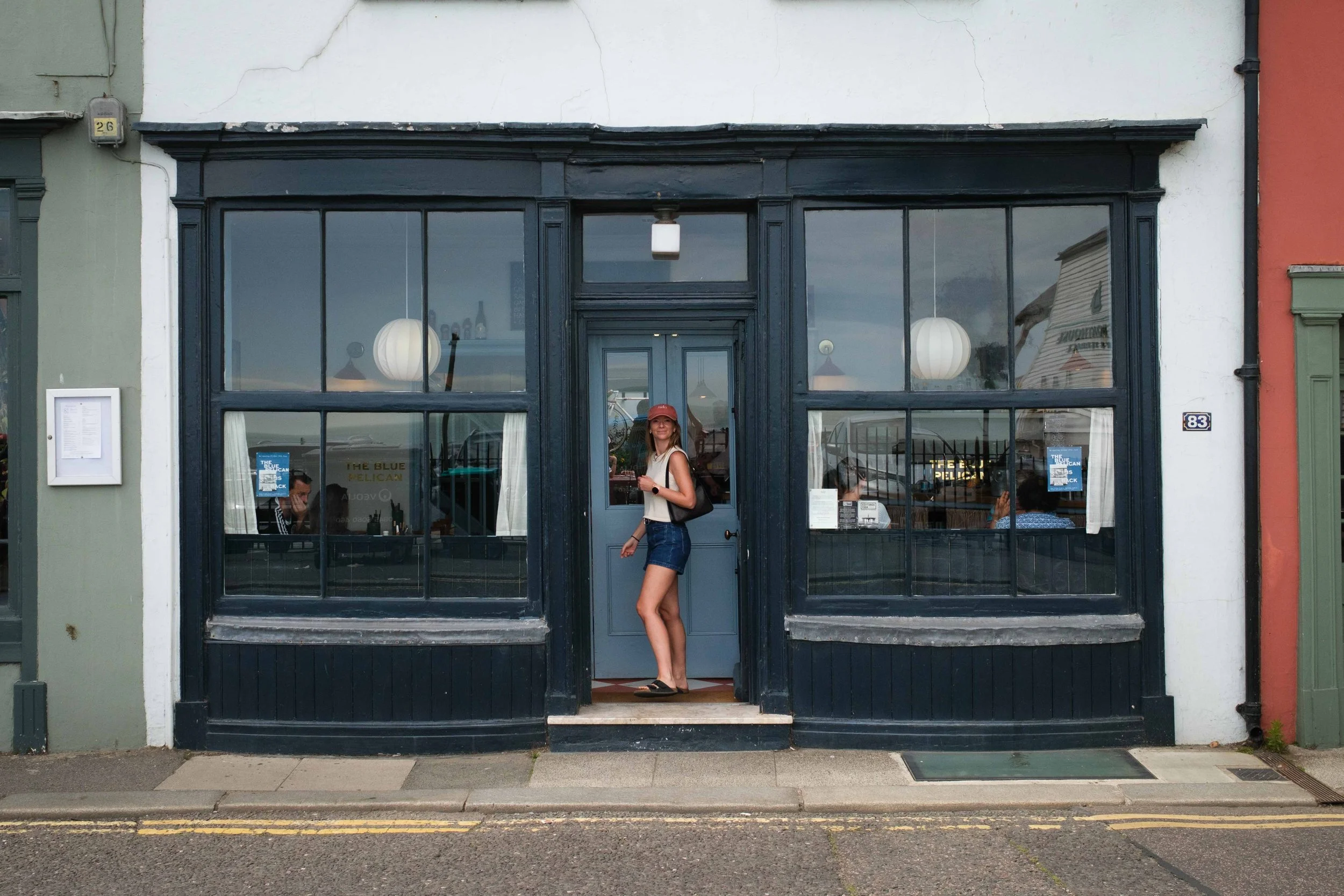
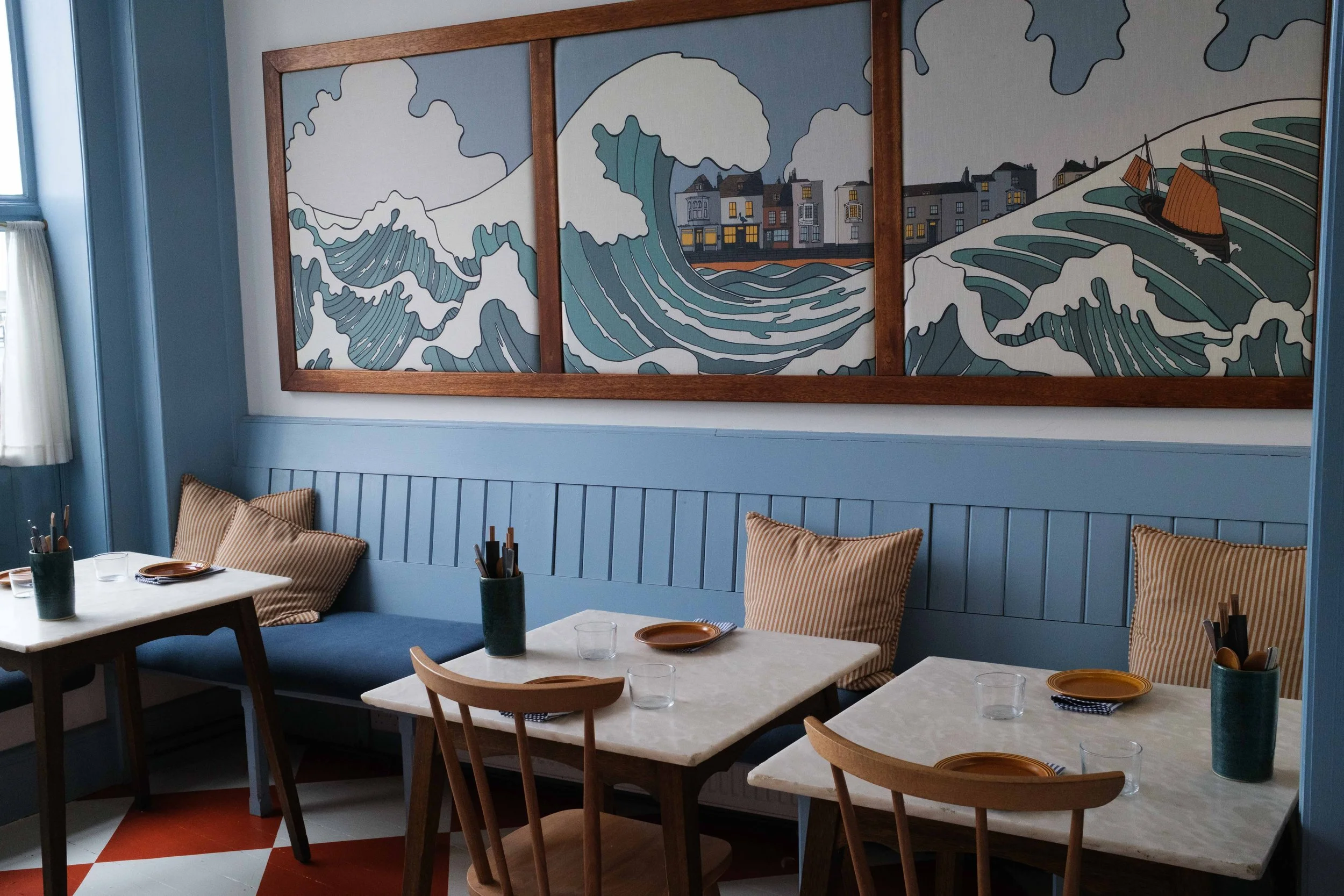
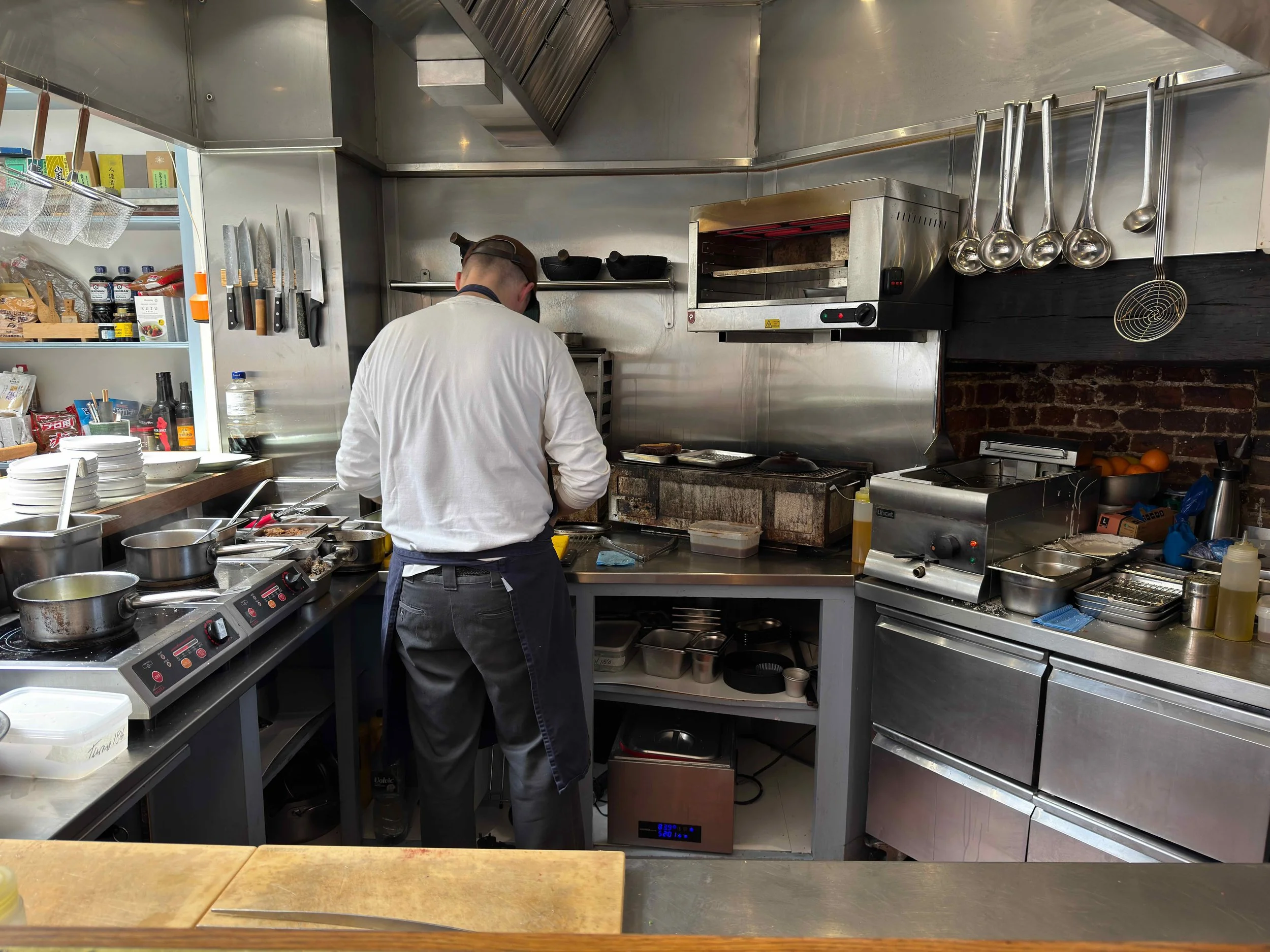
From the outside, the building is almost shy about itself, understated and easy to walk straight past. Step in, though, and it's a different story. The room is colourful and full of character, warm peachy tones, a chequerboard floor and a huge mural inspired by Hokusai's Great Wave washing across one wall. We grabbed seats up at the counter, which we'd recommend if you can get them. Watching Luke and his team work the open kitchen, plating dish after dish for the room, turns lunch into a proper bit of theatre and makes an afternoon here very easy to stretch out.
The food, in a word, was incredible. Everything came out cooked exactly as it should be, the vegetables handled with as much care as the fish, and not a single bland mouthful in the lot. Here's what we had…
What We Ate
We went in sharing style and ordered a good spread across the menu, plus a couple of specials from the board:
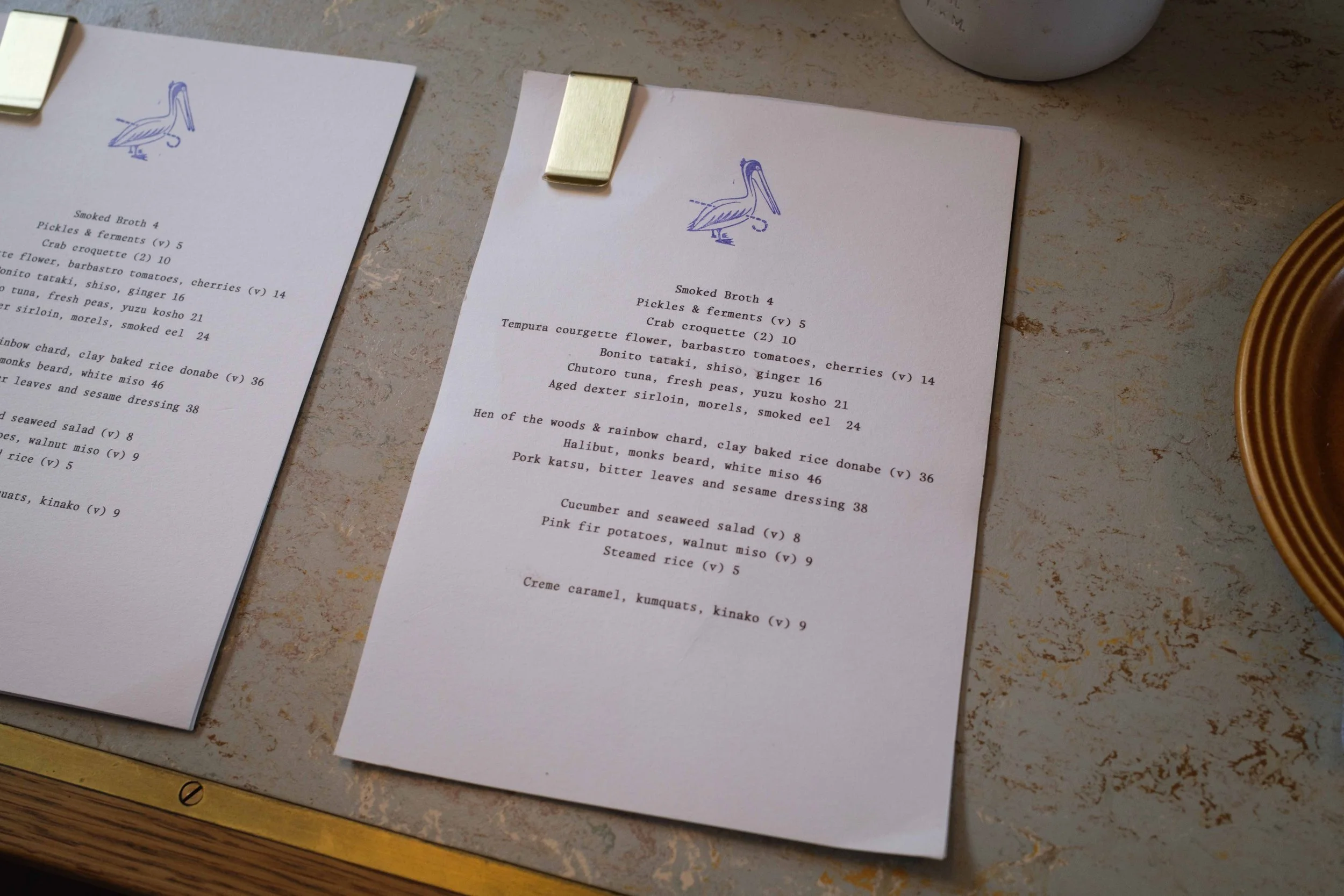
Smoked broth
Crab croquettes
Bonito tataki, shiso and ginger
Hen of the woods & rainbow chard, clay-baked rice donabe
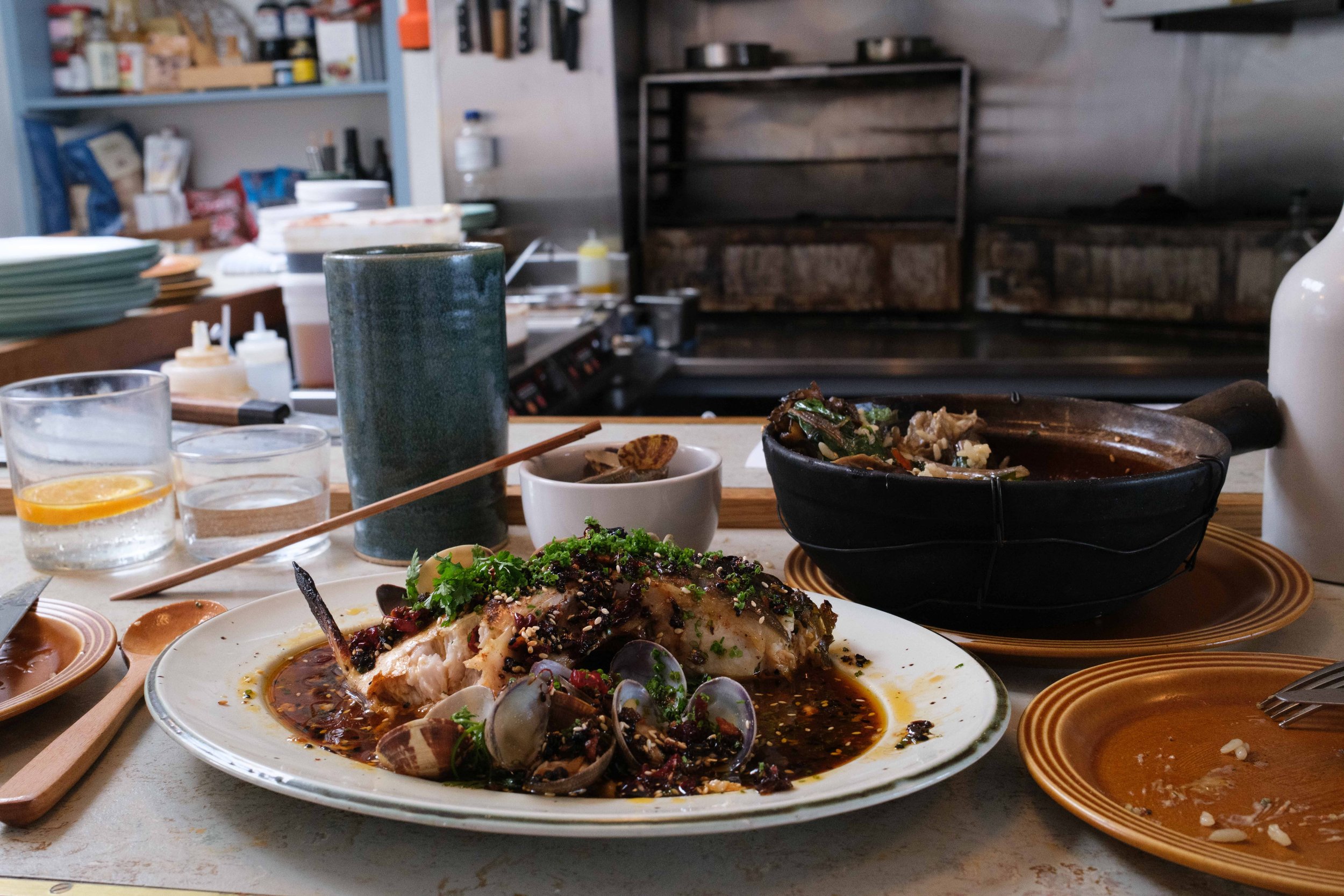
Hamachi collar dressed with clams and la-yu sauce (specials board)
Oysters (specials board)
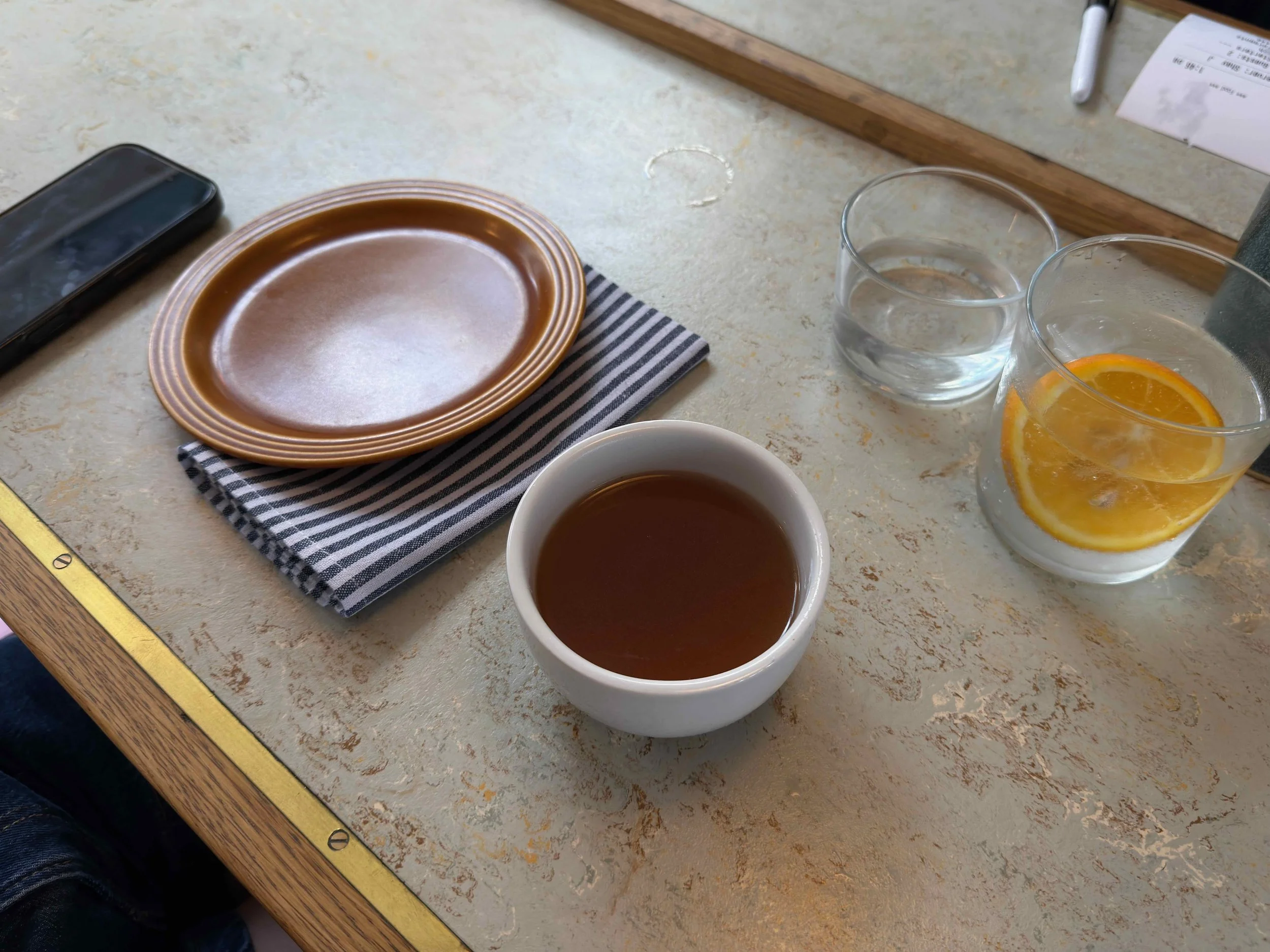
the hearty broth
Smoked broth: A deeply savoury, smoky little cup to start, and a clever opener even on a warm day. It's light enough to wake the palate up rather than fill you, and it sets the tone for just how much flavour the kitchen coaxes out of seemingly simple things.
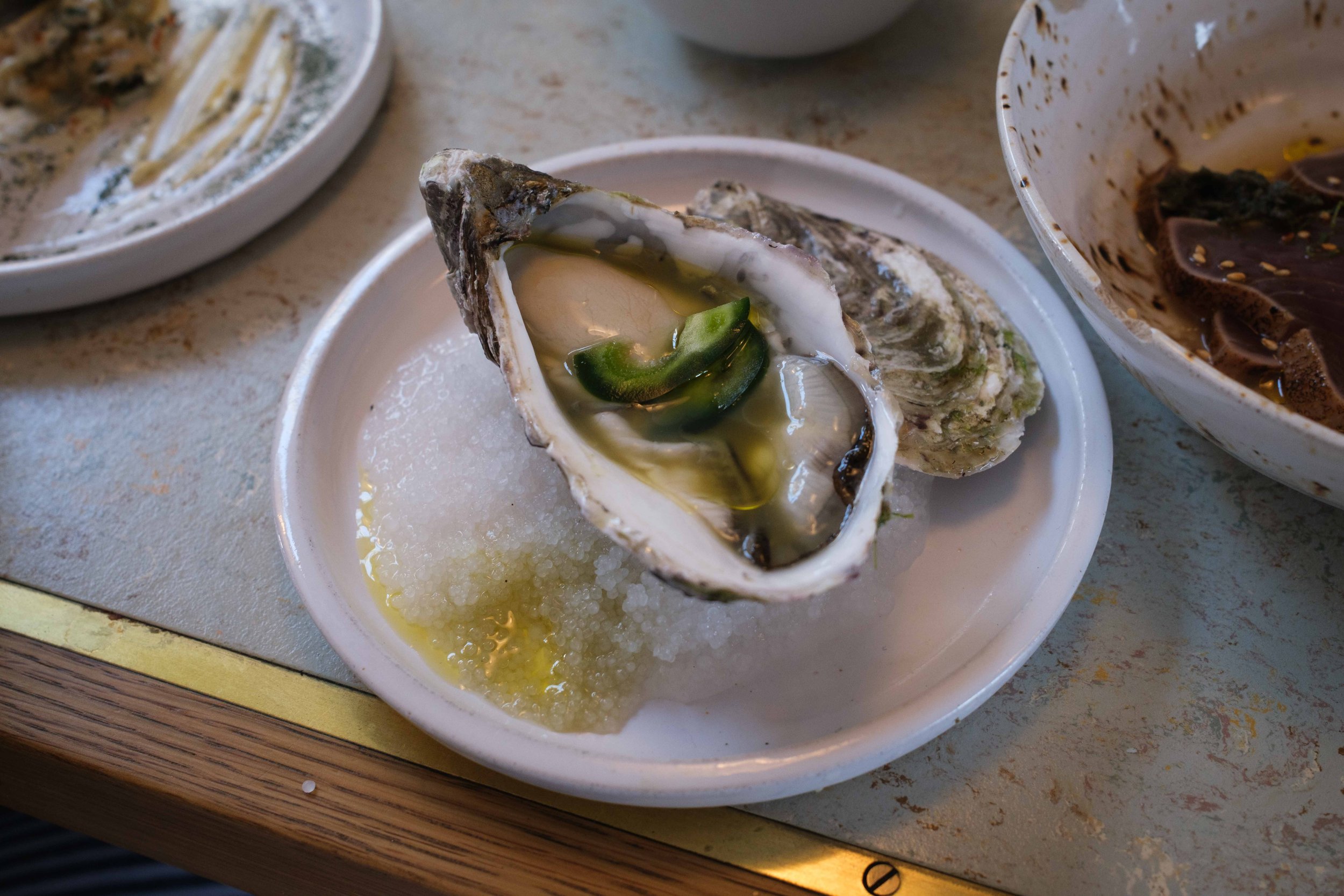
Oysters (specials board): Fresh, chunky and clean. A great way to get the appetite going
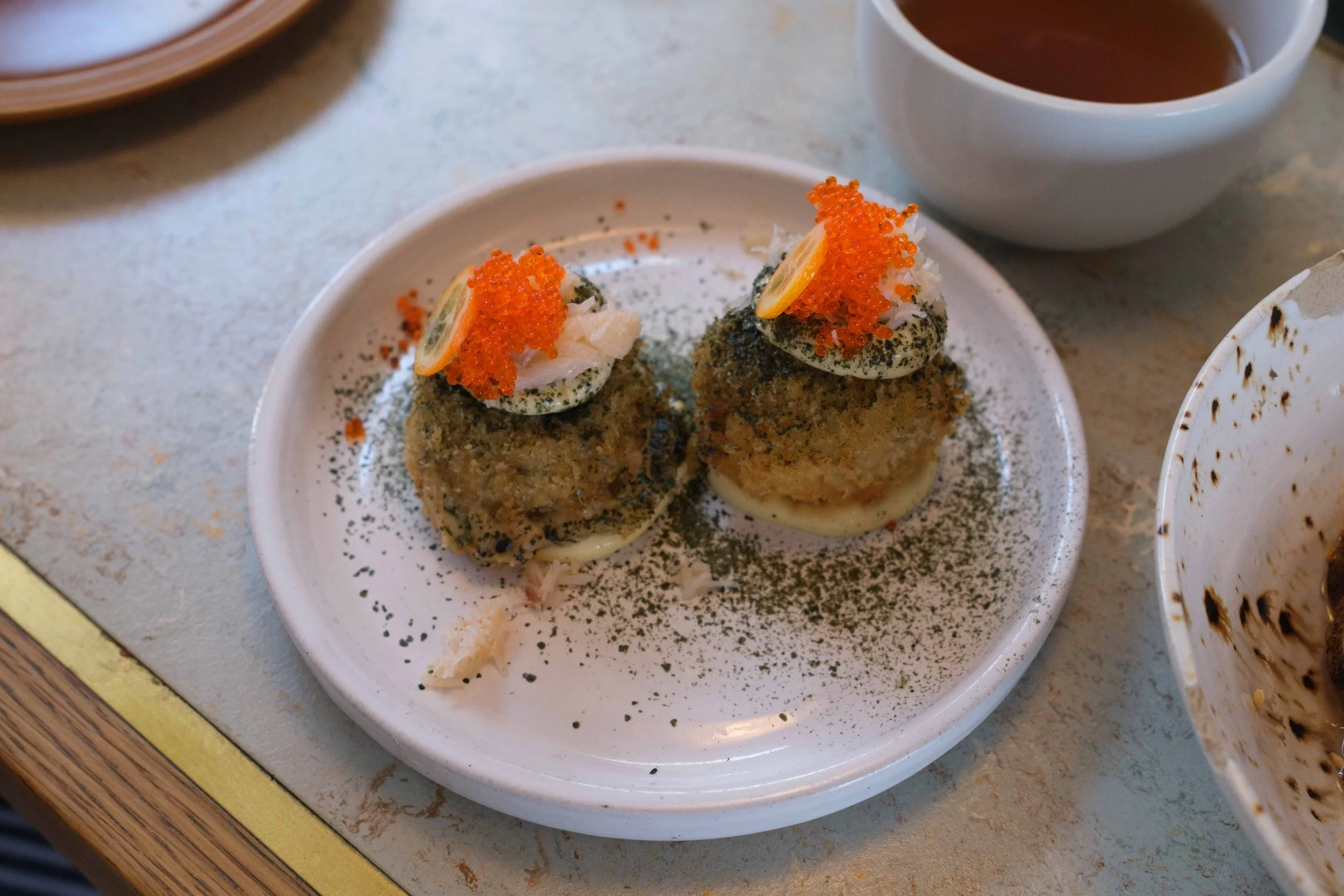
Crab croquettes: Crisp on the outside, soft and oozy in the middle. Exactly what you want from a croquette, with sweet crab doing the heavy lifting.
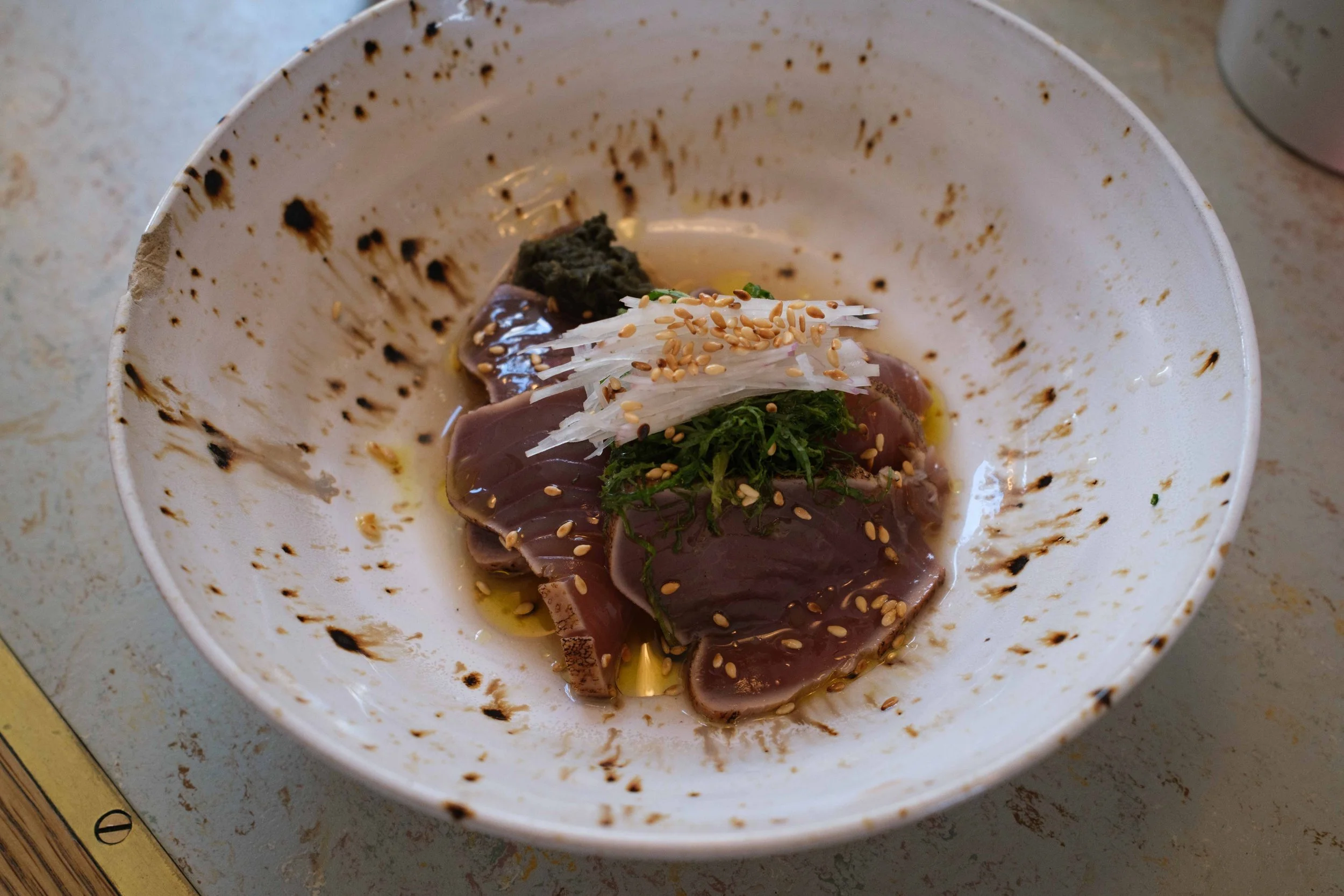
Bonito tataki, shiso and ginger: Lightly seared and beautifully fresh. The bonito almost melted in the mouth, lifted by a lovely dressing and a herby hit of shiso and ginger.
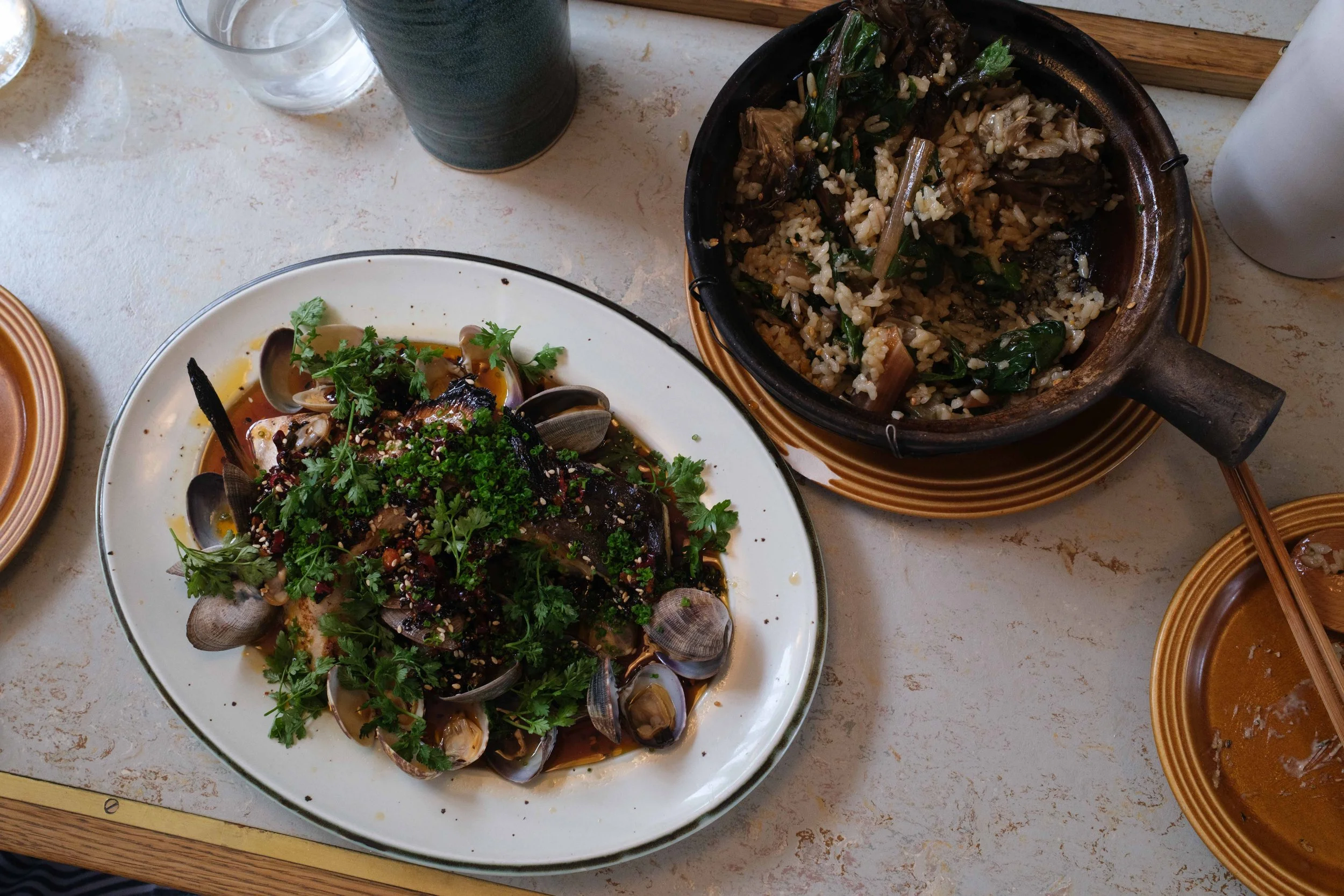
by the time this photo was taken we had already given the donabe a good mix
Hen of the woods & rainbow chard, clay-baked rice donabe: This is the dish the kitchen is known for, and now we understand the fuss. Cooked and served in a donabe (a Japanese clay pot), the rice steams gently while the bottom layer crisps into a golden, savoury crust, which is hands down the best bit. Earthy hen of the woods mushroom and rainbow chard made it comforting and a little luxurious. Being the fiends we are for rice, we could happily have ordered a second pot.
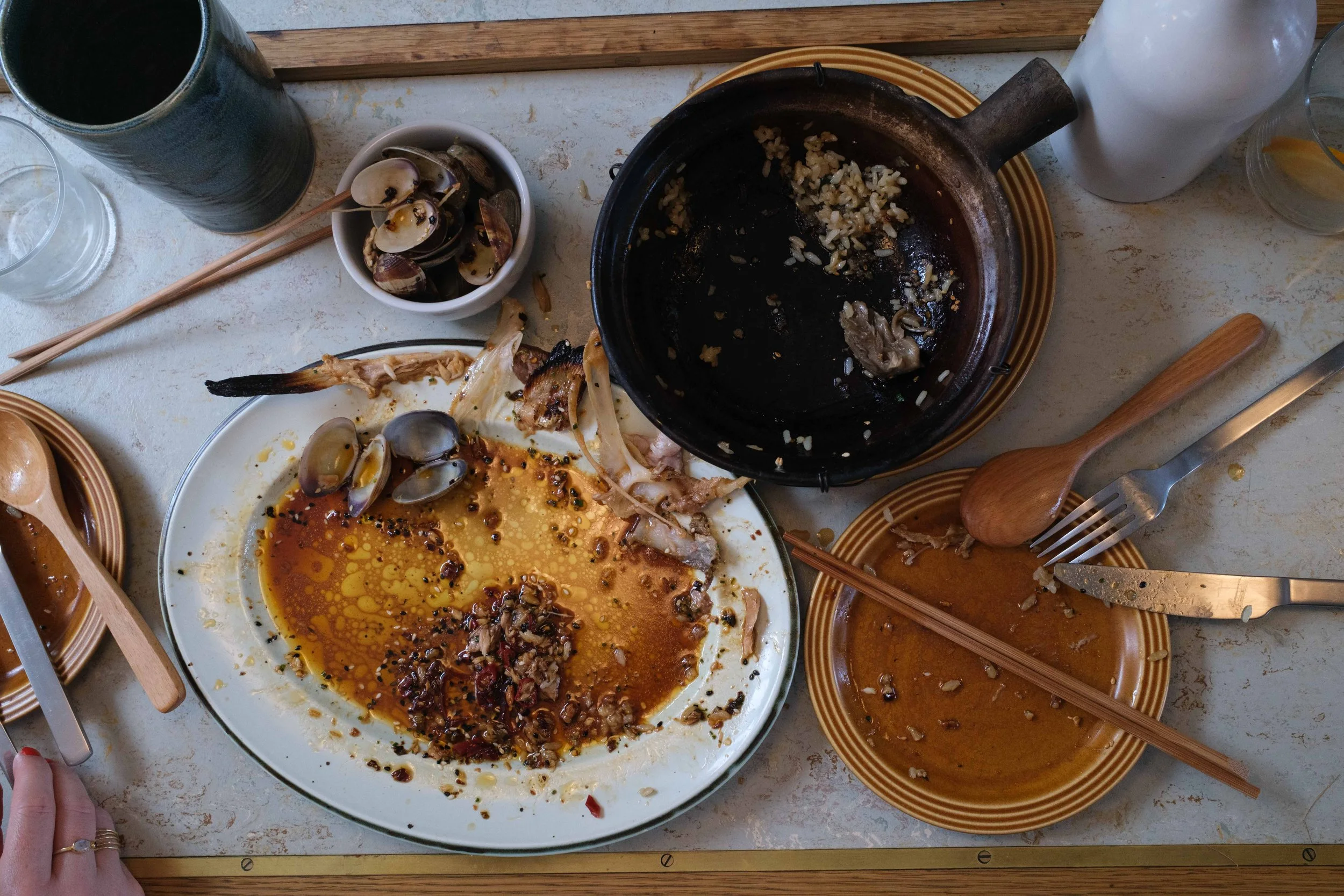
Hamachi collar dressed with clams and la-yu sauce (specials board): Our favourite thing on the table. The collar had loads of rich, tender meat tucked around the bone, the clams alongside were plump and delicious, and the la-yu (a Japanese chilli oil) gave the whole thing a good kick that we loved. Collars are a real treat and often only turn up on the specials board, so if you spot one, order it without a second thought (more on why at the bottom).
Overall thoughts
We loved it here. The cooking is confident and precise without ever feeling fussy, and you can taste the care in every plate, from the crunch of the croquette to the crust on the donabe rice. Sitting at the counter and watching it all come together only adds to the pleasure. It also has the quality we look for in our very favourite places: it's somewhere you'd happily build an entire day around, a special meal by the sea.
Deal itself is a lovely town to wander, and a long lunch here is the perfect centrepiece.
Some nerdy bits about the fish
If hamachi is new to you, it's the Japanese name for amberjack, the fish you'll often see on menus as yellowtail. It's hugely prized in Japanese cooking for its rich, buttery, slightly fatty flesh, which is exactly why it's such a favourite for sashimi and sushi. (A nice bit of trivia: in Japan, the fish goes by different names as it grows, with the younger fish called hamachi and the larger, mature one called buri.)
The collar, known as "kama", is the cut just behind the gills and around the pectoral fin. There are only two per fish, so it tends to be limited and often shows up as a special rather than a fixture, which is precisely where we found it. It's considered something of a delicacy, because the meat tucked around the bones is some of the richest and most tender on the whole fish. Grilled yellowtail collar (hamachi kama) is a classic izakaya dish back in Japan for good reason. Our advice: if you ever spot a collar on a specials board, whether hamachi, salmon or otherwise, order it. You get wonderful flavour, a bit of satisfying hands-on work picking the meat from the bone, and often brilliant value for such a prized cut.
And a quick word on the bonito, because it's a fish that plays a starring role in Japanese cooking while going largely unnoticed over here. Bonito (or katsuo, to give it its Japanese name) is a relative of tuna, with a deeper, meatier and more savoury flavour. You've very likely tasted it without realising: dried and fermented into katsuobushi, it's shaved into the wispy flakes that flutter on top of dishes like okonomiyaki, and it forms the backbone of dashi, the savoury stock at the heart of so much Japanese food. Served fresh, the way we had it, the classic treatment is tataki: the fish is seared hard and fast over a flame so the outside takes on a smoky char while the inside stays raw and silky, before it's sliced and dressed simply with the likes of ginger and shiso. It's a lovely way to enjoy a fish that's full of character.
Details
Website: www.thebluepelican.co.uk
Instagram: @thebluepelicandeal
Email: eat@thebluepelican.co.uk
Phone: +44 (0)1304 783162
Opening Hours: Friday: dinner | Saturday: lunch and dinner | Sunday: ramen, 12.00 to 15.00 (hours shift with the seasons, so do check before you travel)
Booking: Reserve through the link on their website (bookings run through SevenRooms). Weekends fill up, so plan ahead.
Ramen Sundays: Sundays are dedicated to a ramen menu, served from 12.00 to 15.00.
Cellar Bar: Downstairs, there's a Cellar Bar for drinks and small plates on Friday and Saturday evenings from 6 pm. No need to book, just head down and pull up a stool.
Private dining: The upstairs room seats up to 10 and is lovely for a group.
Sister venue: The Rose, on Deal High Street (therosedeal.com)
Getting there: Deal sits on the Kent coast and is reachable by high-speed train from London St Pancras in around an hour and a half, which makes it a very do-able day trip.
If you love food and you're anywhere near the Kent coast, The Blue Pelican is well worth a special trip. Faultless cooking, a gorgeous room and a genuinely warm welcome, all a few steps from the sea. We'll be back, and we'll be bringing friends along next time.
Map
83 Beach Street, Deal, Kent, CT14 6JB