Malaysian Deli - Brockley, London (Review)
Our Rating: ★★★ | ££££ (£15-20pp) - A tiny Brockley room turning out some of the punchiest, most soulful home-style Malaysian cooking in London. Not fancy, and all the better for it. (How we rate restaurants)
There's a certain kind of restaurant we will always root for: small, unshowy, run by people who clearly cook the way they grew up eating, where nobody is chasing a design award and every ounce of effort goes into the pan. Malaysian Deli in Brockley is exactly that. We've now been back a few times, which for us is the surest sign of all, and every visit has left us plotting the next one before we've even paid the bill.
This is proper Malaysian food. Real, punchy sauces with genuine depth, meats cooked with real care, and the kind of layered, built-up flavour you only get when someone knows precisely what they're doing. The menu is short, the dining room is about as no-frills as it gets, and honestly, none of that matters one bit once the food starts landing.
The story
Malaysian Deli is the work of Raja Yusniza, known to just about everyone as Mekja, who was born and raised in the coastal state of Kelantan on Malaysia's east coast. She has described the place as a love letter to her hometown, and once you've eaten here that reads as the plain truth rather than a nice line.
Mekja originally came to the UK to study for a degree in Manchester, met her husband, and the pair eventually settled in Brockley. The deli didn't start as a restaurant at all. It began in 2014 as a small bakery selling cakes and kuih (Malaysian tea cakes), the very things she'd grown up making and selling alongside her mother from the age of nine. When the bakery didn't stick, she made the decision that changed everything: if she loved cooking Malaysian food this much, why not simply cook it for people. Within a few months the place had found its feet, and it has been a beloved fixture of the neighbourhood ever since.
What we love is that the recipes really are hers, learned at her mother's side back in Kelantan and kept faithful to how they were always made. The kitchen and front of house are staffed largely by fellow Malaysians, and the whole thing has the warm, slightly chaotic, family-run feeling of somewhere that exists first and foremost because someone wanted to share their home cooking. It reminds us a little of how we felt about Homies on Donkeys over in Leytonstone: a neighbourhood spot doing one cuisine with real heart, the kind of place worth crossing town for precisely because it isn't trying to be anything other than itself.
The vibe
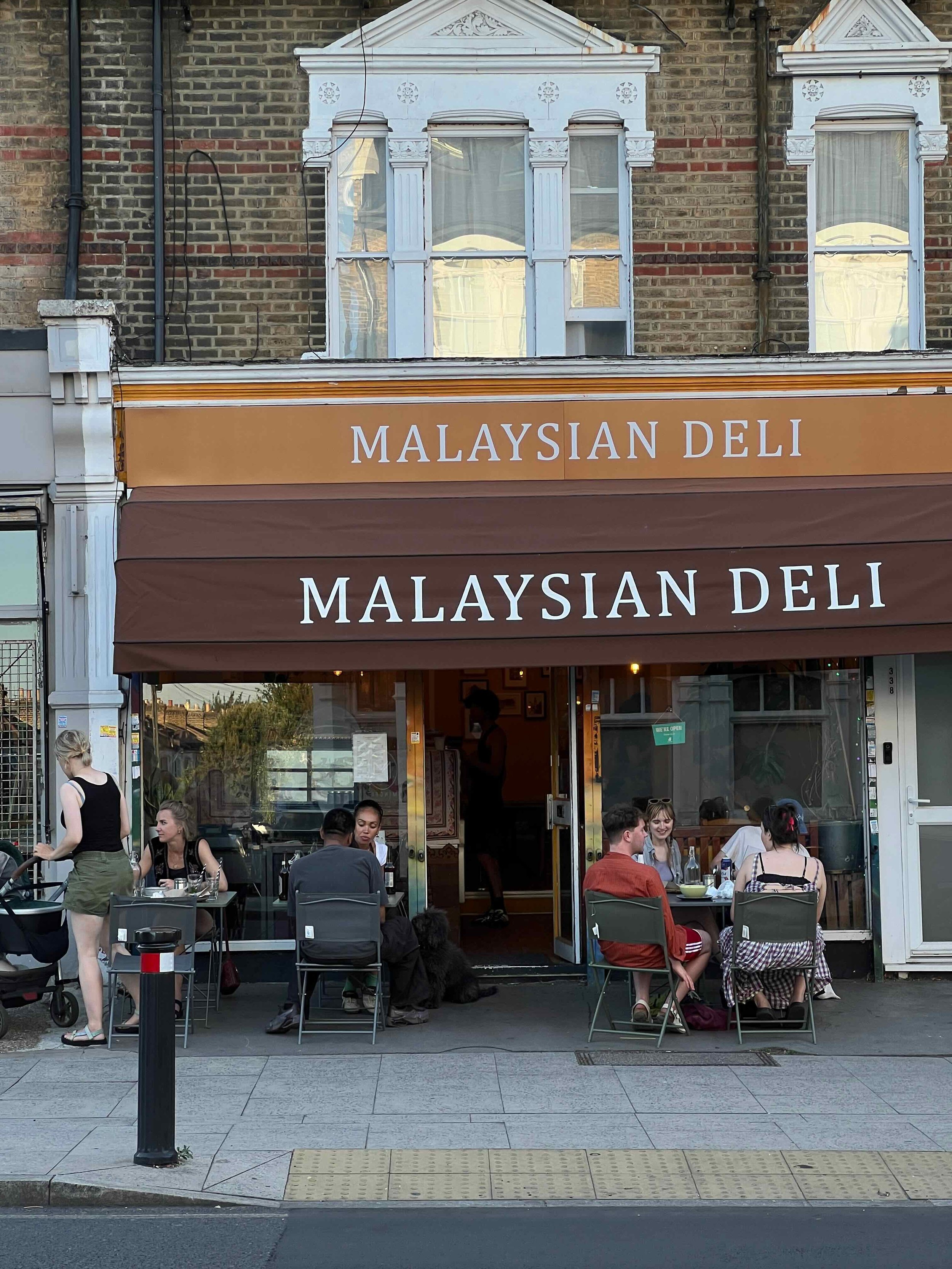
Let's be honest and upfront, because we always are: the dining room is basic. A handful of tables, mustard-warm walls, batik-patterned coverings and a few framed pictures nodding to home. That's the lot. If you're after a slick fit-out and a cocktail list, this isn't your night.
But there's a real cosiness to it, and something about the room makes you want to settle in and order more than you planned. It's softly lit, always busy, and the welcome from the team is genuinely warm. On a grey London evening it feels like a little pocket of somewhere sunnier. The trade-off for all that charm is space, so tables are snug and the place books out, which is exactly why you should reserve ahead via Instagram
What we ate
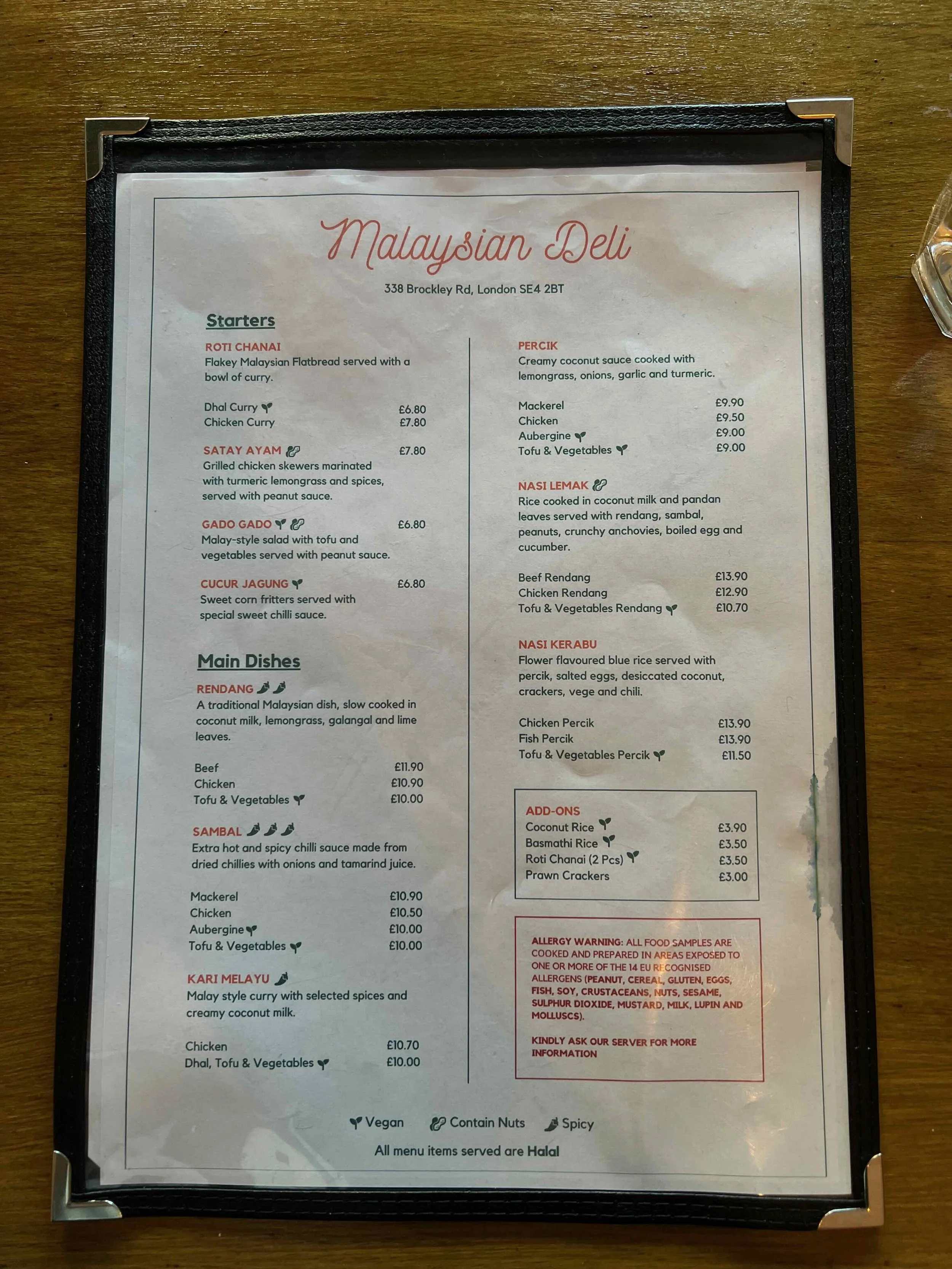
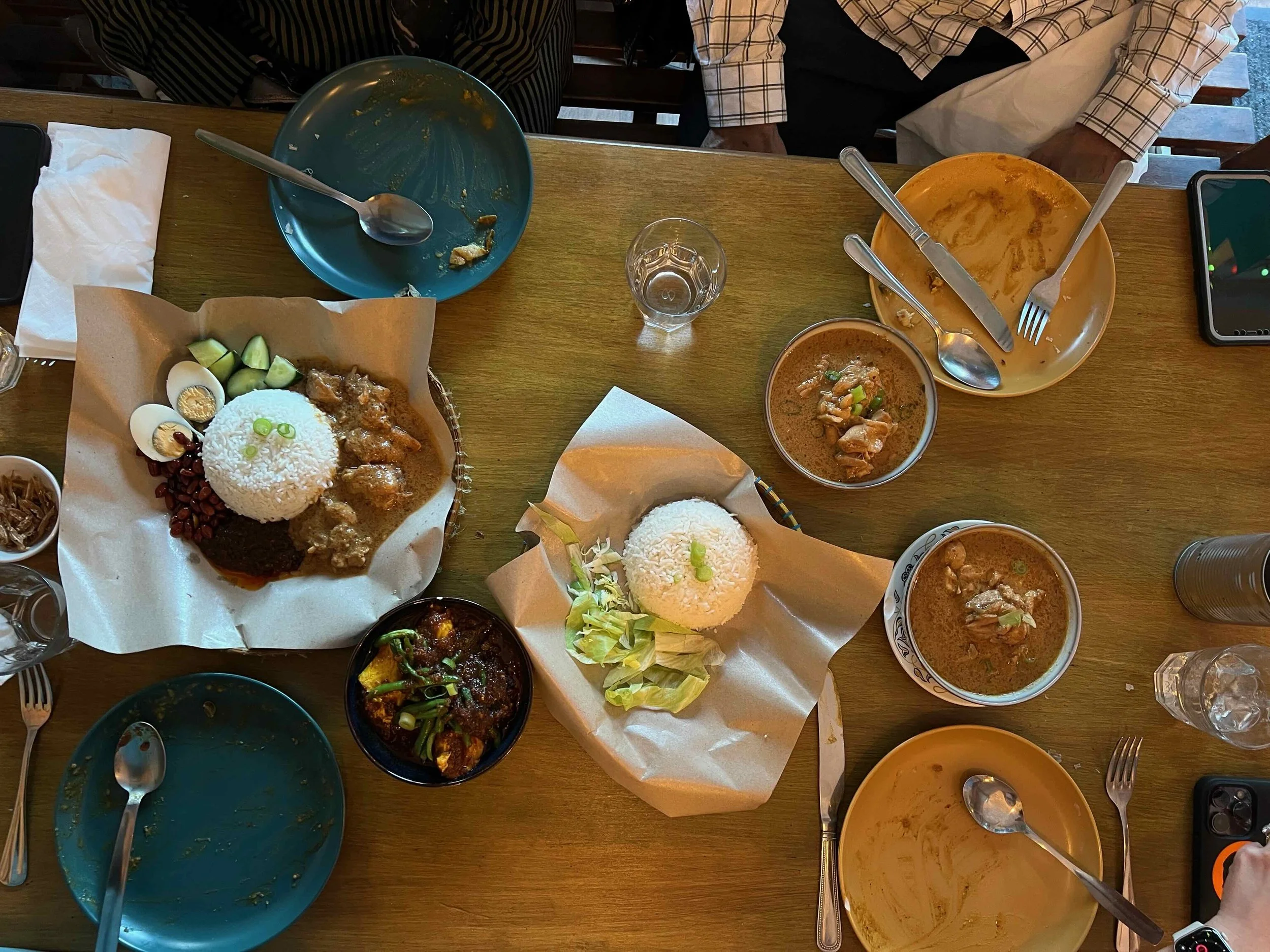
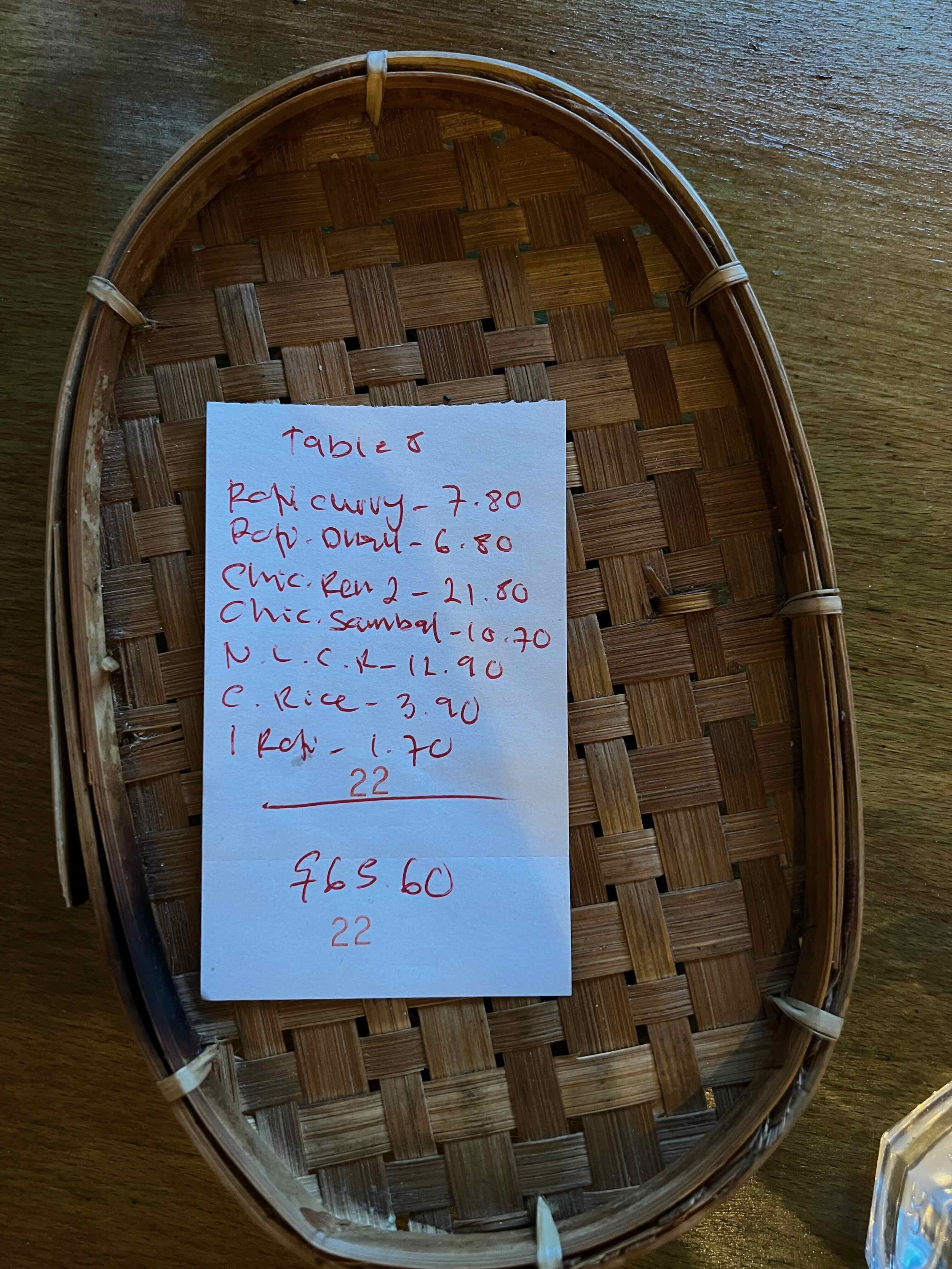
Since we've been back a few times now, this is less a single blowout and more a running list of the things we keep ordering, the dishes that have earned their place across visits. Here's the spread we'd point you towards:
Roti Chanai with chicken curry and dhal curry
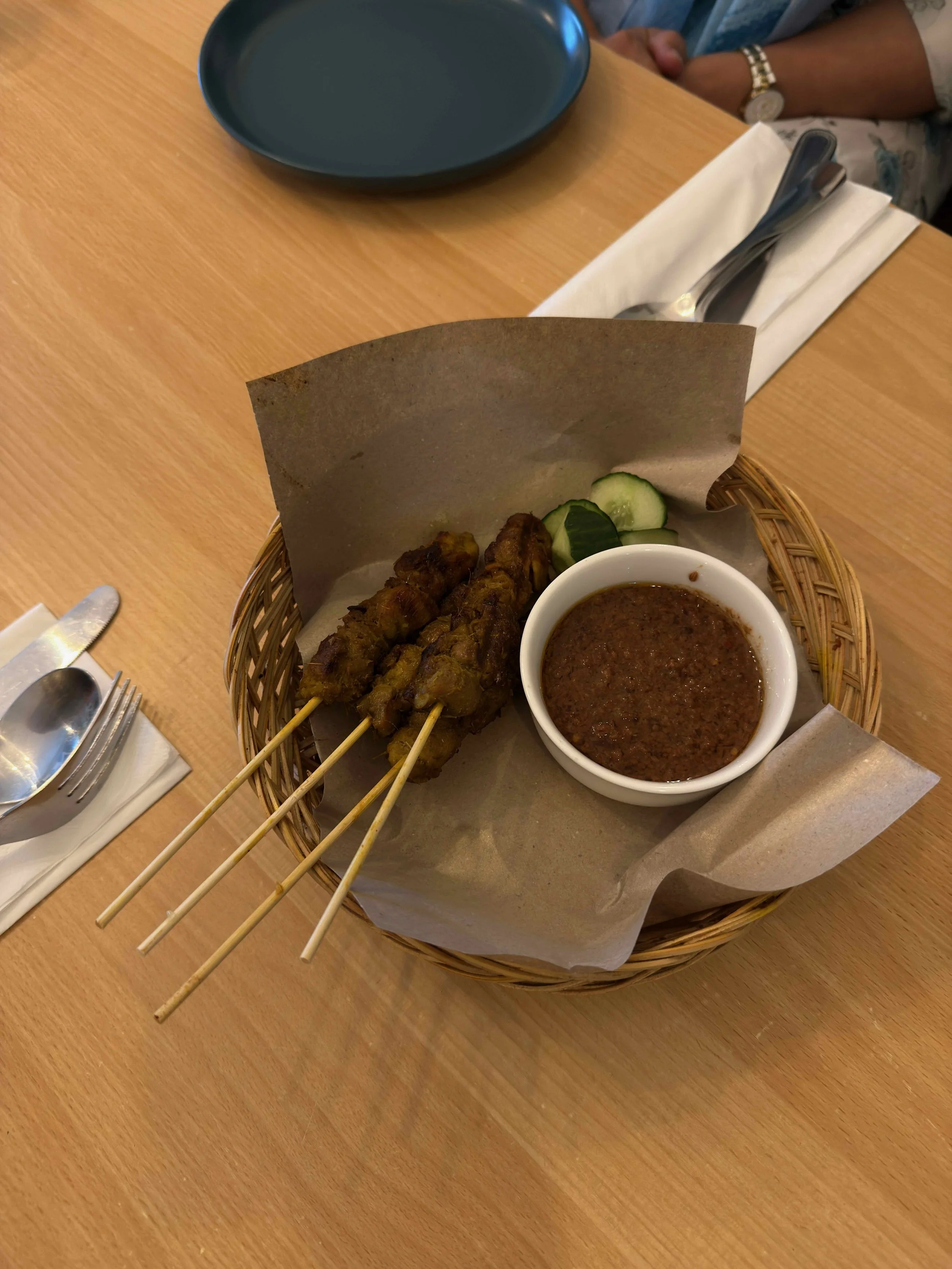
Satay Ayam
Kari Melayu (Chicken)
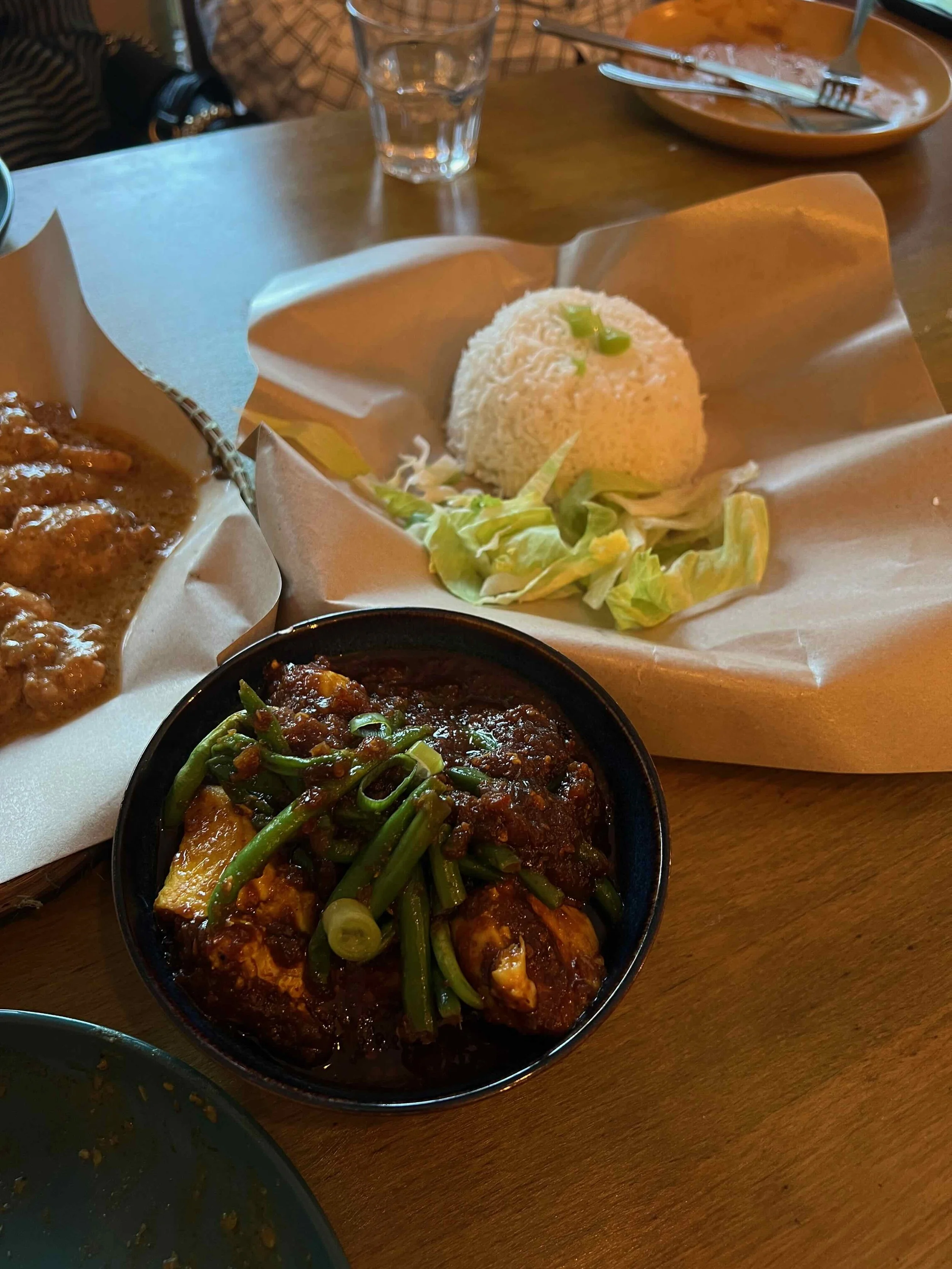
Mackerel Sambal
Nasi Lemak with Chicken Rendang
Coconut rice and extra roti on the side
Roti Chanai with chicken and dhal curries The roti itself is flaky, soft and made for tearing and dunking, and you get a little bowl of curry to drag it through. We'd happily recommend both curries: the chicken curry has more body and richness, while the dhal is gentler and comforting, so getting one of each and sharing is the smart move. It's a messy, hands-on opener.
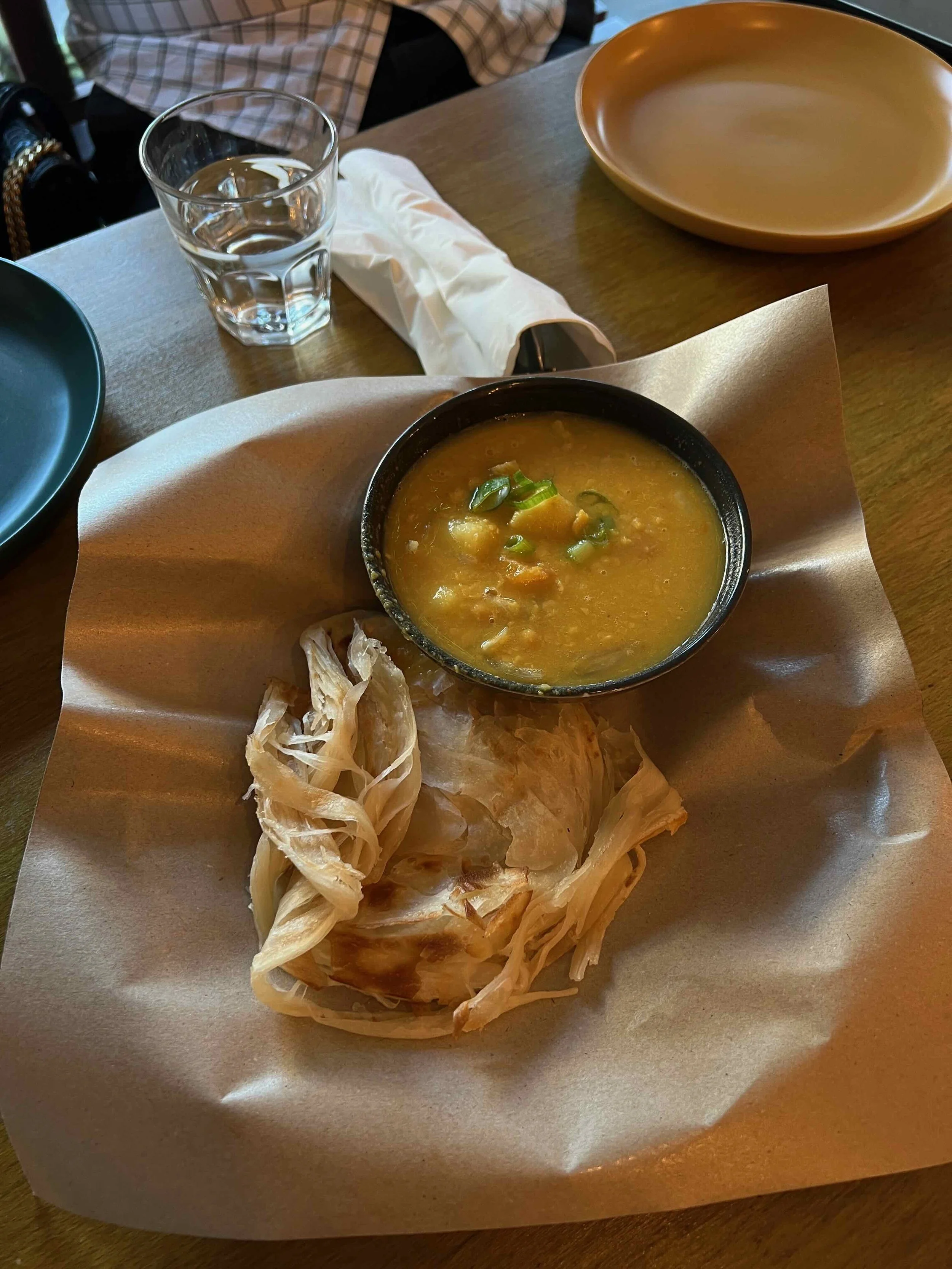
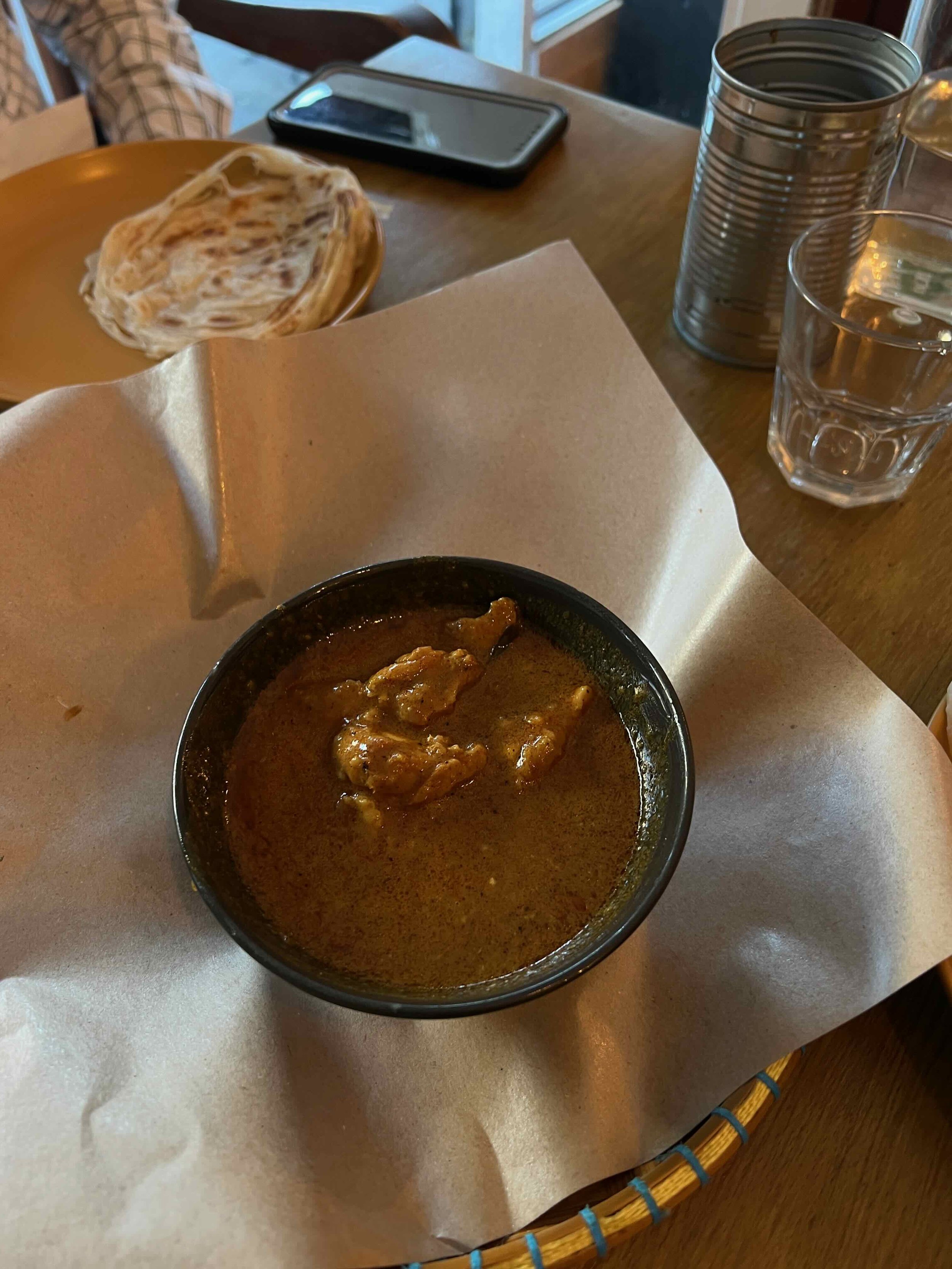
Satay Ayam One of the reasons we keep coming back. Chicken skewers marinated in turmeric, lemongrass and spice, grilled up and served with a proper peanut sauce that's a world away from the gloopy stuff you sometimes get. Order these every single time.
Kari Melayu (Chicken) The gentlest of the mains and a lovely foil to the fiercer sambal. This is Malaysian Deli's take on a classic Malay curry: chicken simmered in creamy coconut milk with a measured, fragrant blend of spice. It's the most familiar-feeling dish on the table, the one we'd steer a nervous first-timer towards, but familiar doesn't mean forgettable. The sauce is rich and comforting and the chicken is cooked with the same care that runs through everything here. We ordered it twice across the table for a reason.
Mackerel Sambal Our usual pick, and for us this is where Malaysian Deli really shows off. Sambal here is thick, dark and properly spicy, built from dried chillies, onions and tamarind, cut through with long beans for freshness and bite. The mackerel stands up brilliantly to all that heat, meaty and rich rather than getting lost under the sauce. It's punchy and moreish and had us going back for one more forkful long after we were full. If fish isn't your thing, the chicken version is excellent too, so you really can't go wrong.
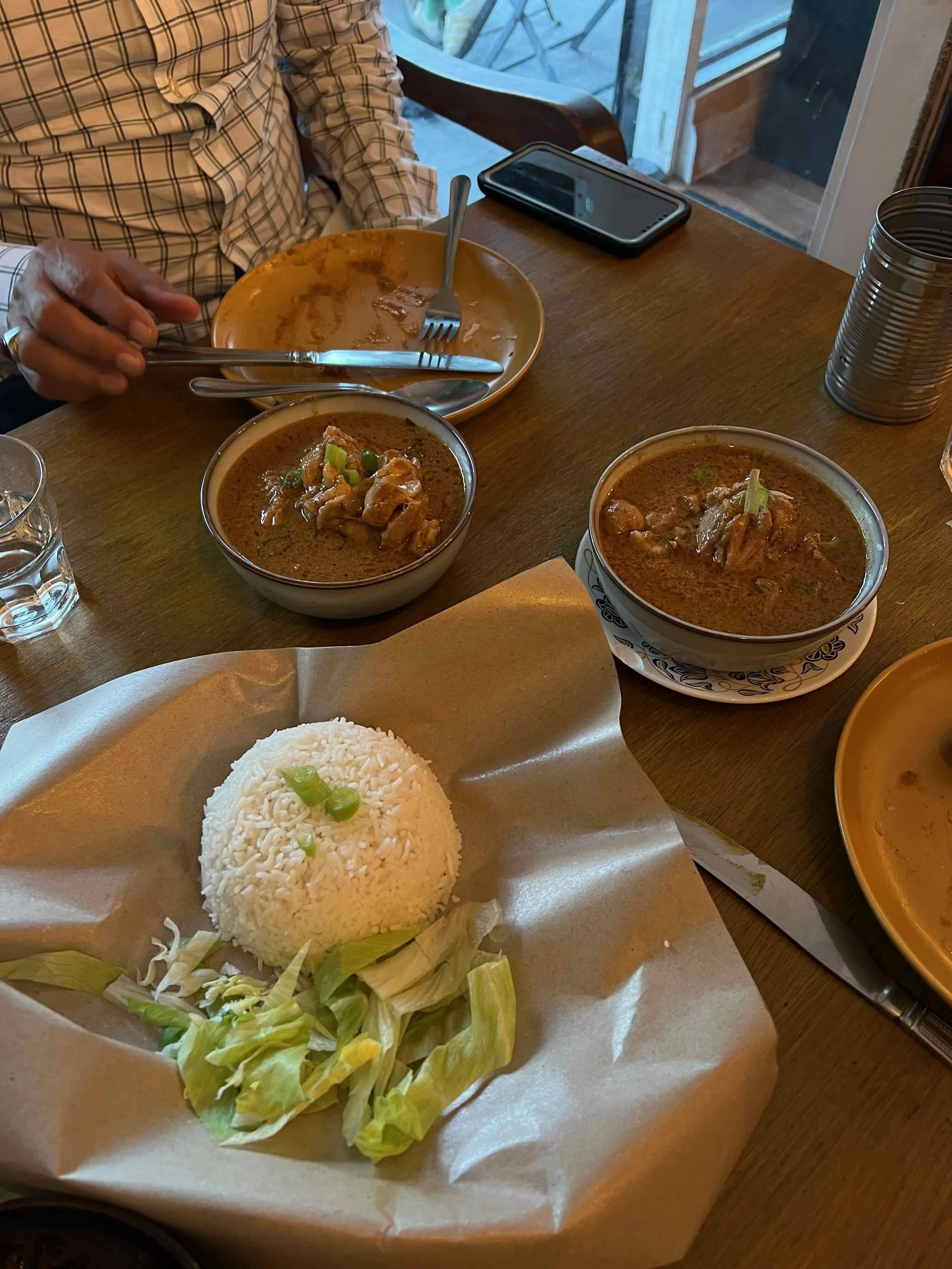
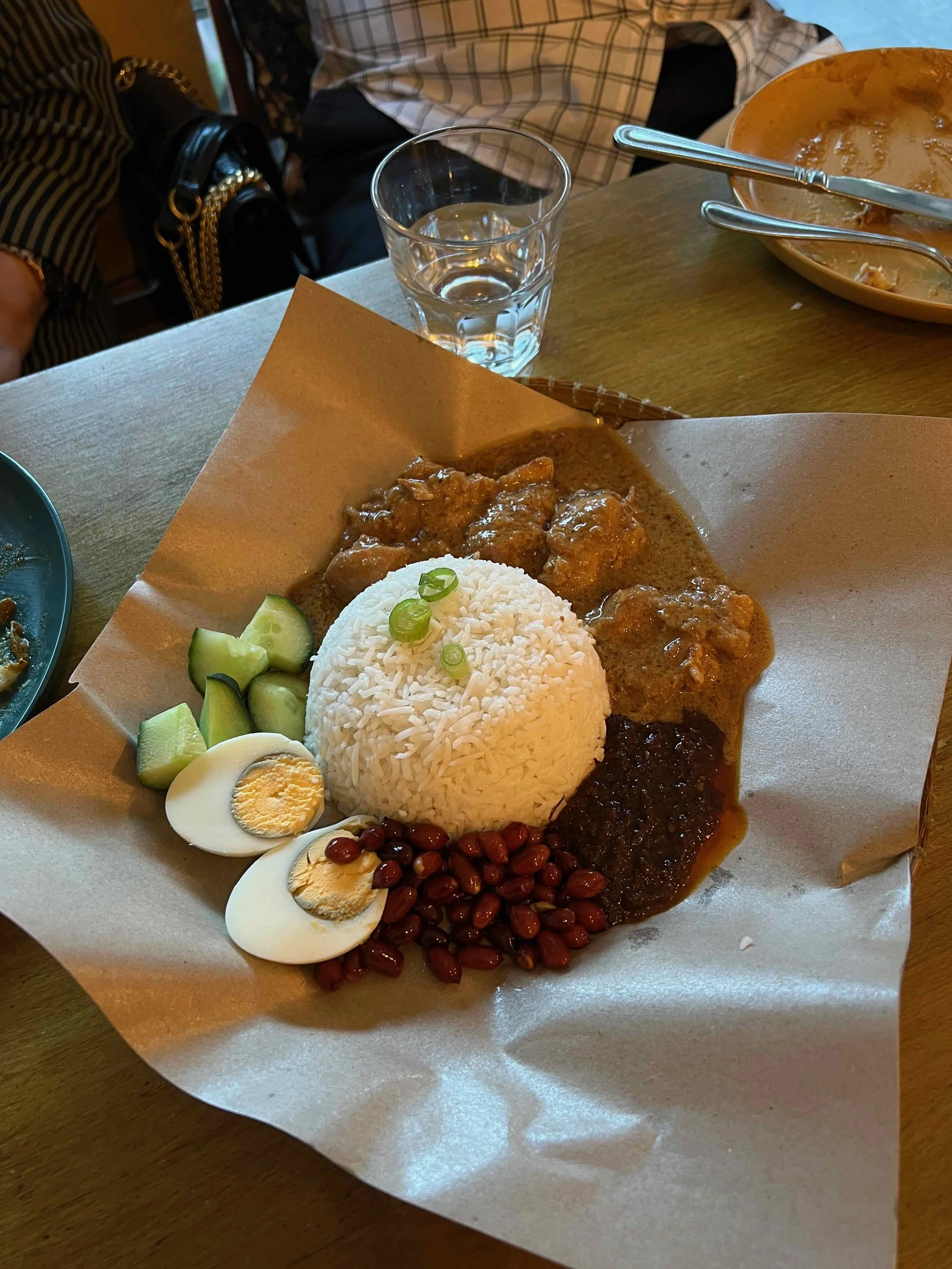
Nasi Lemak with Chicken Rendang If you only order one thing to understand this place, make it a nasi lemak. A neat mound of fragrant coconut rice surrounded by all the trimmings: sambal, a boiled egg, cucumber, crunchy peanuts and, if you add it as we like to, a generous helping of that chicken rendang. It's the sort of plate you're meant to eat around, mixing a bit of everything into each mouthful, and every element pulls its weight. Comforting, complete and genuinely joyful eating. (More on why it's Malaysia's national dish below.)
Overall thoughts
We really do love it here. The setting is humble, the menu is small, and you'll need to book, but the cooking is the whole story and the cooking is brilliant. Everything arrives seasoned with confidence, the sauces have real depth, and the meats in particular are handled with a care that plenty of far pricier kitchens could learn from. It's affordable, it's generous, and it's about as authentic a taste of home-style Malaysian food as you'll find in this corner of London.
If there's a gentle caveat, it's simply that you should arrive knowing what this is: an unpretentious neighbourhood deli, not a polished restaurant experience. Go in wanting exactly that, order a big messy spread, bring your own drinks, and you'll have a wonderful evening.
Details
Address: 338 Brockley Road, London SE4 2BT
Instagram: @malaysiandeli (this is the best place for up-to-date info)
Booking: DM them on Instagram to book. It's small and fills up fast, especially at weekends, so plan ahead rather than chancing a walk-in.
Opening hours: Evenings only, roughly Tuesday/Wednesday through to Sunday (hours have shifted over the years, so please check their Instagram before you travel)
BYOB: Yes, and it's one of the joys of the place. Bring your own drinks, with a small corkage charge (we've seen around £2 quoted, so do check on the night).
Halal: Every dish on the menu is halal.
Good to know: It's cash-friendly and card-friendly, but it is genuinely tiny, so this is a book-ahead spot, not a big-group free-for-all.
The Nerdy Bits
Malaysian food is a glorious crossroads of Malay, Chinese, Indian and Thai influences, and a few of the dishes on this menu carry stories well worth knowing. Here are the ones we found ourselves reading up on afterwards.
Nasi Lemak, the national dish Nasi lemak is about as close as Malaysia gets to an edible flag. The name translates roughly as "rich" or "fatty" rice, a nod to the coconut milk the rice is simmered in, usually with fragrant pandan leaves tucked in alongside. It started life as humble rural fare, a cheap, filling, slow-burn breakfast that fuelled farmers and fishermen through a long day, often wrapped up in a banana leaf and eaten on the go. Over the decades it climbed from roadside stalls to the status of national treasure, and you'll now find it everywhere from street carts to smart restaurants. A classic plate rests on five pillars in balance: the coconut rice, a spicy sambal, crispy fried anchovies (ikan bilis), roasted peanuts and a boiled or fried egg, with cucumber for cool relief. Modern versions pile on extras like fried chicken or, as in ours, a scoop of rendang.
Rendang, and the Indonesia question Here's a fact that surprises a lot of people: rendang isn't originally Malaysian at all. It traces back to the Minangkabau people of West Sumatra in Indonesia, and the name comes from the Minang word merendang, meaning to slowly cook down. That slow reduction was the whole point. By simmering meat for hours in coconut milk and spices until the liquid all but disappeared, cooks created a dish rich enough to survive days without refrigeration, which made it perfect travelling food for a famously mobile, trading people. As the Minangkabau moved and traded across the region, rendang travelled with them and put down deep roots in Malaysia too (Negeri Sembilan, settled by Minangkabau migrants, is a stronghold). It's now so beloved on both sides of the border that Malaysia and Indonesia enjoy a long-running, mostly friendly tussle over who does it best. It's also picked up serious global fame, having topped a widely shared CNN poll of the world's most delicious foods. The version here sits at the saucier, more curry-like end, which is common in Malaysian kitchens.
Nasi Kerabu and that electric blue rice This one is close to Mekja's heart, because nasi kerabu is a signature dish of Kelantan, her home state. The showstopper is the rice, dyed a vivid natural blue by steeping dried butterfly pea flowers (bunga telang) before cooking. The pigment responsible is anthocyanin, the very same antioxidant that makes blueberries blue, and it's pH-sensitive, which is why a squeeze of lime can tip butterfly pea tea from blue to purple. "Kerabu" itself refers to the herb-and-vegetable salad served alongside, and a full plate is a riot of contrasts: the blue rice, a tangle of fresh herbs, toasted coconut, a salted egg, crackers and sambal, sometimes with the fermented fish sauce budu that's a Kelantanese hallmark. It's one of the most beautiful plates in all of Malaysian cooking, and a lovely, direct link back to where these recipes came from.
A quick word on sambal Sambal is less a single recipe than a whole family of chilli-based sauces and relishes found across Southeast Asia, and it's the beating heart of so much Malaysian cooking. At its core it's chillies pounded with aromatics, often lifted by tamarind for sourness and, in many versions, a hit of belacan (fermented shrimp paste) for that deep, savoury funk. It's the ingredient that ties a plate together, and a good one, like the punchy sambal here, is a proper sign of a kitchen that knows its stuff.
Map
338 Brockley Road, London SE4 2BT